
How Off-Season Vacancy Sets Reserve Requirements On A Coastal DSCR Loan — The Quick Read: Off-season vacancy shows up on a coastal DSCR loan as a bigger reserve requirement, not a lower interest rate or a declined file. Underwriting treats a beach or ski property’s slow months as a known, recurring cash-flow gap, so it asks the borrower to hold more liquid PITIA reserves after closing — typically six months of principal, interest, taxes, insurance, and association dues on the subject property, twelve for a first-time investor, through select lenders in Lendmire’s wholesale network. The coverage ratio itself gets built from an annualized, discounted rent figure rather than the best month of the year, and reserves exist to bridge the stretch when that annual average doesn’t match what’s actually landing in the bank that week.
That’s the short version. The mechanics behind it are worth walking through, because they explain why two properties with the same purchase price can carry very different reserve requirements. Every figure here varies by lender and program — guidelines, property type, leverage, and credit profile all apply.
DSCR Calculator
Run the numbers in your market
Rate source: Freddie Mac 30-yr average via FRED® — Federal Reserve Bank of St. Louis · effective Sep 17, 2026
Prefilled with local estimates — enter your own rent or nightly figures, taxes, insurance, and HOA for a more accurate picture.
Program parameters update from Lendmire’s centralized guideline source. Taxes and insurance are editable estimates.
As of Sep 17, 2026 · General Freddie Mac market benchmark, not a Lendmire loan offer. Rent, nightly rate, occupancy, taxes, and insurance are editable estimates. Short-term rental figures are estimates only and vary significantly by season, property type, management approach, and local short-term-rental rules — confirm local regulations before relying on them. Qualifying income for short-term rentals varies by program — some use appraisal market rent, others use documented STR history or projections — and is confirmed in underwriting. Not a Loan Estimate, approval, or commitment to lend. Program availability and eligibility are subject to lender guidelines, credit approval, property review, and underwriting.
What Are Reserves, Exactly?
Reserves are liquid funds a borrower must have on hand after closing, measured in months of the property’s full monthly obligation. On a DSCR loan that monthly obligation is usually written as PITIA — principal, interest, taxes, insurance, and any association dues — and reserves exist as a buffer in case rent stops flowing for a stretch. They aren’t a fee. They aren’t spent at closing. They’re proof of liquidity that sits in an account, unused unless the property goes dark.
Take a standard long-term rental with a steady tenant. Here, reserves cover ordinary risks: a late payment, a vacancy between leases, an unexpected repair. Now take a coastal property with a defined off-season. Here, reserves cover something more predictable — a known dip in bookings that repeats every year. This is exactly why seasonal coastal files carry heavier reserve requirements than a stable duplex three states inland. Final terms depend on lender guidelines, property type, leverage, and the borrower’s complete credit picture.
Key Terms Defined
- DSCR (debt-service coverage ratio): the property’s rental income divided by its full monthly payment. A ratio of 1.00 means the rent exactly covers the payment; above 1.00 means it covers more than that.
- PITIA: principal, interest, taxes, insurance, and association dues — the full monthly housing obligation a DSCR loan measures rent against.
- Reserves: liquid funds, expressed in months of PITIA, that a borrower must hold after closing as a cash-flow cushion.
- Seasonality: the swing between a market’s lowest and highest monthly average rental revenue over a year — a wider swing means a harder off-season trough.
- Form 1007: the standard appraisal form used to document long-term monthly market rent on a conventional rental appraisal — not built for nightly short-term-rental income.
- Business-purpose loan: a loan made to an investor for a non-owner-occupied property, underwritten on the deal rather than the borrower’s personal income.
Why Reserves Climb When Rent Is Seasonal
Reserves scale with risk, and a defined off-season is one of the clearest risk signals underwriting reacts to. A property that books solid every month of the year and a property that books hard for four months and goes quiet for the other eight can carry the exact same annualized DSCR — and still need very different amounts of cash sitting in reserve.
Across the wholesale network Lendmire places files through, standard DSCR investment loans typically call for six months of PITIA reserves on the subject property, with first-time investors generally asked for twelve, subject to underwriting. That’s the baseline for a normal rental. On a strongly seasonal coastal file, the same six-month figure is doing more work, because it has to cover the specific months when income is thinnest — not just an abstract average month. Reserves are a liquidity backstop timed to the property’s real cash-flow calendar, and a beach rental’s calendar has a hole in it every winter.
This is also why the DSCR number itself gets built cautiously. Vacation-rental data provider AirDNA defines market seasonality as the percentage gap between a market’s lowest and highest monthly average revenue over the past year — the smaller that gap, the more stable the income, and the less reserves have to absorb month-to-month swings (AirDNA). National short-term-rental occupancy runs roughly 50-54% depending on the source, meaning close to half of all available nights nationally go unbooked before you even isolate a concentrated seasonal trough. Beach markets peak in summer, ski markets peak in winter, and both carry that off-peak stretch built into their annual math in a way a year-round urban rental doesn’t.
How the Rent Number Gets Built in the First Place
The rent figure feeding the DSCR ratio comes from documented history or a narrative income analysis — never a nightly rate multiplied by 30. That single rule shapes almost everything else about how a seasonal coastal file gets underwritten.
Long-term rental appraisals typically use Form 1007, the single-family comparable rent schedule, to establish monthly market rent. But Fannie Mae’s own appraiser guidance is explicit that this form cannot be stretched to cover short-term-rental income: it would be incorrect for an appraiser to take a nightly STR rate and multiply it by 30 to estimate monthly rent, because that approach ignores furniture and fixtures, additional guest services, vacancy, and business expenses (Fannie Mae Appraiser Update). Form 1007 was built to estimate long-term monthly market rent, full stop — a nightly, seasonal booking calendar is a different animal, and an archived version of Fannie Mae’s own guidance spells out why the two can’t be substituted for each other (Fannie Mae Appraiser Update PDF).
So a seasonal coastal file goes down one of two paths. On a refinance where the current owner has run the property as a rental, twelve months of documented booking and payout history typically supports the income — at a discount to gross, generally 80%, through select lenders in the network, subject to underwriting. On a purchase with no operating history, the appraiser’s own seasonal income analysis carries the weight instead, built from comparable STR performance rather than a single nightly rate. Either way, the number that reaches the DSCR calculation has already absorbed the off-season, which is exactly why reserves then get sized to protect against the months that number is quietly averaging over.
Lendmire’s network handles short-term-rental files a certain way. Borrowers generally must have owned income property for at least twelve of the last thirty-six months. This isn’t for first-time STR buyers — it’s for experienced investors. This rule is separate from the reserve requirement. But both rules come from the same underwriting logic: lenders judge seasonal income more strictly than they judge a signed twelve-month lease.
The Reserve Math, Walked Through
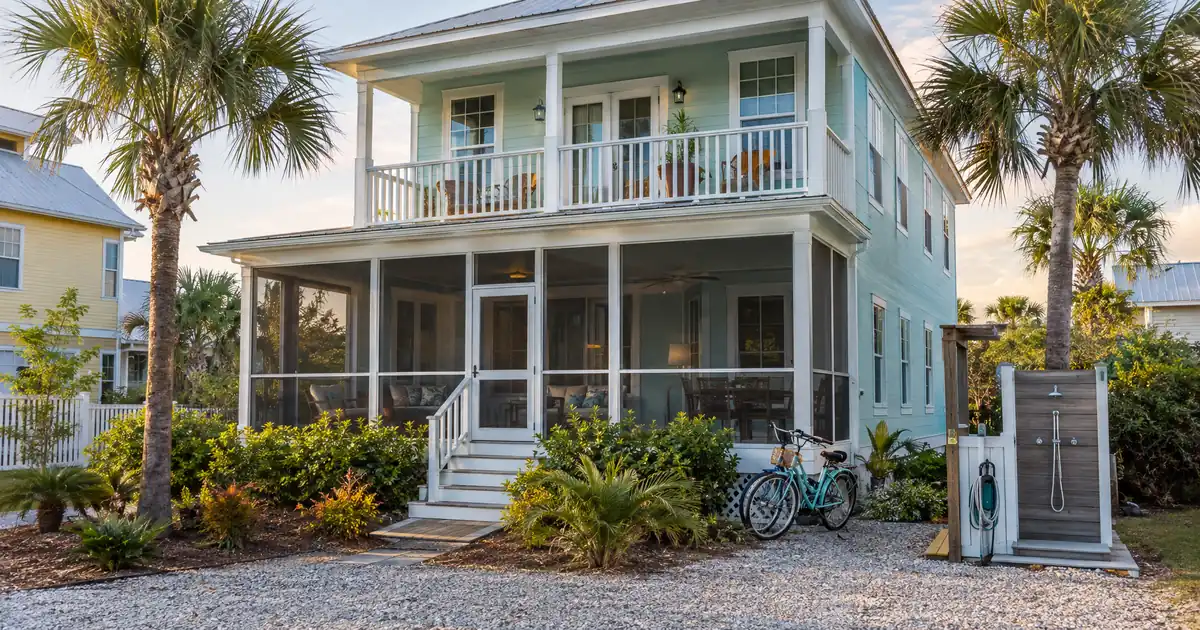
Picture an investor buying a beach house that books strong from late spring through early fall and sits mostly empty the rest of the year. On a refinance with a full trailing-twelve-month operating history, the lender takes the documented gross income, applies the standard haircut, and lands on a rent figure that produces a coverage ratio somewhere around 1.0x to 1.2x on an annualized basis — comfortable on paper. But that annual average was built from several strong months and several weak ones, and the weak months are the ones the reserve requirement is protecting against. These specifics are subject to lender guidelines and a full review of property, leverage, and credit.
Through select lenders in Lendmire’s network, that file typically carries six months of PITIA in reserves on the subject property, generally rising to twelve if the buyer hasn’t owned rental property before. Compare that to a same-priced long-term rental with a signed year-round lease and a steady, non-seasonal tenant — that file often clears with the same baseline reserve count, because there’s no seasonal trough for the reserve to bridge in the first place. Same coverage ratio on paper, different underlying risk, and reserves are the lever that captures the difference.
None of this changes the leverage ladder itself. Loan amounts on the portfolio program run from $150,000 to $10,000,000, with the standard DSCR program capped at $3,000,000 and this larger ladder carrying qualified investors past it; short-term-rental and no-ratio files stop at $2,000,000. At 1.00 coverage or better, leverage runs up to 80% on purchase money to $1,000,000, stepping down to 75% through $3,000,000, 65% through $4,000,000, and 60% up to $6,000,000 on case-by-case review above that — cash-out runs a 75% ceiling on standard rentals and a 70% ceiling on short-term-rental collateral in that same sentence, both scoped to loan size and never quoted flat. Coverage between 0.75 and 0.99 is a real path through select programs to $2,000,000, with LTV and terms adjusting to compensate, subject to underwriting. A minimum credit score of 660 applies broadly, rising to 700 above $3,000,000. Interest-only structuring runs 120 months on 30- and 40-year terms up to 75% LTV, which some seasonal-property investors use specifically to keep the required payment lower during years the off-season bites harder than expected. Terms vary by lender guidelines, property type, leverage, credit profile, and full file review.
Coastal Extras That Stack on Top
Flood zone status is the other lever that quietly raises the reserve dollar amount even when the month count doesn’t move. FEMA designates Zones V and VE as high-risk coastal areas carrying additional hazard from storm wave action, and flood insurance is mandatory for federally backed mortgages in communities that participate in the National Flood Insurance Program (FEMA). DSCR loans aren’t federally backed, but plenty of coastal lenders in the network still require flood coverage as a condition of the file, and that premium gets added into PITIA. Six months of reserves on a property with a bigger insurance line is a bigger dollar cushion than six months on a property without one — the month count stays the same, the number underneath it doesn’t.
Condotels are a separate wrinkle worth flagging. In a standard non-warrantable condo, the owner controls occupancy independently. In a condotel with mandatory rental-pool participation, building management decides who occupies the unit and when — a meaningfully different risk profile for underwriting to price. Through select lenders in the network, condotels can reach 75% LTV on a purchase and 65% on a refinance, capped at $1,500,000, generally with $250,000 in documented cash-in-hand. Municipal rules on operating a short-term rental at all — whether it’s zoned for it, whether an HOA permits it — vary by city, county, HOA, and property type, and get documented for the specific property rather than assumed for a market. Investors should confirm local rules before relying on projected rental income.
DSCR vs. conventional financing
Two common ways to finance an investment property in this market. They qualify you differently — here’s how investors weigh them.
Why investors choose it
- Qualifies on the property’s rental income — no personal tax returns, W-2s, or pay stubs needed to document income.
- No personal debt-to-income ceiling to clear, so existing mortgages and obligations don’t cap your borrowing the same way.
- Can be closed in an LLC, keeping the property inside a business entity.
- Built for scaling — not held to the limit on number of financed properties that conventional financing applies.
- Underwriting centers on the deal: generally qualifies when the rent covers the payment, a 1.00x coverage ratio being a common baseline (confirmed in underwriting).
- Designed specifically for investment property, including long-term and, where the program allows, short-term rentals.
Where it’s strong
- Often the lowest ongoing financing cost for a buyer who fully qualifies on personal income — a fit for a first property or a cost-first purchase.
Trade-offs for investors
- Requires full personal income documentation and must fit within a debt-to-income limit — salary, existing debts, and other mortgages all count.
- Typically held in your personal name rather than a business entity.
- Caps how many financed properties you can carry, which can become a ceiling as a portfolio grows.
- Evaluates you as a borrower as much as the property, which usually means more paperwork.
How investors usually choose: a first or single property often optimizes for the lowest financing cost; portfolio builders often optimize for leverage, vesting in an LLC, and scaling past conventional caps. The right answer depends on your goals, the property, and current guidelines — both paths run through select lenders in Lendmire’s wholesale network, with eligibility and terms confirmed in underwriting.
Where Investors Get Tripped Up
Pricing a deal off the best month of the year is the single most common mistake in a seasonal-market purchase. The underwriting number comes from an annualized, discounted figure — never the peak-season nightly rate times 30 — and an investor who shops a deal using July numbers is likely to be surprised twice: once when the rent used for lender review lands lower than expected, and again when the reserve requirement turns out to be sized for the full year’s risk, not the best month’s cash flow. Exact terms depend on the lender’s guidelines, property type, leverage, and a full review of the borrower’s file.
Here’s a common mistake: assuming a documented history fully offsets the seasonality concern. It doesn’t. Twelve months of booking data supports the rent figure used in the DSCR ratio. But that’s a separate lever from the reserve requirement. The reserve requirement exists because even a well-documented seasonal property still has real months of thin or negative cash flow built into that history. Clearing 1.0x or better on an annualized basis doesn’t make the reserve requirement go away. The ratio and the reserve count answer two different questions.
Want the fuller picture on how coverage ratios get built before reserves come into play? Lendmire’s complete DSCR loans guide walks through qualification from the ground up. And if you’re weighing a coastal short-term rental against a straight long-term lease, check out Lendmire’s breakdown of off-season coverage on a short-term-rental DSCR file. It covers that comparison directly.
Frequently Asked Questions
Can a bigger down payment reduce the reserve requirement? Not directly. A larger down payment lowers the loan amount and can improve the coverage ratio, but reserves are measured separately, in months of PITIA, and typically don’t shrink just because leverage drops — though a stronger overall file can sometimes support a lender’s decision on the margin, subject to underwriting.
Does a strong annualized DSCR mean reserves won’t climb for seasonality? No. A property can clear 1.0x or better on paper and still carry a heavier reserve requirement, because the ratio measures average annual coverage while reserves are sized to the actual off-season cash-flow gap underneath that average.
Is Form 1007 ever used for a short-term rental? Not for estimating nightly income. Form 1007 was built to document long-term monthly market rent; short-term-rental income on a purchase typically comes from the appraiser’s own seasonal income analysis instead, built from comparable STR performance rather than a lease-rate schedule.
Do first-time investors face different reserve requirements on a coastal property? Generally yes. Through select lenders in Lendmire’s network, first-time investors are typically asked for around twelve months of PITIA reserves versus roughly six for an experienced investor, and short-term-rental programs generally require the borrower to have owned income property for at least twelve of the last thirty-six months regardless of reserve count.
Does flood insurance change the number of reserve months required? Usually not the month count itself, but it raises the PITIA figure those months are measured against — so the dollar amount held in reserve goes up even when the required number of months stays the same.
DSCR loans are designed for non-owner-occupied investment properties. Because they’re business-purpose investor loans, lenders review them differently from a standard owner-occupied mortgage. Tax treatment can depend on how the funds are used and how the property is held. Investors should keep clear records and speak with a qualified tax professional before relying on any deduction.
If you’re buying or refinancing a coastal rental and want to see how seasonality plays into leverage and reserves, Lendmire can help compare DSCR loan options based on the property’s income, credit profile, and investor goals.
For current guidelines and terms, see Lendmire’s super jumbo DSCR loan programs page.
Self-employed borrowers can compare both super jumbo programs on Lendmire’s self-employed mortgages page.
About Lendmire
Lendmire is a non-QM mortgage brokerage (NMLS# 2371349) arranging DSCR investor loans in 40 markets, including Washington, D.C. DSCR eligibility is generally reviewed around property-level rental income rather than personal income, subject to lender and program guidelines, a fit for self-employed investors and LLC-owned portfolios. Lendmire was recognized as a Scotsman Guide Top Mortgage Workplace in 2025 and 2026.
Lendmire’s Top Mortgage Workplace recognition is documented by Scotsman Guide 2025 Top Mortgage Workplace and Scotsman Guide 2026 Top Mortgage Workplace.
Get Started
Ready to find the right loan for you?
In about 30 seconds you can review financing options available for your home or investment property. No commitment required.
Informational only. Not a Loan Estimate, approval, or commitment to lend. Program availability and eligibility are subject to lender guidelines, credit approval, property review, and underwriting.
References
1. AirDNA — Rental Seasonality
2. Fannie Mae Single-Family Appraiser Update
3. Fannie Mae Appraiser Update (archived PDF)
Brandon Miller
Founder & CEO, Mortgage Loan Originator, Lendmire LLC
- Mortgage Loan Originator · NMLS# 1129696 · Verify on NMLS Consumer Access
- North Carolina Real Estate Broker · License# 343312 · Verify on NCREC
- North Carolina Insurance Producer · License# 19053198 · Property, Casualty, Life, Health · Verify on NAIC SBS
- Lendmire LLC · Firm NMLS# 2371349 · Verify firm licensure
Compliance and disclosures. Lendmire (NMLS# 2371349) is a licensed mortgage broker and is not a direct lender, depository institution, financial advisor, or tax professional. Content in this article is general market analysis and educational information — not financial, legal, or tax advice for any specific situation. Lendmire does not guarantee loan approval; every transaction is subject to underwriting by the funding lender. Mortgage pricing and loan program guidelines are subject to change at any time without notice and vary by borrower characteristics, property type, and state regulations. Lendmire complies with Equal Housing Opportunity. Licensure verification: NMLS Consumer Access.


