
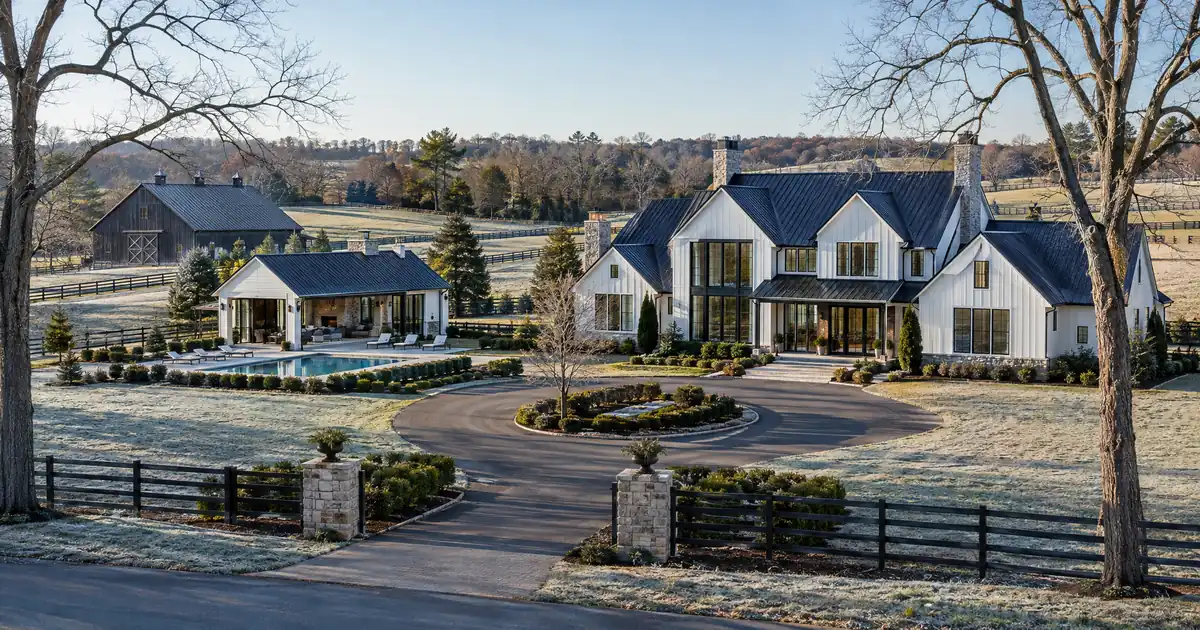
The Quick Read: On an acreage estate, the number of appraisals is rarely a choice you make; loan size sets it. Through select wholesale programs, one appraisal typically covers loans up to $2,000,000, and two full reports apply above that line, with the lower of the two values sizing the loan, subject to underwriting. One appraisal is for the investor whose loan stays at or under the line. Two appraisals are for the investor whose loan lands above it, and for anyone who wants a second set of eyes on land that is hard to value.
- The $2,000,000 line is read on the loan amount, not the purchase price.
- When two reports disagree, the lower value usually controls leverage, and you fund the gap.
- Acreage is the hard case because comparable sales are thin and land value does not scale evenly.
- DSCR (debt service coverage ratio) means the property’s rent divided by its full monthly obligation. A coverage of 1.00 earns full leverage.
- Short-term-rental and no-ratio files stop at $2,000,000, so the largest estates run on long-term rent.
Side-by-Side
Here is how the two paths compare inside the wholesale network Lendmire works with. Every figure is typical, subject to lender guidelines and underwriting. Treat the two-appraisal column as the published industry norm for large balances, with thresholds that vary by program.
DSCR Calculator
Run the numbers in your market
Rate source: Freddie Mac 30-yr average via FRED® — Federal Reserve Bank of St. Louis · effective Oct 15, 2026
Prefilled with starting assumptions — enter your own rent or nightly figures, taxes, insurance, and HOA for a more accurate picture.
Program parameters update from Lendmire’s centralized guideline source. Taxes and insurance are editable estimates.
As of Oct 15, 2026 · General Freddie Mac market benchmark, not a Lendmire loan offer. Rent, nightly rate, occupancy, taxes, and insurance are editable estimates. Short-term rental figures are estimates only and vary significantly by season, property type, management approach, and local short-term-rental rules — confirm local regulations before relying on them. Qualifying income for short-term rentals varies by program — some use appraisal market rent, others use documented STR history or projections — and is confirmed in underwriting. Not a Loan Estimate, approval, or commitment to lend. Program availability and eligibility are subject to lender guidelines, credit approval, property review, and underwriting.
| Factor | One Appraisal | Two Appraisals |
|---|---|---|
| Loan size | $2,000,000 or less | Above $2,000,000 |
| Value used to size the loan | The single report | Lower of the two |
| Review basis | Property rent vs. obligation | Same |
| Documentation | One full report with rent schedule | Two reports from different appraisers |
| Property types | 1-4 units, condos, rural to 5 acres | Same, with size-based limits |
| Acreage limits | Up to 20 acres to $3,000,000 | Same to $3M; stricter above |
| Entity vesting | Welcome, no layered entities | Same |
| Timeline | One ordering step | Added ordering and delivery step |
| Reserves | 6 months on subject; 12 first-timers | Same standard, on a bigger balance |
Two notes on the table. First, “two reports from different appraisers” is standard practice, because a second opinion from the same person is not a second opinion. Second, which report carries the rent schedule is program-specific. Ask before you order.
When One Appraisal Is the Better Fit
One appraisal fits when your loan lands at or under $2,000,000. That is the cleanest path: one ordering step, one value, one rent schedule.
Think about who lands here. An investor buying a high-end rental on a few acres, at 75% leverage on a purchase, can stay under the line when the price is moderate. Another is a refinance with a modest balance against a large property. Cash-out also steps down with size. It runs at 75% to $1,000,000 and 70% to $1,500,000, and both numbers are ceilings subject to underwriting. Every figure here varies by lender and program — guidelines, property type, leverage, and credit profile all apply.
You also gain control over the schedule. Rural appraisers are scarce, and every extra report is another person to find. If your contract has a tight deadline and the loan can sit under the line without wrecking your equity plan, one appraisal is easier to manage.
The honest downside is concentration. One report means one opinion. If that appraiser stretches for comparable sales or misreads the acreage, you live with the number. Sizing around the line also costs you something. A lower loan means more cash at closing, and the leverage ladder already steps down as balances climb.
When Two Appraisals Are the Better Fit
Two appraisals are required above $2,000,000 on the network’s super jumbo programs, so on a true estate this is often the default. They are also a useful safeguard when you would take a second opinion on unusual collateral anyway.
On an acreage estate with a guest house, barn, and several tax lots, a single opinion carries real risk. Two independent reports pressure-test the value before you commit. The lower one controls the loan, which protects you from overpaying against a soft comparable set.
The ladder above the line looks like this, all subject to underwriting:
- $2M to $3M: 75% on a purchase or rate-and-term refinance, and 60% on cash-out.
- $3M to $4M: 65% on a purchase or rate-and-term, with no cash-out.
- $4M to $6M and $6M to $10M: 60% on a purchase or rate-and-term, on review case by case, with no cash-out.
The top cell in the $2M-$3M band needs credit of 720 or better. Above $3,000,000, the top cells need 700 or better.
Two appraisals also bring a stricter overlay. The program floor is 660 on loans to $3,000,000 and 700 above. Above $3,000,000 the overlay also asks for a clean housing history and 48-month event seasoning, and it excludes rural property. Citizens and permanent residents only. Cash-out never satisfies reserves at that size.
Interest-only is available on 30- and 40-year terms for 120 months, up to 75% leverage, with coverage of 0.75 or better qualified on interest, taxes, and insurance. For a high-net-worth buyer, that runway is a large part of why the product exists. Final terms depend on lender guidelines, property type, leverage, and the borrower’s complete credit picture.
Picture an investor with a large estate on a long-term lease. Two appraisals are not an obstacle for this buyer. They are part of how a balance this size gets sized.
Why Acreage Makes the Appraisal Count Matter
The property type is the reason the second report earns its keep. Rural land produces fewer sales, and fewer sales produce a wider range of opinions.
McKissock’s appraiser-education blog notes that rural areas have fewer transactions. Appraisers may search neighboring towns or other regions and must explain why each comparable was chosen. HomeLight adds that rural appraisals can mean far wider comparable searches and more time and cost. Two appraisers searching a thin market may pick different comparables, and the values can drift apart.
Land versus improvements is the second wrinkle. An Oregon appraisal firm says shops, barns, wells, septic systems, and multiple tax lots may each need separate analysis. It also describes separating the home site from the extra acreage, because each added acre tends to add less value than the one before it. Two appraisers can reasonably disagree on where the home site ends and the excess land begins.
Here is where files stack haircuts. The lower of two values sets the base. An excess-land carve-out can trim it further. Then program limits apply on top. On loans to $3,000,000 the program allows up to twenty acres. Above $3,000,000, there is no rural property, and no more than ten acres on a non-rural one. Rural collateral of five acres or less runs to 75% leverage and only on loans at or below $3,000,000. These specifics are subject to lender guidelines and a full review of property, leverage, and credit.
Honestly, acreage is where a clean-looking deal gets rewritten. A lot depends on how each appraiser draws the line around the home site.
What Happens When the Two Values Differ?
The lower value usually controls. Standard practice sizes the loan on the lower of the two reports, not an average. The two do not have to match.
Run the numbers this way. Say the first report supports your contract price and the second lands a few percent below it. Leverage is applied to the lower figure, so the loan shrinks, and you bring the difference in cash. If the gap is wide, your cash need rises quickly in dollar terms even though the percentage looks small. Large balances magnify small valuation gaps.
You have a few options. If one used a distant sale without explaining it, a reconsideration-of-value request with better comparables is the proper route. Renegotiating the price with the seller is another. Putting in more cash is the third. Ordering a third report to shop for a higher number is generally not on the table.
Fees are a point of friction. The borrower typically pays for the second report, and appraisal fees can be owed even when a deal does not close. Build that into your contingency timing.
How Rent and Coverage Work With Two Reports
Value drives leverage. Market rent drives the coverage ratio. A full appraisal with a rent schedule gives lenders both, using Form 1007 for a single-family property or Form 1025 for two to four units. Those are borrowed agency forms, not DSCR-specific ones.
Programs commonly review the file on the lower of the lease or the appraiser’s market rent. A high lease does not lift your coverage on its own. A thin rent comparable set on an estate can pull rent used for lender review down even when value holds.
An estate with a guest house or several dwellings may not fit the standard rent template neatly. Form 1007 captures monthly long-term rent only. Short-term-rental income is treated separately, and short-term-rental files stop at $2,000,000 in this ladder. They qualify on twelve months of operating history on a refinance, or on the appraisal’s short-term-rent analysis on a purchase, at 80% of gross, with coverage of 1.00 or higher. Short-term rental rules can vary by city, county, HOA, and property type, so investors should confirm local rules before relying on projected rental income.
Coverage below 1.00 is a real path through select programs to $2,000,000, with LTV and terms adjusting, subject to underwriting. Above that line, plan on coverage that clears 1.00. Reserves are 6 months of PITIA (principal, interest, taxes, insurance, and association dues) on the subject property, or ITIA on interest-only. First-time investors carry 12 months.
Is Two Appraisals Required by Law?
For a business-purpose rental loan, no. A second appraisal on a super jumbo DSCR file is a lender collateral overlay, triggered by loan size and set program by program.
DSCR loans are designed for non-owner-occupied investment properties. Because they are business-purpose investor loans, they are reviewed differently from a standard owner-occupied mortgage.
The one federal two-appraisal rule is narrow. 12 CFR 1026.35 requires two appraisals from different appraisers on certain higher-priced loans secured by a consumer’s principal dwelling when the seller recently acquired the property and the price rose sharply. The CFPB’s summary calls it an anti-flipping measure and lists exemptions. It is not aimed at an investor’s rental estate.
Key Terms Defined
Full appraisal: A licensed appraiser’s inspected value opinion, with comparable sales and a rent schedule when ordered for a rental.
Rent schedule: The appraiser’s estimate of market rent, used to calculate coverage.
LTV (loan-to-value): The loan amount as a percentage of the appraised value or price.
Comparable sales: Recent sales of similar properties that an appraiser uses to support a value.
Reserves: Liquid funds, counted in months of PITIA, held after closing.
Reconsideration of value: A request that an appraiser review a report using additional or better comparable sales.
The Verdict
Neither option is better in the abstract. One appraisal is the lighter path when your loan genuinely fits at or under $2,000,000. Two appraisals are the structure for larger balances, and they work in your favor on acreage because the lower value protects you from overpaying.
If your loan sits close to the line, run both versions before you sign. A modestly smaller loan can drop you under the line, and the price is more cash down. If you are well above it, spend your energy on picking a contract timeline that allows for rural appraiser availability. For related reading, see Lendmire’s piece on how low-appraisal options work for acreage estate collateral, and what changes on a jumbo deal in one appraisal vs. two on a purchase after a liquidity event. The complete DSCR loans guide covers the broader program.
Next Step
If you are buying or refinancing a high-balance rental property and want to see how the numbers work, Lendmire can help you compare super jumbo DSCR loan options based on the property income, the loan balance, credit profile, leverage, and investor goals. Lendmire is a mortgage broker arranging business-purpose financing through select lenders in its wholesale network across 41 markets, including Washington, D.C. Nothing here is a commitment to lend.
This article is not legal or tax advice; tax treatment varies, so consult a qualified professional, such as an attorney or CPA, about your own situation.
Frequently Asked Questions
Does a super jumbo DSCR loan on acreage always need two appraisals?
Not always. Through select wholesale programs, two appraisals apply above $2,000,000 in loan amount, so a smaller loan on the same property typically needs one.
Which value is used if the two appraisals differ?
The lower one usually sets the maximum loan. Lenders do not typically average the two. You cover any shortfall with more cash or a lower price, subject to underwriting.
Can I size the loan to stay under the two-appraisal line?
Yes, if the numbers support it. The line is read on the loan amount, so a lower leverage percentage or larger down payment can bring the loan under it. The trade-off is more equity at closing, and you should compare that against the value of a second opinion.
Can an estate with a lot of acreage qualify at the largest loan sizes?
It depends on the acreage and the loan size. On loans to $3,000,000, acreage up to twenty acres is allowed. Rural collateral of five acres or less runs to 75% and only on loans at or below $3,000,000, all subject to underwriting.
Who pays for the second appraisal, and does it add time?
The borrower typically pays for it. It adds an ordering and delivery step, and rural appraisers can be scarce, so leave a buffer in your contract dates. Fees can be owed even if the deal does not close.
Lendmire’s self-employed mortgages page presents both super jumbo programs, bank statement and DSCR, side by side.
About Lendmire
Lendmire (NMLS# 2371349) is a mortgage brokerage focused on DSCR investor financing, helping arrange programs through wholesale and investor-lending channels in 41 markets, including Washington, D.C. DSCR loans are evaluated by the lender on property cash flow rather than personal income, subject to lender guidelines, supporting LLC closings and accommodating investors with four or more financed properties. Scotsman Guide Top Mortgage Workplace in both 2025 and 2026.
Get Started
Ready to find the right loan for you?
In about 30 seconds you can review financing options available for your investment property. No commitment required.
Informational only. Not a Loan Estimate, approval, or commitment to lend. Program availability and eligibility are subject to lender guidelines, credit approval, property review, and underwriting.
References
1. McKissock, Appraising Rural Properties
3. Appraisal Services of Oregon, Acreage and Rural Property Appraisals
5. CFPB final rule summary on appraisals for higher-priced mortgage loans
This article is part of Lendmire’s super jumbo DSCR loan program — full qualification details, guidelines, and scenarios live on the program page.
Related reading: Can You Sell Part of a Super Jumbo DSCR Portfolio Early? · How a Super Jumbo DSCR Blanket Loan Releases One Property · How to Sell a Super Jumbo DSCR Pool in Stages
Brandon Miller
Founder & CEO, Mortgage Loan Originator, Lendmire LLC
- Mortgage Loan Originator · NMLS# 1129696 · Verify on NMLS Consumer Access
- North Carolina Real Estate Broker · License# 343312 · Verify on NCREC
- North Carolina Insurance Producer · License# 19053198 · Property, Casualty, Life, Health · Verify on NAIC SBS
- Lendmire LLC · Firm NMLS# 2371349 · Verify firm licensure
Compliance and disclosures. Lendmire (NMLS# 2371349) is a licensed mortgage broker and is not a direct lender, depository institution, financial advisor, or tax professional. Content in this article is general market analysis and educational information — not financial, legal, or tax advice for any specific situation. Lendmire does not guarantee loan approval; every transaction is subject to underwriting by the funding lender. Mortgage pricing and loan program guidelines are subject to change at any time without notice and vary by borrower characteristics, property type, and state regulations. Lendmire complies with Equal Housing Opportunity. Licensure verification: NMLS Consumer Access.