
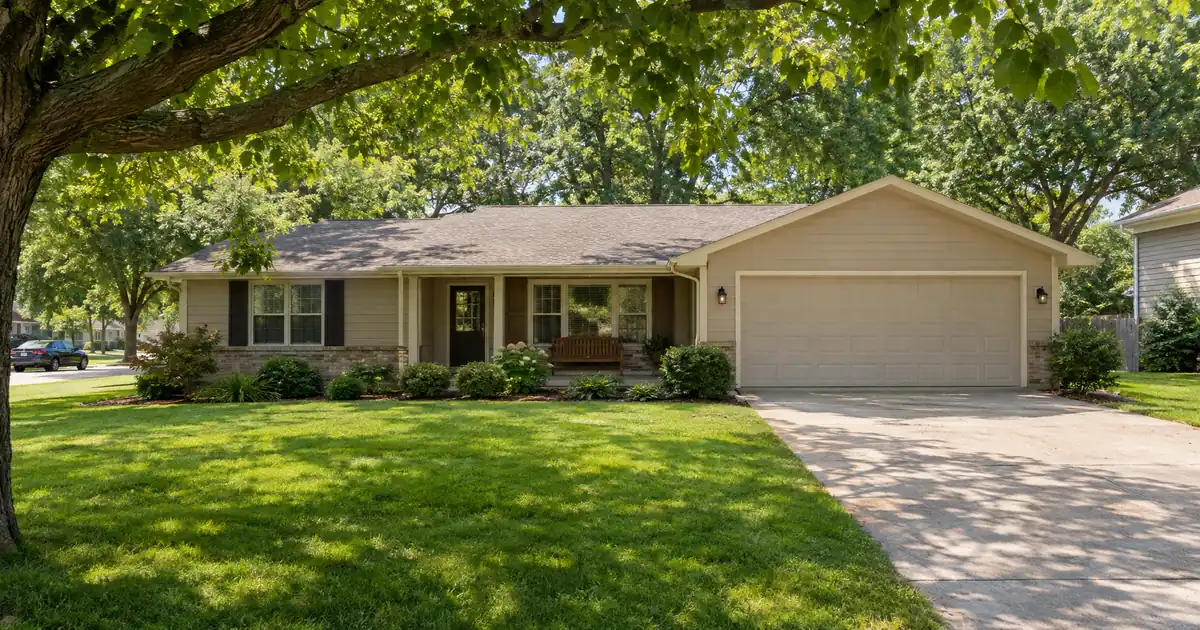
The Quick Read: Usually not as first structured: a portfolio DSCR loan with an uninsurable house typically cannot close until the defect is cured, the house is swapped out, or the house is dropped from the pool, and each path is subject to lender guidelines and a fresh look at the remaining properties. The right path depends on what kind of defect it is and whether the rest of the pool still qualifies without that house.
- A defect that is just paperwork, like a missing lien release, usually gets cured and the closing goes on.
- A defect that needs a court, like a broken chain of ownership, usually pushes you toward dropping the house.
- Dropping a house changes the pool’s rent, loan size, and property count, so the whole file gets re-tested.
- Title work on every property should start before you submit, not after the lender asks.
Key Terms Defined
You will see these words on every portfolio file. Here is what they mean in plain English.
Portfolio (blanket) DSCR loan: One loan, often one note, that finances several rentals at once and qualifies them together. DSCR stands for debt service coverage ratio, which compares rent to the full monthly housing payment (principal, interest, taxes, insurance, and any association dues).
Cross-collateralization: Every property in the pool secures the whole balance, not just its own share.
Title commitment: The title company’s written promise to insure a property, listing what must happen first and what it will not cover.
Schedule B-I (requirements): Items that must be satisfied before the policy issues, such as paying off a prior mortgage.
Schedule B-II (exceptions): Items the policy will not insure, such as easements.
Cloud on title: Any open claim that makes ownership uncertain, like an unreleased lien or a gap in the deed history.
Quiet title action: A court case asking a judge to declare who owns the property and wipe out a competing claim.
Allocated amount: The slice of the total loan balance assigned to one property.
Partial release and substitution: A partial release frees one property from the lien. A substitution swaps a different property into the pool. Both follow the loan documents and the lender’s terms.
Why Does One House Hold Up the Whole Pool?
Because the loan is secured by every house together, the lender needs a clean, insurable lien on each one. If one parcel cannot be insured, the lender cannot close on the pool as written. The other houses can be perfect and it still stalls.
Each house is its own parcel with its own deed, so each gets its own title search and commitment. Those searches run side by side. The slowest property sets the pace for everyone.
Most of what shows up on a commitment is routine. According to Apex Survey, a commitment lists requirements the title company needs satisfied, such as paying off existing mortgages, delinquent taxes, judgment liens, and association fines. It also lists exceptions, which are items the policy will not insure. V7 Labs draws the line between a routine requirement, like paying off a seller’s existing mortgage, and a non-routine one, like a court order to resolve a boundary dispute.
That distinction matters. Seeing an item on the commitment does not mean you have a problem. A problem exists when a requirement cannot be met and the underwriter will not insure around it.
Across the wholesale network Lendmire places files with, the pattern is consistent. Pooled loans are tested on the pool, but the lien position is checked house by house. Strong rents in the pool do nothing to fix a weak deed.
Which Title Problems Can You Fix, and Which Mean Drop It?
Most defects fall into three buckets: quick paperwork, slower legal work, and problems that may never be curable. A Mt. Vernon Law breakdown maps common defects to their typical cures, and the table below follows that logic with speeds shown as relative, not as dates.
| Defect | Typical cure | Relative speed | Usual outcome |
|---|---|---|---|
| Paid-off mortgage never released | Obtain and record a release | Fast | Fix |
| Judgment or tax lien | Pay it, record the release | Fast to moderate | Fix, often with payoff funds |
| Entity or vesting mismatch | Corrective deed, authority documents | Moderate | Fix |
| Name or legal description error | Corrective deed or affidavit | Fast to moderate | Fix |
| Break in the chain of title | Corrective deed, affidavit, or quiet title | Slow | Often drop |
| Boundary or easement conflict | New survey, agreement, or litigation | Slow | Often drop |
| Heir or probate issue | Court or estate process | Slow | Usually drop |
The slow rows share one trait: you depend on someone else, usually a court. A quiet title action is not a quick fix. A forum attorney in one BiggerPockets thread points out that quiet title needs legal grounds and is not a cure-all, and that some defects cannot be cured at all.
Tax-deed purchases deserve a flag. A moderator in another BiggerPockets discussion notes that a tax-deed house typically needs a quiet title action before a title insurer will issue a policy. If a house in your package came that way, ask early.
One more detail: a title company can sometimes insure over a known risk using a special endorsement. Whether the underwriter and the lender accept that is decided case by case. Do not plan around it.
Your Three Options: Cure, Swap, or Drop
You have three moves, and each one has a cost.
Option 1: Cure and wait. This fits paperwork defects. The closing pauses while the release, payoff, or corrective deed is recorded. The title company then refreshes the commitment. The upside is that the pool stays intact. The downside is that you carry the delay, and if you are buying, your contract dates may not bend with it.
Option 2: Swap the house. You propose a different rental to replace the bad one. The lender treats the replacement as a new property: new title work, a new appraisal, and proof of rent through a lease or an appraiser-supported market rent. Substitutions follow the loan documents and the lender’s terms, so a swap on a file that has not closed depends entirely on what the lender will allow. The upside is that the pool keeps its size. The downside is that you start another property’s paperwork from zero.
Option 3: Drop the house. You close the rest without it. This is the common practical answer when the cure needs litigation. In one BiggerPockets thread, an investor buying a package of single-family homes learned shortly before closing that one house could not be insured. The seller had acquired it by quitclaim deed, and the prior owner’s liens and judgments came with it. The experienced reply was to drop that house and close the others, and to treat the due diligence spent on it as a cost of doing business.
Dropping is simple in concept. The catch is that the pool must still qualify without the house.
What Happens to the Numbers If You Drop It?
Everything gets re-tested: pooled coverage, loan size, leverage, and property count. A pool that cleared only because of the dropped house may not clear anymore.
Run it this way, using modeled coverage ratios only. Picture an investor with five rentals in one pool. The pooled coverage ratio clears about 1.25x. The house with the title problem happens to be the strongest earner. Remove it, and the remaining four land closer to 1.05x. That may still work. It also may not, depending on the program and the lender.
Now add the other pressure points:
- Property count. The 30-year portfolio DSCR loan on the network covers two to twenty properties under one note, so dropping from five to four still fits. The separate rental portfolio term loan is built for five or more properties or units, so the same drop could take the file out of that structure.
- Loan size. The 30-year portfolio loan generally runs from $300,000 to $5,000,000, with larger balances on review. The rental portfolio term loan runs from $500,000 to $50,000,000, also with larger balances on review. A smaller pool can slip under a floor.
- Leverage. The 30-year portfolio loan goes up to 80% of value on a purchase or rate-and-term refinance. The rental portfolio term loan goes up to 75% of value. Those caps are ceilings and they do not move because you dropped a house.
- Pooled coverage. Coverage is measured on the whole pool’s rent against its whole debt service, with a 1.00 floor on the 30-year portfolio program. A rental that falls below 1.00 on its own can sit in the pool, but the pooled coverage, the leverage, and the terms are what underwriting tests, subject to underwriting.
This is also where the strong-offsets-weak idea breaks down. Blended income can let a thin-rent house ride alongside strong ones. It cannot let an uninsurable house ride. Rent is averaged. A lien is not.
Purchase Versus Refinance: Who Owns the Problem?
On a purchase, the seller owns the problem until closing. On a refinance, you own it, because you are already the owner of record. That changes your leverage, your deadlines, and your options.
| Factor | Purchase | Refinance |
|---|---|---|
| Who cures | Seller, often at closing | You, the borrower |
| Typical fix funding | Seller proceeds | Your own funds |
| Your leverage | Price cut or walk away | Few; you keep the house |
| Contract deadline | Yes, with earnest money at risk | None, but the refinance waits |
| Insurance help | Seller’s old policy may not transfer | Your owner’s policy may respond |
On a purchase, you have several options: ask for a price reduction, require the seller to cure, walk away, or budget for the repair. In a package deal, the contract should say up front how the price is split house by house and what happens if one house falls out. That is practical advice from experience on pooled files, not a rule.
On a refinance, an existing owner’s policy may help if the defect predates the policy and is not excluded. A Lulich article notes that owner’s policies typically do not cover matters created after you bought, or defects you knew about before closing. So a known problem is usually yours to fix.
If you are pulling equity, the standard cash-out ceiling of 75% of the pooled value applies to a portfolio cash-out, and the structure’s own ceiling applies too. A cash-out refinance in the first six months of ownership is also capped by the seasoning rule. A rate-and-term refinance carries no cost restriction. For the broader question of whether one cash-out across many rentals is worth it, see Lendmire’s piece Is One Portfolio Cash-Out Refinance Worth It for Five or More Rentals?.
Who Does What, and in What Order?
Fixing a title defect is a relay, and every runner is a different party. Here is the usual order.
1. Title company runs the search and issues the commitment for each property.
2. You and your loan team sort requirements from exceptions and flag anything that looks like a real defect.
3. Lien holder or prior owner signs and delivers the release, payoff letter, or corrective document.
4. Closing attorney or title agent records the document with the county recorder.
5. Title company updates the commitment to show the item cleared.
6. Lender re-reviews the property and, if needed, re-tests the pool.
A title practitioner at Starfield & Smith advises lenders to ask that the commitment’s effective date be refreshed just before closing. That narrows the gap period in which a new lien could slip in, and it is worth confirming gap coverage with your title agent.
Entity problems deserve their own watch. If the title commitment asks for authority documents on an LLC, that is a requirement you meet, not a flaw in the deal. A dissolved entity, a house deeded to the wrong entity, or a former co-owner still on title is a different story, and it takes a real fix. Whether the LLC can hold the loan is subject to lender program eligibility, and a house sitting in a separate non-borrowing LLC generally cannot join the pool without changes. Lendmire’s article How to Close a Rental HELOC Once Title Is in a Single-Member LLC walks through that vesting angle.
How to Head This Off Before You Submit
The best fix is to find the problem while you still have time to cure, renegotiate, or walk. Use this checklist.
- Order title on every house at contract. Do not wait for the lender to ask.
- Read Schedule B-I and B-II on each commitment. Sort routine items from real defects.
- Check how each deed reads. The vesting should match the entity that will borrow.
- Look for the slow items first. Probate, heirs, boundary disputes, and chain-of-title gaps decide your timeline.
- Set a decision deadline. Pick the date after which you drop the house instead of waiting.
- Pre-test the pool without each house. Know whether the pool still clears if any single house leaves.
- Confirm every rental has a lease or an appraiser-supported market rent. A clean title does not help a house the lender cannot rent-test.
- Keep property types in bounds. Single-family, 2-4 unit, condo, and townhome fit the 30-year portfolio loan. Manufactured homes, log homes, and barndominiums are not offered, and neither are owner-occupied, mixed-use, or commercial properties.
Credit is part of pool qualification too. On the network, a credit floor of 640 is typical for pooled files, with some portfolio structures asking for 680 or 720. Reserves vary by structure, and on the term loan they are held for taxes, insurance, and capital expenditures. Clearing 1.00 pooled coverage also does not mean positive cash flow, since repairs, vacancy, management, and utilities sit outside the calculation.
What to Ask Your Lender and Check in the Note
Do not guess how your file will handle a failed property. Ask these questions before you sign anything.
- Can the pool close without the problem house? And at what minimum property count and loan size?
- Is a substitution allowed before closing, or only after? What does the lender need to approve a swap?
- Is this a single cross-collateralized note, or separate notes closed together? Some loans labeled portfolio are really a batch of separate loans, which keeps each property on its own lien. In that structure one bad title blocks only that loan.
- How are partial releases handled later? The release price runs above the property’s allocated balance, and the remaining pool must still cover its debt service.
- Does the loan carry cross-default terms? Trouble on one property can reach the others until a lien is formally released.
- Is the loan recourse or non-recourse? Non-recourse structures exist on the term loan, with carve-outs such as fraud and bankruptcy. Recourse loans carry a personal guarantee.
Post-closing matters too. A weak or vacant property can block a later release, because the lender may re-test the remaining pool after each one. That is why a single marginal house is a cost you carry for the life of the loan. For the full picture of how these loans work, Lendmire’s complete DSCR loans guide is the place to start.
Frequently Asked Questions
Will the lender close the other properties without the bad one?
Often yes, if the remaining pool still meets the program’s minimums for property count, loan size, and pooled coverage. That is a lender-guidelines question, and the file gets re-underwritten without the dropped house.
Can I swap in a different property?
Sometimes. A replacement is treated as a new property, with its own title work, appraisal, and rent support. Whether substitution is allowed before closing depends on the lender and the loan documents.
Does one title issue put the whole loan in default?
Not by itself. The problem usually shows up before closing, as a stalled closing. After closing, cross-default terms in the loan documents can let trouble on one property reach the others, so ask how your note is written.
Does title insurance fix a known defect?
No. Owner’s policies typically exclude problems you knew about before closing, and a lender’s policy protects the lender, not you. Insuring over a known risk through an endorsement is possible only case by case.
What if the title problem is on a house I already own?
You own the problem, and the refinance waits until it is cured or the house is left out of the pool. An older owner’s policy may help if the defect predates it and is not excluded.
Where to Go From Here
If you are buying or refinancing several rentals and want to see how the numbers work, Lendmire, a mortgage broker arranging DSCR investor loans through select lenders across 41 markets including Washington, D.C., can help you compare options based on property income, credit profile, leverage, and investor goals. You can reach the team at 828-256-2183. Every file is underwritten individually, and nothing here is a commitment to lend.
A pool is only as strong as its weakest deed, so the best time to meet your title problem is before the lender does.
About Lendmire
Lendmire (NMLS# 2371349) is a DSCR-focused mortgage broker that helps arrange investor financing across 41 markets, including Washington, D.C., through wholesale and investor-lending channels. DSCR eligibility is generally reviewed by the lender around the property’s rental income rather than personal income documentation, subject to lender guidelines — which works for self-employed investors, LLC operators, and portfolios above four financed properties. Scotsman Guide named Lendmire a Top Mortgage Workplace in both 2025 and 2026.
Get Started
Ready to find the right loan for you?
In about 30 seconds you can review financing options available for your investment property. No commitment required.
Informational only. Not a Loan Estimate, approval, or commitment to lend. Program availability and eligibility are subject to lender guidelines, credit approval, property review, and underwriting.
References
1. Apex Survey – What Is a Title Commitment
2. V7 Labs – Title Commitment and ALTA Survey Review
3. Mt. Vernon Law – Clearing Title Problems Before Closing
4. BiggerPockets – Title Issues Causing Nightmare
5. BiggerPockets – Denied Title by Title Company
6. BiggerPockets – Closing on Houses Monday, Losing One to Past Judgment Liens
7. Lulich – What Happens If a Title Issue Is Discovered After Closing
8. Starfield & Smith – General Title Exceptions
This article is part of Lendmire’s DSCR loan program — full qualification details, guidelines, and scenarios live on the program page.
Related reading: Can You Sell One Rental Out of a Portfolio DSCR Loan? · How to Raise Pooled DSCR Coverage Before a Portfolio Loan · How to Handle Vacancies Before a DSCR Portfolio Loan
Brandon Miller
Founder & CEO, Mortgage Loan Originator, Lendmire LLC
- Mortgage Loan Originator · NMLS# 1129696 · Verify on NMLS Consumer Access
- North Carolina Real Estate Broker · License# 343312 · Verify on NCREC
- North Carolina Insurance Producer · License# 19053198 · Property, Casualty, Life, Health · Verify on NAIC SBS
- Lendmire LLC · Firm NMLS# 2371349 · Verify firm licensure
Legal disclosures. Lendmire (NMLS# 2371349) is a state-licensed mortgage brokerage that arranges financing through wholesale lender relationships. Lendmire is not a direct lender, depository institution, or registered financial advisor. The discussion above is general informational content about real estate financing — it is not financial, legal, or tax advice, and readers should consult licensed professionals for guidance on their individual circumstances. Loan inquiries are subject to lender underwriting; this article does not represent a commitment to lend. Loan terms, rates, and qualification standards vary by borrower, property, and state, and are subject to change at any time. Equal Housing Opportunity. NMLS Consumer Access: nmlsconsumeraccess.org.