
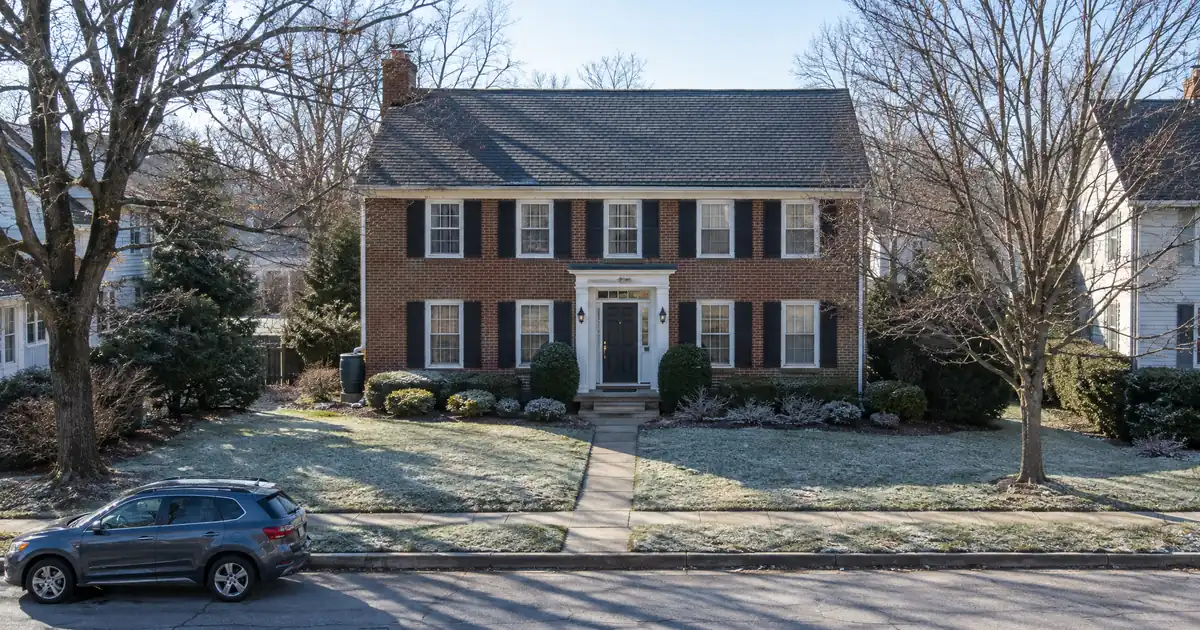
The Quick Read: Usually yes, once the home is finished, legally occupiable, titled in your own name or a revocable trust, and valued by an appraiser or an automated model, because a lender looks at the collateral and the borrower rather than who built the house, and the ceiling depends on occupancy. A home still under construction is a different story. So is an owner-built rental.
- A finished, permitted, occupied owner-built home is treated like any other home once value and title are clear.
- A certificate of occupancy is the practical line between “unlendable build” and “lendable property.”
- On a primary residence or second home, the top tier reaches 90% CLTV only at a 720 or better credit profile. An investment-property line tops out at 70% CLTV.
- Custom builds have few comparable sales, so the valuation method matters more than usual.
- An owner-built rental often fits a DSCR cash-out refinance better than a home equity line.
Why Owner-Built Homes Raise Questions
Lenders do not ban owner-built homes. They worry about three things a builder-built home usually answers by default: is the house done, can it be valued, and is the paper trail clean?
How large a line the equity supports.
An equity line is sized by combined loan-to-value, occupancy, and credit — not by rental coverage. Switch the occupancy or the credit band and the ceiling moves with it.
Investment-property lines require a 700 minimum credit score; second-home lines start at a 640 minimum and primary-residence lines at 600, and the combined-LTV ceiling steps down as the credit band drops on primary-residence and second-home lines and holds on investment-property lines; the line cap steps down on primary-residence lines and holds at every tier on investment-property and second-home lines.
A debt-to-income ratio above 45% requires 680+ credit. Profiles under 640 are limited to single-family homes. At least 75% of the approved line is drawn at closing. Ceilings, floors, and caps update from Lendmire’s centralized guideline source.
Line estimate
Illustrative estimate only — not a quote, Loan Estimate, approval, or commitment to lend. The rate is an editable assumption; equity-line pricing is variable through both the draw and repayment periods and never converts to fixed. Occupancy and credit drive the ceiling together: an investment property tops out at 70% combined LTV (minimum credit 700, line cap $500,000); a second home tops out at 90% combined LTV (minimum credit 640, line cap $500,000), with the ceiling stepping down as the credit band drops (the cap holds at every tier); a primary residence tops out at 90% combined LTV (minimum credit 600), and its $750,000 maximum line is available only at 75% combined LTV or below with a 700-or-better credit profile (720 on the longer-runway program) and a full appraisal. Lines above $500,000 require a full appraisal. Credit, debt-to-income, property type, and full underwriting review all affect the final line.
A home you built yourself may have no builder warranty and a one-of-one design. It may also have permits that were closed late or not at all. None of that is disqualifying. All of it is something a reviewer will look at.
Think of it as a file with more moving parts. The loan product is the same. The evidence you hand over is thicker.
Where You Are in the Build Decides the Answer
The stage of the home matters more than the label “owner-built.” Here is how the stages generally sort.
| Stage | Line outlook | Next step |
|---|---|---|
| Land only | Rarely workable | Use other financing for the build |
| Under construction | Usually not offered | Finish the build, close out permits |
| Finished, no certificate of occupancy | Not ready | Clear final inspections |
| Finished, occupied, permits closed | Generally workable | Gather title, insurance, valuation |
A home that is still a construction site is hard to value, because comparable sales assume finished houses. A practitioner guide on lines during construction says most lenders will not approve a standard line on an active build. It describes the certificate of occupancy as the point where a lender can begin to treat the property as finished. Some lenders in the broader market also ask for a stretch of living in the home after permanent financing. That period varies by lender, so ask early.
Across the wholesale network Lendmire works through, the same logic holds. The line sits against a finished property that can be valued and insured. It does not sit against a plan.
What Lenders Actually Review on a Finished Owner-Built Home
The file has five pieces. Each one is a place where owner-built files stall if something is missing.
Completion and legal occupancy. The local building department issues the certificate of occupancy. Final permit sign-offs should be closed. Open permits show up in title or valuation and stall files.
Title and vesting. The line is secured by a lien on the home. The network’s home equity line requires title held by the individual borrower or a revocable living trust. This surprises builders. If you deeded the house to an LLC during construction for liability reasons, the line cannot go on it as titled. A vesting change is needed first, or the better route is a DSCR cash-out refinance.
Existing liens. If a construction loan or other mortgage is still on the property, that debt counts toward combined leverage. Pay off or convert the construction loan before the line goes in. The new line can sit in first or second lien position, but the whole stack has to fit under the CLTV ceiling.
Insurance. The home needs hazard coverage in place. A builder’s-risk policy that ended at completion does not count. Switch to a standard homeowner or landlord policy before the file is submitted.
Valuation. This is the owner-built pressure point, so it gets its own section.
How the Appraisal Works on a One-of-a-Kind Home
For lines of $500,000 or less, the network ordinarily uses an automated valuation with no traditional appraisal. A higher CLTV may call for a second valuation. A full appraisal is required on every line above $500,000, and a borrower can request one on any line.
On an owner-built home, request the full appraisal when the design is unusual. Bankrate reports that more than 75% of home equity originations across the market now use automated or desktop valuations. It also notes that an automated model assumes average condition and comparable properties, so it can miss real features of a custom house. Few comparable sales makes that worse. The model may read the house lower than it is.
An appraiser values to the market, not to your cost. If you built well under market value, the equity is real. It only counts to the extent the value is supported. Hand the appraiser the plans, the cost ledger, a list of upgrades, and the certificate of occupancy. A packet like that gives a reviewer something to adjust from if the first number comes in light. If it still comes in low, the line shrinks. That is the downside, and it is why the full appraisal is worth considering on custom builds.
What the Network’s Home Equity Line Actually Allows
The ceiling depends on occupancy. This is where owner-built investors most often get tripped up, so read the right row.
| Occupancy | Top CLTV | Credit needed | Max line |
|---|---|---|---|
| Primary residence | 90% | 720+ | $500,000 at that tier |
| Second home | 90% | 720+ | $500,000 |
| Investment property | 70% | 700+ | $500,000 |
On a primary residence, a 720+ profile also reaches 75% CLTV on lines up to $750,000. Lower scores step down. A 700 profile reaches 85% up to $500,000, 640 reaches 80%, 620 reaches 70%, and 600 reaches 60% on smaller lines. The minimum credit score is 600 on a primary residence, 640 on a second home, and 700 on an investment property.
A line above $500,000 is primary-residence only. It requires a 700 credit profile (720 on the longer-runway structure), caps at 75% CLTV, and needs a full appraisal. Lines run from $25,000 up to the program maximum. Debt-to-income tops out at 50%. It is 45% for scores from 600 to 679, and the line is qualified on the interest-only payment at the maximum draw.
Two draw structures exist on primary and second homes. One has a 3-year interest-only draw and a 17-year repayment. The other has a 5-year draw and a 25-year repayment. Investment lines use the 5-year draw and 25-year repayment only. At least 75% of the line is drawn at closing, and the pricing floats rather than converting to fixed. All of this is subject to lender guidelines, and each file is reviewed on its own.
The Consumer Financial Protection Bureau describes a home equity line as an open-end line you borrow against repeatedly. It also notes that a lender may freeze or limit further draws if the home’s value falls or your finances change. If you plan to hold the line as reserves, build that into the plan.
Property Types That Come Up on Owner-Builds
Owner-builders often choose unusual structures and rural sites, and the line has hard edges there.
- Single-family, 2-4 unit, PUD, townhome, and condominium properties are eligible.
- Modular factory-built homes are eligible on one of the two wholesale structures only.
- Manufactured homes, log homes, commercial, mixed-use, and agriculturally zoned properties are not eligible on either structure.
- Co-ops and condotels are not eligible either.
A log-built home or a house on agriculturally zoned land will not work for this product, however well finished it is. A barndominium is also not offered across the network’s DSCR programs. Check zoning and construction type before you spend time on the file.
Exposure limits apply as well. A borrower is limited to three lines. A borrower owning more than 15 financed properties is not eligible. The lines are also offered only in Lendmire’s 16 full-service states (AL, CA, CO, FL, GA, IN, MI, MT, NM, NC, OH, PA, TN, TX, VA, WA), which is narrower than its DSCR footprint of 40 states plus Washington, D.C.
Step-by-Step: From Finished Build to Open Line
1. Close out the build. Get the certificate of occupancy and final permit sign-offs.
2. Settle the construction loan. Pay it off or convert it so lien position is clear. If an old mortgage stays, count it toward CLTV.
3. Confirm vesting. Title should sit with you or a revocable living trust. Fix an LLC deed before applying.
4. Switch insurance. Replace the builder’s-risk policy with a standard homeowner or landlord policy.
5. Pick the valuation. For a custom home, consider asking for a full appraisal rather than an automated one.
6. Assemble the packet. Include the certificate of occupancy, plans, cost ledger, title evidence, and proof of insurance.
7. Apply and submit. The lender reviews credit, debt-to-income, and collateral, and records the lien at closing.
A final note on seasoning. Lenders in the broader market often want some history in the finished home before a line is considered. The practitioner guide above describes 6-12 months of living in the completed home with permanent financing, and it says that is a market expectation, not a rule. Seasoning policies differ by lender, so ask which one applies before you pay for a valuation.
Alternatives If the Line Isn’t Available Yet
Sometimes the timing or occupancy does not fit. These are the usual options.
| Option | Fits when | Trade-off |
|---|---|---|
| Wait and season | Home is finished but young | Delays access to equity |
| Line on another owned home | You have equity elsewhere | Puts that home at risk |
| Cash-out refinance | You want to replace the first lien | New first-lien terms |
| DSCR cash-out refinance | The build is a rental | Reviewed on rent, not personal income |
A line is a second lien in many cases, which means it sits on top of the first mortgage. A refinance replaces the first lien. That distinction matters if your existing first loan carries terms you want to keep.
Using a line on a different property to fund a new build is a common move. The line is secured by the home with equity, not by the house you are building. That is a separate question from whether a finished owner-built house can carry its own line, and Lendmire’s piece Can You Open a HELOC on a Newly Built Home? covers the newly built side of it.
The Investor Decision: Line or DSCR Loan?
If the owner-built house is a rental, a home equity line is a narrow fit. The investment-property ceiling is 70% CLTV, the credit floor is 700, and the line caps at $500,000. Title must be held individually or in a revocable trust. A property already in an LLC cannot take the line at all.
A DSCR cash-out refinance is the more common route. DSCR loans are designed for non-owner-occupied investment properties. Because they are business-purpose investor loans, they are reviewed differently from a standard owner-occupied mortgage. The loan is reviewed primarily on property-level rental income covering the payment, subject to lender guidelines. The complete DSCR loans guide covers the full structure.
Across the wholesale network, a few numbers anchor these files:
- Cash-out refinances top out around 75% LTV across most of the network.
- About 6 months of ownership seasoning is the common expectation. An owner-built home generally follows it, with the settlement statement or recorded deed showing ownership.
- Coverage of 1.00 is where select programs start. A separate select-lender path takes coverage below 1.00, with leverage and terms adjusted.
- Most programs want a credit score around 660. A 620 floor exists in parts of the network, and 700+ unlocks the strongest tiers.
- Reserves commonly run around 6 months of PITIA, varying by lender, leverage, and loan size.
Clearing 1.00 is not the same as positive cash flow. DSCR compares rent to the monthly housing payment only. Repairs, vacancy, management, and capital expenses sit outside the calculation.
Run both products against the same house. A short-term equity need on a primary residence may favor the line. A rental where you want to pull equity out and keep the property in an entity may favor the DSCR refinance.
Worked Scenario: Two Owner-Builds, Two Outcomes
Picture a finished owner-built primary residence with a 720+ credit profile, a closed certificate of occupancy, and title in a revocable trust. The line sits within the network’s primary-residence table. It can reach 90% CLTV on a line up to $500,000, or 75% CLTV on a line up to $750,000 with a full appraisal. The tier is a ceiling, not an offer, and the lender’s valuation sets the actual available amount.
Now take the same quality of build, held as a rental in an LLC. The line is not available as titled. The investor either moves title, subject to program terms, and accepts the 70% CLTV investment ceiling, or runs a DSCR cash-out refinance at around 75% LTV with rent covering the payment at a ratio such as 1.2x. Same house. Different financing. Each figure is subject to lender guidelines and a complete review of property type, leverage, and credit.
Key Terms Defined
Certificate of occupancy: The local approval that says a building is safe and legal to live in.
CLTV: Combined loan-to-value, which adds every lien on the home together and divides by its value.
Automated valuation: A computer estimate of a home’s value, built from comparable sales rather than a visit.
Draw period: The stretch when you can borrow from the line, usually with interest-only payments. Many lines work this way, so plan for the repayment period that follows.
Lien position: Whether your loan is paid first or second if the home is sold or foreclosed on.
Frequently Asked Questions
Can I get a home equity line while I’m still building?
Usually not. Most lenders will not approve a line against an active construction site because the home cannot be valued as finished. A few specialty lenders may lend against owned land alone, on land value rather than the future house. A finished build with a certificate of occupancy is the realistic starting point.
Does doing my own work hurt my approval?
Not by itself. The lender reviews credit, debt-to-income, title, and collateral value. What helps is documentation: closed permits, a certificate of occupancy, and a record of licensed trades. Gaps in that paper trail cause trouble, not the fact that you acted as your own contractor.
What if some of the work was unpermitted?
Expect it to surface in title or valuation, and plan to cure it. Open permits and unfinished sign-offs generally have to be closed out before a lender will treat the home as finished. Talk to the local building department first, then bring the closed paperwork to the file.
Can I use a line on my old home to fund the build?
Yes, that is a separate transaction. The line is secured by the home with equity, not the house being built. The new build is not collateral, so none of the owner-built documentation applies to that line. Your combined leverage on the old home still has to fit its CLTV ceiling.
My owner-built home is a rental. Is a line or a DSCR loan better?
It depends on the goal. The investment-property line caps at 70% CLTV and $500,000, requires a 700 credit profile, and cannot go on a property held in an LLC. A DSCR cash-out refinance generally tops out around 75% LTV, with about 6 months of seasoning, and qualifies primarily on rent. Most owner-built rentals end up on the DSCR side.
If you are considering a home equity line and want to see how the numbers work, Lendmire can help you compare HELOC options based on the property, the equity available, credit profile, combined leverage, and your goals. Reach the team at 828-256-2183 or through the quote page. Lendmire is a broker and arranges financing through select wholesale lenders; every figure is subject to lender guidelines, and none of this is a commitment to lend.
For current guidelines and terms, see Lendmire’s HELOC programs page.
About Lendmire
As a mortgage broker (NMLS# 2371349), Lendmire helps homeowners and real estate investors in its 16 full-service states open home equity lines of credit arranged through wholesale lenders. Lendmire is never the lender; line amounts, ceilings and terms are set by the lender under its guidelines. Scotsman Guide named Lendmire a Top Mortgage Workplace in both 2025 and 2026.
Get Started
Ready to find the right loan for you?
In about 30 seconds you can review financing options available for your home or investment property. No commitment required.
Informational only. Not a Loan Estimate, approval, or commitment to lend. Program availability and eligibility are subject to lender guidelines, credit approval, property review, and underwriting.
References
1. Honest Casa – HELOC during construction
2. Bankrate – Do you need an appraisal for a HELOC or home equity loan
3. CFPB – What is a home equity line of credit (HELOC)?
This article is part of Lendmire’s home equity line of credit program — full qualification details, guidelines, and scenarios live on the program page.
Related reading: How to Open a HELOC on Assets Alone as a Retiree · How to Get a First-Position HELOC on a Texas Rental · How to Source a DSCR Down Payment as an S-Corp Owner
Brandon Miller
Founder & CEO, Mortgage Loan Originator, Lendmire LLC
- Mortgage Loan Originator · NMLS# 1129696 · Verify on NMLS Consumer Access
- North Carolina Real Estate Broker · License# 343312 · Verify on NCREC
- North Carolina Insurance Producer · License# 19053198 · Property, Casualty, Life, Health · Verify on NAIC SBS
- Lendmire LLC · Firm NMLS# 2371349 · Verify firm licensure
Required disclosures. Lendmire (NMLS# 2371349) operates as a licensed mortgage broker, not a direct lender or depository. The discussion in this article is general in nature and should not be relied upon as financial, legal, or tax advice — every investment scenario is unique and should be reviewed by a qualified professional. Any loan inquiry is subject to lender underwriting, and this article is not a commitment to lend or a guarantee of approval. Mortgage rates, loan terms, and program guidelines vary by borrower, property, and state, and may change without notice. Equal Housing Opportunity. Verify licensure at NMLS Consumer Access.