
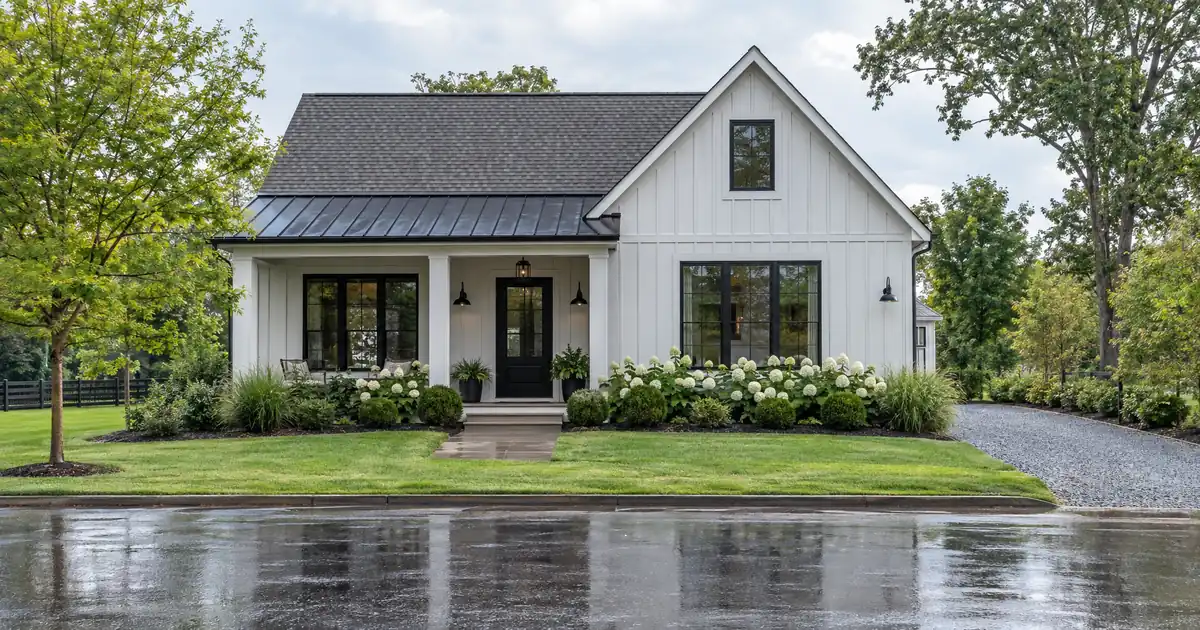
The Quick Read: Yes, in most cases, because DSCR underwriting reviews the property’s rent against its payment and never requires the borrower to walk the property or live in the same state. A local appraiser, a local title agent, and usually a local property manager do the on-site work. The real decision is how much on-the-ground oversight you want to pay for, because that choice belongs to you and not to the lender.
- Qualification runs primarily on property-level rental income covering the payment, subject to lender guidelines. Your home state is not part of the math.
- A local appraiser inspects the property and reports value and market rent.
- Closing happens in the property’s state, often through mobile notary or remote signing, depending on that state and the title company.
- Skipping a personal visit is a risk call, so budget for an independent inspection and a vetted manager.
- A few states and a few lenders add friction, and those edge cases are covered below.
Why Your Home State Doesn’t Decide Approval
Your home state is not an underwriting factor on a DSCR file. The lender’s question is whether the subject property’s rent covers its monthly obligation, which is principal, interest, taxes, insurance, and any association dues (PITIA). Where the borrower sleeps at night does not change that ratio.
DSCR Calculator
Run the numbers in your market
Rate source: Freddie Mac 30-yr average via FRED® — Federal Reserve Bank of St. Louis · effective Oct 15, 2026
Prefilled with starting assumptions — enter your own rent or nightly figures, taxes, insurance, and HOA for a more accurate picture.
Program parameters update from Lendmire’s centralized guideline source. Taxes and insurance are editable estimates.
As of Oct 15, 2026 · General Freddie Mac market benchmark, not a Lendmire loan offer. Rent, nightly rate, occupancy, taxes, and insurance are editable estimates. Short-term rental figures are estimates only and vary significantly by season, property type, management approach, and local short-term-rental rules — confirm local regulations before relying on them. Qualifying income for short-term rentals varies by program — some use appraisal market rent, others use documented STR history or projections — and is confirmed in underwriting. Not a Loan Estimate, approval, or commitment to lend. Program availability and eligibility are subject to lender guidelines, credit approval, property review, and underwriting.
DSCR loans are designed for non-owner-occupied investment properties. Because they are business-purpose investor loans, they are reviewed differently from a standard owner-occupied mortgage. That is why no rule asks you to see the house, and why lender guidelines, not a government visit requirement, set the file’s conditions.
What does limit you is the lender’s footprint. A lender can only place a loan in states where it operates. Lendmire is a mortgage broker that arranges DSCR investor loans through select lenders in its wholesale network across 41 markets, including Washington, D.C., so the practical question is whether a lender in the network serves the property’s state, not yours.
Across a wholesale network, the pattern is consistent. Out-of-state files look like local files on paper. The borrower’s address might be one state over or across the country, and the underwriter spends their time on the rent schedule, the appraised value, credit, reserves, and entity documents.
Who Visits the Property When You Don’t?
Three local parties stand in for you: the appraiser, the title or settlement agent, and a property manager or local agent. The appraiser’s visit is required by the lender. The manager’s eyes are the part you choose to arrange.
| Task | Who performs it | What you provide |
|---|---|---|
| Appraisal and rent schedule | Local appraiser | Access contact, lease if leased |
| Inspection | Independent inspector | Authorization and review of report |
| Title and closing | Local title or settlement agent | Signed documents, funds |
| Day-to-day oversight | Property manager | Management agreement |
| Lease and rent records | Manager or seller | Authorization to share |
An agent writing on BiggerPockets says about 90% of his out-of-state clients never walk a house before buying, and he stresses reliable boots on the ground and virtual tours. That figure is one agent’s anecdote and not market data. It does show how common remote buying is among investors who build a local team first.
One caution deserves its own sentence. Not needing to visit does not mean the property goes uninspected. The appraisal is the lender’s inspection, and a separate inspector protects you.
What Does the Appraisal Look At Without You There?
The appraisal gives the lender two numbers: the property’s value and its market rent. For a single-family rental, the rent conclusion comes from an appraisal form known as the 1007 rent schedule. For two to four units, it comes from the 1025 form, which also reports operating income. Those are Fannie Mae form names that appraisers use as a standard layout, and DSCR loans are not agency products.
The rent number carries the file. Underwriters typically use the lower of the appraised market rent or the signed lease. A lease written above market does not raise the coverage figure, so a tenant paying a premium gains the borrower nothing at qualification.
Coverage works like this: divide the qualifying monthly rent by the PITIA. Most standard programs placed through the network start around 1.00, meaning rent covers the payment, and stronger ratios open better pricing and leverage. A separate select-lender path goes below 1.00, with leverage and terms adjusted. A ratio above 1.00 is also not the same as positive cash flow. Repairs, vacancy, management fees, utilities, and capital expenses all sit outside the calculation.
If the property is tenant-occupied, the appraiser may need the tenant’s cooperation or a local contact for interior access. Some lenders offer exterior-only appraisal products that reduce that logistics burden, so ask which appraisal type applies before you sign a contract.
What Extra Requirements Do Lenders Add for Distant Properties?
Some lenders ask for proof of professional management or a remote-oversight plan on out-of-state files. This is lender-specific and not universal, and it tends to show up when the borrower is far away and the property is tenant-occupied.
The reason is simple. A lender cannot see you, so it looks for evidence that someone competent can see the property. A management agreement, a manager’s rent roll, or a ledger on a refinance answers that concern. You can usually satisfy it by naming the manager early and getting their paperwork ready alongside yours.
Plan on the same core file a local owner would provide:
| Document | Skipped by DSCR? | Still required? |
|---|---|---|
| Traditional personal-income documentation and pay stubs | Generally, program-dependent | No |
| Identity and credit | No | Yes |
| Reserves proof | No | Yes |
| Entity papers if LLC-held | No | Yes |
| Insurance, lease, title | No | Yes |
DSCR reduces personal income paperwork, but it does not mean no paperwork. Loans to LLC-titled borrowers are available subject to lender program eligibility, and a personal guarantee from the principal is still common.
How Do You Close Without Traveling?
Closing happens in the property’s state through its title company, and you can often sign without traveling. The route depends on the property’s state, the notary’s state, the county recorder, and the title insurer.
| Closing route | When it fits | Typical limit |
|---|---|---|
| Remote online notarization (RON) | State allows it for this document | Recorder and title insurer must accept |
| Mobile notary | Notary meets you where you live | Notary licensing and ID rules |
| Hybrid signing | Part digital, part ink | Coordination of original documents |
| Mail-away ink signing | Remote notary is not an option | Courier logistics |
ALTA reports that 48 states and Washington, D.C. have passed a remote online notarization law or issued an executive order on remote notarization, and it cautions that emergency orders may not carry the consumer protections of a model law. A Holland & Knight review explains that remote notarization generally depends on a state’s electronic-signature law allowing that document to be signed electronically, and that most state laws follow either the MBA/ALTA model act or the uniform RULONA statute. That review is a few years old, so treat it as background on how the laws are built, not a current state-by-state list.
Practical advice: ask the title company on day one which signing routes it will accept for your specific loan documents. Legal in the state does not always mean accepted by the lender, the recorder, and the underwriter all at once.
Sight Unseen Is a Risk Decision, Not a Financing Rule
Financing does not require a personal visit, but your risk tolerance might. Experienced investors split on this, and both camps have a point.
A BiggerPockets Rookie podcast recap advises using your own agent, inspector, and contractor on a sight-unseen deal, and not waiving the inspection clause. That advice matches how well-run remote files tend to look.
Waiving inspection or appraisal is a separate, riskier choice. Some investors do it on a purchase. It saves a step and can cost far more if the roof, foundation, or tenant history tells a different story than the listing photos.
The pattern in strong remote files is consistent. The investor hires a licensed inspector who works for them alone, asks for a video walkthrough, reads the manager’s lease and rent history, and sets a repair budget before the offer closes. Investors who have never been to the market often add a first visit after the purchase, once they know the file is clean.
If you are new to investing, a first deal in a market you’ve never seen carries more risk than a repeat deal in a market you know. For a repeat buyer with an established manager, skipping the trip is often a reasonable efficiency.
A Hypothetical Remote Purchase, Step by Step
Consider a hypothetical investor living in one state who is buying a single-family rental in another through an LLC. These inputs are modeled assumptions, not market data. The property is leased, and the investor expects rent covering the full monthly obligation at roughly 1.2x.
1. The investor picks a local agent and a property manager, and asks the manager for the lease and rent history. 2. An offer is accepted, and the investor orders an independent inspection. The inspector’s report goes to the investor. 3. The investor and the broker choose a program. On an investment-property purchase, most files across the network land at 75%-80% LTV, which means 20%-25% down. A select high-leverage program reaches 85% LTV with roughly a 700+ credit score. 4. The lender orders the appraisal through its channel. A local appraiser inspects the property and reports value and market rent. 5. Underwriting compares the lower of market rent or the lease against the full payment. At roughly 1.2x, the file clears the 1.00 baseline many select programs use, subject to lender guidelines. 6. The title company confirms which signing route it will accept, and the investor signs remotely or with a mobile notary. 7. Funds move through the title company, and the manager takes over operations.
The investor never traveled, but five different people looked at the property. That is the point: the oversight is delegated, not skipped.
Credit and reserves matter as much as coverage. A 620 floor exists in parts of the network, most programs want around 660, and 700+ unlocks the strongest leverage tiers. Reserves commonly run around 6 months of PITIA, though a conservative rate-term refinance at modest leverage under $1,500,000 can see reserves waived. Loans above that size typically step up to about 9 months. A larger down payment can lift the coverage ratio, but it never erases leverage caps, credit floors, reserve rules, or property eligibility. The strongest files clear both tests: enough equity and enough rental coverage.
Where It Gets Harder
Remote buying gets more complicated in a handful of situations, and the honest answer in each is that it depends on the lender, the state, and the property.
Attorney-closing states. A notary-technology vendor’s overview says Connecticut bars remote online notarization for local real estate closings, including by out-of-state notaries, and that Georgia and South Carolina are attorney-closing states where attorney oversight effectively limits it. Treat that as directional, and confirm with the title company. In those states, expect a hybrid or in-person route or a mobile notary.
Same-state notary rules. Some states that allow remote notarization still require the notary and signer to be in the same state at the moment of signing. Some lenders also expect in-person notarization even where the state allows the remote kind.
Short-term rentals. Short-term rental income does not fit the monthly format of the rent schedule, so lenders decide separately how, or whether, to count it. Programs for STR collateral typically cap purchase leverage at 75% LTV, ask for a 640+ credit score, and look for about 12 months of hosting history. Short-term rental rules can vary by city, county, HOA, and property type, so investors should confirm local rules before relying on projected rental income.
Ineligible properties. Manufactured homes (single- and double-wide), log homes, and barndominiums are not offered through the network’s DSCR programs, wherever they sit.
Appraisal format changes. The appraisal industry is moving away from the standalone 1007 and 1025 for agency-delivered loans, and that could affect the appraiser panels non-QM lenders also use. Verify the current status with your broker before relying on the form names above.
Refinances and HELOCs. A cash-out refinance on an investment property tops out around 75% LTV across most of the network, and about 6 months of seasoning is the common expectation. An investment HELOC is a different product that often uses automated valuation with no appraiser visit. Lendmire’s piece How to Close an Investment Property HELOC on a Rental From Out of State covers that route.
One more point on pricing and terms. The spine of the network is the 30-year fixed, and extended terms and interest-only periods are available through select lenders, so structure is something to decide with your broker, not assume.
DSCR vs. conventional financing
There are two common ways to finance an investment property, and they qualify you differently — here’s how investors weigh them.
Why investors choose it
- Qualifies on the property’s rental income — no personal tax returns, W-2s, or pay stubs needed to document income.
- No personal debt-to-income ceiling to clear, so existing mortgages and obligations don’t cap your borrowing the same way.
- Can be closed in an LLC, keeping the property inside a business entity.
- Built for scaling — not held to the limit on number of financed properties that conventional financing applies.
- Underwriting centers on the deal: generally qualifies when the rent covers the payment, a 1.00x coverage ratio being a common baseline (confirmed in underwriting).
- Designed specifically for investment property, including long-term and, where the program allows, short-term rentals.
Where it’s strong
- Often the lowest ongoing financing cost for a buyer who fully qualifies on personal income — a fit for a first property or a cost-first purchase.
Trade-offs for investors
- Requires full personal income documentation and must fit within a debt-to-income limit — salary, existing debts, and other mortgages all count.
- Typically held in your personal name rather than a business entity.
- Caps how many financed properties you can carry, which can become a ceiling as a portfolio grows.
- Evaluates you as a borrower as much as the property, which usually means more paperwork.
How investors usually choose: a first or single property often optimizes for the lowest financing cost; portfolio builders often optimize for leverage, vesting in an LLC, and scaling past conventional caps. The right answer depends on your goals, the property, and current guidelines — both paths run through select lenders in Lendmire’s wholesale network, with eligibility and terms confirmed in underwriting.
Key Terms Defined
DSCR: the debt service coverage ratio, which compares a property’s qualifying monthly rent to its monthly PITIA.
PITIA: principal, interest, taxes, insurance, and association dues, the full monthly obligation the rent must cover.
Form 1007 and Form 1025: appraisal forms that report market rent on single-family homes and on two- to four-unit properties.
Remote online notarization (RON): a notary act performed by audio-video connection, where the state and title insurer allow it.
Attorney-closing state: a state where real estate closings customarily run through an attorney, which can limit remote signing.
Property manager: the local professional who handles leasing, rent collection, and maintenance, and who can supply the lease and rent records a lender asks for.
Frequently Asked Questions
Do I have to visit before closing?
No, not as a financing requirement. A local appraiser inspects the property for the lender, and a title agent handles closing in the property’s state. What you owe yourself is independent due diligence, such as a hired inspector and a video walkthrough, because the lender’s appraisal protects the lender and not you.
Does my state of residence matter?
It does not change underwriting. The lender reviews the property’s rent, value, and payment, plus your credit, reserves, and entity documents. What can matter is whether a lender in the network serves the property’s state.
Can I sign closing documents from home?
Often, yes, through remote online notarization, a mobile notary, hybrid signing, or mailed ink signatures. Attorney-closing states may require a different approach, so ask the title company early.
Do I need a property manager?
Lenders do not universally require one, but an out-of-state owner without a manager is hard to defend. A manager supplies the lease, rent roll, and ledger, and some lenders ask for proof of professional management on distant properties. Expect it to be the most useful line item in your remote plan.
Is a refinance different from a purchase for a remote owner?
Yes, in a few ways. A refinance has existing lease and rent records the manager can supply, and cash-out leverage is lower than purchase leverage, around 75% LTV on an investment property across most of the network. Seasoning of about 6 months is the common expectation. Final terms depend on the lender’s guidelines, the property type, and the borrower’s complete credit picture.
Next Step
If you are buying or refinancing a rental property and want to see how the numbers work, Lendmire can help you compare DSCR loan options based on the property income, credit profile, leverage, and investor goals. Reach the team at 828-256-2183 or request a quote, and read the complete DSCR loans guide for the full program picture. Tax treatment can depend on how the funds are used and how the property is held; investors should keep clear records and speak with a qualified tax professional before relying on any deduction. Program details change and every file is underwritten individually, so nothing here is a commitment to lend.
About Lendmire
A non-QM mortgage broker (NMLS# 2371349), Lendmire arranges DSCR financing for real estate investors in 41 markets — 40 states plus Washington, D.C. Because deals are underwritten primarily on property cash flow rather than personal income documentation, the structure suits self-employed buyers and entity-owned portfolios. Lendmire places loans through wholesale investor lenders; it is not a direct lender. Scotsman Guide named Lendmire a Top Mortgage Workplace in both 2025 and 2026.
Get Started
Ready to find the right loan for you?
In about 30 seconds you can review financing options available for your investment property. No commitment required.
Informational only. Not a Loan Estimate, approval, or commitment to lend. Program availability and eligibility are subject to lender guidelines, credit approval, property review, and underwriting.
References
1. BiggerPockets: Investing out of state sight unseen
3. Holland & Knight: Remote online notarization in mortgage loan closings
4. BiggerPockets Rookie podcast recap
5. Proof: Is remote online notarization legal in all states?
This article is part of Lendmire’s DSCR loan program — full qualification details, guidelines, and scenarios live on the program page.
Related reading: How to Qualify for an Interest-Only DSCR Loan for Out-of-State Investors · How a Portfolio LLC Investor Sizes a DSCR Loan on Multifamily · Lease Rent vs. 1007 Market Rent for an Out-of-State DSCR Loan
Brandon Miller
Founder & CEO, Mortgage Loan Originator, Lendmire LLC
- Mortgage Loan Originator · NMLS# 1129696 · Verify on NMLS Consumer Access
- North Carolina Real Estate Broker · License# 343312 · Verify on NCREC
- North Carolina Insurance Producer · License# 19053198 · Property, Casualty, Life, Health · Verify on NAIC SBS
- Lendmire LLC · Firm NMLS# 2371349 · Verify firm licensure
Legal disclosures. Lendmire (NMLS# 2371349) is a state-licensed mortgage brokerage that arranges financing through wholesale lender relationships. Lendmire is not a direct lender, depository institution, or registered financial advisor. The discussion above is general informational content about real estate financing — it is not financial, legal, or tax advice, and readers should consult licensed professionals for guidance on their individual circumstances. Loan inquiries are subject to lender underwriting; this article does not represent a commitment to lend. Loan terms, rates, and qualification standards vary by borrower, property, and state, and are subject to change at any time. Equal Housing Opportunity. NMLS Consumer Access: nmlsconsumeraccess.org.