
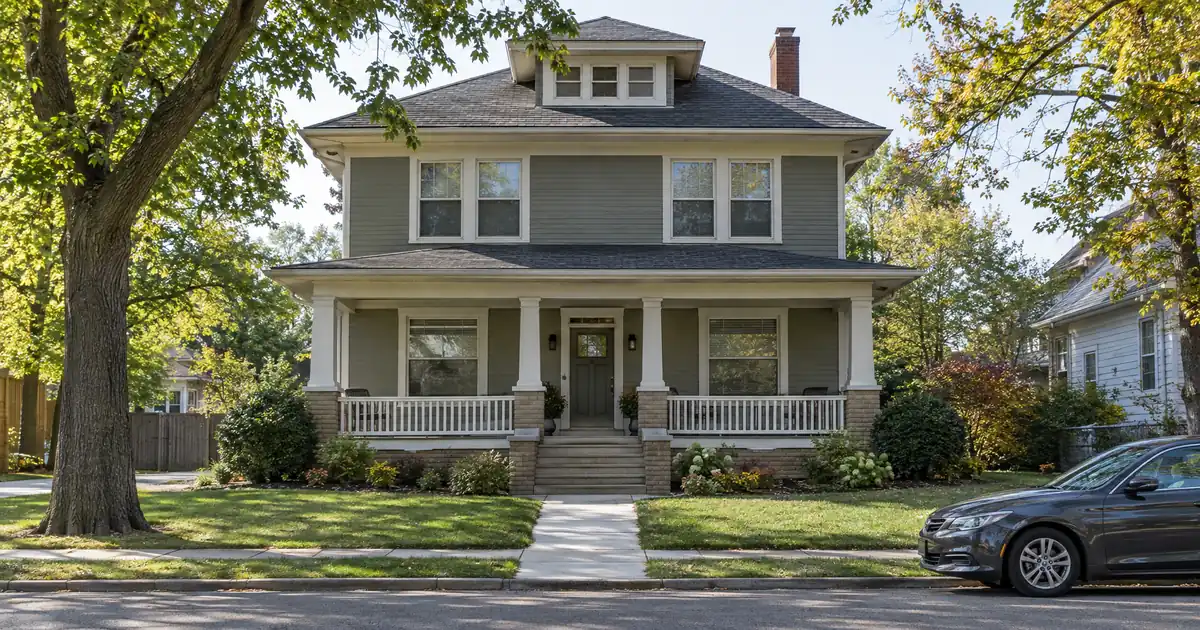
The Quick Read: Usually yes. A rental with no mortgage has no lien to retire, so any new loan on it is a cash-out refinance, and money paid to co-heirs does not change that label. In the DSCR network Lendmire works with, that puts the file under the cash-out leverage ceiling and the seasoning expectation. Lendmire is a broker arranging DSCR loans through select lenders in its wholesale network, and each lender sets its own details.
- A free-and-clear property refinanced for any reason is treated as cash-out.
- Cash-out on a standard rental tops out around 75% LTV across most of the network.
- Seasoning of about 6 months is the common expectation, measured from the recorded deed.
- The new, larger payment must still clear the lender’s coverage floor.
- The buyout agreement, title work, and appraisal need to be in order before applying. Exact terms depend on the lender’s guidelines, property type, leverage, and a full review of the borrower’s file.
Why Does a Paid-Off Rental Count as Cash-Out?
Cash-out is defined by what the loan does, not by who receives the money. When no mortgage exists, the new loan creates a lien where none existed, and the proceeds leave the property as cash. Whether that cash lands in the owner’s account or goes to a sibling at closing, the file reads the same way.
DSCR Cash-Out Calculator
Run the cash-out numbers in your market
Rate source: Freddie Mac 30-yr average via FRED® — Federal Reserve Bank of St. Louis · effective Oct 15, 2026
Prefilled with starting assumptions — enter your property’s value, balance, taxes, and insurance for a more accurate picture.
Program parameters update from Lendmire’s centralized guideline source. Taxes and insurance are editable estimates.
As of Oct 15, 2026 · General Freddie Mac market benchmark, not a Lendmire loan offer. Property value, balance, taxes, and insurance are editable estimates. Maximum loan-to-value varies by lender, program, property type, and seasoning. Not a Loan Estimate, approval, or commitment to lend. Program availability and eligibility are subject to lender guidelines, credit approval, property review, and underwriting.
Agency guidelines, which DSCR loans do not follow, draw the same line. Fannie Mae’s cash-out section treats a new first mortgage on a property with no existing lien as cash-out. That is useful as a contrast point only. DSCR loans are non-agency, and every lender in the network writes its own policy. The practical read is the same, though: expect the cash-out box, not the rate-and-term box.
Rate-and-term is a refinance that returns no cash at closing. In the network, rate-and-term refinances can reach about 85% LTV, a noticeably higher ceiling than cash-out. That gap is why the label matters. Buying out heirs on a paid-off rental is a 75% LTV conversation on a standard rental, not an 85% one. Every figure here varies by lender and program: guidelines, property type, leverage, and credit profile all apply.
Does the Heir Buyout Itself Change the Classification?
Not on a free-and-clear property. Some pages claim a buyout can be run as a rate-and-term refinance when every dollar goes to co-heirs under a legal agreement. That idea comes from agency limited cash-out rules. Fannie Mae’s guide on buying out an owner’s interest requires a written agreement signed by all parties covering the transfer and the proceeds, plus proof of joint ownership, with an exception for recent inheritance.
Those are agency rules. A DSCR lender is not bound by them, and Lendmire does not assume any lender will borrow them. Where a mortgage already exists and the heirs are paying siblings out of a refinance, some lenders may look at the file differently. Where the property is paid off, the safe planning assumption is cash-out.
Here is the part worth saying plainly: a few lenders in the network may view a documented co-owner buyout more favorably than a lump sum to one owner. Others will not. Ask early, before the appraisal is ordered, and ask for the answer in writing.
Key Terms Defined
Cash-out refinance: a new loan on a property that returns money at closing or leaves the property without an existing lien to pay off.
Rate-and-term refinance: a refinance that replaces an existing loan and returns no cash at closing.
Seasoning: the period a borrower must have owned the property before a lender will allow cash-out.
Free and clear: a property with no mortgage or other lien against it.
Recorded deed: the document filed with the county that shows who holds title and when they took it.
Quitclaim: a deed in which a departing owner transfers whatever interest they hold, without promising anything about the title.
How Does Seasoning Work When You Inherit?
For inherited property, the seasoning clock in the network generally runs from the recorded deed, not from the date of death and not from the closing date. The common expectation is about 6 months of ownership before cash-out. Treatment of inherited property varies by lender, and some will be more flexible than others.
The agency world is different. Fannie Mae’s guide says no waiting period applies to inherited property. Several non-lender pages stretch that into a general rule. It is not one. A DSCR lender sets its own clock, and the answer depends on the investor profile, the property, and the program.
| Scenario | Does a clock apply? | What starts it |
|---|---|---|
| Sole heir, deed recorded | Typically yes, about 6 months | Recorded deed |
| Several heirs, one buying out the rest | Lender-specific | Recorded deed, sometimes per heir |
| Property moved into an LLC | Often reset or reviewed | Entity deed, or lender policy |
| Heirs still in probate | Cannot close yet | Title must vest first |
Treat that table as a pattern, not a promise. If the keeping heir already holds a partial share, lenders differ on whether the clock runs from the date each heir took title. That question rarely has a published answer, so the lender has to give it. Lendmire’s piece DSCR Cash-Out Seasoning Rules for a Paid-Off Rental Property goes deeper on the clock itself.
How Does the Buyout Work, Step by Step?
The sequence matters more than any single number, because skipping a step can stall the file.
1. Settle title. Heirs usually need to be on recorded title before a lender will place the loan. Estate and probate loans exist for earlier stages, but they are a different product.
2. Value the property. An independent appraisal sets fair market value. For a rental, the appraisal normally includes a rent schedule: Form 1007 for single-family and Form 1025 for two-to-four units.
3. Agree on shares. Divide the value by the number of heirs, then adjust for anything already paid or any note being carried.
4. Size the loan. The loan has to cover the buyout checks plus closing costs while staying under the cash-out ceiling.
5. Assemble paperwork. A written buyout agreement, the will, probate order or trust document, and a quitclaim or deed from each departing heir.
6. Close through escrow. Checks go to the departing heirs at closing as title transfers.
Run the numbers on a modeled case. Say a paid-off fourplex appraises at $800,000 and three siblings inherit equally. The keeping sibling buys out two shares, which is two-thirds of value. Two-thirds of $800,000 is about $533,000, so the loan needs to land a little above that once costs are added. That is roughly two-thirds of value, which sits under the 75% LTV cash-out ceiling for a standard rental. The equity test passes with some room. The rent test is the one that decides it. Final terms depend on lender guidelines, property type, leverage, and the borrower’s complete credit picture.
If the same sibling were buying out one of two heirs, the loan would be about half of value, again within the ceiling. The ceiling only bites when the buyout approaches three-quarters of the property’s value, which is common only when one heir keeps a very small share.
Does the Rental Still Have to Cover the New Payment?
Yes. Two tests run side by side, and the file must pass both. The equity test checks that the loan fits under the cash-out ceiling. The rent test checks that market rent divided by the new full payment (principal, interest, taxes, insurance, and association dues) meets the program’s coverage floor. Select programs start at a 1.00 floor, and stronger ratios open better pricing and leverage. A separate select-lender path takes coverage below 1.00, with leverage and terms adjusted.
The new payment is the only payment that counts. The old, paid-off history is gone. Here is the catch: long-held or family-occupied rentals often carry below-market rents. A large buyout loan added to a lagging rent roll can pull coverage down, and clearing 1.00 does not mean positive cash flow, since repairs, vacancy, management, and capex sit outside the calculation.
A modest buyout on a well-leased fourplex may clear 1.2x or better. The same property after a buyout of most of the equity could slip toward 1.0x. Test both before signing the agreement with your siblings, not after.
Other file points from across the network:
- Credit: a 620 floor exists in parts of the network, most programs want around 660, and 700+ unlocks the strongest leverage tiers.
- Reserves: commonly about 6 months of PITIA, stepping up to about 9 months above $1,500,000. Some lenders vary by leverage and transaction type.
- Loan size: up to $3,000,000 on standard programs.
- Property type: manufactured homes, log homes, and barndominiums are not offered in these programs.
DSCR loans are designed for non-owner-occupied investment properties. Because they are business-purpose investor loans, they are reviewed differently from a standard owner-occupied mortgage. The guarantor’s score still drives the pricing tier, so a weak credit profile on the keeping heir affects the outcome even though the property carries the qualification. For a deeper walkthrough, see the complete DSCR loans guide.
What If the Property Still Has a Mortgage?
Then the math changes. The old lien survives the owner’s death, and a refinance that pays it off while also paying out heirs blends rate-and-term and cash-out pieces. How a lender classifies that blend is lender-specific. Heirs who keep the existing loan rather than refinancing have separate protections as successors in interest, but that is a servicing matter and does not decide how a DSCR lender classifies a refinance.
Other edge cases worth planning for:
- Entity or trust title. If the property sits in an LLC or trust, the borrower and guarantor structure changes. Eligibility is confirmed with the lender, subject to program terms.
- Partial or seller-financed buyouts. If the keeping heir pays part now and the rest later by note, any note secured by the property creates a lien the lender must see and may require to be subordinated or paid at closing.
- Occupied units. A tenant in place with a lease helps the rent test. An unleased or family-occupied unit may be underwritten on appraisal market rent instead.
Which Funding Route Fits the Buyout?
A cash-out loan is one option, not the only one. The right choice depends on how much equity the keeping heir needs to pay out and how much flexibility the family wants.
| Route | Best when | Tradeoff |
|---|---|---|
| DSCR cash-out refinance | Rent supports the new payment | 75% LTV ceiling on a standard rental; seasoning applies |
| Investment HELOC | Buyout is modest | Capped at $500,000 total |
| Seller-financed buyout | Siblings agree to terms | Creates a lien; heirs stay exposed |
| Sell and split | No one wants the rental | Gives up the asset |
If the buyout exceeds what the 75% ceiling and coverage allow, the answer is often a staged deal: pay part in cash, carry a note for the rest, and refinance again later. That is a legitimate structure, but it needs the lender to see and accept the note.
What Are the Title and Tax Boundaries?
A quitclaim changes who holds title. It does not end the departing heir’s liability on an existing note. Only a payoff of the old loan clears that. On a paid-off rental, that risk does not exist, which is one real advantage.
Tax treatment can depend on how the funds are used and how the property is held; investors should keep clear records and speak with a qualified tax professional before relying on any deduction. One structural point is worth knowing: inherited property’s basis is generally its fair market value at the date of death, so a buyout near that value typically produces little gain for the selling heir, though exceptions exist.
Where Do Heir Buyouts Go Wrong?
Most failures are sequencing problems, not underwriting problems.
- Closing before probate finishes. If title has not vested in the heirs, there is nothing to put a lien on.
- A co-heir who will not sign. One holdout can stop the whole deal. A written agreement signed by every party is the foundation.
- A buyout sized from memory, not an appraisal. If the appraisal comes in lower, every share shrinks and the numbers shift.
- Rent that lags the market. The new payment gets measured against what the appraiser says the unit rents for, so a deeply discounted family lease may not help.
- Assuming the exception applies. Inheritance waivers belong to agency guidelines. A DSCR lender may require the full seasoning period anyway.
A short pre-application checklist: the written buyout agreement, the will or probate order or trust document, deeds or quitclaims from departing heirs, current leases, entity documents if applicable, and proof of reserves.
If you are buying or refinancing a rental property and want to see how the numbers work, Lendmire can help you compare DSCR loan options based on the property income, credit profile, leverage, and investor goals.
Frequently Asked Questions
Can I call it a rate-and-term refinance if all the money goes to my siblings?
Not safely on a paid-off rental. With no existing loan, the refinance creates new debt and sends proceeds out of the property, which reads as cash-out. Some lenders may review a documented co-owner buyout differently, so ask before you apply, and plan around the 75% LTV cash-out ceiling for a standard rental. These specifics are subject to lender guidelines and a full review of property, leverage, and credit.
Does inheriting the property waive the seasoning period?
Not as a rule on DSCR loans. Agency guidance waives its waiting period for inheritance, but DSCR lenders set their own clocks. The common expectation in the network is about 6 months, measured from the recorded deed, and treatment of inherited property varies by lender.
What if my share of the buyout exceeds 75% of the property’s value?
Then the cash-out ceiling will not cover it. You would need to bring other cash, carry a note with the departing heir, or phase the buyout. Any note secured by the property is a lien the lender will want to review.
Will the new loan qualify on my income or the rental’s income?
The property carries the file. A DSCR loan is reviewed primarily on property-level rental income covering the payment, subject to lender guidelines. Your credit score still drives pricing and leverage tiers, and reserves still apply.
Can an LLC or trust be the borrower on an inherited rental?
Often, depending on program guidelines. Moving title into an entity can reset or complicate the seasoning review, so decide the titling before the deed is recorded rather than after.
About Lendmire
Lendmire (NMLS# 2371349) is a mortgage brokerage built around DSCR investor lending, with programs available in 41 markets, including Washington, D.C. DSCR lenders commonly evaluate rental-income coverage instead of personal income paperwork, a practical fit for LLC-owned and multi-property investors. Terms vary by lender, property, leverage, and program. Scotsman Guide named Lendmire a Top Mortgage Workplace in both 2025 and 2026.
Investors weighing their equity options can start with Lendmire’s guide to cash-out refinance on an investment property.
Get Started
Ready to find the right loan for you?
In about 30 seconds you can review financing options available for your investment property. No commitment required.
Informational only. Not a Loan Estimate, approval, or commitment to lend. Program availability and eligibility are subject to lender guidelines, credit approval, property review, and underwriting.
References
1. Fannie Mae Selling Guide B2-1.3-03
2. Fannie Mae Selling Guide B2-1.3-02
This article is part of Lendmire’s investment property cash-out refinance program — full qualification details, guidelines, and scenarios live on the program page.
Related reading: How to Cash Out a Luxury Rental Held in a Trust vs. an LLC · Can You Cash Out a Vacant DSCR Rental on a Two-to-Four Unit? · Should You Refinance a $3 Million Rental With DSCR Cash Out?
Brandon Miller
Founder & CEO, Mortgage Loan Originator, Lendmire LLC
- Mortgage Loan Originator · NMLS# 1129696 · Verify on NMLS Consumer Access
- North Carolina Real Estate Broker · License# 343312 · Verify on NCREC
- North Carolina Insurance Producer · License# 19053198 · Property, Casualty, Life, Health · Verify on NAIC SBS
- Lendmire LLC · Firm NMLS# 2371349 · Verify firm licensure
Legal disclosures. Lendmire (NMLS# 2371349) is a state-licensed mortgage brokerage that arranges financing through wholesale lender relationships. Lendmire is not a direct lender, depository institution, or registered financial advisor. The discussion above is general informational content about real estate financing — it is not financial, legal, or tax advice, and readers should consult licensed professionals for guidance on their individual circumstances. Loan inquiries are subject to lender underwriting; this article does not represent a commitment to lend. Loan terms, rates, and qualification standards vary by borrower, property, and state, and are subject to change at any time. Equal Housing Opportunity. NMLS Consumer Access: nmlsconsumeraccess.org.