
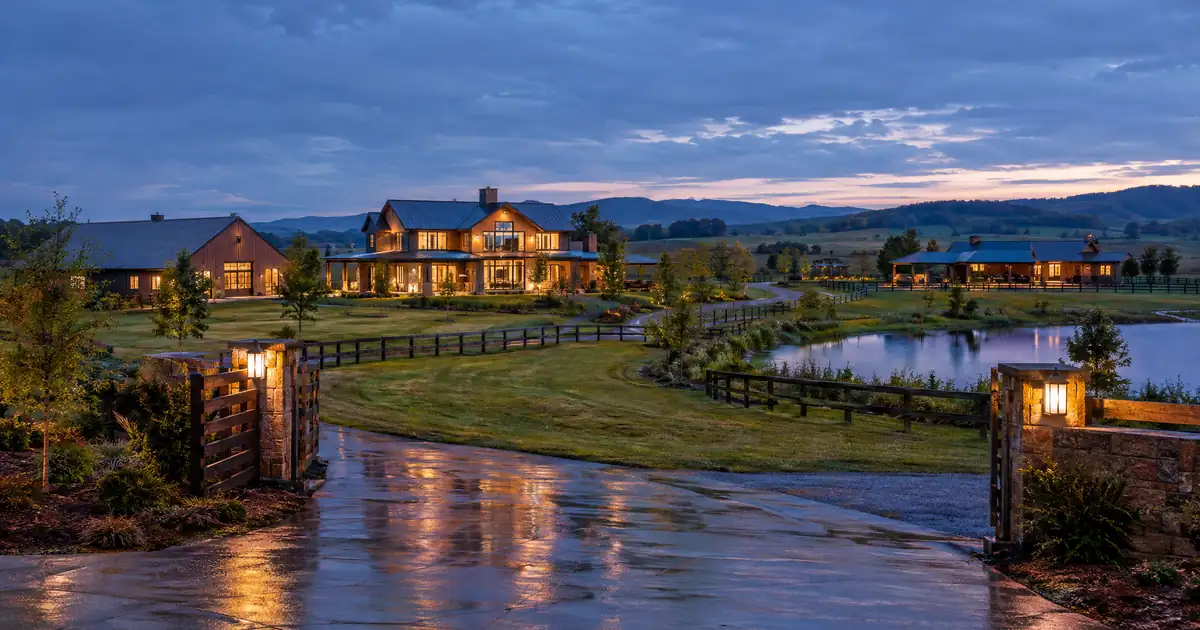
The Quick Read: Passing the appraisal on a large rural rental means supporting two numbers at once: a value that holds up against thin comparable sales, and a market rent that covers the full payment. Start by confirming how the lender treats acreage before you sign a purchase contract. Then give the appraiser a clean file with a documented home site, comparable rentals from a wider radius, and records for every outbuilding.
- The appraisal sets value for leverage and market rent for coverage, so one weak report can hurt both.
- Land above a program’s acreage cap is often carved out of the value used, or it can make the property ineligible.
- Most loans above $2,000,000 need a second appraisal, and the lower number generally governs.
- A short appraisal can often be challenged with better comps, but results vary.
- Clearing 1.00 on coverage does not mean the property cash flows.
Twenty acres with a house on it is not a normal DSCR file. Sales comps are scarce. Rental comps are scarcer. The balance is often large enough to trigger extra review. This guide walks through how underwriting actually treats the appraisal, what changes on a jumbo balance, where the rules break, and what to do about it before and after the report lands.
DSCR Calculator
Run the numbers in your market
Rate source: Freddie Mac 30-yr average via FRED® — Federal Reserve Bank of St. Louis · effective Oct 29, 2026
Prefilled with starting assumptions — enter your own rent or nightly figures, taxes, insurance, and HOA for a more accurate picture.
Program parameters update from Lendmire’s centralized guideline source. Taxes and insurance are editable estimates.
As of Oct 29, 2026 · General Freddie Mac market benchmark, not a Lendmire loan offer. Rent, nightly rate, occupancy, taxes, and insurance are editable estimates. Short-term rental figures are estimates only and vary significantly by season, property type, management approach, and local short-term-rental rules — confirm local regulations before relying on them. Qualifying income for short-term rentals varies by program — some use appraisal market rent, others use documented STR history or projections — and is confirmed in underwriting. Not a Loan Estimate, approval, or commitment to lend. Program availability and eligibility are subject to lender guidelines, credit approval, property review, and underwriting.
What Does the Appraisal Actually Decide?
The appraisal decides two things: the value that sets your loan-to-value limit, and the market rent that sets your coverage ratio. Both flow from one report. A weak number on either side shrinks the loan or sinks the file.
DSCR loans are business-purpose investor loans, so each program writes its own appraisal rules. They borrow form names from the agency world, but no federal rule governs them. For a single-family rental, the appraiser attaches Form 1007, the single-family comparable rent schedule. For two to four units, the appraiser uses Form 1025, which concludes rent unit by unit. Fannie Mae’s appraiser guidance describes the 1007 as the way a lender gets market rent on a one-unit investment property. That is the only agency contrast this topic needs.
Coverage is monthly rent divided by the full monthly obligation: principal, interest, taxes, insurance, and any HOA dues. Across our wholesale network, 1.00 is where select programs start, and stronger ratios open better pricing and leverage. A separate select-lender path takes coverage below 1.00, with leverage and terms adjusted. Most programs credit the lower of the signed lease and the appraiser’s market rent. On a vacant property, market rent is the only figure.
Why Is a Twenty-Acre Jumbo File Harder?
Four things stack up. The balance is large, which brings tighter leverage and often a second report. Comparable sales for large parcels are few. Rental comps are thinner still. And some of the land may be removed from the value the lender uses.
None of these is fatal alone. Together they explain why rural files stall at the appraisal more than at any other step. Rural does not mean automatic denial. Approval depends less on the label and more on whether the appraiser can find enough comps to support value and enough evidence to support rent.
Loan size matters too. Standard programs in our network reach up to $3,000,000, with reserves of about six months of PITIA, stepping up to about nine months above $1,500,000. On purchases, most files land at 75% to 80% LTV on an investment property. A cash-out refinance on a standard rental tops out around 75% LTV.
How Does an Appraiser Treat Twenty Acres?
The appraiser splits the parcel into the home site, usable land, and anything left over. Land the house does not need may be treated as excess land, which can be sold separately. Land that cannot be sold off is surplus land. Surplus may or may not add value.
The definitions matter because treatment differs. Surplus land cannot be split off and has no independent highest and best use. The Colorado Division of Property Taxation notes that the influence of surplus land varies by economic area. In plain terms, the same acre can be worth very different amounts in different places. Residential appraisers also sometimes label surplus land as excess, which can inflate or distort the value conclusion.
Here is the DSCR twist. A lender’s acreage cap is its own rule, separate from the appraiser’s classification. Across the programs we place files with, land above the cap is generally removed from the value used for leverage, or the property is not eligible at all. Most programs favor roughly five acres or fewer. Twenty acres is a tiered, case-by-case exception on larger balances, and the underwriter makes the final rural call after reading the report. Do not assume the whole parcel counts.
| Land component | What the appraiser considers | Likely lender treatment | What you can document |
|---|---|---|---|
| Home site | Land needed for the house | Counts toward value | Survey, legal description |
| Usable acreage | Land with access and utility | May count within cap | Access, slope, wetland maps |
| Excess land | Separable, sellable land | Often carved out | Split feasibility, zoning |
| Outbuildings | Barns, sheds, garages | Case by case | Size, use, permits |
Effective acreage is the usable land an appraiser actually credits after wetland, slope, and access problems. A twenty-acre deed can behave like a much smaller parcel on paper.
Worked Example: One Property, Three Outcomes
Run the numbers on a modeled rural rental priced at $1,850,000, bought at 75% LTV on an investment property. These are modeled assumptions, not market data. Final terms depend on lender guidelines, property type, leverage, and the borrower’s complete credit picture.
- Outcome one, full value supported. The appraisal matches the price. Leverage applies to the whole price, and rent supports coverage near 1.2x.
- Outcome two, excess land carved out. Price bundled in extra acres. The appraisal lands below price, the loan is sized off the lower value, and the buyer brings more cash to close. Coverage may even improve, because the loan is smaller.
- Outcome three, low rent opinion. Value holds, but the appraiser lands on a conservative rent from few comps. Coverage slips toward 1.00 or under. At that point the options are a larger down payment, a different structure such as interest-only through select lenders, or a sub-1.00 path through select lenders with leverage and terms adjusted. Qualification stays subject to lender guidelines, credit approval, and property review.
Loan sizing is the lowest of three tests: the leverage cap on appraised value, the rent coverage test, and property eligibility. A larger down payment can lift coverage, but it never erases a leverage cap, a credit floor, a reserve rule, or an eligibility screen. Strong files clear both tests, equity and coverage.
What Changes Above $2,000,000?
Many programs in the network require two appraisals above $2,000,000. No statute forces this on a business-purpose rental. It is a loan-size practice. The lender decides how the two reports reconcile, and if one comes in lower, the loan is typically sized off the lower number. The borrower pays for both.
A second appraisal is not a second chance. It is a second check. Brief both appraisers with the same documents so the reports do not diverge for avoidable reasons. If they still diverge, expect the conservative figure to govern.
Leverage also steps down with size on many files. Above $3,000,000, cash-out generally disappears and rural treatment tightens sharply.
Pre-Contract Screening: What to Check Before You Sign
Most rural appraisal failures were predictable before the contract. Screen first.
1. Construction type. Manufactured homes, log homes, and barndominiums are not offered in these programs. If the dwelling is one of those, the file ends before any math.
2. Acreage and zoning. Confirm acreage, zoning, and permitted use from county records.
3. Rural flags. No-appraisal DSCR products rarely cover rural addresses. Plan on a full appraisal.
4. Farm-versus-residence risk. A large parcel can read as a working property rather than a home. Agricultural or recreational parcels may fall outside program rules.
5. Neighborhood density. Check recent development on satellite imagery.
6. A lender conversation. Ask how the parcel’s acreage will be counted before you commit.
Building the Appraiser Briefing Packet
The appraiser needs data to justify both numbers. Hand over a package, not a pile.
| Item | Why it matters |
|---|---|
| Survey and legal description | Defines home site and total acreage |
| Outbuilding inventory | Documents size, use, and permits |
| Well and septic records | Shows the home functions as a residence |
| Easements and land-use history | Explains access and any farm use |
| Rental comps from a wider radius | Fills the gap left by thin local data |
| Signed lease, if one exists | Gives the appraiser and lender a reference point |
Comp radius stretches from a mile or two in dense markets to ten miles or more in rural areas. Appraisers working rural parcels lean on limited comps, wider search distances, and more judgment. Each adjustment for age or distance adds uncertainty, and uncertainty pushes estimates conservative. Your job is to shrink that uncertainty with evidence.
DSCR vs. conventional financing
There are two common ways to finance an investment property, and they qualify you differently — here’s how investors weigh them.
Why investors choose it
- Qualifies on the property’s rental income — no personal tax returns, W-2s, or pay stubs needed to document income.
- No personal debt-to-income ceiling to clear, so existing mortgages and obligations don’t cap your borrowing the same way.
- Can be closed in an LLC, keeping the property inside a business entity.
- Built for scaling — not held to the limit on number of financed properties that conventional financing applies.
- Underwriting centers on the deal: generally qualifies when the rent covers the payment, a 1.00x coverage ratio being a common baseline (confirmed in underwriting).
- Designed specifically for investment property, including long-term and, where the program allows, short-term rentals.
Where it’s strong
- Often the lowest ongoing financing cost for a buyer who fully qualifies on personal income — a fit for a first property or a cost-first purchase.
Trade-offs for investors
- Requires full personal income documentation and must fit within a debt-to-income limit — salary, existing debts, and other mortgages all count.
- Typically held in your personal name rather than a business entity.
- Caps how many financed properties you can carry, which can become a ceiling as a portfolio grows.
- Evaluates you as a borrower as much as the property, which usually means more paperwork.
How investors usually choose: a first or single property often optimizes for the lowest financing cost; portfolio builders often optimize for leverage, vesting in an LLC, and scaling past conventional caps. The right answer depends on your goals, the property, and current guidelines — both paths run through select lenders in Lendmire’s wholesale network, with eligibility and terms confirmed in underwriting.
Rent Evidence When Comps Are Thin
Form 1007 is built on three nearby rental comps. The appraiser adjusts them and reconciles to a monthly market rent. McKissock, an appraiser-education provider, notes the form uses three comps and that the lender makes the final income determination, not the appraiser.
With few monthly-lease comps, the appraiser may land on a low-end figure. Counter that with local rental listings, any market rent studies, and a lease that agrees with the rent story. Conflicting rent evidence is a common reason rural files stall, so make the lease, the 1007, and any booking record agree.
Short-term rental income changes the approach. Fannie Mae’s guidance states the 1007 was not designed for short-term rentals, requires monthly-lease comps, and treats multiplying a nightly fee by 30 as incorrect. Across our network, short-term rental purchases reach 75% LTV, cash-out runs to 70% on short-term-rental collateral, and lenders expect a 640+ score and about 12 months of hosting history. Glamping units, tiny homes, and multiple dwellings on one parcel add issues, and a DSCR path may not fit. These specifics are subject to lender guidelines and a full review of property, leverage, and credit.
If the Report Comes In Low
Diagnose before you react. A value shortfall, a rent shortfall, and an excess-land carve-out need different fixes.
| Symptom | Likely cause | Remedy |
|---|---|---|
| Value below price | Thin comps or land carved out | Reconsideration of value with better comps |
| Value below price | Extra acres bundled into price | Renegotiate price or cap acreage |
| Rent below lease | Few monthly comps | Submit rental comps, align lease |
| Coverage under 1.00 | Conservative rent plus large balance | More down, interest-only, or sub-1.00 select path |
| Wrong facts in report | Bed/bath, size, lot errors | Request correction through the lender |
A reconsideration of value goes through the lender and results are mixed. Audit the report for wrong beds and baths, square footage, lot size, condition ratings, and mismatched comps. A purchase contingency gives you room to renegotiate or walk. Without one, a low report becomes your cash problem.
Common Mistakes
- Paying for acres the lender will not finance.
- Assuming the whole parcel counts toward value.
- Skipping the lender conversation before contract.
- Ordering late and ignoring that rural reports can take longer.
- Pressuring an appraiser on value. Do not. Supply evidence instead.
- Reading 1.00 coverage as positive cash flow. DSCR compares rent to the payment only. Repairs, vacancy, management, utilities, and capex sit outside it.
For the full program picture, see the complete DSCR loans guide.
Key Terms Defined
DSCR: The ratio of a property’s rent to its full monthly obligation, used to judge whether it supports the loan.
Form 1007: The appraiser’s schedule of comparable rents for a single-family rental.
Form 1025: The appraisal form that concludes rent unit by unit for two- to four-unit properties.
Excess land: Land not needed to support the home that may be sold separately.
Surplus land: Land that cannot be sold off and may or may not add value.
Effective acreage: The usable land an appraiser credits after wetland, slope, and access issues.
Frequently Asked Questions
Does the whole twenty acres count toward value?
Not necessarily. Land above a program’s acreage cap is generally removed from the value used for leverage, or it can make the property ineligible. Treatment is case by case and subject to lender guidelines and underwriting.
Does the lease or the appraiser’s rent count?
Most programs use the lower of the signed lease and the appraiser’s market rent. A lease above the appraiser’s number does not raise coverage.
What if two appraisals disagree?
The loan is typically sized off the lower figure. Brief both appraisers with the same packet to limit avoidable gaps, and use a reconsideration of value if either report contains factual errors.
Is rural an automatic denial?
No. Approval depends on whether comps support value and rent can be proven. Property type, acreage, and farm-use risk matter more than the word rural.
Can I skip a rural appraisal?
Rarely. No-appraisal products seldom cover rural addresses, and larger parcels generally need a full appraisal.
If you are buying or refinancing a rental property and want to see how the numbers work, Lendmire can help you compare DSCR loan options based on the property income, credit profile, leverage, and investor goals. Programs change, every file is underwritten individually, and nothing here is a commitment to lend.
About Lendmire
As a DSCR and non-QM mortgage broker, Lendmire — NMLS# 2371349 — connects investors with wholesale lending channels across 41 markets, including Washington, D.C. The property’s rental income, not the borrower’s tax returns, is central to lender review, which works for self-employed operators and portfolios beyond four financed properties. Scotsman Guide named Lendmire a Top Mortgage Workplace in both 2025 and 2026.
Get Started
Ready to find the right loan for you?
See your offer in seconds. No credit pull, no obligation.
Informational only. Not a Loan Estimate, approval, or commitment to lend. Program availability and eligibility are subject to lender guidelines, credit approval, property review, and underwriting.
References
1. Fannie Mae Appraiser Update
2. Colorado Division of Property Taxation: appraisal process
3. McKissock: Form 1007 and short-term rental appraisals
This article is part of Lendmire’s DSCR loan program — full qualification details, guidelines, and scenarios live on the program page.
Related reading: How a DSCR Lender Calculates Loan-to-Value on a Rental · How Dual Appraisals Work on a Jumbo DSCR Rental Loan · Can an Investor Get a DSCR Loan on a Naples FL Rental?
Brandon Miller
Founder & CEO, Mortgage Loan Originator, Lendmire LLC
- Mortgage Loan Originator · NMLS# 1129696 · Verify on NMLS Consumer Access
- North Carolina Real Estate Broker · License# 343312 · Verify on NCREC
- North Carolina Insurance Producer · License# 19053198 · Property, Casualty, Life, Health · Verify on NAIC SBS
- Lendmire LLC · Firm NMLS# 2371349 · Verify firm licensure
Disclosure information. Lendmire is a state-licensed mortgage brokerage under NMLS# 2371349. Lendmire is not a depository institution, direct lender, or financial advisor — all loans referenced are placed through wholesale lender partners and are subject to each lender's underwriting standards. This article is provided for general informational purposes and is not a commitment to lend, nor does it constitute financial, legal, or tax advice. Loan programs, terms, rates, and qualification standards change without notice and depend on borrower profile, property type, and the state in which the subject property is located. Equal Housing Opportunity provider. NMLS Consumer Access: nmlsconsumeraccess.org.