
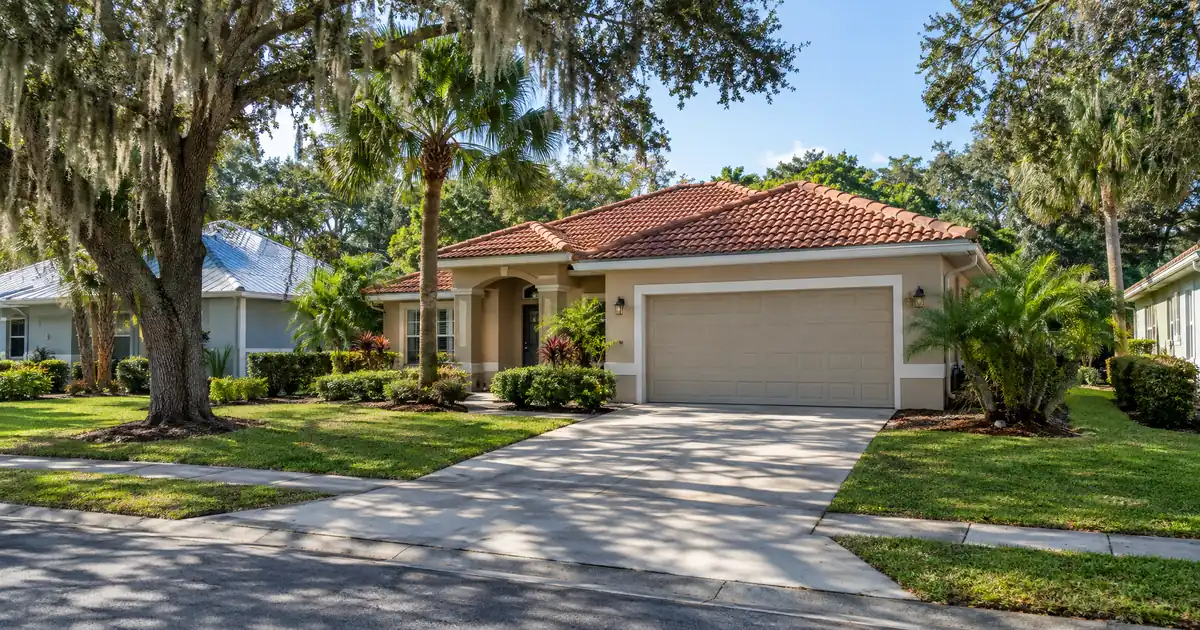
The Quick Read: Yes, an out-of-state owner pays the same Florida documentary stamp tax as a Florida resident on a rental home equity line of credit (a HELOC, a revolving credit line secured by the property), because the tax follows the mortgage recorded on Florida property, not the borrower’s home address, and it is figured on the full line, not just the amount drawn.
- Where you live does not change the answer. The recorded mortgage and the Florida collateral trigger the tax.
- The base is the full secured line. The Florida Department of Revenue taxes mortgages at 35 cents per $100 of the amount secured, contingent or absolute.
- A second, separate state tax, the nonrecurring intangible tax, runs on the same logic at 2 mills.
- Signing the papers in another state does not remove the tax on a recorded mortgage.
- On an investment HELOC, plan on a line of up to $500,000 at a 70% combined loan-to-value (CLTV) ceiling, subject to lender guidelines.
What Does a Florida Rental HELOC Actually Trigger?
Two state taxes can attach when a lender records a mortgage on Florida real estate. Doc stamps are the first. The nonrecurring intangible tax is the second. Both hit the mortgage, both are one-time costs, and neither cares where the owner sleeps at night.
How large a line the equity supports in Florida.
An equity line is sized by combined loan-to-value, occupancy, and credit — not by rental coverage. Switch the occupancy or the credit band and the ceiling moves with it.
Investment-property lines require a 700 minimum credit score; second-home lines start at a 640 minimum and primary-residence lines at 600, and the combined-LTV ceiling steps down as the credit band drops on primary-residence and second-home lines and holds on investment-property lines; the line cap steps down on primary-residence lines and holds at every tier on investment-property and second-home lines.
A debt-to-income ratio above 45% requires 680+ credit. Profiles under 640 are limited to single-family homes. At least 75% of the approved line is drawn at closing. Ceilings, floors, and caps update from Lendmire’s centralized guideline source.
Line estimate
Illustrative estimate only — not a quote, Loan Estimate, approval, or commitment to lend. The rate is an editable assumption; equity-line pricing is variable through both the draw and repayment periods and never converts to fixed. Occupancy and credit drive the ceiling together: an investment property tops out at 70% combined LTV (minimum credit 700, line cap $500,000); a second home tops out at 90% combined LTV (minimum credit 640, line cap $500,000), with the ceiling stepping down as the credit band drops (the cap holds at every tier); a primary residence tops out at 90% combined LTV (minimum credit 600), and its $750,000 maximum line is available only at 75% combined LTV or below with a 700-or-better credit profile (720 on the longer-runway program) and a full appraisal. Lines above $500,000 require a full appraisal. Credit, debt-to-income, property type, and full underwriting review all affect the final line.
A HELOC closing produces two documents. The lender prepares a credit agreement (the note) and a mortgage. The mortgage states the maximum amount it secures. That maximum is the number the state looks at.
The Department of Revenue says the base for doc stamps is the full amount of indebtedness secured, “even if the indebtedness is contingent,” in its Form GT-800014. An undrawn line is exactly that kind of contingent debt. So the part of the line you have not touched still counts.
Here is a clean way to picture it. Two investors each record a mortgage on a Florida duplex. One secures a line half the size of the other’s. The smaller line owes roughly half the stamp tax, because the tax runs per $100 of the amount secured, rounded up for any portion of $100. Draws never enter the math.
Why Your Out-of-State Address Doesn’t Matter
Residency is not a factor in the mortgage tax. The tax attaches to the document and the collateral. Nothing in the Department’s published guidance conditions it on the owner’s domicile.
Think of it as a toll on the road, not on the driver. The road is a mortgage recorded against Florida property. A borrower in Ohio, Colorado, or Ontario drives the same road and pays the same toll.
Out-of-state investors often assume the tax is a resident’s obligation, like a local income tax. It is not. It is a tax on the instrument.
The law firm Starfield & Smith makes the same point in its refresher on Florida doc stamp and intangible taxes. When Florida real property secures the debt, both taxes are due when the mortgage is recorded in Florida.
Key Terms Defined
Documentary stamp tax (doc stamps): A Florida tax on documents such as notes and mortgages, charged at 35 cents per $100 or portion thereof on a recorded mortgage.
Nonrecurring intangible tax: A separate Florida tax on obligations secured by a mortgage on Florida real property, charged at 2 mills.
Recorded mortgage: The security document filed in the county records that gives the lender a lien on the property.
Contingent indebtedness: Debt that exists as a possible obligation, such as the undrawn part of a credit line.
CLTV (combined loan-to-value): All loans secured by the property, added together, divided by the property’s value.
Is It the Line Size or the Amount Drawn?
The line size. This is where investors get surprised, so it deserves a slow walkthrough.
The Department’s guidance taxes a mortgage on the full amount it secures. A Department advisement on revolving credit cites a Florida court holding that a recorded mortgage securing a revolving line is taxed at recording on the full line, not on individual advances. That advisement is TAA 92M-009. It is old, so read it as background rather than a fresh pronouncement.
Later draws do not trigger a second round. Once tax has been paid on the full line, the Department’s nonrecurring intangible tax page says no additional tax is due. The same page says a line of credit is taxable and that the tax applies even if the mortgage is not recorded in Florida.
When both a note and a mortgage exist, the tax goes on the mortgage at recording. A notation goes on the note. Law firm commentary from Baggelaw says there is no extra tax on the note once the mortgage tax has been paid, as laid out in its post on Florida doc stamp strategies.
Here is the practical wrinkle for a rental HELOC. Across the wholesale network where Lendmire places these lines, at least 75% of the line is drawn at closing. So the “I’ll leave most of it undrawn” strategy does not shrink your exposure much, and the tax base is the full line either way. If you want a lower base, you size the line smaller. That is the lever.
The Two Taxes Side by Side
| Factor | Doc stamps | Intangible tax |
|---|---|---|
| Governing law | Chapter 201, F.S. | Chapter 199, F.S. |
| Tax | 35 cents per $100 or portion | 2 mills |
| Base on a HELOC | Full secured line | Full line, taxed once |
| Cap on a mortgage | None | Same full-line base |
| Later draws | No new tax | No new tax once paid |
The $2,450 maximum people quote applies to unsecured notes. The Department’s TIP 24B04-01 says that limit does not apply to a mortgage, security agreement, or other lien filed or recorded in Florida. A large line has no ceiling protecting it.
The two taxes are separate. Doc stamps sit under Chapter 201 and the intangible tax under Chapter 199. Paying one does not satisfy the other.
Does Signing Out of State Avoid the Tax?
No, not on a mortgage-secured line.
An unsecured note that is signed and delivered outside Florida can generally escape the note tax. Starfield & Smith says so in the refresher cited above. That is a different fact pattern from yours. Your HELOC is secured by Florida real property, so the tax is due when the mortgage is recorded here.
A Department advisement, TAA 11B4-004, found no stamp tax on an extension notice that was not signed in Florida. That case involved an unsecured revolving line. It doesn’t help a recorded mortgage.
There is a trap on the other side too. Rule 12B-4.053 makes a note taxable when it is signed in another state, mailed to a Florida payee, and approved and accepted there. Moving a pen across a state line is not a plan.
Multi-state collateral gets more interesting. The Department circulated a draft rule letter with language on out-of-state notes secured by Florida mortgages, including apportioning tax by the share of collateral located in Florida. You can read it at the Department’s draft rule letter. It is draft text, so do not rely on it until the final rule is in hand. For a single Florida rental, the question never comes up.
What About an LLC?
An LLC owner is not exempt from Florida’s mortgage taxes. The Department’s pages draw no distinction by borrower type.
Here is where the HELOC and the DSCR path split, though. On the investment HELOC lines we place, title must be held by the individual borrower or an inter vivos revocable living trust. LLCs, corporations, partnerships, and irrevocable, blind, or land trusts cannot hold title. If your Florida rental already sits in an LLC, a HELOC needs a vesting change first, or you move to a DSCR cash-out refinance instead, subject to program terms.
A DSCR loan is built for non-owner-occupied rentals and qualifies primarily on property-level rental income covering the payment, subject to lender guidelines. Because it is a business-purpose loan, it is reviewed differently from a standard owner-occupied mortgage. Many out-of-state investors hold Florida property in an entity, so this structural difference often decides the product before the tax math does.
Who Writes the Check?
By Department guidance, doc stamp tax is payable by any party to the transaction. The legal duty and the economic cost are not the same thing. In practice the cost lands on the borrower’s side of the settlement statement. Whether a given lender or program passes it to you is a program question, so ask before you commit.
When the mortgage is recorded, the tax goes to the clerk at recording. If a document is not recorded, tax is paid straight to the Department. The Department’s nonrecurring intangible tax page says direct payments are delinquent after the 30th day.
As a broker, here is what we see on out-of-state files. The borrower is rarely surprised by the existence of the tax. The surprise is its size relative to the line, because the line is the base. Out-of-state investors who budget for state recording costs at the start, the same way in-state owners do, tend to have cleaner settlements. Treat the tax as a line item in the deal, not a fee someone can negotiate away.
Refinances and “New Money”
Refinancing a Florida rental raises a different question: does the tax hit the whole new mortgage or only the extra borrowing? Florida courts have wrestled with this. In a large national bank refund case, the First District Court of Appeal opinion describes a dispute where the bank conceded tax on new money above the original loan, while the Department also wanted tax on the full face amount of the refinanced loans. The opinion is useful context. Read the full text before relying on any particular holding.
For your planning, assume the recorded mortgage is the taxed instrument and the secured amount is the base. A leasehold mortgage is a narrow case: a Lexology post on avoiding unnecessary Florida doc stamp tax says it owes doc stamps but not the intangible tax. The post is old, so treat it as background. Most Florida rentals are fee simple, so it will not apply to you.
HELOC or DSCR Cash-Out: Compare the Full Cost
Both options record a Florida mortgage. Both owe Florida’s mortgage taxes on whatever amount that mortgage secures. So the tax does not pick a winner by itself. It becomes one more cost to put beside the rest.
Here is how the two products differ on the facts that matter:
| Factor | Rental HELOC | DSCR cash-out |
|---|---|---|
| Leverage ceiling | 70% CLTV, investment | Around 75% LTV, standard rental |
| Size | $25,000 to $500,000 line | Up to $3,000,000 on standard programs |
| Credit | 700 minimum | Most programs want about 660 |
| Who can hold title | Individual or revocable trust | LLC, subject to program terms |
| Reviewed on | Borrower income and credit | Rent covering the payment |
On the HELOC side, an investment line caps at $500,000 in total, and there is no tier above that. The structure is a 5-year draw followed by a 25-year repayment period. A line at or below $500,000 ordinarily runs on automated valuation rather than a traditional appraisal, though a higher CLTV can require a secondary valuation. Debt-to-income tops out at 50%, qualified on the interest-only payment at the maximum draw.
On the DSCR side, cash-out refinances top out around 75% LTV on a standard rental across most of the network, with about 6 months of seasoning as the common expectation. Coverage starts at 1.00 on select programs, and stronger ratios open better terms and leverage. A separate select-lender path takes coverage below 1.00, with leverage and terms adjusted. Clearing 1.00 only means rent covers principal, interest, taxes, insurance, and any association dues. It does not mean positive cash flow, because repairs, vacancy, management, and utilities sit outside the calculation. Each figure is subject to lender guidelines and a complete review of property type, leverage, and credit.
Honestly, this is a genuine toss-up for a lot of files. A HELOC suits an individual owner with strong credit and a modest cash need who holds the property personally. A DSCR cash-out suits an LLC-held property or an investor who wants a larger draw sized to rental coverage. Lendmire’s complete DSCR loans guide walks through how the DSCR side qualifies. Either way, price both products with the Florida taxes included.
The Mistakes Out-of-State Investors Make
Assuming the tax follows the owner. It follows the Florida mortgage. Skip the hunt for a residency loophole.
Oversizing the line. A bigger line raises the day-one tax, even if you never use the extra room. Size the line to the plan, not the maximum.
Quoting the $2,450 cap. That limit is for unsecured notes. A mortgage has no such ceiling.
Treating it as a lender fee. These are state taxes. A lender collects and remits them. It does not set them.
Confusing the two taxes. Doc stamps and the intangible tax are separate. Budget for both.
Counting on the undrawn portion. The Department taxes contingent amounts. There are narrow exceptions for some renewals and modifications, but do not build a plan on them.
Lendmire’s related pieces go deeper on adjacent angles. One explains how much Florida doc stamps add to an out-of-state rental HELOC. Another covers whether a Florida landlord pays doc stamps on a full rental HELOC.
The Investor Decision
Run this checklist before you commit to a Florida rental HELOC:
1. Confirm title. An individual or revocable trust can hold it. An LLC cannot. 2. Confirm credit. Investment lines floor at 700, and a score above 700 buys eligibility rather than extra leverage. 3. Size the line to the actual need, since the full line is the tax base. 4. Ask who bears the state taxes on the settlement statement. 5. Price the DSCR cash-out beside it, with the same taxes counted on each.
Two eligibility notes. Manufactured homes, co-ops, condotels, log homes, commercial, mixed-use, and agricultural-zoned properties are not eligible for these HELOCs. And a borrower is limited to three lines, with no more than 15 financed properties.
Tax treatment of how you use the funds can depend on how the property is held, so keep clear records and speak with a qualified tax professional before relying on any deduction.
Frequently Asked Questions
Does moving the closing to my home state change the tax?
No. The mortgage still secures Florida real property, so the tax is due when it is recorded in Florida. Where the papers are signed matters for some unsecured notes. It does not remove the tax on a collateralized line.
If I never draw on the line, do I still owe tax on it?
Yes. The Department taxes the full secured amount, including contingent amounts, and an undrawn line is contingent debt. On the network’s investment lines, at least 75% of the line is drawn at closing anyway. A smaller line is the way to lower the base.
Will future draws trigger more doc stamps or intangible tax?
Not once the tax on the full line has been paid. The Department’s guidance says no additional intangible tax is due after the full line is taxed. A later increase in the line or a new mortgage is a different story and would be a new taxable event.
Does the $2,450 cap protect a large line?
No. That cap is for unsecured notes. The Department’s tip sheet says it does not apply to a mortgage filed or recorded in Florida, so tax scales with the secured amount.
Can my LLC borrow on a rental HELOC to avoid this?
No on both counts. An LLC is not exempt from the tax, and it cannot hold title on these investment HELOCs, which require an individual or revocable trust. A DSCR cash-out refinance can work for LLC-held property, subject to program terms, though it records a Florida mortgage and carries the same state taxes.
Where This Leaves You
If you are considering a home equity line and want to see how the numbers work, Lendmire can help you compare HELOC options based on the property, the equity available, credit profile, combined leverage, and your goals. Lendmire is a broker arranging financing through select lenders in its wholesale network. Its DSCR investor loans cover 41 markets, including Washington, D.C., and the HELOC lines are placed in 16 full-service states that include Florida. Reach the team at 828-256-2183 to request a quote. Programs change, and every file is reviewed individually, subject to lender guidelines. This is not a commitment to lend.
Florida’s mortgage taxes follow the recorded lien on the property, so an investor in another state should price a Florida rental line the way a Floridian would.
About Lendmire
As a mortgage broker (NMLS# 2371349), Lendmire helps homeowners and real estate investors in its 16 full-service states open home equity lines of credit arranged through wholesale lenders. Lendmire is never the lender; line amounts, ceilings and terms are set by the lender under its guidelines. Scotsman Guide named Lendmire a Top Mortgage Workplace in both 2025 and 2026.
Get Started
Ready to find the right loan for you?
In about 30 seconds you can review financing options available for your home or investment property. No commitment required.
Informational only. Not a Loan Estimate, approval, or commitment to lend. Program availability and eligibility are subject to lender guidelines, credit approval, property review, and underwriting.
References
1. Florida Department of Revenue – Documentary Stamp Tax
2. Florida Department of Revenue – Form GT-800014
3. Starfield & Smith – Florida doc stamp and intangible tax refresher
4. Florida Department of Revenue – TAA 92M-009
5. Florida Department of Revenue – Nonrecurring Intangible Tax
6. Baggelaw – Strategies on Florida doc stamp tax
7. Florida Department of Revenue – TIP 24B04-01
8. Florida Department of Revenue – TAA 11B4-004
9. Florida Administrative Code Rule 12B-4.053
10. Florida Department of Revenue – draft rule letter 12B-4
11. Florida First DCA opinion (BofA refund case)
12. Lexology – Don’t pay unnecessary doc stamp
This article is part of Lendmire’s investment property HELOC program — full qualification details, guidelines, and scenarios live on the program page.
Related reading: DSCR Cash-Out Documentation When a Lease Expires During Refinance · How to Clear a Solar Lien on Your First Rental Before a DSCR Cash-Out · How to Keep a Standing HELOC on a Rental to Fund the Next Deal
Guides: Investment Property HELOC in Florida
Brandon Miller
Founder & CEO, Mortgage Loan Originator, Lendmire LLC
- Mortgage Loan Originator · NMLS# 1129696 · Verify on NMLS Consumer Access
- North Carolina Real Estate Broker · License# 343312 · Verify on NCREC
- North Carolina Insurance Producer · License# 19053198 · Property, Casualty, Life, Health · Verify on NAIC SBS
- Lendmire LLC · Firm NMLS# 2371349 · Verify firm licensure
Disclosure information. Lendmire is a state-licensed mortgage brokerage under NMLS# 2371349. Lendmire is not a depository institution, direct lender, or financial advisor — all loans referenced are placed through wholesale lender partners and are subject to each lender's underwriting standards. This article is provided for general informational purposes and is not a commitment to lend, nor does it constitute financial, legal, or tax advice. Loan programs, terms, rates, and qualification standards change without notice and depend on borrower profile, property type, and the state in which the subject property is located. Equal Housing Opportunity provider. NMLS Consumer Access: nmlsconsumeraccess.org.