
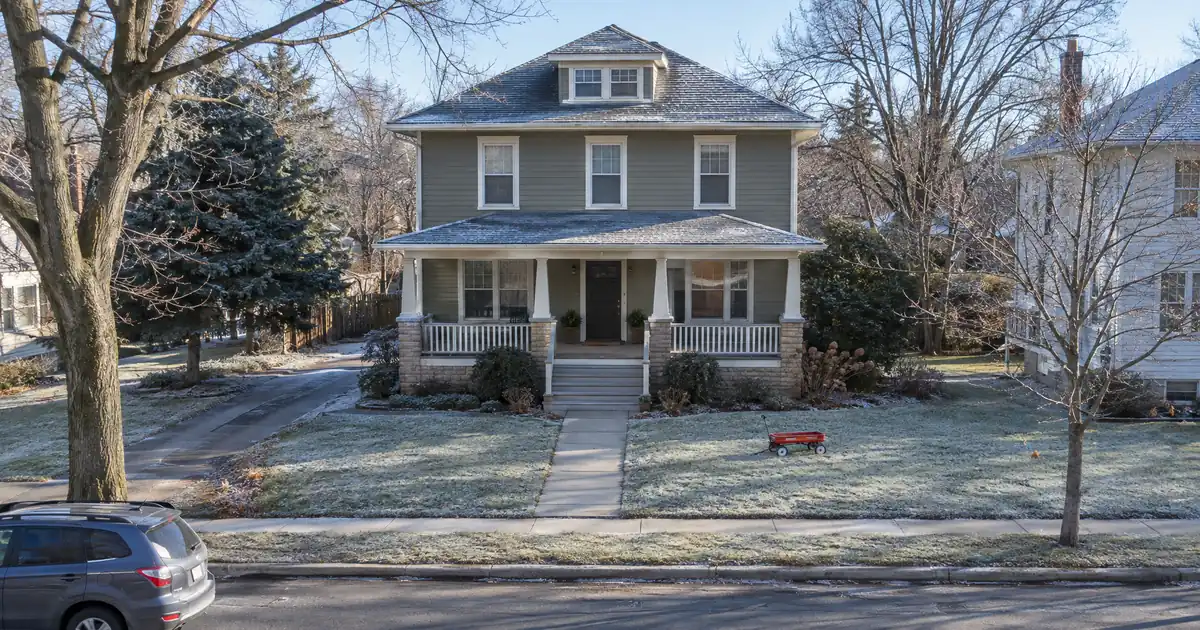
The Quick Read: One note covers the whole group of rentals, the lender tests the pooled rent against the pooled payment instead of judging each property alone, and on leased units the rent counted is typically the lower of the signed lease or the appraiser’s market rent, subject to lender guidelines. The tradeoff is cross-collateralization. Every property backs the same debt.
- A DSCR (debt service coverage ratio) compares rent to the monthly housing payment, and a portfolio loan runs that test on the whole pool.
- Across the wholesale network, a 30-year portfolio structure takes 2 to 20 properties under one note, with a 1.00 pooled coverage floor.
- A lease above market rent adds nothing. A lease below market rent pulls the ratio down.
- The release terms in the note decide how painful it is to sell one property later.
What Is a Portfolio DSCR Loan on a Leased Package?
A portfolio DSCR loan finances several rentals under one note and qualifies them together on rental income. Picture a seller offering six rented houses at once. Instead of six applications, six credit pulls and six closings, you apply once. The lender looks at the rents the properties produce, not at your W-2 or tax-return income.
The vocabulary is messy, so it helps to separate three meanings. Blanket describes the structure: one note, many properties. Portfolio often describes the loan that bundles them. DSCR describes how the file is qualified. One loan can be all three, and some lenders use portfolio to mean separate property-level loans closed together.
In practice, you will see two main structures across the network:
- A 30-year portfolio DSCR loan. It covers 2 to 20 properties under one note. Loan sizes run from $300,000 to $5,000,000, with larger balances on review. Leverage goes up to 80% of value on a purchase or a rate-and-term refinance of investment rentals. The coverage floor is 1.00, measured on the pool. It offers fixed or adjustable terms and an interest-only period. Eligible types are single-family, 2-4 unit, condo and townhome.
- A rental portfolio term loan. It is built for five or more rental properties or units. Loan sizes run from $500,000 to $50,000,000, with larger balances on review. Leverage goes up to 75% of value. Terms are fixed at 3, 5, 7 or 10 years with a balloon at maturity. Recourse and non-recourse versions exist. Small multifamily is also eligible.
These are program ceilings, not quotes. Eligibility depends on lender guidelines, credit, property review and underwriting.
DSCR loans are designed for non-owner-occupied investment properties. Because they are business-purpose investor loans, they are reviewed differently from a standard owner-occupied mortgage. That is why owner-occupied homes, mixed-use buildings, commercial property, co-ops and mobile homes are not eligible inside the pool. Manufactured homes (single- and double-wide), log homes and barndominiums are not offered in these programs at all.
How Does Underwriting Treat the Package, Step by Step?
Underwriting a leased package runs property by property first, then pools the results. The lender wants to know what each property earns, what it is worth and whether it can be rented. Then it tests the whole pool against one coverage number and one leverage cap.
1. Define the pool. The borrower, usually an LLC, lists the leased and vacant properties to pledge. Some structures require a special-purpose entity, and others accept an individual borrower. LLC borrowers are reviewed subject to lender program eligibility. Each property keeps its own deed and legal description.
2. Set rent per property. The lender takes the in-place lease and tests it against the appraiser’s market rent. More on that in the next section.
3. Blend the coverage. Total rent used for lender review is divided by total payment obligations: principal, interest, taxes, insurance and any HOA dues. That gives one ratio for the pool, and on the 30-year structure the floor is 1.00.
4. Set value and leverage. Each property is appraised, and appraised values drive one overall loan-to-value (LTV) ratio. LTV is the loan amount divided by the property’s value. The caps above apply, and a larger down payment never erases them.
5. Assign an allocated loan amount. The loan documents split the debt across the properties. That split matters later, because it drives the release price when you sell one.
6. Check credit and reserves. Credit floors start at 640 on the pool, and some structures want 680 or 720. Reserves vary by lender, leverage and loan size, and many files land around six months of PITIA. On the term loan, reserves are held for taxes, insurance and capital expenditures. PITIA means principal, interest, taxes, insurance and HOA dues, the full monthly obligation.
7. Close once. You sign one note, make one payment and go through one credit pull and one asset review.
The result is the main appeal for a package buyer. The paperwork stays singular even though the collateral is plural. For the single-property version of this same problem, see Lendmire’s piece How to Buy a Tenant-Occupied Rental With a DSCR Portfolio Loan.
How Does the Lender Count Rent on Occupied Units?
On most programs in the network, a leased property is reviewed on the lower of the signed lease or the appraiser’s market rent. A vacant or newly purchased property is reviewed on market rent alone. Occupancy mostly changes which rent figure goes into the math.
The appraiser documents market rent on standard forms borrowed from the conventional world. Fannie Mae’s appraiser guidance describes Form 1007, the Single-Family Comparable Rent Schedule, which estimates monthly market rent on a one-unit investment property. It can also be used for condominium investment properties. Form 1025 covers 2-4 unit properties, and Form 216 can report actual income and expenses on leased small multifamily.
DSCR loans are not agency products. Those forms are borrowed tools, and the loan rules come from the lender programs. McKissock notes that the data behind a 1007 includes lease agreements on the subject and rents on comparable properties.
| Lease situation | Typical rent counted |
|---|---|
| Lease at or below market | The lease amount |
| Lease above market | Market rent (capped) |
| Month-to-month or expiring | Lease or market, per lender review |
| Vacant at purchase | Market rent from the appraisal |
Treat the table as general guidance. Each lender sets its own details.
A Worked Example With Mixed Properties
A pool can clear 1.00 even when one property would not clear it alone. These are modeled assumptions, not market data, and every figure is a ratio.
Say you buy four leased rentals with equal debt service on each. Their stand-alone coverage, using the lower of lease or market rent, runs about 1.30, 1.20, 1.10 and 0.90. The pool averages about 1.125, so the pooled test clears 1.00.
The 0.90 property sits below 1.00 on its own. Inside the pool, underwriting tests the pooled coverage, the leverage and the terms, subject to underwriting. Lenders weigh the whole file, not one line of it.
Now change one input. The 1.30 property has a lease that would support about 1.50 on its own. That extra rent does not count, because the counted rent is capped at the appraiser’s figure. Investors who bought on strong in-place rents should model the deal on market rent.
Flip it around with an inherited lease. If the 1.10 property carries an old lease that supports only about 0.95 while market rent supports 1.10, the lease figure governs. The pool drops to roughly 1.09. That is still above 1.00, but the cushion is thinner.
One more point matters here. Clearing 1.00 does not mean the package produces positive cash flow. DSCR compares rent to PITIA only. Repairs, vacancy, management, utilities and capital expenses sit outside the calculation. A pool at 1.10 can still lose money after a roof replacement.
What Documents Prove the Tenancy?
The lender needs proof that rent is real and that tenants are in place. The seller’s rent roll is a starting point, not verified income. Expect a mix of seller-supplied and borrower-supplied items.
| Document | What it proves | Usually from |
|---|---|---|
| Signed leases | Rent amount and term | Seller |
| Rent roll | Unit-by-unit rent snapshot | Seller |
| Rent payment history | Rent is being paid | Seller or manager |
| Security deposit records | Deposits to transfer | Seller |
| Estoppel certificate | Tenant confirms lease terms | Tenant |
| Entity documents | Who owns the properties | Borrower |
An estoppel certificate is a signed statement from a tenant confirming the lease terms, rent and deposit. Not every lender requires one on every file. Ask early, because tenant paperwork is the item that most often slows a package purchase down.
On a package purchase, the leases usually transfer to the new owner at closing along with the security deposits and the management handoff. Build those steps into the purchase contract. Lenders also expect insurance on each property, and some ask about rent-loss coverage.
Release, Exit and Cross-Collateral Risk
Selling one property out of a pool depends on the release language in the note. A partial release clause lets you sell one property and pay down a set amount of debt. Without one, a blanket loan normally carries a due-on-sale provision, and a sale can put the whole debt in play.
Release clauses are common but not assured. If the language is discretionary, the lender can say no. Read this part of the documents before you sign anything, and make sure the clause states the paydown amount up front.
Three points to know:
- The release price runs above the property’s allocated balance. Selling one rental can return less cash than that property’s equity suggests. Net cash is proceeds minus the release price, closing costs and any prepayment charge.
- The remaining pool must still work. After a release, the lender may retest the remaining properties for coverage and leverage. Partial releases, substitutions and sales follow the loan documents and the lender’s release terms.
- The term loan adds maturity risk. Its balloon comes due at the end of the fixed term, and prepayment follows a yield-maintenance schedule. Confirm amortization and maturity before you commit.
Tax treatment varies; consult a qualified professional.
Cross-collateralization cuts both ways. Strong rentals can carry weaker ones, which is the reason to use the structure. But one bad tenant or one long vacancy that drags down the pooled ratio puts the whole pool at risk, because the lender’s remedies reach all the collateral.
Cash-out on a portfolio loan never goes above 75% of the pooled value. About six months of seasoning is the common expectation, and a cash-out inside the first six months of ownership is capped by a cost-based seasoning rule. A rate-and-term refinance carries no cost restriction. For how proceeds can be used afterward, see Lendmire’s piece Can You Renovate a Tenant-Occupied Rental With Cash-Out Proceeds?.
One Note or Separate Loans?
Choose one note when you want a single closing and pooled qualification. Choose separate DSCR loans when you expect to sell or refinance properties one at a time. Many investors use a blanket structure as a bridge, then refinance properties out individually once each one is stabilized.
| Factor | One portfolio note | Separate loans |
|---|---|---|
| Collateral | All properties pledged together | Each property stands alone |
| Default exposure | One default reaches every property | Isolated per property |
| Selling one property | Needs release clause and paydown | Simple payoff |
| Qualification | Pooled coverage, one credit pull | Each property tested alone |
| Paperwork | One closing, one payment | Repeated per property |
A weak property that cannot carry a loan on its own is the clearest case for pooling. A short hold on several of the properties is the clearest case against it. Honestly, the call often comes down to how many of these rentals you expect to sell within a few years. If the answer is most of them, separate loans usually hurt less.
For a broader view of how DSCR programs work, the complete DSCR loans guide covers qualification, leverage and property types in one place.
Where the General Rule Breaks
Most of the rules above bend in a few named situations.
Short-term rentals in the pool. The 1007 documents monthly rent, not nightly rent or business income, and McKissock notes that income is ultimately decided by the lender. Treat short-term rental income as a separate track, and never multiply a nightly rate by 30. Short-term rental rules can vary by city, county, HOA and property type, so investors should confirm local rules before relying on projected rental income.
Vacant units. A vacant property can sit in the pool, but the lender relies on the appraiser’s market rent instead of a lease. Refinances usually allow less vacancy than purchases. Vacancy limits vary by lender.
Thin coverage. Sub-1.00 programs are available through select lenders in the network, with leverage and terms adjusted. That path belongs to a different program from the 30-year portfolio structure, whose pooled floor is 1.00.
Mixed property types. Single-family, 2-4 unit, condo and townhome work on the 30-year structure. Small multifamily is eligible on the term loan. Mixed-use and commercial property do not belong in either pool.
Mixed markets. The term loan allows multi-market cross-collateralization, so properties in several areas may sit under one loan. The portfolio programs cover most of Lendmire’s DSCR markets, though a few places sit outside the footprint.
The agency property cap. Conventional agency loans limit how many financed properties one borrower can hold. That cap does not apply to business-purpose DSCR loans, which is part of why investors move to this structure once they scale. The network’s 30-year portfolio program supports up to 20 financed properties under one note.
Key Terms Defined
DSCR: the ratio of a property’s rent used for lender review to its monthly payment obligations.
PITIA: principal, interest, taxes, insurance and association dues, the full monthly obligation used in the coverage test.
Cross-collateralization: every property in the pool secures the whole debt, not just its own share.
Release provision: the clause that lets you sell one property and pay down an agreed amount of the loan.
Allocated loan amount: the share of the total debt assigned to each property in the loan documents.
Rent roll: a unit-by-unit list of tenants, rents and lease dates.
Estoppel certificate: a tenant’s signed confirmation of lease terms, rent and deposit.
Market rent: the appraiser’s estimate of what a property would rent for today.
Frequently Asked Questions
Can vacant units be part of the pool?
Yes, within limits. Vacant properties are reviewed on the appraiser’s market rent, since no lease exists. Refinances tend to tolerate less vacancy than purchases, and the pool’s coverage, leverage and terms are still what underwriting tests, subject to lender guidelines.
Do existing leases transfer to me at closing?
Usually, yes. Leases, security deposits and the management handoff pass to the buyer as part of the purchase. Put those items in the purchase contract and gather the leases and rent roll early so the lender can verify rent.
How many properties can sit under one loan?
The 30-year portfolio structure takes 2 to 20 properties under one note. The rental portfolio term loan is built for five or more properties or units. Programs and limits change, and each file is underwritten individually.
Can I add a property to the pool later?
That depends on the loan documents. Substitutions and additions follow the lender’s release and substitution terms, and the whole pool must still meet coverage and leverage tests. Many investors instead refinance into a new pool.
What if one tenant leaves after closing?
The loan keeps performing as long as you make the payment. A vacancy lowers your real income, but the lender tested coverage at closing. The risk comes if you need to refinance or request a release, because the lender may retest the remaining pool at that point.
Next Step
If you are buying or refinancing a rental property and want to see how the numbers work, Lendmire can help you compare DSCR loan options based on the property income, credit profile, leverage and investor goals. Lendmire is a mortgage broker arranging DSCR financing through select lenders in its wholesale network across 41 markets, including Washington, D.C. Call 828-256-2183 to talk through a package.
Package deals reward the buyer who reads the release clause as carefully as the rent roll.
About Lendmire
Lendmire (NMLS# 2371349) is a mortgage brokerage focused on DSCR investor financing, helping arrange programs through wholesale and investor-lending channels in 41 markets, including Washington, D.C. DSCR loans are evaluated by the lender on property cash flow rather than personal income, subject to lender guidelines, supporting LLC closings and accommodating investors with four or more financed properties. Scotsman Guide Top Mortgage Workplace in both 2025 and 2026.
Get Started
Ready to find the right loan for you?
In about 30 seconds you can review financing options available for your investment property. No commitment required.
Informational only. Not a Loan Estimate, approval, or commitment to lend. Program availability and eligibility are subject to lender guidelines, credit approval, property review, and underwriting.
References
1. Fannie Mae Appraiser Update, June 2024
2. McKissock: Form 1007 and Short-Term Rental Appraisals
This article is part of Lendmire’s DSCR loan program — full qualification details, guidelines, and scenarios live on the program page.
Related reading: Can You Sell One Rental Out of a Portfolio DSCR Loan? · How to Raise Pooled DSCR Coverage Before a Portfolio Loan · How to Handle Vacancies Before a DSCR Portfolio Loan
Brandon Miller
Founder & CEO, Mortgage Loan Originator, Lendmire LLC
- Mortgage Loan Originator · NMLS# 1129696 · Verify on NMLS Consumer Access
- North Carolina Real Estate Broker · License# 343312 · Verify on NCREC
- North Carolina Insurance Producer · License# 19053198 · Property, Casualty, Life, Health · Verify on NAIC SBS
- Lendmire LLC · Firm NMLS# 2371349 · Verify firm licensure
Legal disclosures. Lendmire (NMLS# 2371349) is a state-licensed mortgage brokerage that arranges financing through wholesale lender relationships. Lendmire is not a direct lender, depository institution, or registered financial advisor. The discussion above is general informational content about real estate financing — it is not financial, legal, or tax advice, and readers should consult licensed professionals for guidance on their individual circumstances. Loan inquiries are subject to lender underwriting; this article does not represent a commitment to lend. Loan terms, rates, and qualification standards vary by borrower, property, and state, and are subject to change at any time. Equal Housing Opportunity. NMLS Consumer Access: nmlsconsumeraccess.org.