
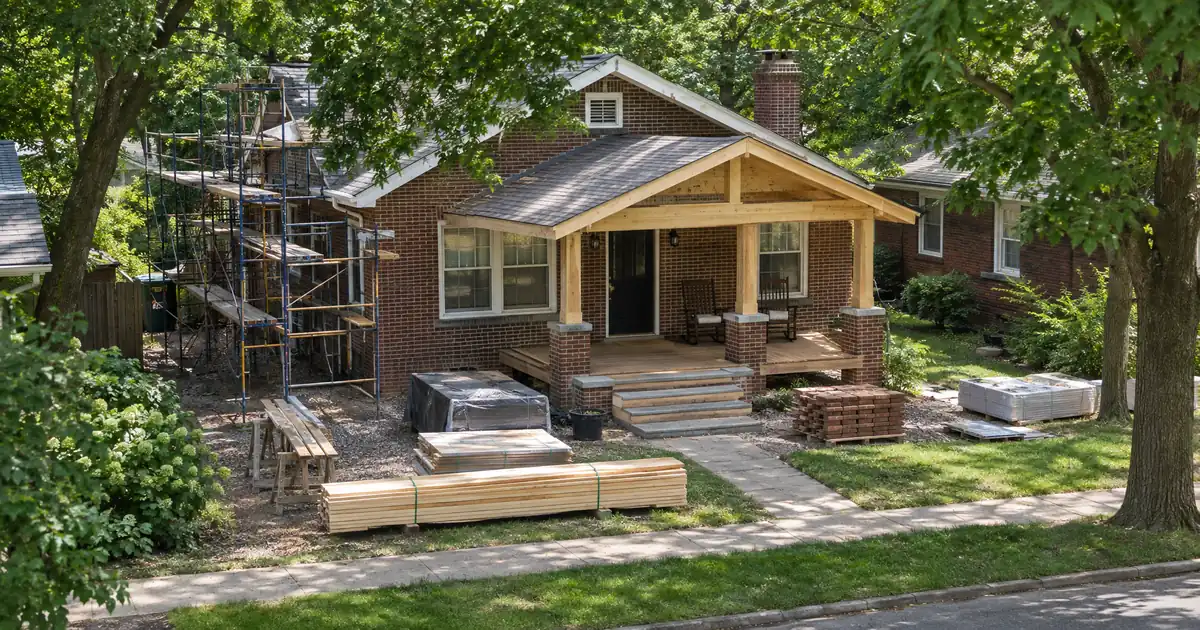
The Quick Read: These two loans do different jobs, and most BRRRR investors end up using both in sequence. Hard money buys the houses and pays for the rehab. A portfolio DSCR loan then refinances several finished, leased rentals into one long-term note. The real question for a batch is whether to pool the exit or refinance each house on its own.
Key Takeaways
- Hard money qualifies the asset and the plan. A portfolio DSCR loan is reviewed for the pooled rent.
- A portfolio DSCR loan is one note secured by several rentals. Blanket loan and cross-collateralized loan mean the same thing.
- Pooling works best when the houses are alike, leased, seasoned and staying together.
- The slowest house sets the pace for a pooled exit.
- DSCR measures rent against the loan payment only. Clearing 1.00 is not the same as positive cash flow.
The Honest Answer
Hard money is for the investor who needs to buy and renovate. The lender looks at the purchase contract, the scope of work, the budget and the exit. The borrower’s track record sets the leverage tier. A portfolio DSCR loan is for the investor whose houses are already finished and rented, and who wants one note instead of several.
They are not rivals. One is the bridge and the other is the landing. The decision that matters for a batch is how the bridge ends.
Across our wholesale network, the files that run smoothly size the hard money around what the exit loan will need. The files that struggle borrow first and look at the exit later.
Side-by-Side
The figures below are program ranges. Each varies by lender, property, and experience, and none is a commitment to lend. Terms are subject to lender guidelines.
| Factor | Hard Money | Portfolio DSCR Loan |
|---|---|---|
| Main job | Buy and rehab | Refinance and hold |
| Qualified on | Asset, rehab plan, exit | Pooled rent vs pooled PITIA |
| Leverage basis | Project cost, capped by after-repair value | Property value; cost cap if recently bought |
| Term | 6-18 months, interest-only | 30-year; interest-only period available |
| Property types | 1-4 units | SFR, 2-4 unit, condo, townhome |
| Documentation | Contract, scope, budget, track record | Leases, appraisal rent, rehab proof, entity papers |
| Entity vesting | Often an LLC; varies | LLC required on some structures |
| Reserves | Varies by lender and project | Commonly around 6 months of PITIA |
| Batch handling | One loan per house | One note covering 2 to 20 properties |
| Timeline logic | Must outlast rehab and lease-up | Needs houses leased and seasoned |
PITIA is principal, interest, taxes, insurance and association dues. Seasoning is the waiting period before a lender will size a loan on appraised value instead of cost.
When Hard Money Is the Better Fit
Hard money fits whenever the house is not yet a rental. A rehab with open permits, no lease and no stabilized rent cannot pass a DSCR test. Hard money does not ask it to.
Leverage on a fix-and-flip is tiered by completed projects. It runs up to 93% of project cost at five or more completed projects and up to 90% of project cost at two or more. Below two it is 85% of project cost. Every tier is also capped at 75% of after-repair value, so the lower number governs. Up to 100% of the rehab budget funds in draws against completed work. That is a budget figure, not a purchase LTV, and it is not a 100% purchase loan.
Other program points:
- Loan amounts run up to $5,000,000, with larger loans by exception.
- Terms run 6 to 18 months, interest-only, with no prepayment penalty.
- A 620 credit score is the minimum, with extra conditions below 660.
- First-time investors qualify at the lower leverage tiers. Final terms depend on the lender’s guidelines, the property type, and the borrower’s complete credit picture.
Collateral is non-owner-occupied residential property of one to four units. All of this varies by lender, property, and experience.
Hard money is the better fit in these situations:
- You are buying houses that need real work and have no tenant.
- Your batch has mixed scopes and finish dates, so you need flexibility.
- You want no prepayment penalty while you wait for the exit.
- You are early in your track record and need an asset-based lender.
The catch is the maturity date. The note has to outlast the rehab, the lease-up, the seasoning and the exit appraisal. On a batch, it has to outlast the slowest house.
When a Portfolio DSCR Loan Is the Better Fit
Start with the definition. A portfolio DSCR loan is one note secured by several rentals. Blanket loan and cross-collateralized loan are other names for it. A bank’s portfolio loan, meaning a loan the bank keeps on its own books, is a different use of the word.
The 30-year portfolio DSCR loan pools 2 to 20 properties under one note. Loan sizes run $300,000 to $5,000,000, with larger balances on review. Leverage goes up to 80% of value on a purchase or a rate-and-term refinance. Rates can be fixed or adjustable, and an interest-only period is available. Eligible property types are SFR, 2-4 unit, condo and townhome. The credit floor is 640, rising to 680 or 720 on some portfolio structures.
Coverage is measured on the pool, so stronger houses can offset weaker ones. The floor is 1.00 on the pooled number. A house that rents below 1.00 on its own can sit in the pool. Underwriting tests the pooled coverage, the leverage and the terms. It does not test each house alone.
Larger investors have a second option, the rental portfolio term loan. It covers five or more rental properties or units, with loan sizes from $500,000 to $50,000,000. Leverage goes up to 75% of value, and terms are fixed at 3, 5, 7 or 10 years with a balloon at maturity. It comes in recourse and non-recourse forms. Non-recourse looks to the real estate, with carve-outs for things like fraud and bankruptcy. It carries a yield-maintenance prepayment schedule. Small multifamily of five or more units is eligible only on this term loan. Each figure is subject to lender guidelines and a complete review of property type, leverage, and credit.
Manufactured homes, log homes and barndominiums are not offered on any of these programs.
A portfolio DSCR loan is the better fit in these situations:
- Your houses are finished, leased and similar in quality.
- You plan to hold them together under one entity.
- You want one closing, one servicer and one payment.
- You would rather manage one maturity than several.
A pooled refinance can also fund the next purchase. Cash-out is available on seasoned properties up to 75% of the pooled value. That ceiling is never exceeded, and the structure’s own ceiling can bind first.
What Happens When One House Lags?
Picture a four-house batch. Three houses are finished and leased. The fourth is waiting on a punch list and has no tenant. Hard money is outstanding on all four.
You have three paths.
Path one: wait. Extend the hard money on the three finished houses until the fourth is ready, then pool all four. This keeps the paperwork simple. It also means the finished houses carry bridge costs while they wait. A pooled refinance usually needs the houses leased and seasoned together.
Path two: pool the three. Refinance the stabilized group now and refinance the fourth on its own later. This is the hybrid. It frees capital sooner but adds a second closing.
Path three: go one by one. Refinance each house as it seasons using separate DSCR loans. Each stands alone, with no cross-collateral link between them. The cost is one qualification per house.
The appraisal can reshape any of these. Inside the first six months of ownership, the loan on a pooled structure is also capped at 90% of total cost (purchase price plus documented improvements). That cap is 100% of total cost from six to twelve months. The leverage ceiling still applies, so the loan is the lower of the two. After twelve months, the appraised value alone is the basis. A rate-and-term refinance is not subject to the cost-basis cap.
A strong appraisal inside the first six months may not raise proceeds. A weak appraisal can turn the exit into a payoff that needs cash from you. If your hard money ran near its cap, a seasoned exit may return little or nothing after payoff.
Say the pool clears about 1.15x with one weak house inside it. That is workable on paper. If the weak house then appraises low, the pooled leverage and the cost cap both tighten at once.
Where Pooling Bites
Cross-collateralization means every property backs the whole note. Lawyers call this a dragnet, blanket or spreader clause. The upside is blended coverage. The downside is shared exposure.
Check these items in the loan documents before you sign:
- The release terms. Partial releases, substitutions and sales out of the pool follow the loan documents and the lender’s release terms.
- The release price. It runs above the property’s allocated balance.
- The remaining pool. After a sale, the properties left must still cover their debt service.
- Default language. A problem on one house can become a problem on all of them.
- Entity setup. One pooling entity limits your exit options. Separate entities limit what can be pooled.
Owner-occupied property, co-ops, mixed-use and commercial property are ineligible in the pool. Every property still needs a lease or an appraiser-supported market rent. Your own rent projection is a planning figure. It is not an underwriting input.
DSCR loans are designed for non-owner-occupied investment properties. Because they are business-purpose investor loans, they are reviewed differently from a standard owner-occupied mortgage. The CFPB’s Truth in Lending reference treats credit to buy or improve non-owner-occupied rental property as business-purpose credit. The test is the loan’s purpose, not the label on the property. If you plan to live in one unit, Reg Z rules for owner-occupied rentals turn on unit count, so confirm the structure before you buy.
One more point on coverage. DSCR compares rent to PITIA only. Repairs, vacancy, management, utilities and capital expenditures sit outside the calculation. A pool that clears 1.00 can still lose money in a bad quarter.
Key Terms Defined
BRRRR: Buy, rehab, rent, refinance, repeat. The refinance step recycles your capital into the next house.
DSCR: Debt service coverage ratio. It is the property’s rent divided by its monthly PITIA.
Hard money: A short-term, interest-only, asset-based loan used to buy and renovate. It is underwritten on the property, the plan and the exit.
After-repair value (ARV): The estimated value once the rehab is done. It is a planning figure until an appraiser confirms it.
Seasoning: The waiting period, often about 6 months from title recording, before a lender sizes a loan on appraised value.
Cross-collateralization: Every property in the pool secures the whole note.
The Verdict
Use hard money when the houses are not yet rentals. Use a portfolio DSCR loan when they are finished, leased, seasoned and staying together.
Most small batches fit individual DSCR loans better than a pool. A pool wins when the houses are uniform, stabilized and held under one entity. It also helps when you value one closing and one servicer over independence between houses. If one house may be sold within a few years, weigh the release terms first.
Two habits protect either path:
- Before you buy, confirm the exit lender’s seasoning, appraisal and property-type rules.
- Size the hard money to what the exit can repay, and keep reserves for the gap.
Reserves vary by lender, leverage, loan size and transaction type. They commonly run around 6 months of PITIA and step up to about 9 months on loans above $1,500,000. A larger down payment can lift coverage, but it never erases leverage caps, credit floors or reserve rules. The strongest files have enough equity and enough rental coverage.
Lendmire’s complete DSCR loans guide covers the long-term side in more depth. For the handoff itself, see the hard money exit refinance path.
Frequently Asked Questions
Can I refinance several hard money loans into one DSCR loan?
Yes, when the properties meet the program’s rules. A portfolio DSCR loan can pool 2 to 20 properties under one note, subject to lender guidelines. Each house needs a lease or appraiser-supported rent, and each must meet seasoning and property-type rules.
Do all my houses have to be ready at the same time?
For a pooled exit, they usually do. A finished house can be refinanced alone, or you can pool the ready ones and handle the last house separately. Weigh the cost of a second closing against the cost of extending the bridge.
What if one house fails coverage?
The pooled number is what gets tested. A rental below 1.00 can sit in the pool when underwriting tests the pooled coverage, the leverage and the terms. If the pool falls short, you can drop the weak house, hold it back, or lower the requested loan amount.
Can I sell one house later?
Often, but only through the loan’s release terms. The release price runs above the property’s allocated balance. The remaining pool must still cover its debt service, so read the release language before you sign.
Is a portfolio loan better than separate loans?
Neither is better in every case. A pool offers one closing and one servicer, while separate loans keep each house independent. The right choice depends on uniformity, entity setup and your exit plans.
Next Step
If you are buying, rehabbing or refinancing an investment property on a short timeline and want to see how the numbers work, Lendmire can help you compare hard money options based on the project, the exit plan, leverage and your goals. As a broker, Lendmire arranges DSCR and hard money financing through select lenders in its wholesale network across 41 markets, including Washington, D.C. Lenders review eligibility and approve each file.
About Lendmire
Lendmire, NMLS# 2371349, is a mortgage brokerage focused on investor financing, arranging DSCR loans in 40 states plus Washington, D.C. — 41 markets total. Qualification is based on the property’s income rather than personal income documentation, subject to lender guidelines, making it a fit for LLC-held rentals and scaling portfolios. Scotsman Guide named Lendmire a Top Mortgage Workplace in both 2025 and 2026.
Get Started
Ready to find the right loan for you?
In about 30 seconds you can review financing options available for your investment property. No commitment required.
Informational only. Not a Loan Estimate, approval, or commitment to lend. Program availability and eligibility are subject to lender guidelines, credit approval, property review, and underwriting.
References
1. Law Insider, cross-collateralization clause
2. CFPB Truth in Lending Act reference
3. Compliance Alliance, Regulation Z and investment properties
This article is part of Lendmire’s hard money loan program — full qualification details, guidelines, and scenarios live on the program page.
Related reading: Does a Portfolio DSCR Loan Hold Back Repair Money? · Five-Year vs Ten-Year DSCR Portfolio Term Loan at Maturity · How to Finance the Next Rentals Under a DSCR Portfolio Loan
Brandon Miller
Founder & CEO, Mortgage Loan Originator, Lendmire LLC
- Mortgage Loan Originator · NMLS# 1129696 · Verify on NMLS Consumer Access
- North Carolina Real Estate Broker · License# 343312 · Verify on NCREC
- North Carolina Insurance Producer · License# 19053198 · Property, Casualty, Life, Health · Verify on NAIC SBS
- Lendmire LLC · Firm NMLS# 2371349 · Verify firm licensure
Disclosure information. Lendmire is a state-licensed mortgage brokerage under NMLS# 2371349. Lendmire is not a depository institution, direct lender, or financial advisor — all loans referenced are placed through wholesale lender partners and are subject to each lender's underwriting standards. This article is provided for general informational purposes and is not a commitment to lend, nor does it constitute financial, legal, or tax advice. Loan programs, terms, rates, and qualification standards change without notice and depend on borrower profile, property type, and the state in which the subject property is located. Equal Housing Opportunity provider. NMLS Consumer Access: nmlsconsumeraccess.org.