
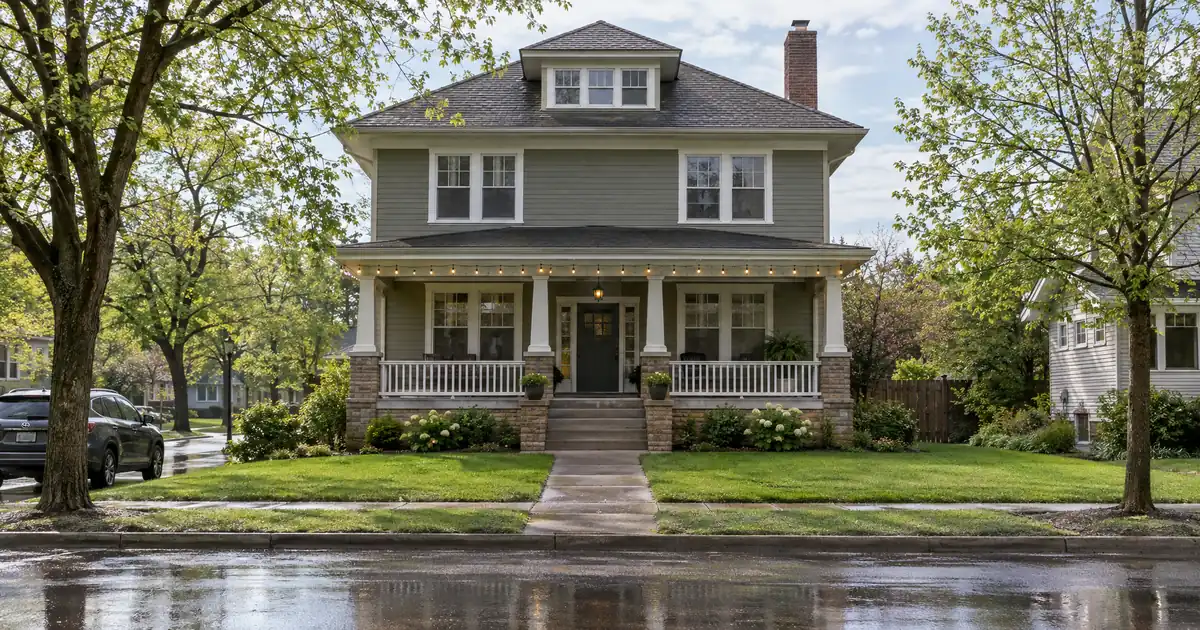
The Quick Read: No. A portfolio DSCR loan puts one note over several rentals, but insurance is a separate contract. On most files across a wholesale lender network, the lender wants proof of acceptable coverage at every property address, with the lender named on it, and one blanket policy or several separate policies can supply that, subject to lender guidelines.
- One note does not create one policy. Evidence of coverage is collected per address either way.
- A master policy can work if it lists each address, carries adequate limits, and names the lender correctly.
- Three markets usually means three different risk pictures, so many investors end up with a hybrid or fully separate policies.
- Flood is its own track and generally cannot be assumed to ride on a master policy.
Here is the part that trips people up. “Portfolio loan” and “master policy” sound like they belong together. They don’t. One is a financing structure. The other is an insurance product. This page explains how each works and where the two meet.
What Does “One Master Policy” Actually Mean?
Three different things get called a master policy, and mixing them up causes most of the confusion. The loan is one thing. The landlord policy is another. An association master policy on a condo building is a third, and it has nothing to do with your rental portfolio.
A true blanket landlord policy is a commercial-style product. One carrier covers many properties under one contract, usually placed through an insurance broker. A multi-location schedule is a close cousin: one carrier, one policy, each address listed with its own limits. Per-property policies are simply one policy per rental, possibly from different carriers.
Any of the three can work for a lender. What matters is what the paperwork shows.
Key Terms Defined
Portfolio DSCR loan: One note secured by several rentals, with a recorded security instrument on each property. Blanket loan and cross-collateralized loan mean the same thing. A bank’s “portfolio loan,” meaning a loan the bank keeps on its own books, is a different use of the phrase.
Blanket insurance policy: One landlord policy that covers multiple properties. It is a separate contract from the loan.
PITIA: Principal, interest, taxes, insurance, and any association dues. DSCR compares rent to this full monthly obligation.
Mortgagee (loss payee): The lender named on the policy so claim money is routed to protect the collateral.
Declarations page: The summary page of a policy showing the insured, the address, the limits, and the lender listed.
Named insured: The person or entity the policy is issued to. It should match who holds title.
One Loan, Many Policies: How the Structures Fit Together
The loan side is simple. Each rental in the pool gets its own recorded security instrument. The lender underwrites the pool as a whole, adding up rents and dividing by the combined debt service. That pooled number is the coverage ratio, and the 30-year portfolio DSCR loan in our network starts at a 1.00 floor measured on the pool, subject to lender guidelines.
The insurance side feeds into that math only through the insurance line in PITIA. Whether you buy one policy or three changes the size of that line. It does not change the structure of the loan.
The lender still collects evidence per address. A master policy does not collapse three properties into one document. It just puts three addresses on one declarations package. Lendmire’s piece Does a Portfolio DSCR Loan Require One Master Insurance Policy? covers the single-policy side in more depth.
For contrast, agency lending offers a useful parallel. The Freddie Mac multifamily guide permits blanket or master policies covering multiple properties, as long as the documentation identifies each property’s full street address. It also says a blanket policy’s coverage must be as good as or better than a stand-alone policy. That is not a DSCR rule. It simply shows the logic lenders tend to follow: the form of the policy is flexible, but the adequacy per property is not.
What the Lender Needs to See for Each Property
Plan on one evidence package per address, whatever policy structure you choose.
| Item | Why it matters | Three-market wrinkle |
|---|---|---|
| Declarations page | Proves coverage exists | One per address, even on a master |
| Lender as mortgagee | Protects collateral | Same wording on every property |
| Adequate limits | Covers rebuild risk | Shared limits may be questioned |
| Named insured | Matches title | Mixed entities need care |
| Flood evidence | Separate peril | Zone status differs by location |
Beyond insurance, every property in the pool still needs a lease or an appraiser-supported market rent. The package also carries entity documents if you hold title in an LLC, subject to program terms. Treat the list as typical, not as a fixed checklist, because lenders differ.
Why Three Markets Make One Policy Harder
A single policy across three markets is possible. It is rarely the easiest path.
Start with the carrier. A blanket policy needs a carrier that is licensed and priced well in every state where you own. Fadaie Insurance makes this point and suggests a hybrid: blanket coverage where it makes sense, individual policies where it doesn’t. A carrier that is strong in one market can be weak in another, and you pay for that weakness on the whole schedule.
Then look at perils. Picture three archetypes: a coastal market, a wind-and-hail market, and an inland market with mostly quiet weather. Each has a different loss profile. Shared limits across all three can leave one property underinsured after a big claim. As Wexford Insurance notes, a blanket limit set too low can leave gaps during major claims. A lender reviewing three markets will notice that.
Finally, local agents matter. Captive carriers that sell only their own policies tend to be less flexible on multi-state schedules, and an independent broker can usually place more. Line that person up before you go under contract on the second or third property.
Flood Is Its Own Track
Do not assume a master policy covers flood. It generally doesn’t. Flood coverage is evaluated per property based on its flood zone, and one rental in your pool may need it while the other two don’t.
Regulated lenders follow interagency flood guidance. The interagency flood Q&A hosted by the FDIC says that when flood coverage is accepted at a lender’s discretion, it must cover both the borrower and the lender as loss payees. Some investor lenders carry similar expectations, so plan for flood to need its own policy and its own lender wording on each affected address.
Worked Example: Premiums Inside the Pooled Coverage Number
These are modeled assumptions, not market data. Say you hold three single-family rentals in three markets. The pool clears roughly 1.20x on the 30-year portfolio DSCR loan with each premium priced separately by the best local carrier.
Now suppose you move to one blanket schedule, and the carrier’s pricing is stronger in two markets but weak in the third. The insurance line rises on that third property. The pooled number might drift toward 1.12x. It still clears 1.00, but your cushion is thinner.
Flip it. If a single carrier prices all three markets well, the blanket might nudge the pool upward, say toward 1.24x. Neither outcome is guaranteed. The point is that insurance cost moves the ratio, which is why it is worth getting quotes on both structures before you submit the file.
One more caution. Clearing 1.00 does not mean positive cash flow. DSCR looks at rent against PITIA only, so repairs, vacancy, management, utilities, and capital spending sit outside the number.
A related point: one rental below 1.00 coverage can sit inside the pool, because stronger properties can offset it. In that case underwriting tests the pooled coverage, the leverage, and the terms. If you want to see how a pool across markets fits on a single note, Lendmire’s article Can You Finance Rentals in Three Markets on One DSCR Loan? walks through it.
Which Setup Fits? A Comparison
| Factor | Three separate policies | One carrier, multi-location schedule | True master policy |
|---|---|---|---|
| Lender acceptance | Straightforward | Usually fine if each address is listed | Fine if limits are adequate |
| Best carrier per market | Yes | No | No |
| Renewal dates | Three | One | One |
| Release when one sells | Cancel one policy | Endorse the schedule | Endorse the master |
| Admin load | Higher | Lower | Lowest |
There is a genuine toss-up here. Separate policies cost more effort and give you the best carrier in each market. One schedule saves administration and gives you one deductible and one renewal date, a benefit Fadaie describes. Many investors with three markets land on the hybrid, and that is a perfectly reasonable answer.
One practitioner pattern is worth knowing. When a pooled file stalls on insurance, the cause is rarely the master-versus-separate question. It is usually a mismatch: the named insured does not match title, the mortgagee clause differs between addresses, or one declarations page lacks the address. A clean, consistent package for every property prevents most of that.
Entities, Named Insured, and Mortgagee Mechanics
The policy should be issued to whoever holds title. If you hold title in an LLC, the named insured should match that entity, subject to program terms. Some structures require a special-purpose entity, typically an LLC, so confirm that early. If the pool mixes entities, you need each policy to match the vesting on its property.
The lender’s name and loss-payee wording should be identical across addresses. On a master policy, the lender is generally listed as loss payee on that single policy, and the loan and the coverage can share one renewal cycle.
Where the General Rule Breaks
Lender-specific requirements. Some lenders prefer one approach. Across a wholesale network, requirements differ, so confirm what your specific lender wants before you buy any policy.
Short-term rentals. Many standard landlord policies explicitly exclude short-term rental activity, according to Fadaie. A blanket landlord policy may need an endorsement for any STR in the pool.
Condo master policies. An association’s master policy covers the building. It is not your landlord policy, and a condo in your pool will still need its own unit coverage.
Mid-loan lapses. If one policy lapses or renews at a higher premium, the lender will want fresh evidence. Per-property policies make that cleaner, because one problem stays contained.
Multi-state eligibility. Whether properties in different states can share a note depends on the structure. The rental portfolio term loan allows properties in several markets or states under one loan. For the 30-year portfolio DSCR loan, confirm multi-market eligibility file by file.
Manufactured homes. Manufactured and mobile homes are not reviewable on these programs.
Program Basics for Context
Your insurance structure sits inside a loan with its own limits. The 30-year portfolio DSCR loan covers 2 to 20 properties under one note, typically $300,000 to $5,000,000, with leverage up to 80% on a purchase or rate-and-term refinance of investment property. It offers a 30-year term with an interest-only period available, and it covers single-family, 2-4 unit, condo, and townhome properties.
The rental portfolio term loan is built for five or more rental properties or units under one loan. Loan size typically runs $500,000 to $50,000,000, with leverage up to 75% on investment property. It uses fixed terms of 3, 5, 7, or 10 years with a balloon at maturity, and recourse and non-recourse options exist, with carve-outs on the non-recourse side. This is the only structure that takes small multifamily of five or more units. Reserves held for taxes, insurance, and capital expenditures are part of that loan.
For the pool, a credit score floor of 640 is typical, with 680 or 720 on some structures. Everything here is subject to lender guidelines and individual underwriting. Partial releases follow the loan documents, the release price runs above the property’s allocated balance, and the remaining portfolio must still cover its debt service. For the full picture of how these loans work, see Lendmire’s complete DSCR loans guide.
Pre-Closing Checklist
1. Get insurance quotes for both a blanket or schedule structure and separate policies in each market.
2. Tell the insurance broker which lender will be named and give the exact wording.
3. Confirm each policy lists the full property address and matches title vesting.
4. Check each property’s flood zone and arrange flood coverage where needed.
5. Review limits and any sub-limits, especially on a shared schedule.
6. Confirm STR use is covered by endorsement where it applies.
7. Gather leases, rent roll, and entity documents with the declarations pages.
Tax treatment varies by situation, so consult a qualified tax professional.
Frequently Asked Questions
Can one policy cover rentals in different states?
Yes, if the carrier is licensed and willing to write in every state involved. That usually means going through an independent broker rather than a captive agent. Many multi-state investors use a hybrid, with a blanket schedule where pricing is good and individual policies elsewhere.
Does a blanket loan mean insurance?
No. The loan is one note secured by several properties. The insurance is a separate contract. The lender wants proof of coverage at each address, and the form of that proof is flexible.
Do I need flood coverage on every property?
No. Flood is evaluated by each property’s location and zone. One rental may need it while another doesn’t. Where it is needed, the lender generally wants to be named on it.
What if one property’s policy lapses?
Expect the lender to ask for replacement evidence promptly. With separate policies, the problem stays contained to one address. With a master policy, a lapse or a pricing change can touch the whole schedule.
Does insurance cost change the pooled DSCR?
Yes. Insurance is part of PITIA, so a higher premium in any market lowers the pooled coverage number. That is why quoting both structures before you submit makes sense.
Next Step
If you are buying or refinancing a rental property and want to see how the numbers work, Lendmire can help you compare DSCR loan options based on the property income, credit profile, leverage, and investor goals. Lendmire arranges financing through select lenders in its wholesale network across 41 markets, including Washington, D.C., and qualification is subject to lender guidelines and is not a commitment to lend.
Three markets mean three insurance conversations, and the investors who handle them early tend to find the loan is the easy part.
About Lendmire
Lendmire — NMLS# 2371349 — is a DSCR and non-QM mortgage brokerage with investor loan programs in 41 markets, including Washington, D.C. DSCR eligibility is commonly reviewed by the lender around property-level rent rather than personal income documentation, subject to lender guidelines, and the brokerage helps arrange financing for LLC-owned portfolios beyond conventional financed-property limits. Recognized by Scotsman Guide as a Top Mortgage Workplace in 2025 and 2026.
Get Started
Ready to find the right loan for you?
In about 30 seconds you can review financing options available for your investment property. No commitment required.
Informational only. Not a Loan Estimate, approval, or commitment to lend. Program availability and eligibility are subject to lender guidelines, credit approval, property review, and underwriting.
References
1. Freddie Mac Multifamily Guide, Chapter 31
2. Fadaie Insurance: How to Insure Rental Properties in Multiple States
3. Wexford Insurance: Insuring All Rental Properties Under One Policy
4. Interagency Flood Insurance Q&A (hosted by the FDIC)
This article is part of Lendmire’s DSCR loan program — full qualification details, guidelines, and scenarios live on the program page.
Related reading: DSCR Loan Concentration Risk for a Portfolio With One Lender · DSCR Loan Lender Failure Rules for a 10-Door LLC Portfolio · Can You Use One Super Jumbo DSCR Loan for 20 or More Rentals?
Brandon Miller
Founder & CEO, Mortgage Loan Originator, Lendmire LLC
- Mortgage Loan Originator · NMLS# 1129696 · Verify on NMLS Consumer Access
- North Carolina Real Estate Broker · License# 343312 · Verify on NCREC
- North Carolina Insurance Producer · License# 19053198 · Property, Casualty, Life, Health · Verify on NAIC SBS
- Lendmire LLC · Firm NMLS# 2371349 · Verify firm licensure
Important disclosures. Lendmire (NMLS# 2371349) is a licensed mortgage brokerage. Lendmire is not a direct lender, depository institution, or financial advisor. All loan inquiries are subject to lender underwriting; this article does not constitute a commitment to lend. Rates, terms, and program guidelines are subject to change without notice and vary by borrower profile, property type, and state. Information in this article is general in nature and is not financial, legal, or tax advice. Equal Housing Opportunity. NMLS Consumer Access: nmlsconsumeraccess.org.