
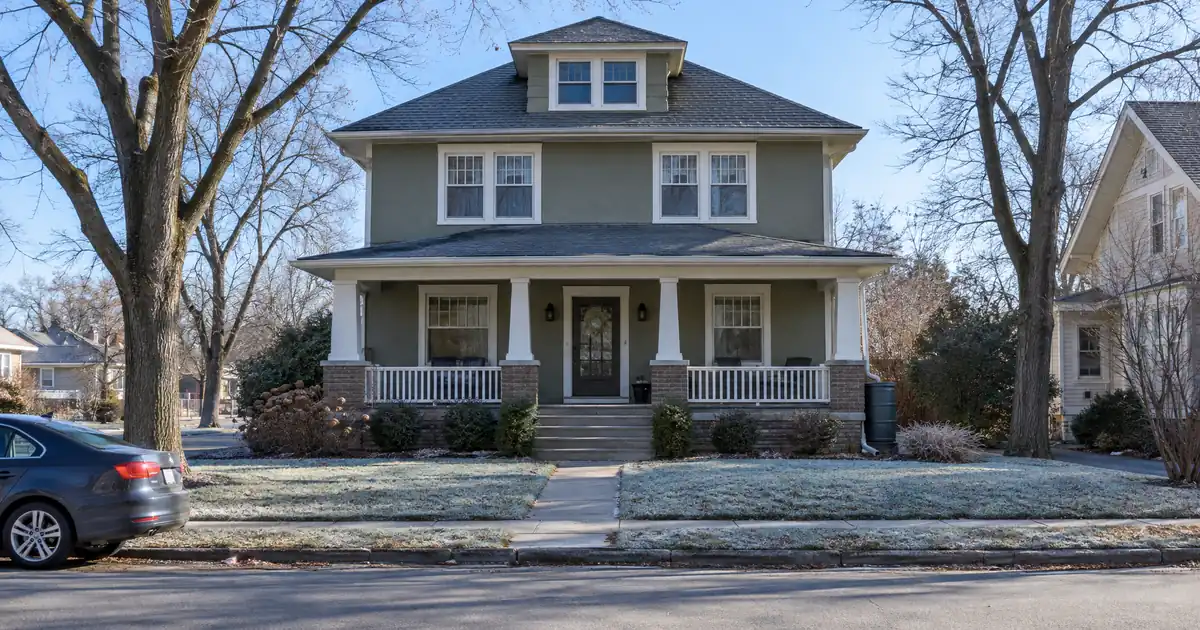
The Quick Read: A portfolio DSCR loan puts several rentals under one note and tests the pool’s combined rent against its combined payment. Rentals leased to relatives can often sit inside the pool when the lease reflects market rent, payments are documented, and the program accepts related-party tenants.
- Programs differ. Some exclude family leases, some allow them with proof, and all bar the borrower’s own household from living in the property.
- Most programs count the lower of the signed lease or the appraiser’s market rent. A family discount lowers the pool’s coverage.
- Coverage is measured on the pool, so strong rentals can offset weak ones. A bad family lease can also drag the pool down.
- A blanket structure ties every property to the whole debt. When only some rentals have family tenants, separate loans may fit better.
Lease terms on family-occupied rentals decide how much rent a pool gets to count. The structure itself is the easy part. Here is how the underwriting works, step by step.
Key Terms Defined
Portfolio (blanket) DSCR loan: One note secured by liens on several rentals, with coverage tested on the whole pool. “Blanket” and “cross-collateralized” name this same loan.
DSCR: Debt service coverage ratio. It is the rent a lender accepts divided by the monthly PITIA (principal, interest, taxes, insurance and any association dues).
Related-party lease: A lease between the borrower and a relative or a business a relative controls. Each program defines “related” in its own way.
Market rent: What an independent appraiser says the unit would rent for to a stranger. It comes from Form 1007 for a single-family home and Form 1025 for two to four units.
Release clause: A loan-document term that lets you pull one property out of the pool, usually at a release price above that property’s share of the balance.
Pooled coverage: Total accepted rent across the pool divided by total PITIA across the pool.
What a Portfolio DSCR Loan Actually Is
Many investors say “portfolio loan” and mean different things. A big bank uses the phrase for a loan it keeps on its own books. That is a different sense of the word. Here, a portfolio DSCR loan means one note, several rentals, and a lien on each property.
Nav explains that a blanket mortgage lets multiple properties secure a single loan, and that investors often use it when buying or refinancing. The same piece warns that it increases the lender’s claim on your property. Defaulting on one loan can affect the others.
Across our wholesale network, two structures cover most portfolio files:
| Feature | 30-year portfolio DSCR loan | Rental portfolio term loan |
|---|---|---|
| Property count | 2 to 20 under one note | 5 or more properties or units |
| Loan size | $300,000 to $5,000,000 | $500,000 to $50,000,000 |
| Leverage | Up to 80% on purchase or rate-and-term | Up to 75% of value |
| Term | 30-year, fixed or adjustable | Fixed 3, 5, 7 or 10 years, balloon |
| Coverage | 1.00 floor, measured on the pool | Set by the structure |
Larger balances are reviewed individually on both. Leverage and size figures are program ceilings, subject to lender guidelines. They are not quotes. Cash-out on a portfolio loan never exceeds 75% of the pooled value.
The 30-year structure takes single-family homes, two-to-four-unit buildings, condos and townhomes, and offers an interest-only period. The term loan adds small multifamily (five or more units). That property type is eligible only on the term loan. Non-recourse structures exist on the term loan, with carve-outs such as fraud and bankruptcy.
Manufactured and mobile homes are not reviewable on any of these programs. Owner-occupied, mixed-use and commercial property are also out.
For the wider picture, see Lendmire’s complete DSCR loans guide.
How Underwriters Treat a Family Lease, Step by Step
DSCR loans are designed for non-owner-occupied investment properties. Because they are business-purpose loans, they are reviewed differently from a standard owner-occupied mortgage. Occupancy is where the family question starts.
Step 1: The occupancy screen. The occupancy affidavit is the first document in the file. Everything else is checked against it. A relative who lives in your household and lives in the property makes it owner-occupied, and no program in the network accepts that. An LLC does not change this. The occupancy statement and the guarantee still reach the members behind it, subject to lender program eligibility.
Step 2: The related-party check. This is a program convention, not a law. A relative in a separate household renting a separate property is a gray zone. Some programs stop here. Some allow it with market rent and payment proof. A few overlays are strict enough to exclude the unit from the pool entirely.
Step 3: Setting the rent. Most programs count the lower of the signed lease and the appraiser’s market rent. A discounted lease lowers coverage. An inflated lease adds nothing, because the cap is market rent. A month-to-month family tenancy gets the same lower-of treatment, and a fresh written lease is the usual fix.
Step 4: Proof of payment. Expect the executed lease plus a bank trail showing the tenant paying with their own funds. Related-party files get a heavier package. A clean trail helps, but it does not guarantee the rent counts as written.
Step 5: Pooled coverage. Underwriting adds the accepted rent on every property, adds the PITIA on every property, and divides. Strong units offset weak ones.
Step 6: Pool-level leverage. The lender adds the debt against every pledged property and divides by their combined appraised value. The leverage cap applies to the pool, not to each house.
Step 7: Release terms. No federal rule gives you a right to release a property. It is a contract term. We cover it below.
A Worked Example: One Family Discount Inside a Pool
Picture five rentals with equal-sized payments. Each unrelated-tenant rental covers its payment at 1.20x. These are modeled assumptions, not market data.
- No family leases: the pool covers at 1.20x.
- One house leased to a cousin at a discount: the lease alone covers 0.90x, and market rent is 1.20x. The lower-of rule counts 0.90x. The pool is (4 × 1.20 + 0.90) ÷ 5, or about 1.14x.
- Two houses leased to relatives at 0.80x each: the pool is (3 × 1.20 + 1.60) ÷ 5, or about 1.04x. It still clears 1.00, but the cushion is thin.
- The program excludes the family house: the other four rentals test at 1.20x, but that house is not part of the loan.
A rental below 1.00 can sit in the pool, because underwriting tests the pooled coverage, the leverage and the terms rather than each house alone. Even so, the discount matters. A family rent that is harmless to your family budget lowers rent used for lender review in the pool.
Clearing 1.00x also is not the same as positive cash flow. DSCR compares rent to PITIA only. Repairs, vacancy, management, utilities and capital costs sit outside the ratio.
Which Family Arrangements Work?
Not every relative is treated the same. The table shows typical treatment, though each program sets its own rules.
| Arrangement | Typical treatment |
|---|---|
| Relative in your household lives there | Owner occupancy. Not eligible. |
| Relative in a separate household, market-rent lease | Varies by program. Often allowed with proof. |
| Same, but lease below market | Lower rent counts. Some programs exclude. |
| Relative’s business as master tenant | Must look arm’s-length, and treatment varies by program. |
| Unrelated tenant | Standard treatment. |
The documentation package for any family lease is the same: a signed lease at or near market rent, the appraiser’s rent schedule, and a bank trail of rent paid from the tenant’s own account. Build that file for every family house at once. Do not wait for the lender to ask.
Tax treatment is a separate question from underwriting. IRS Publication 527 says rent substantially below comparable rents is not a fair rental price, so investors should speak with a qualified tax professional before relying on any deduction.
Where the Rule Breaks
Vacant or rent-ready property. The appraiser’s market rent sets income. Leasing the house to a relative after closing is a loan-document and occupancy question. Check the covenants before you sign anything.
Above-market family lease. Market rent typically counts. Related-party leases get heavy scrutiny, and the lender often defaults to market.
A batch of loans versus a true blanket. Some lenders say “portfolio” about several separate notes closed together. Those do not cross-collateralize. A true blanket has one note and a lien on every property.
Adding a property later. This usually takes a modification, a refinance of the pool, or a separate loan.
A weak remainder after a sale. Releasing one property means the remaining pool must still cover its debt service. Selling your strongest rental is the riskiest move, because the rest may fail the retest. The release price runs above the property’s allocated balance. If a family-leased property has to leave the pool, expect that cost.
The personal guarantee. Releasing one lien does not usually release the guaranty on a recourse loan.
For a related look at spreading one loan across properties in different places, see Lendmire’s piece Can a Single Portfolio DSCR Loan Cover Rentals in Several States?.
Pool or Separate Loans?
This is the real investor decision. A pool buys you one closing and blended qualification. It costs you independence between properties.
| Factor | One blanket loan | Separate loans |
|---|---|---|
| Coverage test | Blended across pool | Each property alone |
| Family-leased house | Can lower or dent the pool | Fails or passes alone |
| Default exposure | Reaches every property | Stays with one lien |
| Selling one rental | Release clause and retest | Simple payoff |
Nav lists foreclosure exposure as a core cross-collateralization risk, and it advises securing a release clause because selling one property is much harder without one. Use that as a prompt in your own planning.
A practical sorting method:
1. Put rentals with unrelated tenants and documented market rent in the pool.
2. Check whether the program accepts related-party tenants at all. If not, those houses go on separate loans or stay unfinanced.
3. For accepted family leases, test pooled coverage with the lower-of rent. If the pool still clears with room to spare, keep the house in.
4. If one family lease is the weakest link, move it out or re-lease it at documented market rent.
Two or three rentals often fit separate loans better, since a pool’s advantages grow with property count. A weak family lease in a small pool moves the ratio more than it does in a large one. That is a pattern we see across files. It is not a rule.
Leverage also matters. A bigger down payment lowers the payment and can lift coverage. It never erases leverage caps, credit floors or property eligibility. The strongest files have enough equity and enough rent coverage. On the portfolio programs, the credit floor is 640, and 680 or 720 on some portfolio structures, subject to lender guidelines. Every property still needs a lease or an appraiser-supported market rent. Some structures require a special-purpose entity, typically an LLC, depending on program guidelines.
For a look at counting many houses in one pool, see Lendmire’s explainer How to Count Twenty-Two Single-Family Rentals in a Portfolio DSCR Loan.
Frequently Asked Questions
Can my brother rent one of the houses in my portfolio loan?
It depends on the program. Some lenders in the network accept a relative in a separate household with a market-rent lease and a payment trail. Others exclude related-party leases. Ask before you build the pool around that house.
Does a family discount sink the whole loan?
Not automatically. The discount lowers the rent the pool is allowed to count, so pooled coverage falls. If the pool still clears the 1.00 floor on the 30-year structure, the file can still be reviewed. Leverage and terms are tested too.
Does putting the properties in an LLC solve the family issue?
No. Occupancy limits can reach the LLC’s members and their families, and the personal guarantee on recourse loans stays in place. LLC ownership is accepted subject to program terms.
What if my relative pays on time but the lease is below market?
Good payment history helps the file, but it does not raise the rent that counts. Most programs use the lower of the lease and the appraiser’s market rent. A new lease at market rent is the normal fix.
Can I take cash out of a portfolio loan?
Yes, on seasoned properties. Cash-out never exceeds 75% of the pooled value, and the structure’s own ceiling also applies. Terms depend on the lender and the file.
About Lendmire
Scotsman Guide named Lendmire (NMLS# 2371349) a Top Mortgage Workplace in both 2025 and 2026.
Lendmire is a mortgage broker. It arranges DSCR investor financing through select lenders in its wholesale network across 41 markets, including Washington, D.C. Qualification runs primarily on property-level rental income covering the payment, subject to lender guidelines. Nothing here is a commitment to lend.
If you are buying or refinancing several rentals and want to see how the numbers work, Lendmire can help you compare DSCR loan options based on the property income, credit profile, leverage, and investor goals. Bring your lease list and any family arrangements, and the team can show which houses belong in a pool.
Get Started
Ready to find the right loan for you?
In about 30 seconds you can review financing options available for your investment property. No commitment required.
Informational only. Not a Loan Estimate, approval, or commitment to lend. Program availability and eligibility are subject to lender guidelines, credit approval, property review, and underwriting.
References
1. Nav: Cross collateralization
This article is part of Lendmire’s DSCR loan program — full qualification details, guidelines, and scenarios live on the program page.
Related reading: DSCR Loan vs Local Bank Commercial Loan on a Fourplex · Should an Investor With Several Rentals Sell One or Use a DSCR Cash-Out? · How a DSCR Lender Applies Debt Yield to a Rental Portfolio Loan
Brandon Miller
Founder & CEO, Mortgage Loan Originator, Lendmire LLC
- Mortgage Loan Originator · NMLS# 1129696 · Verify on NMLS Consumer Access
- North Carolina Real Estate Broker · License# 343312 · Verify on NCREC
- North Carolina Insurance Producer · License# 19053198 · Property, Casualty, Life, Health · Verify on NAIC SBS
- Lendmire LLC · Firm NMLS# 2371349 · Verify firm licensure
Required disclosures. Lendmire (NMLS# 2371349) operates as a licensed mortgage broker, not a direct lender or depository. The discussion in this article is general in nature and should not be relied upon as financial, legal, or tax advice — every investment scenario is unique and should be reviewed by a qualified professional. Any loan inquiry is subject to lender underwriting, and this article is not a commitment to lend or a guarantee of approval. Mortgage rates, loan terms, and program guidelines vary by borrower, property, and state, and may change without notice. Equal Housing Opportunity. Verify licensure at NMLS Consumer Access.