
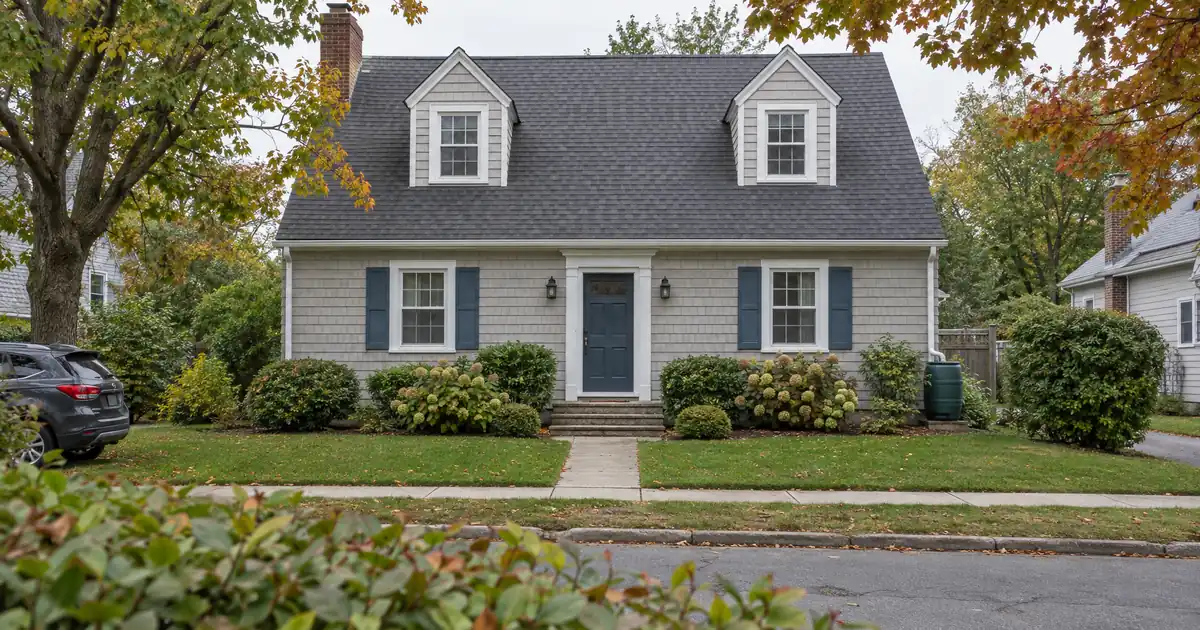
The Quick Read: Yes, a DSCR cash-out refinance can pay off a private or hard-money lender on a rental. The new loan wires the payoff through title, the old lien is released, and any surplus comes to you. It works only when the property clears four gates, subject to lender guidelines.
- Ownership clock: Cash-out programs typically want about six months of ownership, counted from the date the deed was recorded.
- Appraisal: The new lender orders its own appraisal. Your after-repair estimate does not size the loan.
- Leverage cap: Cash-out on an investment property tops out around 75% of appraised value across most of the network.
- Rent coverage: Rent has to cover the new payment. The old private-loan payment does not enter the math.
Here is the straight version. The law does not stop you from doing this. The lender’s program rules decide, and those rules are knowable before you apply.
Key Terms Defined
- DSCR (debt service coverage ratio): Monthly rent divided by the full monthly payment on the new loan.
- PITIA: Principal, interest, taxes, insurance, and association dues. This is the payment the rent has to cover.
- LTV (loan-to-value): The loan balance as a percentage of the appraised value.
- Seasoning: The waiting period between buying a property and refinancing it on current value.
- Payoff statement: The old lender’s written figure for what it takes to retire the note, with a valid-through date.
- Prepayment penalty: A fee some loans charge if you pay them off early.
- BRRRR: Buy, rehab, rent, refinance, repeat. It is a strategy, not a loan product.
How Does the Payoff Actually Happen at Closing?
The title company collects the old lender’s payoff statement, and the new lender wires that amount directly to the old lender. The old lien is then released. Whatever is left after costs goes to you.
The sequence looks like this:
1. Read the old note first. Check the maturity date, extension terms, minimum-interest clauses, exit fees, and any prepayment penalty. Then request a payoff statement with a valid-through date. A stale statement has to be refreshed, and interest accrues daily in the meantime.
2. Classify the exit. If the new loan only covers the payoff and costs, lenders generally treat it as rate-and-term. If cash comes back to you, it is cash-out. Lenders draw that line differently, so confirm it in writing.
3. Let the new lender order its own appraisal and rent figure. An appraiser uses the single-family value form (Form 1004) or, for two-to-four-unit properties, the small-income-property form (Form 1025). Rent support comes from a rent schedule (Form 1007 on single-family). The loan is sized from those numbers.
4. Run the coverage test on the new loan only. The lender divides rent by PITIA on the new loan. Your old private note never enters the ratio.
5. Close through title. The payoff wire goes out, the release gets recorded, and the surplus is disbursed.
BRRRR investors often learn the hard way that the refinance replaces every prior lien. One new mortgage remains. That is the point of the exercise, and it is also why the numbers have to work on the whole payoff, not just the original purchase.
Is Paying Off a Private Lender Cash-Out or Payoff-Only?
It depends on whether any money comes back to you at closing. Payoff-only is a rate-and-term refinance. Anything returned to you moves the loan into cash-out, with the tighter leverage cap.
| Factor | Payoff-only (rate-and-term) | Cash-out |
|---|---|---|
| Cash back at closing | None | Yes, after payoff and costs |
| Leverage ceiling (investment property) | Up to 85% | About 75% |
| Seasoning | Lender-specific | About 6 months of ownership |
| Coverage impact | Smaller loan, easier ratio | Bigger loan, tighter ratio |
Pulling extra cash raises the new payment. That can lower your coverage ratio even though the rent never changed. Many investors forget this until the file is already in review.
What Has to Be True Before a Lender Says Yes?
Four gates matter most: ownership time, appraised value, rent coverage, and the borrower’s credit and reserves. All of this is subject to lender guidelines, and every file is underwritten individually. Fail one gate and the loan shrinks or stalls.
Seasoning. About six months of ownership is the common expectation for cash-out. The clock runs from the recorded deed date. It does not restart when the rehab finishes. Hard money also does not remove the waiting period, because the refinancing lender sets that rule, not the lender you are paying off.
Appraisal. Bridge loans are often sized to purchase price plus rehab cost. The exit lender sizes to appraised value times its LTV cap. The gap between those two numbers is where BRRRR files get stuck.
Rent coverage. Many select programs start at 1.00, meaning rent roughly equals PITIA. Stronger ratios open better pricing and leverage. A separate select-lender path takes coverage below 1.00, with leverage and terms adjusted. A ratio above 1.00 is not positive cash flow, because repairs, vacancy, management, and utilities sit outside the calculation.
Credit and reserves. A 620 floor exists in parts of the network. Most programs want around 660, and 700 or higher unlocks the strongest leverage tiers. Reserves commonly run about six months of PITIA. They step up to about nine months on loans above $1,500,000. Conservative rate-and-term files at modest leverage under that size can see reserves waived.
Property and ownership. The property has to be finished, insurable, and either leased or supportable by an appraiser’s market rent. Entity-owned rentals, including LLC titles, can qualify, subject to lender program eligibility. Manufactured homes, log homes, and barndominiums are not offered.
On size, standard programs run up to $3,000,000. Above $2,500,000 the network generally holds to 30-year fixed structures. For the full picture of how these loans work, see the complete DSCR loans guide.
Worked Example: Does the Appraisal Clear the Payoff?
Run the numbers on a modeled rental, using percentages of value instead of dollars. These are assumptions for illustration, not market data.
Say you expect the property to appraise at a value index of 100. Your total payoff, including accrued interest, exit fees, and closing costs, equals 72% of that value. At a 75% cash-out ceiling, the new loan covers the payoff with about 3% of value left over. That is a thin cushion. Each figure is subject to lender guidelines and a complete review of property type, leverage, and credit.
The break-even appraisal is the payoff divided by the LTV cap. Here that is 72 divided by 0.75, or a value index of 96. If the appraiser lands at 96 or higher, you walk away clean. At 95, the cap yields 71.25 against a 72 payoff, so you bring cash to closing.
Now stress the other side. Suppose the same payoff sits against a rate-and-term structure with no cash back, where the ceiling runs up to 85%. The leverage gate is wide open. The rent test then becomes the deciding gate, because a larger loan on weak rent still fails the 1.00 line.
The lesson: size your bridge backward from the exit. A bridge that borrows at a higher percentage of value than the exit lender will lend leaves you funding the difference.
One pattern shows up repeatedly in files like this. The payoff statement drifts upward every month, while the appraisal is the one number nobody controls. Investors who get through cleanly usually have a cushion in the math and a plan for a low value.
What If You Are Still Inside the Ownership Clock?
Inside the first six months, many programs size to purchase price plus documented improvements instead of a fresh appraised value. A cost-based loan can fall short of a bridge payoff that was sized to cost plus rehab and pushed higher by interest.
Two practical exits exist:
- Payoff-only now, cash-out later. This means two closings, with two sets of costs.
- Wait out the clock. This works only if the bridge note has room to extend and the extension fee is acceptable.
Delayed financing does not usually rescue a financed purchase. It is a Fannie Mae exception that waives the six-month title clock, but it applies only where the original purchase had no mortgage financing. The Selling Guide’s cash-out section also sets a 12-month note-age clock on a first mortgage being paid off. Hard money secured by the property generally disqualifies a purchase from that exception.
This is agency contrast only. DSCR lenders set their own seasoning rules, and agency underwriting leans on personal income and debt ratios instead of rent.
Your Options at Maturity
A refinance is one of four exits. Compare them before the note comes due.
| Option | Fits when | Main risk |
|---|---|---|
| DSCR cash-out or payoff refinance | Finished, seasoned, rent supports the loan | Low appraisal or thin coverage |
| Extend the private note | Close to seasoning or rent-ready | Extension fees, more interest |
| Pay cash | You hold liquidity elsewhere | Ties up capital |
| Sell | Equity is captured and the hold no longer pays | Transaction costs, lost income |
The situation usually points to the path:
| Your situation | Likely path | First move |
|---|---|---|
| Leased and seasoned | Cash-out or payoff refinance | Order the payoff statement |
| Vacant | Payoff-only after leasing, or extend | Secure a lease |
| Rehab unfinished | Extend, then refinance | Finish the work |
| Low appraisal expected | Smaller loan, more cash in, or extend | Run the break-even math |
Payoff grows with interest, extension fees, and any exit charge, so a slow exit costs money every month. Start the refinance and the extension conversation in parallel. If a low appraisal shows up near maturity, the extension is your safety net.
Individual, Family, and Institutional Private Lenders
The mechanics are the same whether your lender is a hard-money firm, a partner, or a relative. What changes is the paperwork. Institutional lenders issue formal payoff statements with per-diem interest. Individuals sometimes work from informal or unrecorded notes.
Expect the title company to want a written payoff figure and a signed release or satisfaction. Ask the private lender for that letter early, because chasing a signature at the last minute delays everything.
If your lender is a relative or seller, Lendmire’s pieces on whether a DSCR cash-out can pay off a private lender or seller note and whether a cash-out refinance can pay off a private note or family loan cover those wrinkles.
Can One Rental’s Equity Pay Off Another Rental’s Note?
Yes, with a catch. You can cash-out refinance a seasoned rental with equity, then use the proceeds to retire a private note on a different property. Coverage is tested on the property you are refinancing, at the larger loan size. The note you retire does not count in that math.
The second property now has a clean title, and you may later refinance it too. Just keep in mind that every extra dollar pulled from the first rental tightens that rental’s coverage.
A portfolio structure is another option. The 30-year portfolio DSCR loan places two to twenty rentals under one note, with coverage measured on the pooled rent against pooled debt service. A portfolio cash-out never exceeds 75% of the pooled value, subject to lender guidelines.
Why These Refinances Stall
The common reasons are timing misalignment, lease and deposit documentation gaps, and appraisal gaps. Rent that cannot carry the new loan is the fourth. If coverage falls short, the income test caps the loan below your payoff. Your choices are a smaller loan, more cash in, stronger rent evidence, or a select-lender program that takes coverage below 1.00 with leverage and terms adjusted.
Short-term rentals need extra care. The standard rent schedule was designed for monthly rent, so it cannot support nightly pricing. Cash-out on short-term-rental collateral tops out around 70%, versus 75% on standard rentals. Expect about twelve months of hosting history and a 640 or higher score. Short-term rental rules can vary by city, county, HOA, and property type, so investors should confirm local rules before relying on projected rental income.
The new loan’s prepayment terms matter. Many DSCR notes carry their own prepayment penalty, so your hold period belongs in the decision.
Business-purpose status. DSCR loans are designed for non-owner-occupied investment properties. Because they are business-purpose investor loans, they are reviewed differently from a standard owner-occupied mortgage. Federal rules treat credit for non-owner-occupied rental property as business purpose, and the lender decides the primary purpose case by case. A compliance article on Lexology cautions that business purpose does not mean compliance-exempt.
Surplus cash. Tax treatment can depend on how the funds are used and how the property is held; investors should keep clear records and speak with a qualified tax professional before relying on any deduction.
Documents and Timing Checklist
Count backward from the maturity date, and give yourself room for a low appraisal. A typical file includes:
- the settlement statement from your purchase,
- the private note, with draw history,
- the payoff statement with a valid-through date,
- rehab invoices,
- the lease and security deposit record,
- bank statements,
- entity documents if an LLC holds title,
- proof of insurance.
DSCR is reviewed on property-level rental income covering the payment, subject to lender guidelines. That suits investors with many properties or complicated personal income. The property still has to carry the loan on its own.
Frequently Asked Questions
Can I refinance if the property isn’t leased yet?
Often yes, if an appraiser supports a market rent. A lease strengthens the file, though, and many lenders want one in place for a refinance. A vacant property usually pushes you toward extending the note or leasing first.
How soon after buying can I get cash back?
Timing depends on the lender’s seasoning rules, which vary by program. Soon after purchase, a payoff-only refinance may be possible, with cash-out later. Both options carry separate closing costs.
What if the appraisal comes in low?
The loan shrinks. At a 75% cash-out cap, a lower value cuts what the lender will advance, and you bring cash to cover the gap. Run the break-even appraisal before you apply, and keep an extension available. Leverage, reserves, and pricing vary by lender and program; the final terms follow the full file review.
Do I owe a prepayment cost on the private note?
Possibly. Check the note for minimum-interest clauses, exit fees, and prepayment terms. The payoff statement should itemize them.
Can an LLC-held property qualify?
Often, subject to lender program eligibility. Expect entity documents in the file, and expect the lender to review title and insurance in the entity’s name.
Next Steps
If you are buying or refinancing a rental property and want to see how the numbers work, Lendmire can help you compare DSCR loan options based on the property income, credit profile, leverage, and investor goals. Lendmire is a broker arranging financing through select lenders in its wholesale network, across 41 markets including Washington, D.C. Request a quote or call 828-256-2183, and bring your payoff statement.
Investors weighing their equity options can start with Lendmire’s guide to cash-out refinance on an investment property.
About Lendmire
Lendmire — NMLS# 2371349 — is a DSCR and non-QM mortgage brokerage with investor loan programs in 41 markets, including Washington, D.C. DSCR eligibility is commonly reviewed by the lender around property-level rent rather than personal income documentation, subject to lender guidelines, and the brokerage helps arrange financing for LLC-owned portfolios beyond conventional financed-property limits. Recognized by Scotsman Guide as a Top Mortgage Workplace in 2025 and 2026.
Get Started
Ready to find the right loan for you?
In about 30 seconds you can review financing options available for your investment property. No commitment required.
Informational only. Not a Loan Estimate, approval, or commitment to lend. Program availability and eligibility are subject to lender guidelines, credit approval, property review, and underwriting.
References
1. Fannie Mae Selling Guide B2-1.3-03, Cash-Out Refinance Transactions
2. CFPB, Regulation Z §1026.3, Exempt transactions
3. Lexology, Beware of Business Purpose
This article is part of Lendmire’s investment property cash-out refinance program — full qualification details, guidelines, and scenarios live on the program page.
Related reading: How a DSCR Lender Tests Coverage With Weak Rentals in the Pool · Can a W-2 Investor at the Loan Cap Fund Down Payments With DSCR Cash-Out? · DSCR Portfolio Refinance vs Selling Part of Your Rentals
Brandon Miller
Founder & CEO, Mortgage Loan Originator, Lendmire LLC
- Mortgage Loan Originator · NMLS# 1129696 · Verify on NMLS Consumer Access
- North Carolina Real Estate Broker · License# 343312 · Verify on NCREC
- North Carolina Insurance Producer · License# 19053198 · Property, Casualty, Life, Health · Verify on NAIC SBS
- Lendmire LLC · Firm NMLS# 2371349 · Verify firm licensure
Important disclosures. Lendmire (NMLS# 2371349) is a licensed mortgage brokerage. Lendmire is not a direct lender, depository institution, or financial advisor. All loan inquiries are subject to lender underwriting; this article does not constitute a commitment to lend. Rates, terms, and program guidelines are subject to change without notice and vary by borrower profile, property type, and state. Information in this article is general in nature and is not financial, legal, or tax advice. Equal Housing Opportunity. NMLS Consumer Access: nmlsconsumeraccess.org.