
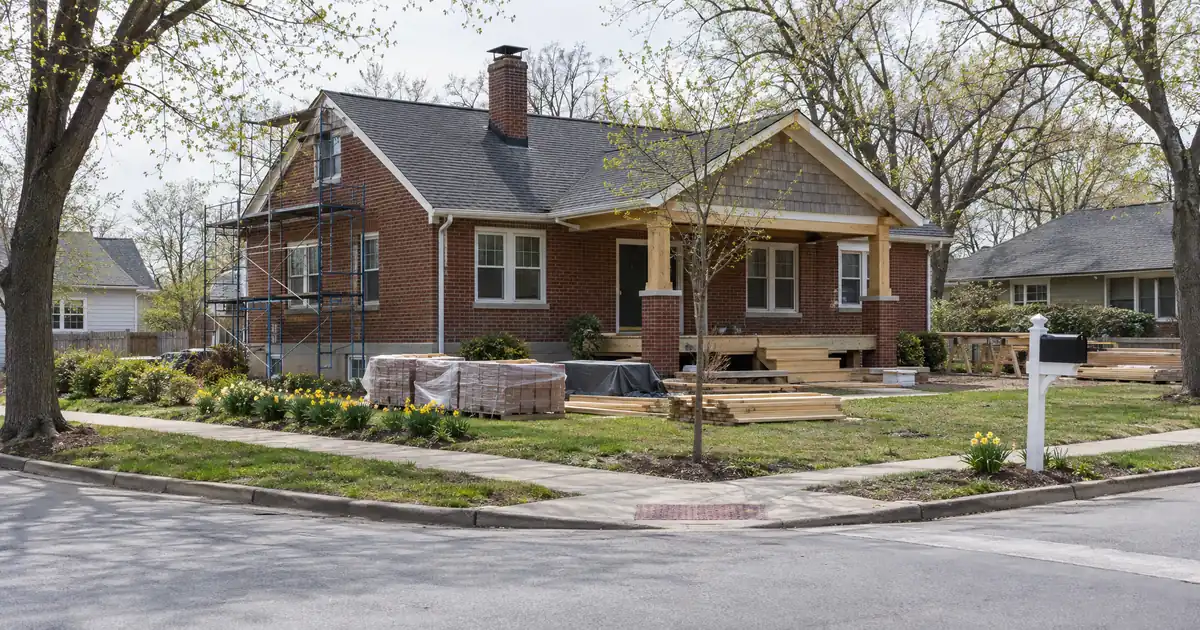
The Quick Read: A 1099 contractor proves a down payment by showing that the cash is in the borrower’s own accounts, that it traces to a clean source, and that it is available to bring to closing. Across the wholesale network, the core evidence is recent account statements with every page, a written explanation for any large or unusual deposit, and paper for any non-earnings source such as an asset sale.
- Hard money is asset-based, so the down payment is often the main place a self-employed file gets reviewed.
- Show the most recent statements, all pages, from accounts in the borrower’s or the entity’s name.
- Explain any deposit that does not match a known 1099 payer.
- Keep down payment, closing costs, and reserves separate in your own accounting.
- Move money early and keep the paper. Everything varies by lender, property, and experience.
A 1099 contractor’s income is easy to document with the forms the payers send. The cash for the deal is a different test. Hard money lenders care less about how you earn and more about whether the cash is real, yours, and not borrowed without disclosure. This article walks through how that test works, step by step, and where it breaks down.
What this loan actually costs to carry.
Hard money is sized against the project and priced by time. Enter the deal and see how much the program will lend, the cash required at closing, the carry while you hold it, and what is left at the exit.
Leverage tiers on the current program: 85% with fewer than 2, 90% with 2 or more, 93% with 5 or more completed projects — every tier capped at 75% of after-repair value. Loan amounts up to $5,000,000, larger by exception; terms of 6 to 18 months, interest-only, no prepayment penalty. The rehab portion funds in draws against completed work, not at closing.
Program parameters shown update from Lendmire’s centralized guideline source. Rate, points, and months are editable assumptions, not quoted terms.
Cost cap sets the loan · positive spread
Illustrative estimate only — not a quote, Loan Estimate, approval, or commitment to lend. Rate, points, and months are editable assumptions. Hard money is business-purpose financing for real estate investors, not a consumer mortgage. Leverage on the current program tops out at 93% of project cost for investors with a documented track record, capped at 75% of after-repair value, with rehab funding up to 100% of the documented budget released in draws; actual terms vary by lender, borrower experience, property, and exit. Lendmire is a mortgage broker, not a lender.
What Does “Proving a Down Payment” Actually Mean?
Proving a down payment means showing three things: the money exists, it belongs to you, and you can trace where it came from. Lenders in the hard money space want to see skin in the game before they advance funds against a property.
Hard money for a flip or bridge purchase is lent against project cost and after-repair value. Across the network, leverage is tiered by documented completed projects. Fix-and-flip loans run up to 93% of project cost at 5 or more completed projects, 90% at 2 or more, and 85% with fewer than 2, with every tier capped at 75% of after-repair value. A bridge purchase without rehab runs up to 80% of purchase price. Whatever the tier, the gap between the loan and the cost is the borrower’s cash. That gap is what gets verified. Programs vary by lender, property, and experience, and nothing here is a commitment to lend.
There is no true 100% purchase program. Some borrowers hear “100% financing” and assume no cash is needed. What actually exists is a high loan-to-cost tier for experienced investors, plus draws that fund up to 100% of the rehab budget against completed work. The purchase side still needs the borrower’s cash.
Why 1099 Contractors Get Extra Questions
A 1099 contractor’s accounts are busy. Client payments arrive by ACH, check, Zelle, or a payment app, often in uneven amounts. That is normal. The question comes when a lump sum shows up that does not match any payer.
The IRS treats independent contractors as self-employed, reporting on Schedule C. Lenders often want some proof of business activity, such as a business license, a CPA letter, or entity documents. For a hard money file, though, the income paper is secondary. Underwriting stays asset-based: the property, the plan, and the exit.
Here is the catch. Because the lender is not building a traditional employment income picture, the bank statement becomes the main document in the file. An unexplained deposit has nowhere to hide.
Payouts from Stripe, PayPal, or Square can complicate this. Those typically report on Form 1099-K rather than 1099-NEC, so a processor statement may be needed to tie a deposit to a payment stream.
Step One: Sort the Money Into Buckets
Before collecting any paper, decide what each dollar is for. Down payment, closing costs, and reserves are three separate buckets.
This matters because lenders treat them differently. Borrowed funds are commonly accepted for the down payment and closing costs with documentation, but are often excluded from reserves. The same cash cannot be counted twice. If the account shows enough for the down payment but nothing left for holding costs and closing, the file reads as thin.
A simple worksheet helps: the cash needed to bring to closing on one line, the post-closing liquidity on another, and the account each comes from. Reserves vary by lender, leverage, loan size, and transaction type, so confirm what the specific program wants before the file goes in.
Step Two: Show the Account Statements
The common ask is the most recent one or two statements, every page, in the borrower’s name or the borrowing entity’s name. Skipped pages are the surest way to draw a follow-up. Pages that show only a balance without activity do not help either.
On hard money, the statement often serves as a proof-of-cash-to-close check. BiggerPockets practitioners say most hard money lenders will at least want a bank statement of some kind to confirm the borrower has the cash, though a few do not season assets at all.
For a contractor, a few habits keep the statement clean:
1. Pull full statements, not screenshots or balance summaries.
2. Use the account where the money has been sitting, not a new account opened for the deal.
3. If funds sit in a business account, be ready to show ownership and access to that account.
4. Keep the personal and business accounts separate, with transfers between them labeled.
Step Three: Source Every Large Deposit
A large deposit is any amount that stands out against the account’s normal pattern. Underwriters sort deposits by type, and the treatment depends on the source.
| Deposit type | Typical treatment | What to provide |
|---|---|---|
| Client payments (1099) | Ordinary activity | 1099 forms, invoices |
| Asset sale proceeds | Can count as assets once sourced | Bill of sale or settlement statement |
| Transfer from another account | Traced back | That account’s statements |
| Gift | Per program rules | Gift letter, donor statement |
| Loan or borrowed funds | Per program rules, disclosed | Loan documents |
| Unknown deposit | Needs explanation | Letter plus supporting paper |
Experian explains that seasoned funds are money that has typically been in your account for at least 60 days, and that lenders review recent large deposits to confirm the funds come from an acceptable source and are not undisclosed borrowed money. That is a consumer-mortgage norm. Hard money follows the lender’s own policy, so use it for the concept, not as a rule. Some hard money files ask only for a source, not seasoning.
The practical point for a contractor: a deposit that matches a 1099 payer is easy. A lump sum that does not match is the one that needs a short written explanation and a document behind it.
What Counts as a Clean Source?
A clean source is one the borrower can trace to their own earnings or to a documented sale of their own asset. Three questions decide it:
- Does the source trace to the borrower’s earnings or sale proceeds?
- Does the money look borrowed or gifted?
- Does the deposit pattern match the 1099 income history?
If the answer to the first is yes and the second is no, the file is usually simple. If the money came from elsewhere, the paper just has to say so. Experian lists a gift letter, bill of sale, or written explanation as examples of what may be enough. Not every deposit is a problem. An explained deposit is a non-issue.
Where the General Rule Breaks
Several edge cases change what the file needs. Each depends on the lender, so confirm before moving money.
Gifts. Programs differ. Some lenders do not allow gifted funds on investment property, which is conventional-loan thinking. Other investors report that some hard money lenders do not check. Treat both as unreliable and ask the program directly. Never describe a gift or a loan as income to make the file easier. That is a misrepresentation, and it can become a fraud problem.
Borrowed funds and equity. Borrowed money may be accepted for the down payment with documentation, but is often excluded from reserves. One lender asking for a couple of months of seasoning on borrowed funds is that lender’s habit, not a universal rule. Disclose it either way. Undisclosed secondary financing is what lenders are trying to catch.
Partner or private-money capital. Funds from a partner need a documented transfer and a clear explanation of the arrangement. A wire into the borrower’s account with a signed agreement is far cleaner than cash that appears the week before closing.
Entity borrowers. Buying through an LLC does not remove the source-of-funds review, and entity eligibility is subject to lender program eligibility. Expect to show the operating agreement, proof of ownership, and statements for whichever account funds the deal.
Business-purpose loans versus owner-occupied. Hard money here is for non-owner-occupied residential property, one to four units, with ground-up construction up to ten units. Because these are business-purpose loans, the CFPB’s Regulation Z commentary deems credit to acquire, improve, or maintain non-owner-occupied rental property as business purpose. The lender’s documentation demands come from its own credit policy and anti-fraud practice. An owner-occupied property is a different situation and not part of these programs.
Money set aside for taxes. A contractor’s balance often includes cash owed for quarterly taxes. The lender sees the balance, not the obligation. Plan so the down payment, closing costs, and reserves are covered after the tax money is set aside. Tax treatment varies; consult a qualified professional.
A Worked Walkthrough: From Client Payments to Closing
Picture a contractor who has been building the down payment over several months from client payments. The deposits come from a handful of payers who send 1099-NEC forms, so each deposit has an obvious match. A few weeks before the offer, the contractor sells a work truck and deposits the proceeds in the same account.
The file now has two kinds of deposits. The client payments need only the 1099s. The truck sale needs a bill of sale and a note on the statement. That is the whole fix: one page of paper for the one deposit that does not match a payer.
Now picture the same contractor who instead moves money from a business account to a personal account the week before closing, with no labels and a different account name. The file now needs ownership proof for the business account, a transfer record, and a written explanation. Nothing here is fatal. It is just avoidable friction.
The lesson from files like these: the contractor with a steady pattern and one explained exception moves through review with fewer gaps than the one with several unexplained transfers.
Timing: Move Money Early
A simple fix is to move money well before the file goes in. Experian notes that seasoned funds usually do not need their source documented, since they have sat in the account long enough to look ordinary. Cash that has been in the borrower’s account for a while looks like savings. Cash that arrived last week looks like a transfer.
So if the plan involves a partner’s capital, an asset sale, or borrowed funds, do it early and keep the paper. Do not shuffle money between accounts during review. Each move creates a new line the underwriter may ask about.
Proof of Funds Versus Income Proof Versus Reserves
These get mixed up, so here is how they differ.
| Item | What it answers | Typical evidence |
|---|---|---|
| Proof of funds | Do you have the cash to close? | Account statements |
| Source of funds | Where did the cash come from? | Deposit explanations, sale documents |
| Income proof | How do you earn? | 1099s, business documents |
| Reserves | Cash left after closing | Statements showing post-closing liquidity |
A 1099 does document income. Down payment sourcing is a separate asset test. A contractor can have strong 1099 history and still stall a file with an unexplained deposit. The reverse is also true: a short self-employment history does not sink a file whose cash is well documented, since underwriting stays asset-based.
Mistakes That Stall Files
- Sending partial statements or screenshots.
- Leaving a large deposit unexplained and hoping nobody asks.
- Moving money between accounts during review.
- Counting the same cash as both down payment and reserves.
- Calling a gift or a loan income.
- Opening a new account just before closing and funding it all at once.
- Forgetting that the down payment on the bridge loan can resurface when the borrower later refinances.
That last point is worth planning for. Many investors refinance out of hard money into long-term DSCR financing once the property is stabilized, and Lendmire brokers that path. The same accounts may be reviewed again then, so a clean trail on the first loan helps the next one. The complete DSCR loans guide covers how that second loan is reviewed.
A Short Explanation Letter Outline
When a deposit needs explaining, keep the letter short and factual. A workable outline:
1. State the date and amount of the deposit and the account it landed in.
2. Name the source in one sentence, such as a sale of equipment or a client payment.
3. Attach the supporting document, such as a bill of sale, invoice, or other account statement.
4. Confirm the funds are the borrower’s own and are not borrowed.
5. Sign and date it.
No narrative needed. Underwriters read dozens of these, and a plain one-page note with a document behind it does more than a long story.
Key Terms Defined
Proof of funds: documentation, usually account statements, showing the borrower has the cash needed to close.
Source of funds: the origin of the cash, such as earnings, an asset sale, or a transfer, traced through paper.
Seasoned funds: money that has sat in the borrower’s account long enough to look like ordinary savings, often cited at around 60 days in consumer mortgages.
Large deposit: a deposit that stands out against the account’s normal pattern and may need a written explanation.
Reserves: cash the borrower holds after closing, kept separate from the down payment.
Loan-to-cost: the loan amount as a share of total project cost, the basis for hard money leverage tiers.
Related Reading
Contractors weighing how a lender counts their cash can read Lendmire’s piece How a Hard Money Lender Counts Down Payment for a 1099 Contractor.
If you are buying, rehabbing or refinancing an investment property on a short timeline and want to see how the numbers work, Lendmire can help you compare hard money options based on the project, the exit plan, leverage, and your goals.
This article is general information, not legal or tax advice. Consult a qualified attorney or CPA about your own situation.
Frequently Asked Questions
Do hard money lenders really check where my down payment came from?
Most want at least a bank statement to confirm the cash exists, and many look at large deposits. A few lenders do little asset seasoning, but policies differ lender to lender, so ask up front. Across the network, the safest assumption is that the statement and any unusual deposit will be read.
Is my 1099 enough to prove the down payment?
No. The 1099 documents income. The down payment is an asset question answered by account statements and, where needed, a source explanation. The forms help by matching client payments to deposits, but they do not show the cash is available.
Can I use gifted or borrowed money for the down payment?
It depends on the program. Some allow documented gifts or borrowed funds for the down payment, while many exclude borrowed money from reserves. Disclose everything and get the rule in writing before moving funds. Never label a gift or a loan as income.
How long should money sit in my account first?
Consumer mortgages commonly cite about 60 days, but hard money follows the lender’s own rules, and some ask only for a source. Earlier is cheaper, since older cash looks like savings and needs less explanation. Confirm the specific lender’s expectation.
What if my down payment is in a business account?
Expect to show that you own the account and can access the funds, usually through entity documents and statements. Keep the transfer to any personal account labeled, and do it well before the file goes in.
About Lendmire
Lendmire (NMLS# 2371349) is a mortgage brokerage focused on DSCR investor financing, helping arrange programs through wholesale and investor-lending channels in 41 markets, including Washington, D.C. DSCR loans are evaluated by the lender on property cash flow rather than personal income, subject to lender guidelines, supporting LLC closings and accommodating investors with four or more financed properties. Scotsman Guide Top Mortgage Workplace in both 2025 and 2026.
Get Started
Ready to find the right loan for you?
In about 30 seconds you can review financing options available for your investment property. No commitment required.
Informational only. Not a Loan Estimate, approval, or commitment to lend. Program availability and eligibility are subject to lender guidelines, credit approval, property review, and underwriting.
References
1. IRS, Form 1099-NEC independent contractors FAQ
2. BiggerPockets, hard money lender for first-time investor
3. Experian, what seasoned money for a down payment means
4. CFPB, Regulation Z § 1026.3
This article is part of Lendmire’s hard money loan program — full qualification details, guidelines, and scenarios live on the program page.
Related reading: Hard Money Bridge Down Payment Documents for a Single-Family Home · How Hard Money Lenders Count Rehab Funds Toward Your Minimum Down · How a Hard Money Lender Counts a Seller-Financed Down Payment
Brandon Miller
Founder & CEO, Mortgage Loan Originator, Lendmire LLC
- Mortgage Loan Originator · NMLS# 1129696 · Verify on NMLS Consumer Access
- North Carolina Real Estate Broker · License# 343312 · Verify on NCREC
- North Carolina Insurance Producer · License# 19053198 · Property, Casualty, Life, Health · Verify on NAIC SBS
- Lendmire LLC · Firm NMLS# 2371349 · Verify firm licensure
Important disclosures. Lendmire (NMLS# 2371349) is a licensed mortgage brokerage. Lendmire is not a direct lender, depository institution, or financial advisor. All loan inquiries are subject to lender underwriting; this article does not constitute a commitment to lend. Rates, terms, and program guidelines are subject to change without notice and vary by borrower profile, property type, and state. Information in this article is general in nature and is not financial, legal, or tax advice. Equal Housing Opportunity. NMLS Consumer Access: nmlsconsumeraccess.org.