
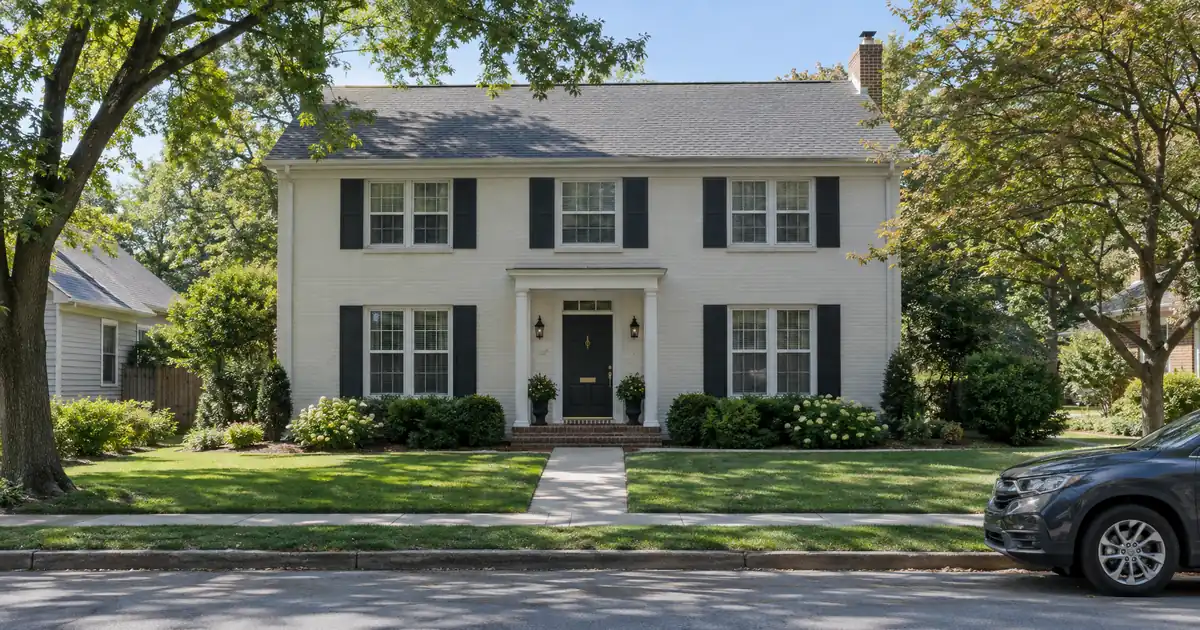
The Quick Read: Yes, a disabled veteran can generally add a private HELOC behind an existing VA first mortgage. The VA offers no home equity line of its own, so the new line records as a second lien, and a disability rating does not change that lien structure or your eligibility with the HELOC lender. What decides the outcome is how much equity you have, your credit, and your debt load.
- The HELOC comes from a private lender, not the VA, so no certificate of eligibility is involved.
- Your disability rating does not block or unlock the line. The lender looks at equity, credit, income, and debt-to-income ratio.
- A recent zero-down VA buyer often has too little equity to qualify yet.
- The VA loan itself stays owner-occupied. HELOC cash can help fund a rental down payment, but the VA loan cannot buy the rental.
- A later refinance of the VA loan means the HELOC lender must subordinate or you pay the line off.
Key Terms Defined
You will see six terms here. Here they are in plain words.
- HELOC: a home equity line of credit, a revolving line secured by your home, which you draw on as needed.
- Lien position: the order in which lenders get paid if the home is sold or foreclosed. First lien is paid first; second lien is paid after.
- CLTV (combined loan-to-value): all loans on the home added together, divided by the home’s value.
- Subordination agreement: a signed document in which one lender agrees to stay behind another in lien order.
- Funding fee: the one-time charge on most VA purchase and refinance loans. Many veterans with a service-connected disability rating are exempt.
- DSCR (debt service coverage ratio): a rental property’s rent divided by its full monthly obligation of principal, interest, taxes, insurance, and any association dues.
How large a line the equity supports.
An equity line is sized by combined loan-to-value, occupancy, and credit — not by rental coverage. Switch the occupancy or the credit band and the ceiling moves with it.
Investment-property lines require a 700 minimum credit score; second-home lines start at a 640 minimum and primary-residence lines at 600, and the combined-LTV ceiling steps down as the credit band drops on primary-residence and second-home lines and holds on investment-property lines; the line cap steps down on primary-residence lines and holds at every tier on investment-property and second-home lines.
A debt-to-income ratio above 45% requires 680+ credit. Profiles under 640 are limited to single-family homes. At least 75% of the approved line is drawn at closing. Ceilings, floors, and caps update from Lendmire’s centralized guideline source.
Line estimate
Illustrative estimate only — not a quote, Loan Estimate, approval, or commitment to lend. The rate is an editable assumption; equity-line pricing is variable through both the draw and repayment periods and never converts to fixed. Occupancy and credit drive the ceiling together: an investment property tops out at 70% combined LTV (minimum credit 700, line cap $500,000); a second home tops out at 90% combined LTV (minimum credit 640, line cap $500,000), with the ceiling stepping down as the credit band drops (the cap holds at every tier); a primary residence tops out at 90% combined LTV (minimum credit 600), and its $750,000 maximum line is available only at 75% combined LTV or below with a 700-or-better credit profile (720 on the longer-runway program) and a full appraisal. Lines above $500,000 require a full appraisal. Credit, debt-to-income, property type, and full underwriting review all affect the final line.
What Does a HELOC Lender Look at on a VA-Financed Home?
A HELOC lender treats a VA-financed home like any other primary residence with a first mortgage on it. Across the wholesale network Lendmire works with, the lender checks equity, credit, debt-to-income, property type, and title. VA status is not on the list.
Here is what the file looks like in practice.
Equity comes first. A VA purchase often starts with little or no down payment. If you bought recently, you may owe nearly the full value. In that case there is no room for a second lien yet. Time and principal paydown, or a rise in value, create the room.
Leverage limits are tiered by credit. On a primary residence, the network ceiling reaches 90% CLTV only with a 720 or better credit profile, and only on lines up to $500,000. Lines up to $500,000 at a 660 to 719 profile typically top out at 85% CLTV on a primary residence. At 640, the ceiling is 80%. At 620, it falls to 70%, and at 600, to 60%. Those lower tiers apply to lines up to $400,000. Lines above $500,000 are primary-residence only, cap at 75% CLTV, and need a full appraisal. Every figure is subject to lender guidelines and full file review.
Debt-to-income is capped. The maximum is typically 50%, and 45% for credit profiles from 600 to 679. The lender reviews your file on the interest-only payment calculated on the maximum draw, not on what you plan to use.
Credit and valuation matter. The program floor is 600. Lines at or below $500,000 usually run an automated valuation with no traditional appraisal, and you can request a full appraisal if you want one.
Title is simple. The home must be held by you individually or in a revocable living trust. This is a primary residence, so that is normally the case.
Availability is narrower than DSCR. HELOC placement runs in 16 full-service states: AL, CA, CO, FL, GA, IN, MI, MT, NM, NC, OH, PA, TN, TX, VA, and WA. That is narrower than the 41-market DSCR footprint.
Does a Disability Rating Change Anything?
A disability rating does not change your HELOC eligibility. The HELOC is a private loan, so the VA is not a party to it. There is no benefit to claim and no approval to request from the VA.
Where the rating matters is on your first loan. Veterans who receive service-connected disability compensation are generally exempt from the VA funding fee. That exemption belongs to VA purchase and refinance loans. It does not waive any cost on a HELOC. If compensation is awarded retroactively to a date before your closing, a refund of the fee may be possible.
Two practical points follow. First, the HELOC lender decides how to document your income, and the program sets those rules. Ask early what paperwork your income type needs. Second, you carry two payments once the line is drawn, so test the combined load against your actual monthly budget before you apply.
What Do the VA’s Own Rules Say About a Second Lien?
The VA’s rules allow a second lien as long as your VA loan stays first. VA Circular 26-24-17 says a VA-guaranteed home loan, other than one for repairs, alterations, or improvements, must be secured by a first lien. It also describes secondary borrowing as generally not prohibited by the VA. The warning in the same document is the one to remember: a secondary loan handled the wrong way can put the first-lien position at risk.
The federal loan guaranty rules point the same way. VA’s regulations at 38 CFR Part 36, Subpart B address lien priority and allow supplemental loans when the lien sits immediately behind the guaranteed loan.
Your HELOC is recorded after the VA mortgage, so it is junior from day one. You need no subordination at origination when the line is added to an existing VA loan.
Subordination comes up when you later refinance the VA loan. The new VA loan must regain first position, so the HELOC lender has to sign a subordination agreement. If it refuses, you generally pay the line off. A related point, when someone assumes a VA loan, is that the junior loan does not have to be assumable, though that may limit a future sale by assumption.
Myth check on two common worries. A HELOC does not void your VA loan. And there is no VA-branded HELOC, whatever a marketing page implies.
How Much Can You Actually Borrow?
You can borrow the room between your VA balance and the lender’s CLTV ceiling, capped by the program’s line limit. The formula is short: home value times the maximum CLTV, minus what you owe on the VA loan. Whatever is left is the most the line could be.
Two scenarios show how different the answer can be.
The recent buyer. Say you bought with a VA loan and nothing down, and you have a 720 credit profile. The network ceiling on a primary residence is 90% CLTV. Your VA balance sits near 100% of value. There is no room. You wait for paydown and appreciation to open a gap.
The long-time owner. Picture a veteran who has owned for many years, with a VA balance well below half of value and a 700 credit profile. A line at up to 85% CLTV on a primary residence leaves a large gap. The line size, not equity, becomes the limit, because the maximum line is $750,000, or $500,000 for most tiers.
A few structural facts to know before you apply:
- The line sits in first or second lien position. Behind a VA loan, it is second.
- Lines carry one of two draw structures: a 3-year interest-only draw with a 17-year repayment, or a 5-year interest-only draw with a 25-year repayment.
- At least 75% of the line is drawn at closing. You pay on most of it from day one, so do not size it as a standby reserve.
- Pricing floats during the draw and repayment periods and never converts to fixed.
- After closing, the minimum subsequent draw is typically $1,000.
For an extra look at how a standing line behaves behind a different first loan, see Lendmire’s piece Can You Put a HELOC Behind an FHA First Mortgage?.
HELOC or VA Cash-Out Refinance: Which Fits a Disabled Veteran?
A HELOC keeps your existing VA loan intact. A VA cash-out refinance replaces it. For a veteran who is exempt from the funding fee, the cash-out refinance looks better than it does for most borrowers, because that fee disappears. The right choice depends on your current loan terms and how much cash you need.
| Factor | HELOC behind VA | VA cash-out refinance |
|---|---|---|
| Existing VA loan | Stays in place | Replaced |
| Number of payments | Two | One |
| Funding fee | None on the line | Waived if you are exempt |
| Later refinance | Needs subordination | No second lien to handle |
| Pricing on new money | Floats, never fixed | Set by the new VA loan |
If you like your current VA loan terms, the HELOC protects them. If you want one loan and one payment, the refinance is cleaner. Lendmire’s piece Variable HELOC vs Fixed Cash-Out Behind a DSCR First Lien shows the same tradeoff for an investor’s first lien.
Can the HELOC Help You Buy a Rental?
It can help fund the down payment, but the VA loan cannot buy the rental. A VA loan is owner-occupied financing, and you certify that the home is your primary residence. Investment properties and second homes do not qualify. Misstating your occupancy intent carries serious consequences, so do not try to stretch it.
There is one built-in exception worth knowing. A VA loan can buy an owner-occupied 2-4 unit property, where you live in one unit and rent the others. That is house hacking, and it fits the VA program as long as you actually occupy the home.
Once the occupancy condition has been satisfied, the next purchase is usually a pure investment property. That is where a DSCR loan fits. DSCR loans are designed for non-owner-occupied investment properties. Because they are business-purpose investor loans, they are reviewed differently from a standard owner-occupied mortgage. The loan is reviewed primarily on property-level rental income covering the payment, subject to lender guidelines. Read the complete DSCR loans guide for the full mechanics.
Here is what the DSCR side looks like on most files across the wholesale network:
- Purchase leverage: typically 75% to 80% LTV on a purchase, which means 20% to 25% down. Select programs reach 85% LTV with roughly a 700 or better score.
- Credit: a 620 floor exists in parts of the network. Most programs want around 660, and 700 or better opens the strongest tiers.
- Coverage: 1.00 is where many select programs start. A separate select-lender path takes coverage below 1.00, with leverage and terms adjusted. Stronger ratios open better pricing and leverage.
- Reserves: commonly around 6 months of PITIA (principal, interest, taxes, insurance, and any dues), though this varies with the lender, leverage, and loan size.
- Loan size: typically up to $3,000,000 on standard programs (smaller balances available through select lenders).
Clearing 1.00 does not mean the rental produces positive cash flow. DSCR compares rent to the monthly obligation only. Repairs, vacancy, management, utilities, and capital expenses sit outside it.
On the down payment itself, the lender still wants to see where the money came from, and borrowed funds are reviewed under each program’s terms. The HELOC also adds a payment on your home. Confirm how a given program treats it before you count on the line. A bigger down payment can lift the coverage ratio, but it never erases leverage caps, credit floors, or reserve rules. Strong files clear both tests: enough equity and enough rent.
Tax treatment can depend on how the funds are used and how the property is held; investors should keep clear records and speak with a qualified tax professional before relying on any deduction.
What Are the Risks to Weigh?
The biggest risk is that you secure a rental purchase with your own home. If the rental underperforms, the HELOC still comes due, and your primary residence stands behind it.
Other risks to size up:
- Floating pricing. The line never converts to fixed, so the cost can move over time.
- Payment step-up. After the interest-only draw ends, principal repayment begins, and the payment rises.
- Heavy initial draw. With at least 75% drawn at closing, you carry most of the balance immediately.
- Fixed-income strain. Two payments on one household budget can leave little cushion.
- Refinance friction. A later change to your VA loan depends on the HELOC lender signing a subordination.
This setup tends to work best for a long-time owner with deep equity, steady income, and a rental that clears coverage on its own with room to spare. It tends to work poorly for a recent zero-down buyer, or for anyone who would have to stretch the DSCR coverage to make the purchase work.
Step by Step: How the Process Runs
1. Pull your VA loan balance and a realistic home value to estimate CLTV.
2. Check your credit profile against the credit tiers described earlier.
3. Decide how much you really need, remembering most of the line is drawn at closing.
4. Gather documents for your income type and your property.
5. Apply for the line, and have the HELOC lender confirm what valuation the file needs.
6. If the line will fund a rental down payment, price the rental against DSCR guidelines before you commit.
Property types matter too. Single-family homes, 2-4 units, PUDs, townhomes, and condos are eligible for the HELOC. Manufactured homes, co-ops, condotels, and log homes are not. Manufactured homes, log homes, and barndominiums are also not offered on the DSCR side.
Frequently Asked Questions
Does a HELOC on a VA-financed home affect my VA entitlement?
No. The HELOC is a separate private loan, and it does not use VA entitlement. Entitlement attaches to the VA loan itself. The HELOC lender cares about lien position and combined leverage, not your entitlement balance.
Do I need VA approval or a certificate of eligibility to get the line?
No. The VA is not part of a private HELOC. You apply to the HELOC lender, which reviews the file under its own program guidelines. The first-lien rule is the one VA concern, and a HELOC recorded behind your VA loan respects it.
Why might a lender turn me down if I just bought with a VA loan?
Usually there is not enough equity. A VA purchase can start with little or nothing down, so combined leverage may already sit at the ceiling. Once paydown and appreciation build equity, the same file can look very different.
What happens to the HELOC if I refinance the VA loan later?
The new VA loan must be first in line. The HELOC lender must sign a subordination agreement, or you pay the line off. If you choose a VA cash-out refinance, proceeds can retire the line, and then no subordination is needed.
Can I use a HELOC on my VA-financed home as the down payment on a rental?
Often yes, subject to the DSCR program’s rules on borrowed funds. Plan on documenting where the money came from. Also test the rental’s coverage ratio, since the HELOC adds a payment to your own budget.
Next Step
If you are considering a home equity line and want to see how the numbers work, Lendmire can help you compare HELOC options based on the property, the equity available, credit profile, combined leverage, and your goals. Lendmire is a mortgage broker arranging financing through select lenders in its wholesale network, and every file is subject to lender guidelines. This is not a commitment to lend. You can reach the team at 828-256-2183.
About Lendmire
Lendmire, NMLS# 2371349, is a mortgage brokerage that arranges home equity lines of credit through wholesale lending partners in its 16 full-service states. Lines on primary residences, second homes and investment properties are each reviewed individually by the lender under the program’s occupancy, credit and combined-loan-to-value guidelines. Scotsman Guide named Lendmire a Top Mortgage Workplace in both 2025 and 2026.
Get Started
Ready to find the right loan for you?
In about 30 seconds you can review financing options available for your home or investment property. No commitment required.
Informational only. Not a Loan Estimate, approval, or commitment to lend. Program availability and eligibility are subject to lender guidelines, credit approval, property review, and underwriting.
References
1. Cuddigan Law on the VA funding fee exemption
3. 38 CFR Part 36, Subpart B (eCFR)
4. Alston & Bird consumer finance summary on secondary financing and VA assumptions
5. Military.com on VA loan occupancy rules
This article is part of Lendmire’s home equity line of credit program — full qualification details, guidelines, and scenarios live on the program page.
Related reading: HELOC Subordination CLTV Rules for a Lower-Payment Refinance · Can You Keep Your HELOC and Refinance to a Lower Payment? · How to Subordinate a Second-Position HELOC on a Refinance
Brandon Miller
Founder & CEO, Mortgage Loan Originator, Lendmire LLC
- Mortgage Loan Originator · NMLS# 1129696 · Verify on NMLS Consumer Access
- North Carolina Real Estate Broker · License# 343312 · Verify on NCREC
- North Carolina Insurance Producer · License# 19053198 · Property, Casualty, Life, Health · Verify on NAIC SBS
- Lendmire LLC · Firm NMLS# 2371349 · Verify firm licensure
Disclosure information. Lendmire is a state-licensed mortgage brokerage under NMLS# 2371349. Lendmire is not a depository institution, direct lender, or financial advisor — all loans referenced are placed through wholesale lender partners and are subject to each lender's underwriting standards. This article is provided for general informational purposes and is not a commitment to lend, nor does it constitute financial, legal, or tax advice. Loan programs, terms, rates, and qualification standards change without notice and depend on borrower profile, property type, and the state in which the subject property is located. Equal Housing Opportunity provider. NMLS Consumer Access: nmlsconsumeraccess.org.