
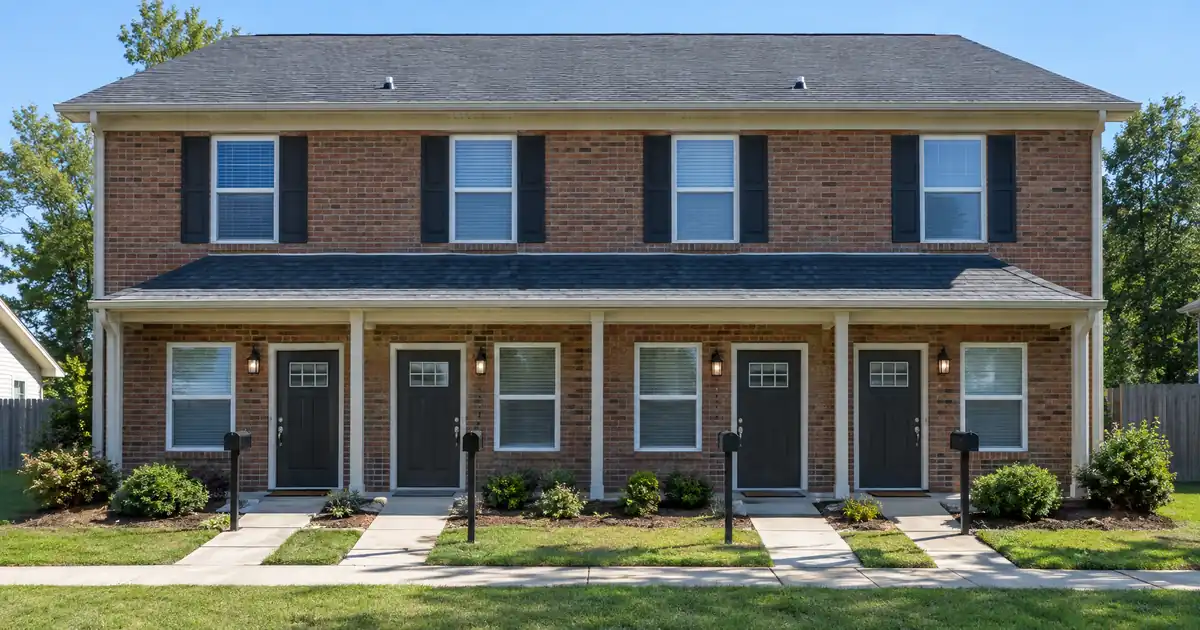
Refinance A Two-To-Four Unit Owner-Occupied Home — The Quick Read: You can do it, and living in one unit often helps. The loan is a standard home loan, not a business loan. Which program fits depends on who holds your current mortgage, whether you want cash out, and how many units the building has. Lenders count part of the rent from your other units, but your full housing payment still counts against you. Everything below is subject to lender guidelines and full file review, and nothing here is a commitment to lend.
Key Takeaways
- A building with two to four units gets more scrutiny than a single-family home, mainly on leverage, reserves, and rent.
- Rate-and-term refinances, which swap your loan without pulling out meaningful cash, reach higher leverage than cash-out refinances.
- If you hold an FHA or VA loan, a streamline refinance may skip the appraisal and most of the paperwork.
- Rent from the other units can help you qualify, but lenders discount it.
- If you move out, the lender treats the building as an investment property, and the rules change.
Which Refinance Fits the Loan You Hold Now?
Start with your current loan. Conventional loans go to conventional refinances. FHA loans can use the FHA Streamline. VA loans can use the VA IRRRL. Taking real cash out changes the category for everyone.
Lendmire is a mortgage broker. It arranges these loans through wholesale lenders, and the refinance programs it places include conventional, FHA, VA, and jumbo. The table shows how the main paths differ for a building you live in.
| Path | Best when | Cash out? |
|---|---|---|
| Conventional rate-and-term | You hold a conventional loan | Only incidental |
| Conventional cash-out | You need real equity access | Yes, lower leverage |
| FHA Streamline | You hold an FHA loan | Token amount only |
| VA IRRRL | You hold a VA loan | None |
| Jumbo refinance | Your balance is above conforming limits | Varies by lane |
The conventional paths follow agency rules. Rate-and-term is the lane most owner-occupants want. The government streamlines exist to lower the cost of an existing government loan. They are not a way to pull out equity.
How Is a Two-to-Four Unit Refinance Underwritten, Step by Step?
The lender checks your loan-to-value ratio against a cap set by unit count and refinance type. Then it checks credit, total debt, rent documentation, cash reserves, and occupancy. Each step can change your options, so here is the order they usually run in.
Step 1: Pick the program. Your current loan type and your cash goal decide this. Everything else follows.
Step 2: Apply and review disclosures. You get a Loan Estimate. Compare it line by line against the Closing Disclosure later. Costs can look different between lenders even on the same program.
Step 3: Confirm occupancy and title. For a conventional limited cash-out refinance, at least one borrower must be on title when you apply. Lenders also confirm that you live in one unit. Misstating occupancy is a serious problem, so state it plainly.
Step 4: Appraisal. For two to four units, the conventional appraisal is the small residential income property report, known as Form 1025. It values the building and estimates market rent for each unit. Streamlines on FHA and VA loans may skip this step.
Step 5: Credit and debt review. Across the wholesale conventional programs Lendmire arranges, files typically start at a 620 decision score. The automated underwriting finding governs most files, with a total debt-to-income ceiling of 50%. Manually underwritten loans run tighter, at 36% or 45%, depending on score and reserves. Waiting periods after credit events are set by the agencies. They run four years after a chapter 7 discharge, seven after a foreclosure, and four after a short sale or deed-in-lieu. Documented extenuating circumstances can shorten them.
Step 6: Reserves. Multi-unit owner-occupied loans often require extra cash in the bank after closing. The exact months depend on the automated findings and the program. Ask your loan officer early so you are not surprised.
Step 7: Closing. You review the Closing Disclosure, sign, and then a short right-to-cancel window applies before funds go out. More on that below.
How Does the Rent From Your Other Units Count?
Rent from the units you do not occupy can count toward qualifying. Rent from your own unit generally cannot, with narrow exceptions such as a boarder. Lenders do not count all of the rent. They commonly count about three-quarters of it, which builds in room for vacancies and upkeep.
Two things surprise people:
- The full payment stays in your debt ratio. The discounted rent is added to your income. Your whole housing payment still counts as debt. The rent does not cancel the payment.
- Documentation matters. If the building already produces rent, lenders typically want the appraiser’s rent schedule plus proof of that rent. That is usually your latest tax return showing rental income or current leases. The conventional rules lay out which route applies to you.
Short-term rental income gets extra scrutiny. Without a lease, lenders look for evidence the income is stable. If you run units on a nightly basis, expect more questions.
The practical result: rent can help you qualify, but real cash flow will differ from the coverage figure.
Rate-and-Term, Cash-Out, and the Caps That Apply
Rate-and-term is the limited cash-out refinance. The new loan pays off your existing first mortgage and closing costs. It can also pay off a purchase-money second lien, and you get only incidental cash back. Fannie Mae’s eligibility matrix shows a 95% LTV cap for limited cash-out on a two-to-four unit principal residence. LTV, or loan-to-value, is your loan balance divided by the property’s value. At 95% LTV you hold at least 5% equity. These specifics are subject to lender guidelines and a full review of property, leverage, and credit.
Freddie Mac’s guide shows the same 95% figure for no-cash-out refinances on loans approved through its automated system. It also notes that manually underwritten and super-conforming loans can sit at lower caps. Super-conforming means the loan is above the standard limit in a high-cost area. Freddie Mac also rounds calculated ratios up to the next whole number. A 94.01% result counts as 95%.
Older rules capped three- and four-unit buildings below two-unit ones. In current automated underwriting that gap has closed on the principal-residence side. Do not assume it holds on a manually underwritten file.
Cash-out is tighter. Conventional cash-out on a two-to-four unit principal residence tops out at 75% LTV, compared with 80% on a one-unit home. Seasoning rules apply too. The first mortgage you are paying off must be at least 12 months old, counted note date to note date. Each borrower on title must have held title for 6 months, with exceptions for delayed financing, inheritance, and legal awards. Terms vary by lender guidelines, property type, leverage, credit profile, and full file review.
Across the wholesale programs Lendmire works with, one lane can reach 89.99% LTV with no mortgage insurance. It requires a 680 score, a 50% ratio, a thirty-year fixed rate, a primary residence, and a conforming balance. It carries its own six months of seasoning, and it is not written in Texas. A cash-out on a Texas homestead is capped by the state constitution at the agency figure. Exact terms depend on the lender’s guidelines, property type, leverage, and a full review of the borrower’s file.
What Does Mortgage Insurance Do on a Refinance?
Mortgage insurance is required above 80% LTV on a conventional loan. It protects the lender, not you. You can ask to cancel it once your balance reaches 80% of the original value. That requires a good payment history, no second liens, and no drop in value. The servicer must end it automatically at 78%. Published typical annual premiums run 0.58% to 1.86% of the balance. Treat that as a range, not a quote. Your actual cost depends on your file. Every figure here varies by lender and program — guidelines, property type, leverage, and credit profile all apply.
FHA Streamline and VA IRRRL: The Government Shortcuts
Both programs shrink the paperwork. Neither is a cash-out tool.
HUD’s FHA Streamline page says the loan must already be FHA-insured and current. The refinance must also give you a net tangible benefit, meaning a real, measurable improvement such as a lower combined payment cost. You can take only a token amount of cash out. Closing costs cannot be rolled into the new loan. A “no-cost” refinance means the lender covers costs by charging a higher interest rate. Streamlines often skip a new appraisal, and that omission is where much of the savings comes from. Streamline refers to documentation, not to costs.
The VA’s IRRRL page says the loan must be VA-to-VA and reuse your existing entitlement. You get no cash. Only the existing VA loan can be paid off. If a second mortgage holder is in the picture, that lender must agree to subordinate. The program charges a 0.5% funding fee unless you are exempt. It also requires a net tangible benefit. Across the files Lendmire sees, seasoning is the later of 210 days and six payments. You need a Certificate of Eligibility before closing.
For occupancy, the IRRRL asks only that you certify you lived in the home before. That makes it unusual. It can work on a two-to-four unit you have since moved out of. Every other product on this list cares about where you live now.
If you have a second lien and want to keep it, subordination is the process that lets the new first mortgage keep its priority.
Where the General Rule Breaks
The rules above hold for most files. These are the places they bend.
- Three- and four-unit FHA files. FHA adds a self-sufficiency test on full-underwrite refinances for three and four units. The building’s net rent, from all units including yours, must cover the full housing payment. Two-unit homes are exempt. Whether the test touches a non-credit-qualifying streamline is a detail to confirm with your loan officer against HUD’s handbook.
- Moving out. When the building stops being your primary residence, it becomes an investment property. Leverage drops sharply, to 75% on two to four units.
- Manual underwriting and high-balance loans. These can sit at lower caps than the automated 95%.
- The first-time-buyer program. The 97% LTV lane applies to one-unit homes, so a two-to-four unit does not qualify.
- Jumbo balances. Above the conforming limit, jumbo lanes take over. They start at a 660 decision score, reach leverage up to 90%, and fund loans up to $5,000,000. The ratio ceiling on the fixed lanes is 50%.
- Texas homestead cash-out. The state constitution sets the cap, as noted earlier.
- Final terms depend on lender guidelines, property type, leverage, and the borrower’s complete credit picture.
What Does the Decision Look Like in Practice?
Picture a homeowner living in a triplex with two rented units. The loan sits at roughly 70% of the building’s value. The goal is a lower payment on a conventional loan, with no cash out. Pricing and available terms vary by lender, borrower profile, property type, and full underwriting review. No mortgage insurance applies at 70%. The lender counts about three-quarters of the two rented units’ rent, adds it to income, and keeps the full payment in debt. Reserves and a clean appraisal are the remaining pieces.
Now change one fact. Say the owner wants meaningful cash out. The cap drops to 75% and the seasoning rules apply. The same building may support far less new borrowing than the owner expected.
Or change a different fact. Say the owner holds a VA loan and just wants a lower payment. The IRRRL skips the appraisal and most of the credit package. It may be the simplest route.
Run a break-even before you choose. Divide your total closing costs by your monthly savings. That tells you how long you must stay in the home for the refinance to pay for itself. A cheaper payment that costs more than you will ever save is not a win. Tax treatment can depend on your situation; borrowers should speak with a qualified tax professional before relying on any deduction or credit.
Rights You Have at Closing
On a refinance of your primary home with a new loan, you generally get a short right to cancel after signing. The CFPB explains that the window starts only after you sign, receive the correct disclosure, and receive two copies of the cancellation notice. You must cancel in writing. A phone call is not enough. If you cancel, you still owe your original loan. The Closing Disclosure waiting period and the cancellation window are separate. One comes before you sign. The other comes after.
Key Terms Defined
LTV (loan-to-value): Your loan balance divided by the property’s value, shown as a percentage.
Rate-and-term refinance: A new loan that replaces your old one and pays closing costs, with only incidental cash back.
Cash-out refinance: A new, larger loan that puts real equity in your pocket, at lower leverage limits.
Net tangible benefit: A measurable improvement, such as a lower combined payment cost, that a government streamline must deliver.
Seasoning: The minimum time you must hold a loan or title before a given refinance is allowed.
Reserves: Cash or liquid assets left in the bank after closing.
Frequently Asked Questions
Can I use rent from my other units to qualify?
Yes, in most conventional files. Lenders generally count about three-quarters of the rent from the units you do not live in. Your own unit’s rent generally does not count. The full housing payment stays in your debt ratio.
Is the leverage cap the same for a duplex and a fourplex?
In current automated underwriting, both reach 95% on a conventional rate-and-term refinance of a principal residence. Manually underwritten and super-conforming loans can sit lower. Cash-out is capped at 75% for any two-to-four unit.
Do I need a new appraisal?
On a conventional refinance, yes. The appraiser uses Form 1025 and estimates rent for each unit. FHA Streamline and VA IRRRL loans may skip the appraisal.
Can I take cash out on a streamline?
No, not in any meaningful amount. FHA allows only a token amount, and VA allows none. If you need real equity, a conventional cash-out is the path, with its lower leverage and seasoning rules.
What if I move out after I refinance?
The lender underwrites on your stated occupancy at application, so be honest about your plans. Once the building is no longer your primary residence, it is treated as an investment property with different rules. The VA IRRRL is the exception for later refinances, because it asks only for past occupancy.
Run the Break-Even on Your Building
If you are weighing a refinance and want the break-even run on your own numbers, Lendmire can help you compare the programs on the same home. Lendmire is a broker, so it arranges the loan through a wholesale lender, and all programs are subject to lender guidelines. Nothing here is a commitment to lend.
A two-to-four unit refinance rewards the owner who knows which cap applies to their building before applying.
For the program’s current guidelines, see a scenario review with Lendmire.
About Lendmire
As a mortgage broker (NMLS# 2371349), Lendmire helps home buyers in 16 states pair an FHA, USDA or HUD-184 first lien with a down payment assistance option arranged through wholesale lenders. Lendmire is never the lender; program terms are set by the lender and the agency guidelines. Scotsman Guide named Lendmire a Top Mortgage Workplace in both 2025 and 2026.
Get Started
Ready to find the right loan for you?
In about 30 seconds you can review financing options available for your home or investment property. No commitment required.
Informational only. Not a Loan Estimate, approval, or commitment to lend. Program availability and eligibility are subject to lender guidelines, credit approval, property review, and underwriting.
References
1. Fannie Mae Eligibility Matrix
2. Freddie Mac Guide Section 4203.1
3. HUD FHA Streamline Refinance
This article is part of Lendmire’s Refinance series — every loan program’s qualification details, guidelines, and scenarios live on the loan options page.
Related reading: Cash Out Refinance Investment Property in Los Angeles · Cash Out Refinance Investment Property in Muncie, Indiana: The 2026 DSCR Guide to Old West End · Cash Out Refinance Investment Property in Muncie, Indiana: The 2026 DSCR Cash-Out Guide for Muncie Investors
Brandon Miller
Founder & CEO, Mortgage Loan Originator, Lendmire LLC
- Mortgage Loan Originator · NMLS# 1129696 · Verify on NMLS Consumer Access
- North Carolina Real Estate Broker · License# 343312 · Verify on NCREC
- North Carolina Insurance Producer · License# 19053198 · Property, Casualty, Life, Health · Verify on NAIC SBS
- Lendmire LLC · Firm NMLS# 2371349 · Verify firm licensure
Important disclosures. Lendmire (NMLS# 2371349) is a licensed mortgage brokerage. Lendmire is not a direct lender, depository institution, or financial advisor. All loan inquiries are subject to lender underwriting; this article does not constitute a commitment to lend. Rates, terms, and program guidelines are subject to change without notice and vary by borrower profile, property type, and state. Information in this article is general in nature and is not financial, legal, or tax advice. Equal Housing Opportunity. NMLS Consumer Access: nmlsconsumeraccess.org.