
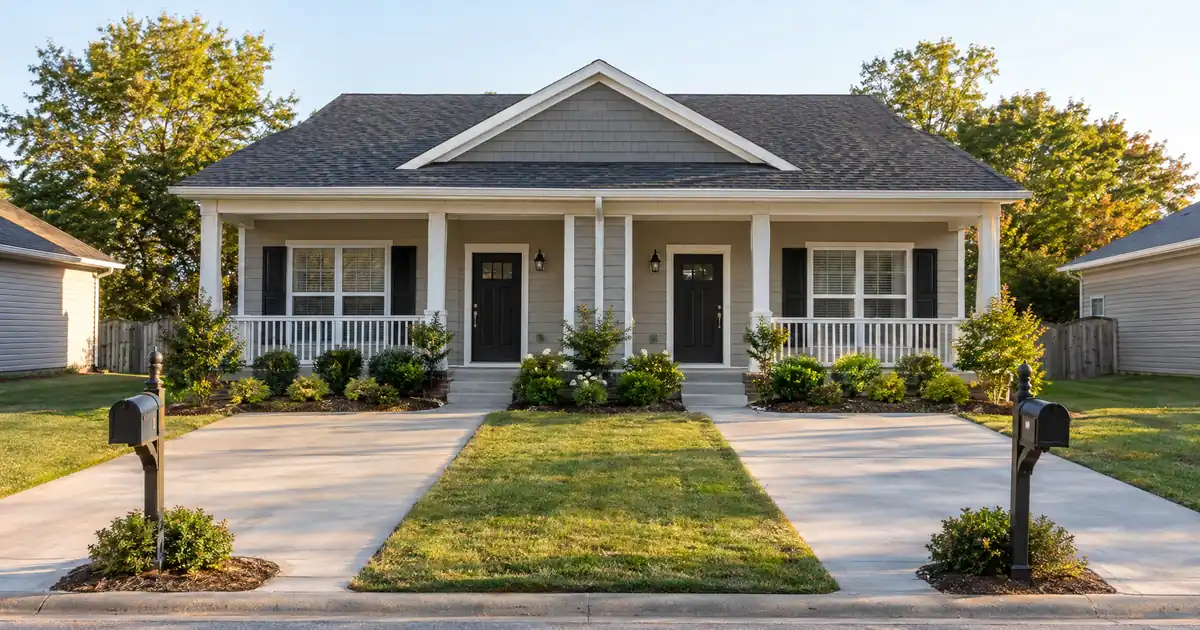
The Quick Read: A rehabbed duplex exits hard money through a long-term DSCR loan that pays off the bridge, and that loan is sized on the new lender’s appraisal, not on your after-repair estimate. The refinance works when three separate tests clear: enough time owned, enough appraised value, and enough rent coverage on the new loan. A shortfall on any one test changes the outcome.
- A DSCR cash-out refinance on an investment property tops out at 75% LTV, with about 6 months of seasoning measured from title recording, subject to lender guidelines.
- A payoff-only refinance, with no cash back at closing, can reach a higher ceiling (up to 85% on a DSCR rate-and-term file), but the equity you created stays in the property.
- The DSCR loan’s 1.00 minimum is a select-program floor, and it measures rent against the monthly obligation only.
- A duplex adds per-unit rent verification, and a vacant unit leans on the appraiser’s market rent.
- Plan the exit before the bridge closes, because the bridge has to outlast the rehab, lease-up, seasoning, appraisal and underwriting.
Key Terms Defined
- Seasoning: the period you must own the property before a lender will refinance against its appraised value instead of your cost.
- Cost basis: the purchase price plus the documented rehab spend.
- ARV versus appraised value: ARV is your estimate of the finished value, while appraised value is the number the new lender’s appraiser reports, and only the second one sizes the loan.
- Payoff-only (rate-and-term): a refinance that retires the hard money loan and returns no cash at closing.
- Cash-out: a refinance that pays off the bridge and returns the remaining proceeds to you.
- DSCR: the ratio of monthly rent to PITIA (principal, interest, taxes, insurance and any HOA dues).
How Does the Exit Work, Start to Finish?
The exit works as a swap. A long-term DSCR loan replaces the short-term bridge, pays it off along with closing costs, and returns whatever is left to you if the file is cash-out. If the payoff plus costs exceeds the new loan, you bring cash to closing.
DSCR Cash-Out Calculator
Run the cash-out numbers in your market
Rate source: Freddie Mac 30-yr average via FRED® — Federal Reserve Bank of St. Louis · effective Oct 15, 2026
Prefilled with starting assumptions — enter your property’s value, balance, taxes, and insurance for a more accurate picture.
Program parameters update from Lendmire’s centralized guideline source. Taxes and insurance are editable estimates.
As of Oct 15, 2026 · General Freddie Mac market benchmark, not a Lendmire loan offer. Property value, balance, taxes, and insurance are editable estimates. Maximum loan-to-value varies by lender, program, property type, and seasoning. Not a Loan Estimate, approval, or commitment to lend. Program availability and eligibility are subject to lender guidelines, credit approval, property review, and underwriting.
No regulator or agency owns this strategy. The refinance step is an ordinary investment-property refinance, which is why the lender’s own policies decide nearly everything. Those policies set how long you must own the duplex, how much value the lender will recognize, and how it counts rent.
Hard money loans in this space are typically interest-only with terms of 6 to 18 months and no prepayment penalty, though terms vary by lender, property, and experience. Many investors refinance out of hard money into long-term DSCR financing once the property is stabilized, and Lendmire brokers that path through its hard money exit refinance program. The complete DSCR loans guide covers how the long-term side of that swap works in general.
Is Your Duplex Ready to Refinance?
Your duplex is ready when the work is finished, both units are rent-ready or leased, and the building is legal and insurable as a rental. Lenders look at the file the way an appraiser looks at the building, so readiness comes down to proof.
| Readiness item | Why it matters | Document that proves it |
|---|---|---|
| Rehab complete | Appraiser values finished condition | Invoices, draw records, photos |
| Permits closed | Open permits can stall the file | Final inspection sign-off |
| Units leased or rent-ready | Rent drives the coverage test | Signed leases or listing history |
| Title and entity clean | Payoff runs through title | Operating agreement, payoff letter |
| Insurance converted | Builder’s-risk ends at completion | Landlord policy declarations |
If any row is unresolved, ask whether the bridge has enough runway to fix it. If it does not, the realistic choices are an extension, a sale, or a payoff-only refinance. An extension fee gets added to the payoff, so it lowers your net cash directly.
Seasoning, Value and Rent: The Three Tests
The refinance clears only when time, value and rent each pass on their own. Clearing one does nothing for the others, and this is where most rehabbers get tripped up.
Test one: time owned
On the DSCR cash-out programs Lendmire places files with, seasoning is typically about 6 months, counted from title recording. Seasoning is lender policy, not law, so it varies by lender. Market surveys such as the REIPrime BRRRR guide describe DSCR lenders as commonly wanting 3 to 6 months of ownership and cash-out refinances commonly capping at 75%. Across the network Lendmire works with, the DSCR cash-out ceiling is 75% LTV on an investment property, with about 6 months of seasoning.
Inside the seasoning window, some lenders will size an early refinance to your cost basis rather than the appraisal. If you spent heavily and the appraisal is far above basis, that extra equity stays locked until the clock runs out.
Test two: appraised value against the leverage cap
The new lender orders its own appraisal. The appraiser’s number, multiplied by the leverage ceiling, is the most the new loan can be. Your ARV estimate is a planning tool, not an input.
Test three: rent coverage on the larger loan
A DSCR loan is reviewed primarily on property-level rental income covering the payment, subject to lender guidelines. A bigger loan means a bigger payment, so the ratio gets retested on the new number. All else equal, a loan that grows 10% takes a 1.20x file down to roughly 1.09x. Select programs start at 1.00, and a separate select-lender path takes coverage below 1.00 with leverage and terms adjusted. Stronger coverage generally opens better pricing and leverage.
Clearing 1.00 is not the same as positive cash flow. The calculation leaves out repairs, vacancy, management, utilities and capital expenses.
Payoff-Only or Cash-Out?
A payoff-only refinance is usually the lighter lift, while a cash-out refinance recovers your capital but carries the longer wait and the lower ceiling. Pick based on whether you need the equity out now.
| Factor | Payoff-only (rate-and-term) | Cash-out |
|---|---|---|
| Cash back at closing | None | Yes, if value supports it |
| DSCR ceiling, investment property | Up to 85% LTV | 75% LTV |
| Seasoning | Often lighter, lender-dependent | About 6 months from recording |
| Best when | Bridge matures before seasoning | You need capital for the next deal |
Some investors do both in sequence: payoff-only now to stop bridge interest, cash-out later once seasoning is satisfied. That means two closings and two sets of costs. It pays off only if the cost of carrying the bridge exceeds the cost of the second closing.
A contrast worth knowing: agency-style delayed financing skips the waiting period only when the purchase was made with cash. Money borrowed against the subject property generally does not qualify, so a hard money bridge secured by the duplex does not use that route. DSCR loans are not agency products, and each lender sets its own seasoning terms.
What Changes When the Property Is a Duplex?
A duplex changes the rent side of the file. Instead of one lease, the lender sees two units, and each one needs support.
Appraisers typically report two- to four-unit properties on Form 1025, which Fannie Mae’s Selling Guide lists for that property size. It is cited here for the form name only, since DSCR files do not follow agency rules. The report includes an income approach. Realvals’ appraisal form reference notes that the 1025 is often paired with the 1007 rent schedule and the 216 operating income statement. That pairing gives the lender market rent for each unit.
What that means in practice:
- Both units leased: the lender typically reviews both leases against the appraiser’s market rent.
- One unit vacant: the appraiser’s market rent for that unit can stand in for a lease, but coverage gets tighter and the file is reviewed more closely.
- Staggered lease dates: an expiring lease raises the question of what rent applies next, so renewals signed before the application help.
- Reserves: the DSCR program commonly asks for about 6 months of PITIA, stepping up to about 9 months above $1,500,000, and the amount varies by lender, leverage and loan size.
Credit matters too. A 620 floor exists in parts of the network. Most DSCR programs want around 660, and stronger scores open the stronger leverage tiers.
Worked Example: The Break-Even Appraisal
The break-even appraisal equals your payoff plus exit costs, divided by the leverage ceiling. The figures below are modeled assumptions on an index, not market data or dollar amounts.
Set payoff plus exit costs at 100 index units.
| Scenario | Ceiling | Break-even appraisal |
|---|---|---|
| DSCR cash-out, investment property | 75% LTV | About 133 units |
| DSCR payoff-only, investment property | Up to 85% LTV | About 118 units |
Now suppose the appraisal comes in at 125 units. A DSCR cash-out at 75% LTV supports a loan of about 94 units, which leaves roughly 6 units of cash to bring. A DSCR payoff-only at an 85% ceiling supports about 106 units, which clears the payoff with a small cushion and returns no cash. Exact terms depend on the lender’s guidelines, property type, leverage, and a full review of the borrower’s file.
The same appraisal can mean two different outcomes depending on the structure you picked. Exact eligibility depends on credit, reserves, property review and lender guidelines.
Step by Step: From the Note to the Payoff
The process runs in a fixed order, and the first step happens before the rehab ends.
1. Read your existing note. Find the maturity date, extension terms, prepayment terms and payoff mechanics. Hard money terms vary by lender, property, and experience.
2. Run the timeline backward from maturity. The bridge must outlast rehab, lease-up, seasoning, appraisal and underwriting. If it cannot, decide now whether to extend.
3. Rehab and document. Keep invoices, draw records and photos in one folder. Underwriters want to see spend tied to completed work.
4. Lease both units. Documented rent supports the coverage test.
5. Apply once seasoning is satisfied. For cash-out, that is about 6 months from title recording on the DSCR programs in the network.
6. Order the appraisal and rent schedule. The new lender’s value sizes the loan.
7. Underwrite. The lender reviews credit, reserves, coverage and the property.
8. Pay off the bridge through title. Closing costs come out of proceeds, and any remainder is your cash out.
Investors who plan to repeat the strategy should read Lendmire’s piece How to Size Hard Money for a BRRRR So the DSCR Refinance Pays It Off before the next purchase.
What If the Bridge Matures Before the Refinance Is Ready?
Maturity-date triage comes down to comparing the cost of an extension against the cash it protects. An extension fee gets added to the payoff, and bridge interest keeps accruing while you wait. A payoff-only DSCR file may stop that accrual earlier, but it leaves equity trapped.
A practitioner pattern: the investors who run out of runway usually underestimated the lease-up and appraisal steps, not the rehab itself. Building a few extra months into the original bridge term costs less than a rescue extension.
If the Appraisal Comes in Short
A short appraisal leaves you with five options, listed here from least to most costly:
1. Switch to payoff-only, which stops the bridge but leaves the equity in the property.
2. Wait out seasoning if the issue is cost basis rather than value, and accept extra bridge carry.
3. Bring cash to cover the gap between the loan and the payoff.
4. Extend the bridge and pay the added fee while you cure the problem.
5. Sell the duplex, which is the clean exit if the margin has gone.
Check the appraisal’s comparable sales before disputing it. A weak rent schedule can hurt coverage even when value is fine. Because the loan is larger on a cash-out, that is the structure most exposed to a thin appraisal.
Documents to Gather Before Applying
| Document | Where it comes from |
|---|---|
| Payoff letter | Current hard money lender |
| Settlement statement | Original purchase closing |
| Rehab invoices and draw records | Contractor, lender draws |
| Final permit sign-off | Local building department |
| Leases for both units | You and your tenants |
| Landlord insurance declarations | Insurance carrier |
| Entity documents | Operating agreement, EIN letter |
| Proof of reserves | Bank statements |
Document how your own money moved as well. If funds were transferred from private or hard money sources, an underwriter wants the paper trail so the money is not treated as an unexplained deposit.
Common Mistakes on the Way Out
- Assuming the lender will use your ARV instead of its own appraisal.
- Counting seasoning from the end of the rehab when it typically runs from title recording.
- Planning to hit the full ceiling, which leaves no room for overruns or a conservative appraisal.
- Treating a payoff-only file as if it would return cash.
- Ignoring the retested coverage ratio on a larger loan.
- Skipping the bridge note’s extension and prepayment terms until maturity is close.
- Forgetting refinance costs such as appraisal, title and processing, which reduce your margin.
Tax treatment can depend on how the funds are used and how the property is held; investors should keep clear records and speak with a qualified tax professional before relying on any deduction.
Who This Path Fits (and Who Should Pick Another Exit)
The DSCR exit fits investors who intend to hold the duplex as a rental and whose rent supports the new loan. It fits less well if you plan to sell soon, because refinance costs rarely pay back on a short hold. It also fits less well if the rehab has not been finished or leased.
Sub-1.00 coverage is available through select lenders in the network, with leverage and terms adjusted. It is a structural choice, not a rescue plan. If the numbers only work at reduced leverage, compare that cost against selling.
If you are buying, rehabbing or refinancing an investment property on a short timeline and want to see how the numbers work, Lendmire can help you compare hard money options based on the project, the exit plan, leverage, and your goals.
Frequently Asked Questions
Can I refinance right after the rehab?
A payoff-only DSCR refinance may be possible sooner, since seasoning is often lighter when no cash comes back. A cash-out refinance typically waits about 6 months from title recording on the programs in the network. Some lenders size early refinances to cost basis, so confirm which basis applies before relying on the appraisal.
Does a payoff-only refinance reset seasoning?
Not as a rule, though lenders differ. A payoff-only file simply replaces the bridge, and the 6-month clock for a later cash-out typically still runs from the original title recording. Ask each lender how it treats a prior refinance before you choose the two-step route.
Do I need a signed lease on both units?
A signed lease on each unit gives the strongest file. If one unit is vacant, the appraiser’s market rent can often support that unit, but coverage gets tighter and the lender reviews the file more closely. Leases that expire soon deserve renewals before you apply.
Can an LLC refinance the duplex?
Yes, an LLC can usually be the borrower, subject to lender program eligibility. Title and entity documents need to match, and the payoff runs through title. Confirm entity requirements early so the operating agreement is ready.
What if the hard money loan matures first?
Compare the extension fee with the cash it protects. The fee gets added to the payoff, and interest continues accruing. A payoff-only DSCR loan stops the clock, while a sale ends the exposure entirely. Building runway into the original term is a more affordable fix.
About Lendmire
Lendmire is a non-QM mortgage brokerage (NMLS# 2371349) arranging DSCR investor loans in 41 markets, including Washington, D.C. DSCR eligibility is generally reviewed around property-level rental income rather than personal income, subject to lender and program guidelines, a fit for self-employed investors and LLC-owned portfolios. Lendmire was recognized as a Scotsman Guide Top Mortgage Workplace in 2025 and 2026.
Get Started
Ready to find the right loan for you?
In about 30 seconds you can review financing options available for your investment property. No commitment required.
Informational only. Not a Loan Estimate, approval, or commitment to lend. Program availability and eligibility are subject to lender guidelines, credit approval, property review, and underwriting.
References
2. Fannie Mae Selling Guide B4-1.2-01
This article is part of Lendmire’s hard money loan program — full qualification details, guidelines, and scenarios live on the program page.
Related reading: How a BRRRR Rehabber Uses a Signed Lease to Exit Hard Money Early · 40-Year DSCR vs. 1099-Only Loan for Cash-Out Refinance · Can a Conventional Cash-Out Refinance Pay Off a Second Mortgage?
Brandon Miller
Founder & CEO, Mortgage Loan Originator, Lendmire LLC
- Mortgage Loan Originator · NMLS# 1129696 · Verify on NMLS Consumer Access
- North Carolina Real Estate Broker · License# 343312 · Verify on NCREC
- North Carolina Insurance Producer · License# 19053198 · Property, Casualty, Life, Health · Verify on NAIC SBS
- Lendmire LLC · Firm NMLS# 2371349 · Verify firm licensure
Disclosure information. Lendmire is a state-licensed mortgage brokerage under NMLS# 2371349. Lendmire is not a depository institution, direct lender, or financial advisor — all loans referenced are placed through wholesale lender partners and are subject to each lender's underwriting standards. This article is provided for general informational purposes and is not a commitment to lend, nor does it constitute financial, legal, or tax advice. Loan programs, terms, rates, and qualification standards change without notice and depend on borrower profile, property type, and the state in which the subject property is located. Equal Housing Opportunity provider. NMLS Consumer Access: nmlsconsumeraccess.org.