
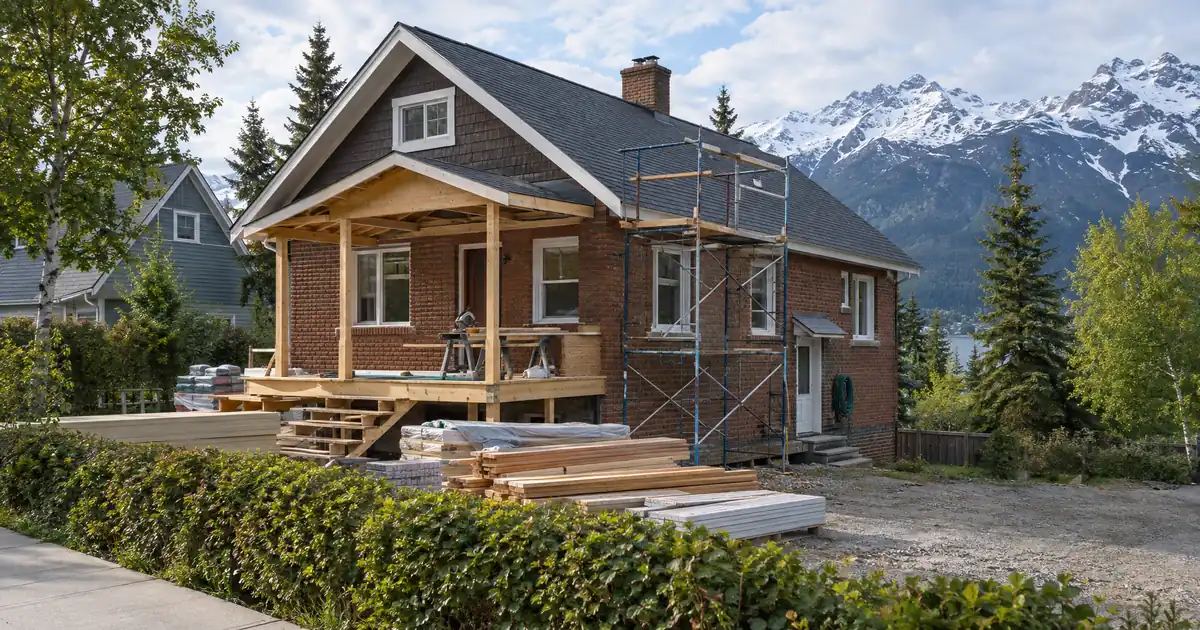
The Quick Read: You replace the short-term bridge note with a long-term DSCR loan, and the new loan pays the bridge lender off through title at closing, as long as the new lender’s appraisal, the rent coverage, your credit, and your reserves all clear that program’s tests.
- A DSCR loan is reviewed primarily on property-level rental income covering the payment, subject to lender guidelines.
- The new lender sizes the loan on its own appraisal, not on your after-repair-value estimate.
- A DSCR loan’s rate-and-term refinance on an investment property goes up to 85% LTV on select programs. Its cash-out refinance tops out at 75% LTV and typically wants about 6 months of ownership.
- Alaska’s thin comparable sales make the appraisal the most likely point of failure.
- Plan the exit well before the bridge matures, and keep a backup route.
What “Refinancing Out” Actually Means
Hard money is built to expire. The usual structure is a short term, interest-only payments, and a balloon due at maturity. Hard money lenders expect a defined exit up front, and Hard Money First’s exit-strategy explainer notes that the balloon can be very large.
DSCR Cash-Out Calculator
Run the cash-out numbers in Alaska
Rate source: Freddie Mac 30-yr average via FRED® — Federal Reserve Bank of St. Louis · effective Oct 15, 2026
Prefilled with starting assumptions — enter your property’s value, balance, taxes, and insurance for a more accurate picture.
Program parameters update from Lendmire’s centralized guideline source. Taxes and insurance are editable estimates.
As of Oct 15, 2026 · General Freddie Mac market benchmark, not a Lendmire loan offer. Property value, balance, taxes, and insurance are editable estimates. Maximum loan-to-value varies by lender, program, property type, and seasoning. Not a Loan Estimate, approval, or commitment to lend. Program availability and eligibility are subject to lender guidelines, credit approval, property review, and underwriting.
The two standard exits are selling the property or refinancing into long-term debt. This article covers the second one. The new loan’s proceeds pay off the bridge, and you keep the property.
The shift in underwriting is the part that surprises people. The bridge lender cared about the property, your plan, and your exit. A DSCR lender cares about whether the property’s rent covers its own full monthly obligation. DSCR loans are designed for non-owner-occupied investment properties. Because they are business-purpose investor loans, they are reviewed differently from a standard owner-occupied mortgage.
Across the wholesale network Lendmire works with, this exit is routine. Many investors refinance out of hard money into long-term DSCR financing once the property is stabilized, and Lendmire brokers that path through its hard money exit refinance program. For the wider picture of how these loans work, see the complete DSCR loans guide.
How the New Lender Underwrites the Exit, Step by Step
Start with the payoff, not the new loan. Every step below follows from that number.
1. Pull the payoff terms from your existing note. Look at the principal drawn, accrued interest, per-diem interest, extension fees, exit fees, and any prepayment penalty. Lendmire’s own hard money program carries no prepayment penalty, but notes from lenders often do. The payoff grows every day you wait, so treat it as a moving target.
2. Confirm business purpose. The new loan must be on a non-owner-occupied rental. That is what allows a DSCR loan instead of a consumer mortgage.
3. Classify the refinance. If the new loan only covers the payoff and closing costs, it is a rate-and-term refinance. If any money comes back to you, it is a cash-out refinance. That label drives the leverage cap and the waiting period.
4. Order the lender’s appraisal with a rent schedule. Single-family properties use Form 1007, and 2-4 unit properties use Form 1025. Rent support comes from a lease or from the appraiser’s market-rent estimate.
5. Run the coverage test. DSCR is monthly rent divided by the full monthly payment: principal, interest, taxes, insurance, and any HOA dues (PITIA). A larger new loan means a larger payment, so the test runs on the new loan size, not the old balance.
6. Apply the lower of the value limit and the rent limit. Rent coverage can cap the loan before equity does.
7. Run the payoff waterfall. Start with the new loan. Subtract bridge principal, accrued interest, exit or extension fees, new closing costs, and any reserves funded from proceeds. What remains is cash to you. That figure can be zero, and it can be negative, which means you bring cash to closing.
8. Close through title. The new lender pays the bridge lender through the title company, and the old lien is released.
9. Start early. Insula Capital Group’s exit guidance recommends beginning the refinance well before maturity. It also warns that refinancing too soon can hurt the valuation.
The Four Gates
Four independent tests decide the outcome. Failing one rarely kills the exit. More often it turns a cash-out into a payoff-only refinance.
Time owned. On a DSCR loan, a cash-out refinance typically wants about 6 months of ownership, measured from title recording. Waiting periods are a lender overlay, not a law.
Appraised value against the payoff. A DSCR cash-out refinance on a standard rental tops out at 75% LTV. A DSCR rate-and-term refinance on an investment property can go up to 85% LTV on select programs, with no cash back at closing. The break-even appraisal is roughly your payoff plus exit costs, divided by the LTV cap. A bridge sized near the top of your after-repair value leaves no cushion, because exit costs push the break-even above your own estimate. Final terms depend on lender guidelines, property type, leverage, and the borrower’s complete credit picture.
Rent coverage. Many select DSCR programs start at 1.00 coverage, and stronger ratios open better terms and leverage. A separate select-lender path takes coverage below 1.00, with leverage and terms adjusted. Clearing 1.00 is not the same as positive cash flow. Repairs, vacancy, management, utilities, and capital expenses sit outside the calculation.
Credit, reserves, loan size, and property type. A DSCR loan has a 620 credit floor in parts of the network. Most programs want around 660, and 700 or higher unlocks the strongest leverage tiers. Reserves commonly run about 6 months of PITIA on a DSCR loan, and about 9 months above $1,500,000. Standard DSCR programs reach up to $3,000,000, and all of these figures vary by lender, property, and borrower.
Your Exit Routes Compared
| Route | Best for | Main hurdle |
|---|---|---|
| DSCR rate-and-term | Payoff only, no cash back | Appraisal must cover the payoff |
| DSCR cash-out | Pulling equity after seasoning | About 6 months of ownership, 75% LTV cap |
| Bridge extension | Property not yet rent-ready | Extension fees and default terms |
| Sale | Thin equity or weak rent | Market timing and carrying cost |
Variations That Change the Math
Rate-and-term versus cash-out timing. A straight payoff often faces a lighter waiting period than a cash-out. Guidelines vary by program. Treating every payoff as a cash-out can delay a refinance that did not need the wait. Lendmire’s piece Can You Refinance A Hard Money Loan? covers the basic eligibility question.
The two-step exit. You can do a payoff-only DSCR refinance now and a cash-out later. That costs two closings and may trigger a prepayment penalty on the new loan, depending on the program. It pays off only if the later cash is meaningful.
Extend instead of forcing it. If repairs are unfinished or the unit has no tenant, a short extension from your current lender can beat pushing an immature file to a DSCR lender. This is a judgment call, and it costs fees.
Longer terms. The spine of the DSCR network is the 30-year fixed. Select lenders offer 40-year terms and interest-only periods, and ARM structures exist. Above $2,500,000, the network generally holds to 30-year fixed structures.
Where the General Rule Breaks
Delayed financing rarely fits. That concept comes from agency lending and covers all-cash purchases. A purchase funded with hard money was financed, so many programs disqualify it. Even where it applies, it waives only the waiting period and recovers documented cost, not appreciation.
Inside the seasoning window. Many programs size the loan to the lower of the appraisal or your documented cost. That can leave you short of a full payoff plus cash back.
Alaska appraisals. NeighborWorks America reports that Alaska housing groups face appraisal gaps and a lack of comparable sales in remote communities. Comps are generally easier to find in Anchorage and the Mat-Su Valley than elsewhere, so appraisers outside those areas work with wider search radii and larger adjustments. Rent-schedule comps can be just as thin. The practical effect is that a low or delayed appraisal is the likeliest failure point, so build a timeline buffer around it.
Property type and access. Pilings, remote cabins, and structures on leased land can be limited or ineligible under some programs, so confirm against the network’s guidelines before you plan around the exit. DSCR loans through the network do not cover manufactured homes (single- and double-wide), log homes, or barndominiums.
Title. Alaska land title can involve Native conveyances, allotments, and easements. An exception on the title report can stall a loan, so order title early on any non-standard parcel.
Not reviewable at the leverage you hoped. If the equity is not there, the exit may need cash to close, a partial paydown, or a different route. A larger down payment on a purchase lowers the monthly payment and can lift the DSCR. It never erases leverage caps, credit floors, reserve rules, or property eligibility.
What Happens If the Exit Fails in Alaska
Most Alaska investment loans are secured by a deed of trust, and that shapes the downside. Under Alaska’s trustee-sale statute, a trustee can sell the property without a court decree when the deed of trust carries a power of sale. The trustee must record the notice of default at least 30 days after the default and at least 90 days before the sale. You also have a right to cure before the sale.
The Alaska Supreme Court summarized this process in Thomas v. Joseph Casteel Trust. Junior liens are extinguished by the sale, while senior encumbrances survive. Judicial foreclosure remains available but is less common.
What happens after a sale, including any redemption rights, depends on the deed of trust and the foreclosure route used. The statute page also notes it may not reflect the latest law. Confirm specifics with an Alaska attorney.
This is the reason to treat the maturity date as a hard deadline instead of a suggestion.
What the Decision Looks Like in Practice
Picture an investor who bought a rundown fourplex outside Anchorage with a bridge loan and finished the rehab. The units are leased, but the bridge matures soon. She orders the DSCR lender’s appraisal early, since local comps are thin.
The appraisal comes in at her break-even. The DSCR test clears 1.2x on the new loan size, but a cash-out is not available because ownership is under 6 months. So she runs a payoff-only refinance and leaves the cash-out for later. The coverage ratio works. The appraisal decided the structure.
A different investor finds that the appraisal lands well below his estimate. His options are a bridge extension while he adds rent support, a partial paydown with his own cash, or a sale. A one-unit property with strong rent but a high balance might fit the rent test and still fail the value test. Both tests have to pass together.
Use this short decision order:
- Get the exact payoff, including per-diem interest and fees.
- Check ownership time against the cash-out waiting period.
- Estimate the appraisal conservatively and run the break-even.
- Confirm rent coverage on the new loan size.
- Confirm credit, reserves, and property eligibility.
- Pick the route: payoff-only, cash-out, extension, or sale.
Tax treatment can depend on how the funds are used and how the property is held; investors should keep clear records and speak with a qualified tax professional before relying on any deduction.
Key Terms Defined
Balloon payment: the large lump sum due when a short-term loan matures.
Seasoning: the waiting period a lender wants between buying a property and refinancing it, measured from title recording.
Rate-and-term refinance: a refinance that pays off the old loan and costs, with no cash back to you.
Cash-out refinance: a refinance that returns cash to you at closing, which carries a lower leverage cap.
DSCR: the debt service coverage ratio, which is monthly rent divided by the full PITIA payment.
PITIA: principal, interest, taxes, insurance, and HOA dues, the full monthly obligation on a property.
ARV: after-repair value, your projection of what the property is worth once the work is done.
Frequently Asked Questions
Can I refinance out of a hard money loan if the property is not rented yet?
It is harder, because a DSCR loan is reviewed primarily on property-level rental income covering the payment. Rent support can come from a lease or the appraiser’s market-rent estimate. If the unit has no tenant and the bridge is close to maturity, an extension from your current lender may protect the file.
Will the new lender lend on my ARV?
No. The lender’s own appraisal replaces your after-repair-value projection. A DSCR cash-out refinance caps at 75% LTV on standard rentals, and a DSCR rate-and-term refinance can reach 85% LTV on select programs, both subject to lender guidelines.
Does every payoff trigger a six-month wait?
No. The waiting period of about 6 months applies mainly to a DSCR cash-out refinance, and rate-and-term payoffs are often treated more flexibly. It varies by program, so ask before assuming.
Does Alaska change the DSCR guidelines?
No state-specific leverage overlay applies to DSCR loans in the network. Alaska changes the practical side: thin comps, remote property types, title complications, and the deed-of-trust foreclosure process.
What if the DSCR number comes in below 1.00?
Coverage below 1.00 is available through select lenders in the network, with leverage and terms adjusted. Many select programs start at 1.00, so a weak rent number may mean a lower loan, more cash to close, or a different exit.
Next Step
If you are buying or refinancing a rental property and want to see how the numbers work, Lendmire can help you compare DSCR loan options based on the property income, credit profile, leverage, and investor goals. Programs change, every file is underwritten individually, and nothing here is a commitment to lend.
In a state where comparable sales can be hard to find, the borrowers who exit cleanly are the ones who treat the appraisal as the first step instead of the last.
About Lendmire
Lendmire (NMLS# 2371349) is a mortgage brokerage focused on DSCR investor financing, helping arrange programs through wholesale and investor-lending channels in 41 markets, including Washington, D.C. DSCR loans are evaluated by the lender on property cash flow rather than personal income, subject to lender guidelines, supporting LLC closings and accommodating investors with four or more financed properties. Scotsman Guide Top Mortgage Workplace in both 2025 and 2026.
Get Started
Ready to find the right loan for you?
In about 30 seconds you can review financing options available for your investment property. No commitment required.
Informational only. Not a Loan Estimate, approval, or commitment to lend. Program availability and eligibility are subject to lender guidelines, credit approval, property review, and underwriting.
References
1. Hard Money First: exit strategy
2. Insula Capital Group: exit strategies for hard money investors
3. NeighborWorks America: Alaska housing
4. Alaska Statutes § 34.20.070
5. Thomas v. Joseph Casteel Trust via FindLaw
This article is part of Lendmire’s hard money loan program — full qualification details, guidelines, and scenarios live on the program page.
Related reading: How an Interest-Only DSCR Loan Works for Out-of-State Investors · How a 40-Year DSCR Loan Works in an LLC · How to Refinance Five Airbnbs Into One Portfolio DSCR Loan
Guides: Hard Money Loans in Alaska
Brandon Miller
Founder & CEO, Mortgage Loan Originator, Lendmire LLC
- Mortgage Loan Originator · NMLS# 1129696 · Verify on NMLS Consumer Access
- North Carolina Real Estate Broker · License# 343312 · Verify on NCREC
- North Carolina Insurance Producer · License# 19053198 · Property, Casualty, Life, Health · Verify on NAIC SBS
- Lendmire LLC · Firm NMLS# 2371349 · Verify firm licensure
Compliance and disclosures. Lendmire (NMLS# 2371349) is a licensed mortgage broker and is not a direct lender, depository institution, financial advisor, or tax professional. Content in this article is general market analysis and educational information — not financial, legal, or tax advice for any specific situation. Lendmire does not guarantee loan approval; every transaction is subject to underwriting by the funding lender. Mortgage pricing and loan program guidelines are subject to change at any time without notice and vary by borrower characteristics, property type, and state regulations. Lendmire complies with Equal Housing Opportunity. Licensure verification: NMLS Consumer Access.