
The Quick Read: You pay off the bridge with a DSCR loan sized on what you actually have in the property, meaning purchase price plus documented rehab, rather than on the appraised value, then come back for a cash-out loan once the lender’s ownership clock has run. That first step stops the bridge clock and the accruing interest. The second step pulls out the equity your rehab created, if the appraisal and the rent support it. Both steps depend on lender guidelines, and neither is a commitment to lend.
- The label matters. A loan that only pays off the bridge and closing costs is treated as a rate-and-term refinance. Any cash back to you makes it a cash-out.
- Two clocks run at once. Ownership time starts at the recorded deed. A separate question is whether the lender sizes on cost or on appraised value.
- Typical DSCR figures. Cash-out tops out around 75% LTV on an investment property, and about six months of ownership is the common expectation. Select programs start at a 1.00 coverage floor.
- Plan backward. The bridge must outlast the rehab, lease-up, appraisal, and underwriting. Picking the exit on day one is far cheaper than finding one in the last month.
- Know when to skip it. If the appraisal lands low or the rent is thin, the two-step plan may cost more than it saves. Each figure is subject to lender guidelines and a complete review of property type, leverage, and credit.
Key Terms Defined
Seasoning is the waiting period a lender wants between you buying a property and borrowing against its appraised value. It is lender policy, not law.
Cost basis is what you have in the property: the purchase price plus rehab work you can document with receipts and draw records.
ARV (after-repair value) is your own estimate of what the finished property is worth. The lender never sizes a loan on it. The lender’s own appraisal sets the number.
Payoff-only (rate-and-term) refinance is a loan that covers the old balance and closing costs, with no cash back to you.
Cash-out refinance is a loan that returns cash to you at closing. It usually carries a lower leverage cap and stricter seasoning.
DSCR (debt service coverage ratio) is the property’s rent used for lender review divided by its full monthly obligation, which is principal, interest, taxes, insurance, and any HOA dues. That obligation is called PITIA.
Delayed financing is a narrow agency feature that lets a cash buyer borrow soon after purchase. It rarely helps a hard money borrower, as covered below.
What Does Refinancing at Cost Actually Mean?
It means the new lender caps your loan at roughly what you have invested, not at what the property now appraises for. Inside the seasoning window, most programs across the wholesale network Lendmire places files with size the loan on cost basis. After the window, they size on appraised value.
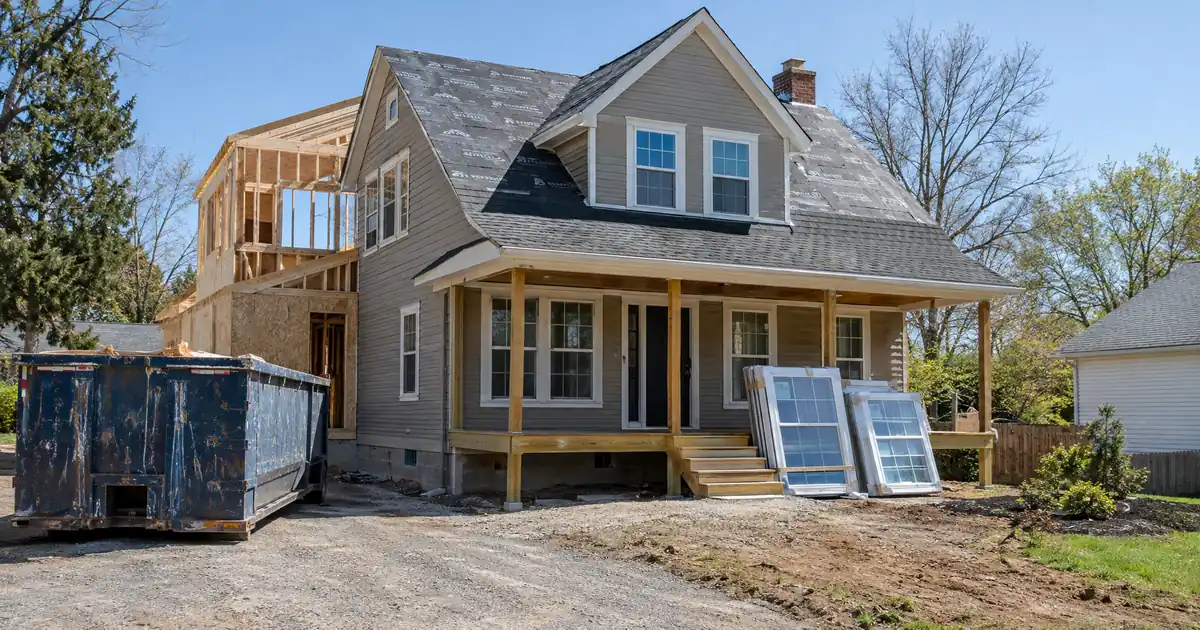
Picture a rehabbed duplex that appraises well above what you paid plus what you spent. Shortly after closing on the purchase, that gap may exist only on paper. The lender sees a recent purchase and says it will lend against what you put in, not against the flip in value.
That is why the early exit usually returns little or no cash. It is built to get you out of the bridge, not to harvest equity. The equity comes at the second step.
Here is the catch. A strong appraisal at month three does not turn into cash at month three. Investors who plan around the appraisal instead of the clock get surprised.
Payoff-Only or Cash-Out: What Decides the Label?
The closing math decides it. If the new loan equals the bridge payoff plus closing costs and nothing more, it is generally a payoff-only refinance. Any dollar above that comes back to you, and the file becomes a cash-out.
The distinction matters because the two carry different rules. On the DSCR loan, a rate-and-term refinance of an investment property can go up to 85% LTV, with no cash back at closing. A cash-out tops out around 75% LTV, with about six months of ownership as the common expectation, measured from title recording. Where exactly a lender draws the line between the two is its own policy, so get the classification in writing before you order an appraisal. Leverage, reserves, and pricing vary by lender and program; the final terms follow the full file review.
The payoff waterfall runs in this order:
1. Principal balance on the hard money note.
2. Accrued interest, plus any exit or extension fees in your note.
3. New loan closing costs.
4. Required reserves, which sit in your account and are not paid out at closing.
5. Whatever remains, if anything, is cash to you.
That last line is where people trip. The payoff keeps growing as bridge interest accrues, so treating it as a fixed number is an error. Ask your hard money lender for a payoff statement with a daily interest figure, and update it before you run the math.
The Two Clocks: Title Seasoning and Value Seasoning
Ownership time starts on the recorded deed date. It does not start at the hard money funding date, the end of the rehab, the lease signing, or the payoff. Pull the recorded deed and use that date. Files counted from the wrong date get kicked back.
The second clock is about which value the lender trusts. Before seasoning clears, the loan is sized on cost. After, it is sized on the appraisal. The two clocks usually move together, but you should confirm both with the lender before you plan around them.
BiggerPockets-style advice often says the refinance only works if you can borrow on appraised value. That is true for the cash-out step, which is why the early exit and the later cash-out are different loans. Across the network, the common expectation for cash-out is about six months, but individual lenders differ. Some will treat a payoff-only exit more flexibly than a cash-out. None of that is a guarantee of cash back.
Early Exit Versus Seasoned Exit, Side by Side
Run the numbers on one modeled property. These are index units, not dollars, so the logic travels. Assume an appraised value of 100 units, a cost basis of 70 units, a hard money payoff of 66 units, and exit closing costs of 3 units. These are modeled assumptions, not market data.
| Factor | Early exit (at cost) | Seasoned exit (cash-out) |
|---|---|---|
| Loan sized on | Cost basis (70) | Appraised value (100) |
| Cap that binds | Cost, then rent coverage | 75% LTV, then rent coverage |
| Loan needed to exit | 69 (payoff + costs) | 69 (payoff + costs) |
| Maximum loan | Up to cost basis | 75 units |
| Cash back to you | About zero | About 6 units |
In the seasoned column, 75% of 100 is 75 units. Subtract the 66-unit payoff and 3 units of closing costs, and 6 units come back. You had 4 units of your own money in the deal (70 minus 66), so you recover that and a little more.
The early exit does the job of leaving the bridge, but it leaves your 4 units inside. Waiting lets you recover them. Staying in the bridge costs monthly interest in the meantime, so the question is whether the wait costs more than a second closing.
The Break-Even Appraisal and the Low-Appraisal Problem
The formula is plain: break-even appraisal equals payoff plus exit costs, divided by the LTV cap. With a 69-unit need and a 75% cap, that is 92 units. An appraisal at 92 gets you out with no cash back. Above 92, you get cash. Below it, you bring money to the table.
Each point of lost value cuts the loan by 0.75 points while the payoff stays fixed. So cash back falls faster than value does. If the appraisal comes in at 85 units, the loan is about 63.75, and you are about 5.25 units short of the 69 you need.
You can also back-solve the purchase. At a 75% cap and closing costs near 3% of value, an all-in cost of about 72% of value is the most you can have in the deal and still recover everything. Above 72%, some of your cash stays trapped. That is the modeled math. It tells you what to pay and spend before you start.
If the appraisal falls short, you have options. Ask about a reconsideration of value with stronger comps. Wait and reappraise after the market moves. Bring cash to close the gap. Or choose another takeout, such as a second bridge. A home equity line is not a DSCR product, and an investment-property HELOC line caps at $500,000 total.
Why Rent Coverage Can Cap Your Loan Before Leverage Does
A bigger loan means a bigger payment, and a bigger payment lowers coverage. So the loan has to clear two tests: enough equity and enough rent. The strongest files clear both.
Lenders size on the appraiser’s rent schedule, not on your asking rent. For a one-unit property, the appraiser uses Form 1007, the Single-Family Comparable Rent Schedule. For two to four units, the appraiser uses Form 1025, the Small Residential Income Property Appraisal Report, which captures rent unit by unit. Fannie Mae’s appraiser forms page lists both forms. They are named here only so you recognize the paperwork.
On the DSCR loan, 1.00 is where many select programs start. A separate select-lender path takes coverage below 1.00, with leverage and terms adjusted. Stronger ratios open better pricing and leverage.
One more point. Clearing 1.00 is not the same as positive cash flow. Coverage compares rent to PITIA only. Repairs, vacancy, management, utilities, and capex sit outside the calculation.
Exit Vehicles Compared
| Exit | Best fit | Main catch |
|---|---|---|
| DSCR loan | Stabilized rental, leased | Needs rent coverage, reserves |
| Conventional loan | Investor with strong personal income | Income documentation, DTI |
| Second bridge loan | Appraisal short, seasoning not met | More carry, more fees |
| HELOC or other line | Small gap to close | Not a DSCR product |
| Sale | Thin rent or low appraisal | Gives up the hold |
Many investors refinance out of hard money into long-term DSCR financing once the property is stabilized. Lendmire arranges that path through its hard money exit refinance program, subject to lender guidelines.
Plan Backward From the Maturity Date
Hard money terms commonly run 6 to 18 months, interest-only, though your own note governs and varies by lender, property, and experience. Count backward from the maturity date. The term must outlast the rehab, the lease-up, the seasoning window, the appraisal, and underwriting.
If the note matures before seasoning ends, you have four moves:
- Payoff-only at cost. Exit the bridge now and plan the cash-out for later.
- Extend. Price the extension fee against a second set of closing costs.
- Sell. Reasonable if the numbers have drifted.
- Bring cash. Pay down the balance and carry the rest.
Choose the term on day one. Investors who pick a short bridge and hope the seasoning fits usually pay extension fees.
Document Cost Basis As You Build It
Cost basis is only as good as your paper. Start the file during the rehab, not after.
- Recorded deed showing the purchase date.
- Settlement statement and purchase contract.
- Rehab scope of work, invoices, receipts, and draw history.
- Closed permits, where permits were required.
- Payoff statement with daily interest, plus the full note terms.
- Signed lease, security deposit, and proof of first rent collected.
- Entity documents and verified reserves.
Reserves vary by lender, leverage, loan size, and transaction. Commonly they run about six months of PITIA, stepping up to about nine months above $1,500,000. Credit tiers typically start at a 620 floor, with most programs wanting about 660 and 700-plus opening the strongest leverage. Loan sizes run up to $3,000,000 on standard programs. Manufactured homes, log homes, and barndominiums are not offered in the network’s DSCR programs. Every file is underwritten individually.
Cash Out Later: The Two-Step Plan
The two-step plan works like this. Step one, refinance payoff-only at cost when the bridge nears maturity. Step two, once seasoning clears and the lease is in place, run a cash-out against appraised value.
The price of the plan is two closings. Weigh the second set of closing costs against what the bridge would charge to extend. Tax treatment can depend on how the funds are used and how the property is held; investors should keep clear records and speak with a qualified tax professional before relying on any deduction.
Use this table to decide your likely move:
| Your situation | Likely move |
|---|---|
| Maturity near, seasoning not met | Payoff-only at cost, cash-out later |
| Seasoned, appraisal strong, rent covers | Go straight to cash-out |
| Appraisal low, rent solid | Wait, or bring cash |
| Rent thin, appraisal strong | Smaller loan, or a sub-1.00 select path |
| Both weak | Sell, or hold in bridge |
For the complete picture of how these loans work, see the complete DSCR loans guide.
Why Delayed Financing Usually Does Not Rescue You
Delayed financing is the exception people hope for, and it usually does not apply. It is an agency feature, not a DSCR one. Fannie Mae’s Selling Guide allows a cash-out within six months of purchase only if the purchase was arm’s-length and other conditions are met. The guide is built around all-cash buyers.
Bankrate’s explainer lists documenting the source of the cash and the absence of liens among the criteria. A hard money purchase carries a lien on the property, so it was financed, not bought with cash. Do not build your exit around this exception. Treat it as contrast only.
Who Should Skip This Plan
Skip the two-step plan if the numbers do not leave room. That means an all-in cost well above the break-even range, rent that cannot cover the new payment, or a maturity so close that two closings do not fit. In those cases, selling or extending may cost less.
Market drift matters too. In a rising market, waiting helps. In a flat or falling one, buying right matters more than any exit trick.
Frequently Asked Questions
Is there a waiting period before I can refinance out of hard money?
For a payoff-only exit, many programs treat the wait more flexibly, and loans are often sized on cost. For a cash-out, about six months from title recording is the common expectation on the DSCR loan. Lender policy sets the exact rule.
Does delayed financing work after a hard money purchase?
Rarely. It is an agency feature built for cash buyers, and a hard money loan puts a lien on the property. Plan around DSCR seasoning instead.
Does it matter if my LLC owns the property?
Loans to LLC-titled entities are available subject to program terms. Seasoning follows the recorded deed, so ask the lender how any transfer of title affects the clock before you move the property.
What if the appraisal comes in low?
Your loan shrinks by 0.75 points for every point of lost value, while the payoff stays fixed. Ask about reconsideration of value, wait and reappraise, bring cash, or use another takeout.
Does a payoff-only refinance ever return cash?
No. Once cash comes back at closing, the file is a cash-out, with a lower leverage cap of about 75% LTV on an investment property and the seasoning rule attached. Terms vary by lender guidelines, property type, leverage, credit profile, and full file review.
Next Steps
If you are buying or refinancing a rental property and want to see how the numbers work, Lendmire can help you compare DSCR loan options based on the property income, credit profile, leverage, and investor goals. Call 828-256-2183 or request a quote through the site. Lendmire is a mortgage broker, and lenders in its network review each file.
About Lendmire
Lendmire is a non-QM mortgage brokerage (NMLS# 2371349) arranging DSCR investor loans in 41 markets, including Washington, D.C., through wholesale and investor-lending channels. DSCR loans are evaluated by the lender on rental income rather than personal income, subject to lender guidelines — a fit for LLC-owned portfolios, self-employed investors, and operators scaling beyond conventional loan caps. Recognized as a Scotsman Guide Top Mortgage Workplace in 2025 and 2026.
Get Started
Ready to find the right loan for you?
In about 30 seconds you can review financing options available for your investment property. No commitment required.
Informational only. Not a Loan Estimate, approval, or commitment to lend. Program availability and eligibility are subject to lender guidelines, credit approval, property review, and underwriting.
References
1. Fannie Mae Appraisers & Property Underwriting
2. Fannie Mae Selling Guide B2-1.3-03
3. Bankrate: delayed financing
This article is part of Lendmire’s hard money loan program — full qualification details, guidelines, and scenarios live on the program page.
Related reading: Cross-Collateral Line vs Super Jumbo DSCR Cash-Out: Equity and Risk · Do Fintech Rental HELOCs Allow LLC-Owned Properties? · Can You Get a DSCR Cash-Out Refinance When the Ratio Falls Below 1.0?
Brandon Miller
Founder & CEO, Mortgage Loan Originator, Lendmire LLC
- Mortgage Loan Originator · NMLS# 1129696 · Verify on NMLS Consumer Access
- North Carolina Real Estate Broker · License# 343312 · Verify on NCREC
- North Carolina Insurance Producer · License# 19053198 · Property, Casualty, Life, Health · Verify on NAIC SBS
- Lendmire LLC · Firm NMLS# 2371349 · Verify firm licensure
Disclosure information. Lendmire is a state-licensed mortgage brokerage under NMLS# 2371349. Lendmire is not a depository institution, direct lender, or financial advisor — all loans referenced are placed through wholesale lender partners and are subject to each lender's underwriting standards. This article is provided for general informational purposes and is not a commitment to lend, nor does it constitute financial, legal, or tax advice. Loan programs, terms, rates, and qualification standards change without notice and depend on borrower profile, property type, and the state in which the subject property is located. Equal Housing Opportunity provider. NMLS Consumer Access: nmlsconsumeraccess.org.