
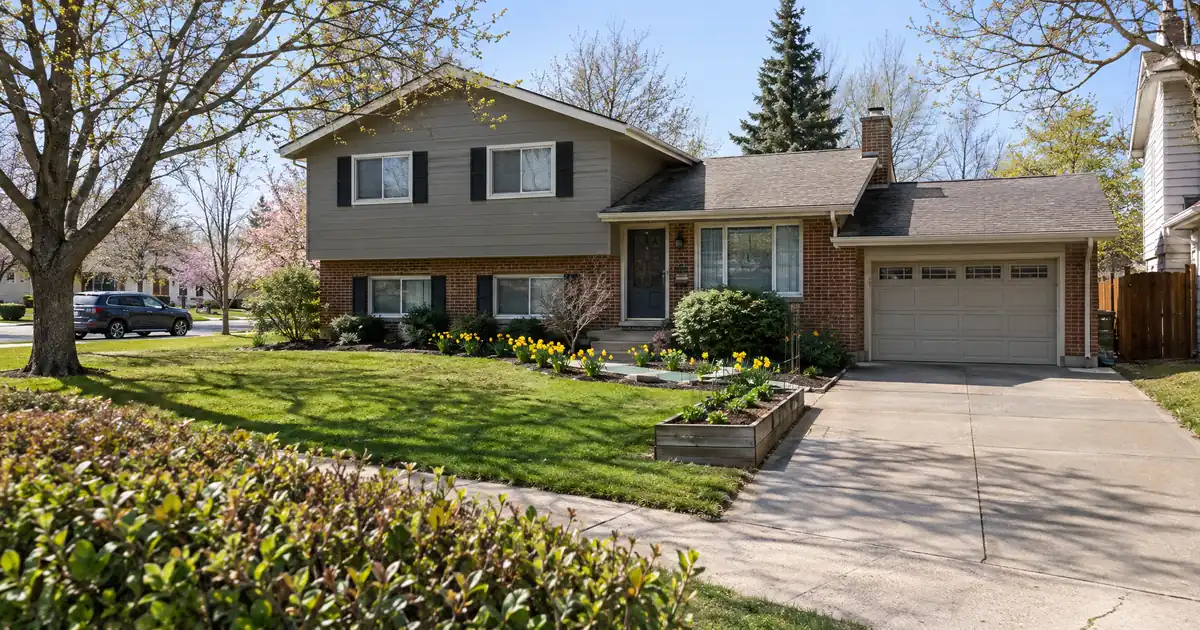
The Quick Read: A rental can usually be cash-out refinanced out of seller financing or a subject-to deal, but only once the new lender can pay off whatever sits on title, see recorded ownership in your name, and run rent against the new payment. The DSCR lender does not take over the old arrangement. It retires it with new first-lien money, and title, seasoning and coverage decide how much cash comes back.
- Cash-out on a standard rental tops out around 75% LTV across the network, subject to lender guidelines.
- Seasoning of about 6 months generally runs from the recorded deed, not the contract date.
- Coverage of 1.00 is where select programs start; stronger ratios open better terms.
- A payoff-only loan and a cash-out loan are treated differently, so decide which you need first.
- A subject-to payoff usually needs the seller’s cooperation, because the old loan is still in the seller’s name.
Investors who buy with seller financing often treat the refinance as an afterthought. That is a mistake. The exit is where these deals either pay off or stall, and the stalls almost always trace back to title, timing or an uncooperative seller. This article walks through the mechanics step by step, then covers the structures that change the answer and the edge cases where the usual rule breaks. For the broader program picture, Lendmire’s complete DSCR loans guide covers how these loans work end to end.
DSCR Cash-Out Calculator
Run the cash-out numbers in your market
Rate source: Freddie Mac 30-yr average via FRED® — Federal Reserve Bank of St. Louis · effective Oct 15, 2026
Prefilled with starting assumptions — enter your property’s value, balance, taxes, and insurance for a more accurate picture.
Program parameters update from Lendmire’s centralized guideline source. Taxes and insurance are editable estimates.
As of Oct 15, 2026 · General Freddie Mac market benchmark, not a Lendmire loan offer. Property value, balance, taxes, and insurance are editable estimates. Maximum loan-to-value varies by lender, program, property type, and seasoning. Not a Loan Estimate, approval, or commitment to lend. Program availability and eligibility are subject to lender guidelines, credit approval, property review, and underwriting.
Key Terms Defined
Seller financing: The seller acts as the lender, and the buyer repays the seller under a note, often ending in a balloon payment.
Subject-to: The buyer takes title while the seller’s existing mortgage stays in place, in the seller’s name.
Contract for deed: A land contract where the seller keeps legal title until the buyer finishes paying.
Due-on-sale clause: A loan term that lets the lender demand the full balance if the property is sold or transferred.
Seasoning: The ownership time a lender wants to see before it sizes a cash-out loan on appraised value.
Payoff-only refinance: A new loan that covers the old debt and closing costs, with no cash back to the borrower.
DSCR: Debt service coverage ratio, meaning the property’s rent compared with its monthly principal, interest, taxes, insurance and any HOA dues.
Balloon payment: A large lump sum due at the end of a short note term.
Can a Rental Be Cash-Out Refinanced Out of Seller Financing?
Yes, when the structure is clean and the clock has run. DSCR loans are designed for non-owner-occupied investment properties. Because they are business-purpose investor loans, they are reviewed differently from a standard owner-occupied mortgage. Qualification rests primarily on property-level rental income covering the payment, subject to lender guidelines.
Here is how the network sees it. A DSCR lender wants a first lien on a property titled to a borrower with an eligible entity or personal vesting, a lease or market rent that clears the coverage test, and a payoff for whatever sits ahead. Seller financing is just one more payoff. What makes it harder than paying off a bank loan is that the paperwork behind it is often thinner.
Seasoning is lender policy, not a federal rule. Most programs placed through the network look for about 6 months of ownership before they size a cash-out on appraised value, measured from title recording. Inside that window, a lender typically sizes the loan on the lower of value or cost basis. After it, appraised value is the basis.
How Underwriting Treats the Deal, Step by Step
1. Establish what you legally hold. Everything else follows from this. A recorded deed with a recorded seller lien is the easy case. A contract for deed is harder, because title insurer education on contracts for deed explains the seller keeps legal title while the buyer holds only equitable title. These contracts are often never recorded.
2. Order title work. The title company checks vesting, liens, judgments, any underlying mortgage, and any recorded contract or memorandum. Unrecorded seller financing makes ownership history and lien position harder to verify, and that can slow or stop a file.
3. Get payoff statements. For a seller note, the payoff comes from the seller. For a subject-to loan, it comes from the servicer, usually with the seller’s written authorization.
4. Classify the loan. If the new loan covers only the payoff and closing costs, it is generally treated as payoff-only. If any cash returns to you, it is cash-out. That line matters because cash-out carries seasoning and the lower leverage ceiling. A rate-and-term refinance can reach up to 85% LTV across the network, but it returns no cash at closing. Cash-out stays at or below 75% LTV on a standard rental.
5. Run the seasoning clock. Years of land-contract payments do not count. The clock starts when a deed is recorded in your name. If you hold only equitable title, record a deed before you plan the cash-out.
6. Appraise and test rent. Two separate tests apply: coverage and leverage. Passing one does not excuse failing the other. A bigger cash-out means a bigger payment, which pushes the coverage ratio down. The appraisal includes a rent opinion; the agency forms behind it are the 1007 rent schedule for single-family and the 1025 operating income statement for 2-4 unit properties.
7. Close. The title company pays off the seller or servicer, records the new first lien, and sends any cash-out proceeds to the borrower.
Reserves matter here too. They vary by lender, leverage, loan size and transaction type, commonly around 6 months of PITIA, stepping up to about 9 months on loans above $1,500,000.
Which Structure Do You Hold?
| Structure | Who holds title | Clock starts | Main risk |
|---|---|---|---|
| Recorded note and deed | Buyer | Recorded deed date | Balloon date |
| Contract for deed | Seller | Only after deed recorded | No recorded ownership |
| Unrecorded note | Buyer or unclear | Depends on deed | Lien position unclear |
| Wraparound | Buyer | Recorded deed date | Underlying clause |
| Subject-to | Buyer | Recorded deed date | Seller cooperation |
Recorded note and deed. This is the cleanest path. The buyer has a recorded deed, the seller holds a recorded lien, and a refinance simply pays the note off.
Contract for deed. The refinance here has a different shape. New loan funds go to the seller, the seller’s deed is delivered and recorded, and the new lender’s deed of trust records in first position. The old contract is paid off, not modified. This requires a willing seller who can convey clear title.
Wraparound mortgages. These layer a new note over an existing loan. They are structured differently from a plain seller note, but they also trigger the underlying due-on-sale clause.
What the Law Says About Subject-to
Subject-to is the one structure where federal law sits in the background. Cornell’s Legal Information Institute defines a due-on-sale clause as a loan term letting the lender demand the full balance on a sale or transfer. The Garn-St Germain Act made those clauses enforceable. Its protected transfers, such as to a spouse or child, are limited, and as Miller, Miller & Canby notes, they apply only to residential property with fewer than five units. An investor’s arm’s-length subject-to purchase is not on the list.
Two clarifications keep people from overreacting. First, the clause is a lender option, not a crime. Nolo points out that “due-on-sale” is really due-on-transfer: it is triggered by a change in ownership, whatever the sale label. Second, the lender may or may not act. Calls are possible and can’t be ruled out entirely.
That is why subject-to works best as a bridge. The practical plan is to season the title, hold reserves, and refinance into a loan in your own name before anyone forces the question.
Payoff-Only or Cash-Out? Choose Deliberately
| Factor | Payoff-only | Cash-out |
|---|---|---|
| Cash back | None | Yes |
| Leverage ceiling | Rate-and-term, up to 85% LTV | Around 75% LTV |
| Seasoning | Often lighter | About 6 months |
| Coverage effect | Smaller payment | Larger payment |
Payoff-only can open a door that cash-out keeps shut. If you bought a few months ago and the balloon is coming, retiring the seller note first is often cleaner. The cost is a second set of closing costs if you later come back for equity. A cash-out wins when you are already past seasoning and the rent clears comfortably.
Consider where the flip point sits. If your cost basis is well below market value, because you bought a motivated seller’s property at a discount, the equity is locked until seasoning passes. Waiting often beats forcing a thin cash-out.
How Rent Coverage Shrinks as Cash-Out Grows
Run the numbers this way. Say a rental clears roughly 1.35x coverage on a payoff-only loan. Pull cash on top, and the larger balance raises the payment. Coverage might slide toward 1.15x. Push toward the leverage ceiling and it can approach the 1.00 line.
Remember what DSCR does and doesn’t measure. It compares rent to PITIA only. Clearing 1.00 is not the same as positive cash flow, because repairs, vacancy, management, utilities and capex sit outside the calculation.
Coverage below 1.00 is available through select lenders in the network, with leverage and terms adjusted. It is a separate path from the 1.00 programs, not a lower floor on the same one. Before leaning on it, ask whether it fits the property’s story or whether the submarket math isn’t working.
Equity available depends on rent used for lender review, PITIA, reserves and the 75% ceiling. It is not a guaranteed cash figure. A larger down payment on the original purchase doesn’t change that, because leverage caps, credit floors, reserve rules and property eligibility still apply. The strongest files clear both tests: enough equity and enough coverage.
Edge Cases Where the Rule Breaks
Delayed financing rarely fits. The agency delayed-financing exception waives seasoning only for all-cash, arm’s-length purchases, and it caps proceeds near documented cost. A seller-financed purchase used financing, so it generally doesn’t qualify.
Never recorded, so no ownership date. A contract for deed that was never recorded leaves no ownership date to season from. Deliver and record the deed first.
An unreachable seller. On a subject-to deal, the old loan is still the seller’s. A payoff statement can stall without authorization.
Retitling mid-process. Moving title into an LLC before or during the refinance can disturb the seasoning count. Ask before you retitle. Entity-held loans are subject to lender program eligibility.
Thin equity. If the payoff exceeds the maximum new loan, you bring cash to closing or wait.
Ineligible property types. Manufactured homes (single- and double-wide), log homes and barndominiums are not offered through the network’s DSCR programs, however the property was originally financed.
Seller credit problems. The seller stays liable on a subject-to mortgage, and late payments hurt the seller’s credit. A damaged or uncooperative seller can stall the payoff at the worst moment.
What the Investor Decision Looks Like
For most seller-financed buyers, the decision runs in a simple order. First, confirm title: is a deed recorded in your name? If not, fix that first. Second, check the clock: has about 6 months passed since recording? Third, compare cost basis to value, since that sets how much cash is realistic. Fourth, test coverage on the larger payment. Fifth, confirm you can actually get a payoff.
Balloon dates make the refinance mandatory, so plan the exit well ahead of maturity. That way, seasoning and rent tests are already passed when the date arrives. Subject-to buyers should plan even earlier and keep reserves, since a lender could act at any point.
For most files, the stronger play is to season the title, document the rent, and refinance on your own timeline. The exception is a wrap or subject-to deal in a stable property where the balloon is distant. There, a payoff-only refinance can wait, as long as the reserve cushion holds.
Term structure is flexible once you refinance. The spine is the 30-year fixed, with 40-year terms and interest-only periods available through select lenders in the network, and ARM options for investors who want them. Credit floors begin around 620 in parts of the network, with most programs wanting around 660 and 700+ unlocking the strongest leverage. Loan sizes run up to $3,000,000 on standard programs. Qualification is subject to lender guidelines, and every file is underwritten individually.
Tax treatment varies; consult a qualified professional.
If you are buying or refinancing a rental property and want to see how the numbers work, Lendmire can help you compare DSCR loan options based on the property income, credit profile, leverage, and investor goals. Reach the team at 828-256-2183 or request a quote. Lendmire is a mortgage broker arranging DSCR investor loans across 41 markets, including Washington, D.C.
Frequently Asked Questions
Do years of land-contract payments count toward seasoning?
No. Seasoning generally runs from the recorded deed date, not the contract date or the number of payments. If you hold only equitable title, record a deed before planning a cash-out.
Can I cash-out refinance a subject-to property in my name?
Often yes, once title is recorded in your name and about 6 months have passed. The catch is the payoff: the old loan belongs to the seller, so the servicer typically needs the seller’s authorization to release a payoff statement.
Is a payoff-only loan easier than a cash-out loan?
Usually, yes. Payoff-only files often carry lighter seasoning and can reach up to 85% LTV as a rate-and-term refinance, with no cash back. Cash-out brings seasoning and a ceiling around 75% LTV on a standard rental.
What if the property doesn’t appraise high enough?
The loan shrinks to the ceiling, and if the payoff exceeds that amount, you bring cash or wait. Inside the seasoning window, cost basis may limit the loan regardless of the appraisal.
Does a cash-out hurt my coverage ratio?
Yes. More cash means a larger payment, which lowers the ratio. Coverage of 1.00 is where select programs start, and stronger ratios open better terms, so it pays to test the larger payment before pulling the maximum.
For how equity extraction works on an investment property, see Lendmire’s guide to cash-out refinance on an investment property.
About Lendmire
Lendmire, NMLS# 2371349, is a mortgage brokerage focused on investor financing, arranging DSCR loans in 40 states plus Washington, D.C. — 41 markets total. Qualification is based on the property’s income rather than personal income documentation, subject to lender guidelines, making it a fit for LLC-held rentals and scaling portfolios. Scotsman Guide named Lendmire a Top Mortgage Workplace in both 2025 and 2026.
Get Started
Ready to find the right loan for you?
In about 30 seconds you can review financing options available for your investment property. No commitment required.
Informational only. Not a Loan Estimate, approval, or commitment to lend. Program availability and eligibility are subject to lender guidelines, credit approval, property review, and underwriting.
References
1. Alliant National Title – contract for deed
2. Cornell LII Wex – due-on-sale clause
3. Miller, Miller & Canby – Garn-St Germain Act
4. Nolo – taking over the mortgage
This article is part of Lendmire’s investment property cash-out refinance program — full qualification details, guidelines, and scenarios live on the program page.
Related reading: How to Close a Rental Cash-Out Refinance in an LLC · Title Change Before vs After Closing a Rental Cash-Out Refinance · Seller Financing vs Investor Cash-Out Refinance on a Rental
Brandon Miller
Founder & CEO, Mortgage Loan Originator, Lendmire LLC
- Mortgage Loan Originator · NMLS# 1129696 · Verify on NMLS Consumer Access
- North Carolina Real Estate Broker · License# 343312 · Verify on NCREC
- North Carolina Insurance Producer · License# 19053198 · Property, Casualty, Life, Health · Verify on NAIC SBS
- Lendmire LLC · Firm NMLS# 2371349 · Verify firm licensure
Compliance and disclosures. Lendmire (NMLS# 2371349) is a licensed mortgage broker and is not a direct lender, depository institution, financial advisor, or tax professional. Content in this article is general market analysis and educational information — not financial, legal, or tax advice for any specific situation. Lendmire does not guarantee loan approval; every transaction is subject to underwriting by the funding lender. Mortgage pricing and loan program guidelines are subject to change at any time without notice and vary by borrower characteristics, property type, and state regulations. Lendmire complies with Equal Housing Opportunity. Licensure verification: NMLS Consumer Access.