
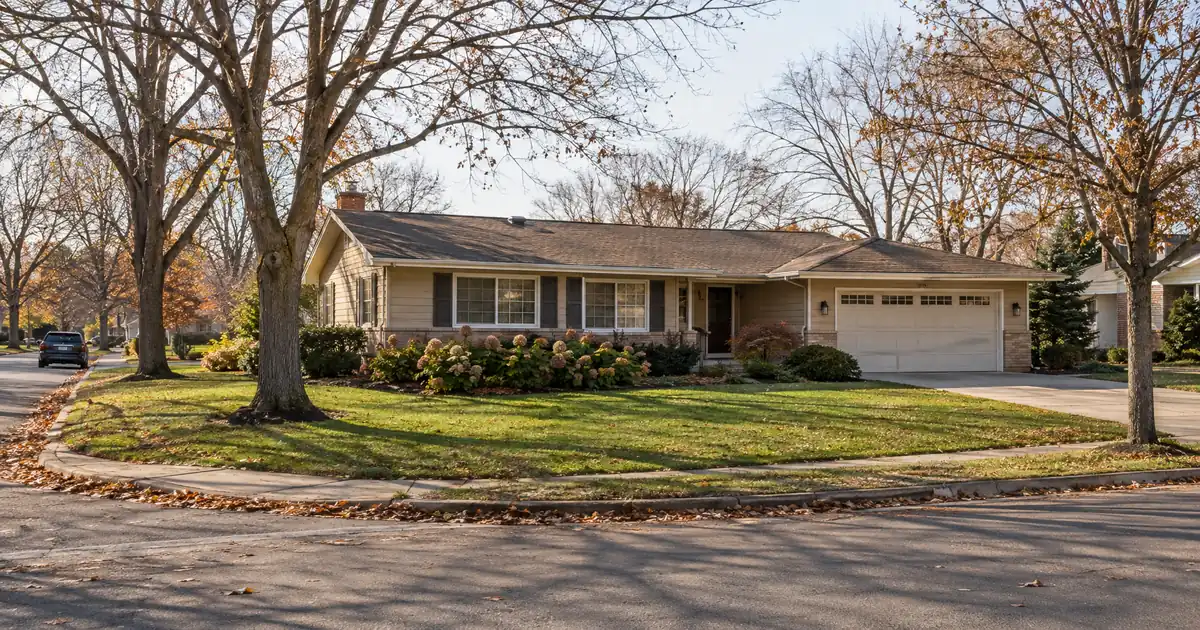
The Quick Read: A rental cash-out refinance replaces your existing financing with one new first loan, and that loan settles every required lien before you receive anything. Payoffs, closing costs, and any holdbacks come out of the loan amount first, and the investor gets only what remains. Across most of the wholesale network, the new loan tops out around 75% LTV on a cash-out of an investment property. Final terms depend on lender guidelines, property type, leverage, and the borrower’s complete credit picture.
- The new loan pays the first mortgage, any second lien, and any lien title finds, and the borrower receives the remainder.
- A larger payoff means smaller cash, because both draw on the same leverage ceiling.
- Rent is tested against the new, larger payment, so more cash taken means thinner coverage.
- About 6 months of ownership is the common seasoning expectation, measured from title recording.
- Clearing 1.00 coverage is not the same as positive cash flow.
Every program referenced here is subject to lender guidelines, credit approval, and property review. None of it is a commitment to lend.
DSCR Cash-Out Calculator
Run the cash-out numbers in your market
Rate source: Freddie Mac 30-yr average via FRED® — Federal Reserve Bank of St. Louis · effective Oct 29, 2026
Prefilled with starting assumptions — enter your property’s value, balance, taxes, and insurance for a more accurate picture.
Program parameters update from Lendmire’s centralized guideline source. Taxes and insurance are editable estimates.
As of Oct 29, 2026 · General Freddie Mac market benchmark, not a Lendmire loan offer. Property value, balance, taxes, and insurance are editable estimates. Maximum loan-to-value varies by lender, program, property type, and seasoning. Not a Loan Estimate, approval, or commitment to lend. Program availability and eligibility are subject to lender guidelines, credit approval, property review, and underwriting.
What Does “Pays Off Every Balance” Actually Mean?
It means the new first mortgage must retire every lien that sits ahead of it or alongside it on title, and the closing agent sends those payoffs directly. The investor never handles that money. Whatever is left after the payoffs and costs is the cash-out.
A refinance, in its plainest form, is paying off existing real estate debt with the proceeds of a new mortgage. HUD’s archived reference guide uses that same basic definition. The cash-out version adds one step: after the old debt is cleared, the borrower keeps the difference.
Here is what typically counts as a balance that must be cleared, and what does not:
| Item | Paid at closing? | Why |
|---|---|---|
| First mortgage | Yes | The new loan takes first position |
| Second mortgage or HELOC on this property | Yes | Title requires a clean lien position |
| Tax lien, judgment, mechanic’s lien | Yes, if title finds it | Involuntary liens block a clean first |
| Loan on a different property | No, unless you direct proceeds there | Not attached to this title |
| Old prepayment charge | Paid, as a cost | It is a payoff-letter item, not forgiven |
The fourth row catches many investors off guard. A line of credit secured by another rental stays open unless the investor uses the cash to retire it afterward. The closing agent only pays what attaches to the subject property.
How Does Underwriting Treat the Payoff, Step by Step?
Underwriting treats the payoff as the first claim on the new loan amount. It then tests whether the rest of the file still works on equity and rent. The process runs in a fixed order.
Step 1: Classify the transaction. Any refinance that puts cash in your hands beyond payoff and closing costs is a cash-out. A refinance that returns no cash is a rate-and-term, which on most programs in the network carries a higher LTV ceiling, up to 85% on an investment property. That line matters. If your plan creates even modest cash, the deal works to the stricter 75% cash-out ceiling.
Step 2: Collect payoff statements. Each lender holding a lien provides a payoff statement. It includes principal, accrued interest, per diem interest, a good-through date, and any prepayment charge. The statement is only valid through that date, so a closing that slips can require an updated figure.
Step 3: Order title. A title search confirms every lien. This is where surprise balances surface: an old judgment, a contractor’s claim, a forgotten second. Anything the search finds must be cleared or subordinated to the new first position, and clearing it comes out of proceeds.
Step 4: Size the loan. The loan amount cannot exceed the cash-out LTV ceiling applied to the appraised value. Payoffs, costs, and reserves all fit under that ceiling. Run it as percentages: if the combined payoffs and costs already consume most of 75% of value, little is left to hand back.
Step 5: Test rent against the new payment. Debt service coverage is monthly rent divided by the new monthly obligation: principal, interest, taxes, insurance, and any HOA dues. Taking more cash raises that obligation and lowers the ratio. Most select programs start at 1.00 coverage. Stronger ratios open better pricing and leverage. A separate select-lender path takes coverage below 1.00, with leverage and terms adjusted.
Step 6: Close and disburse. The title or escrow company sends each payoff, covers costs, and pays the borrower the remainder. The settlement statement is the anchor document. It shows every payoff by name and the exact cash returned. Asking for each lien to appear as its own line makes it easy to verify that nothing was missed.
The Closing-Day Order of Payments
Money moves in one direction and in one order: new loan proceeds in, then payoffs, then costs and holdbacks, then you. The investor is always last in line, which is why the headline number is never the check.
| Order | Use of funds |
|---|---|
| 1 | Existing first mortgage payoff |
| 2 | Second liens, HELOCs, or title-found liens |
| 3 | Closing costs, prepaids, escrows |
| 4 | Required holdbacks, if any |
| 5 | Cash to the borrower |
For consumer-purpose refinances of a primary home, federal disclosure forms show this flow in a “Total Payoffs and Payments” line that reduces cash to close. DSCR loans are business-purpose investor loans, so they are reviewed differently from a standard owner-occupied mortgage, and that consumer disclosure format does not govern them. The settlement statement still shows every payoff and the cash returned.
Worked Example in Percentages and Ratios
Take two modeled files on the same rental, valued at the same appraised amount. These are illustrations, not cited market data.
File one: a single low-balance lien. The first mortgage equals about 15% of value. The new loan sits at the 75% ceiling. After the payoff, roughly 60% of value remains before costs and reserves. That is a large check, but the larger loan also raises the payment, so coverage tightens. Say rent covered the old payment at around 1.6x; the new, larger obligation might bring it down toward the low 1.2 range.
File two: stacked liens. The first mortgage is about 55% of value, a HELOC adds about 12%, and a title-found judgment adds a sliver more. Together they approach 70% of value. The 75% ceiling now leaves only a small margin, and costs consume much of it. The investor may receive little or nothing. The refinance is functionally a consolidation, which can still make sense if the goal is one payment and cleaner title, but it is not an equity pull.
Same property, same ceiling, opposite results. Payoffs and cash draw from one pool.
What Limits the Cash Once Every Balance Is Cleared?
Four things limit it: the appraised value, the 75% cash-out ceiling, the rent coverage on the new payment, and reserves. A file must pass both the equity test and the rental coverage test. Strong equity cannot rescue weak rent, and strong rent cannot lift the ceiling. These specifics are subject to lender guidelines and a full review of property, leverage, and credit.
Other file-level factors apply. Most programs in the network want credit around 660, a 620 floor exists in parts of the network, and 700 or higher unlocks the strongest leverage tiers. Reserves commonly run around 6 months of PITIA, stepping up to about 9 months on loans above $1,500,000. Loan sizes run up to $3,000,000 on standard programs, and above $2,500,000 the network generally holds to 30-year fixed structures. Seasoning is about 6 months of ownership from title recording.
A bigger down payment, or here, more retained equity, lowers the payment and can lift coverage. It never erases leverage caps, credit floors, reserve rules, or property eligibility. Manufactured homes, log homes, and barndominiums are not offered in the network’s DSCR programs.
Key Terms Defined
Payoff statement: a lender’s written figure for what it takes to clear a loan on a specific date.
Per diem interest: the daily interest that keeps accruing until the payoff is received.
Good-through date: the last day a payoff figure stays valid.
Seasoning: the period you must own the property before a cash-out is allowed.
Holdback: funds the closing agent keeps back for a specific purpose until it is satisfied.
Debt service coverage (DSCR): monthly rent divided by the monthly principal, interest, taxes, insurance, and HOA obligation.
Rate-and-term refinance: a refinance that returns no cash at closing beyond costs.
Where the General Rule Breaks
The “every balance is paid” rule has real exceptions. These are the ones that trip up investors most often.
Prepayment penalty on the old loan. The old loan’s terms disappear into the payoff, but a penalty still running does not vanish. It appears as a cost on the payoff letter and reduces your cash. Read the letter before assuming the old loan is free to leave.
Seasoning reset. Each cash-out starts a new seasoning clock and a new prepayment schedule on the new loan. Refinancing again soon after is harder, and the next one may carry its own penalty.
Title and vesting. Deeding a partner out, or moving the property into an LLC before the refinance, can raise a due-on-sale concern with the existing lender. The usual advice is to complete the refinance under the current vesting and make any title change only as the new lender’s closing instructions allow. Entity-held title works on many programs, subject to program terms. An inherited property generally needs recorded title before a cash-out can close.
Recent cash purchases. An investor who bought with cash may be able to refinance sooner under a delayed-financing concept, limited to the documented initial investment plus costs. Whether a DSCR program allows it varies, so confirm before planning around it.
Debts on other properties. The closing agent pays them only if you direct the proceeds there, and a separate payoff on another property needs its own documentation. Do not assume a blanket consolidation.
A shortfall. If payoffs plus costs exceed what the ceiling allows, the file does not work as structured. Options include bringing cash to the table, trimming the scope of what is being paid off, or waiting for value or balances to move.
Investors weighing a different path may prefer to keep a low-cost first mortgage in place and use a second-position product instead. This is a separate decision, and the deciding variable is how good the existing first mortgage is. A cash-out reprices the whole balance, not just the new cash.
Structure Variations Worth Knowing
The spine of most programs is the 30-year fixed. Extended terms such as 40-year, and interest-only periods, are available through select lenders in the network, and ARM structures exist for investors who want them. These options can lift coverage by lowering the required monthly obligation, but they do not change the leverage ceiling or the payoff order.
Short-term rentals follow different numbers. Cash-out on a short-term rental runs at 70% LTV, a lower ceiling than the 75% on a standard long-term rental. Expect a 640 or higher score and about 12 months of hosting history. On refinances, the coverage floor is 1.00. Terms depend on the lender’s guidelines, the property type, the leverage, and a full review of the credit profile.
What the Investor Decision Looks Like
A cash-out is worth doing when the use of proceeds earns more than the cost of repricing the entire balance. It is a poor fit when the payoff already consumes most of the available equity.
Consider three investor profiles:
- The investor with a low first lien and a clear next purchase. Coverage still clears, the check is meaningful, and the cash funds another rental. This is the cleanest case.
- The investor with stacked junior liens. The refinance cleans up title and consolidates payments, but cash is thin. Judge it as a consolidation, not an equity pull.
- The investor with a cheap first mortgage and a small cash need. Replacing the whole loan to extract a modest amount often costs more than it returns. Closing costs weigh heaviest on small cash-outs, and a second-position alternative may suit better.
Watch the coverage math carefully. Clearing 1.00 means rent covers the housing payment. It does not mean the property cash flows, because repairs, vacancy, management, utilities, and capital expenses sit outside the calculation.
If the cash funds another purchase, keep a clean paper trail: deposit proceeds into one dedicated account and keep the settlement statement.
For the full framework behind these programs, see Lendmire’s complete DSCR loans guide.
If you are buying or refinancing a rental property and want to see how the numbers work, Lendmire can help you compare DSCR loan options based on the property income, credit profile, leverage, and investor goals, arranged through select lenders in its wholesale network across 41 markets, including Washington, D.C. Call 828-256-2183 or request a quote.
Frequently Asked Questions
Does a cash-out refinance pay off all my liens?
It pays every lien attached to the subject property that title requires cleared, including a first mortgage, second liens, and involuntary liens like judgments. Debts secured by other properties are not paid unless you direct proceeds to them.
What happens to a HELOC on the same rental?
A cash-out pays off the first mortgage and any second lien or HELOC at settlement, so the new loan holds first position. A line on a different property stays open and is unaffected.
Why is my check smaller than the headline number?
Payoffs, closing costs, prepaids, escrows, and any holdbacks come out of the loan amount first. The remainder is your cash. Accrued interest and a prepayment charge on the old loan can shrink it further.
Can the proceeds pay off a loan on a different property?
Yes, if you direct the cash there after closing, or if a lender-approved arrangement documents it. The closing agent does not automatically clear debts on other collateral.
Does a rental cash-out give me a three-day cooling-off period?
Generally no. Federal rescission rights apply to certain consumer-purpose loans on a principal dwelling, and the CFPB’s rescission commentary states they do not apply to business-purpose loans. Investor loans are business-purpose, so the settlement statement, not a rescission window, is your checkpoint.
For how equity extraction works on an investment property, see Lendmire’s guide to cash-out refinance on an investment property.
About Lendmire
As a non-QM mortgage broker (NMLS# 2371349), Lendmire facilitates DSCR investor loans across 41 markets, including Washington, D.C. DSCR eligibility is generally reviewed around property-level rental income instead of personal income documentation, subject to lender guidelines, serving LLC-structured portfolios and self-employed borrowers who don’t fit conventional boxes. A two-time Scotsman Guide Top Mortgage Workplace (2025, 2026).
Get Started
Ready to find the right loan for you?
See your offer in seconds. No credit pull, no obligation.
Informational only. Not a Loan Estimate, approval, or commitment to lend. Program availability and eligibility are subject to lender guidelines, credit approval, property review, and underwriting.
References
1. HUD Archives HOC Reference Guide
2. CFPB Commentary on Rescission, Regulation Z §1026.23
This article is part of Lendmire’s investment property cash-out refinance program — full qualification details, guidelines, and scenarios live on the program page.
Related reading: Short-Term Rental Cash-Out Refinance Requirements Without Bringing Cash to Closing · Short-Term Rental Cash-Out Refinance Options for an Investment Property · Best Short-Term Rental Cash-Out Refinance Program After Moving Out
Brandon Miller
Founder & CEO, Mortgage Loan Originator, Lendmire LLC
- Mortgage Loan Originator · NMLS# 1129696 · Verify on NMLS Consumer Access
- North Carolina Real Estate Broker · License# 343312 · Verify on NCREC
- North Carolina Insurance Producer · License# 19053198 · Property, Casualty, Life, Health · Verify on NAIC SBS
- Lendmire LLC · Firm NMLS# 2371349 · Verify firm licensure
Important disclosures. Lendmire (NMLS# 2371349) is a licensed mortgage brokerage. Lendmire is not a direct lender, depository institution, or financial advisor. All loan inquiries are subject to lender underwriting; this article does not constitute a commitment to lend. Rates, terms, and program guidelines are subject to change without notice and vary by borrower profile, property type, and state. Information in this article is general in nature and is not financial, legal, or tax advice. Equal Housing Opportunity. NMLS Consumer Access: nmlsconsumeraccess.org.