
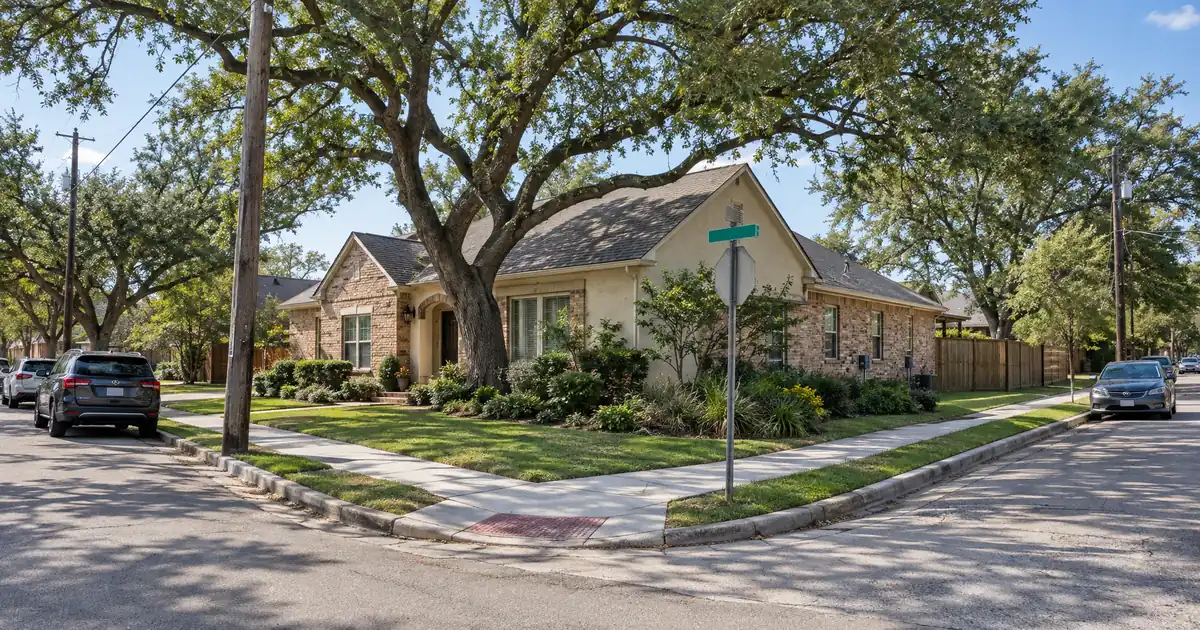
The Quick Read: It depends on one fact: whether the house has actually stopped being your homestead. Texas homestead rules attach to a property that is still legally a homestead, and they do not attach to a true rental. Moving out and signing a lease does not always end homestead status, so the classification comes first and the loan comes second.
- A true rental, with you living in a new primary residence, is generally treated as non-homestead.
- A temporary rental where you still plan to return and own no other home may still be a homestead.
- On this network, investment-property HELOC limits vary by lender guidelines, so confirm terms with the lender.
- Homestead-only limits do not govern a true rental, and a qualified Texas attorney or title professional can confirm which rules apply.
- Title review of the old home’s lien history is the step most owners skip.
Why Two Camps Give Opposite Answers
Some lenders say Texas only allows a HELOC on a primary residence. Others say rentals are free of homestead rules. Both are half right, because each describes a different property.
How large a line the equity supports in Texas.
An equity line is sized by combined loan-to-value, occupancy, and credit — not by rental coverage. Switch the occupancy or the credit band and the ceiling moves with it.
Investment-property lines require a 700 minimum credit score; second-home lines start at a 640 minimum and primary-residence lines at 600, and the combined-LTV ceiling steps down as the credit band drops on primary-residence and second-home lines and holds on investment-property lines; the line cap steps down on primary-residence lines and holds at every tier on investment-property and second-home lines.
A debt-to-income ratio above 45% requires 680+ credit. Profiles under 640 are limited to single-family homes. At least 75% of the approved line is drawn at closing. Ceilings, floors, and caps update from Lendmire’s centralized guideline source.
Line estimate
Illustrative estimate only — not a quote, Loan Estimate, approval, or commitment to lend. The rate is an editable assumption; equity-line pricing is variable through both the draw and repayment periods and never converts to fixed. Occupancy and credit drive the ceiling together: an investment property tops out at 70% combined LTV (minimum credit 700, line cap $500,000); a second home tops out at 90% combined LTV (minimum credit 640, line cap $500,000), with the ceiling stepping down as the credit band drops (the cap holds at every tier); a primary residence tops out at 80% combined LTV (minimum credit 600), and its $750,000 maximum line is available only at 75% combined LTV or below with a 700-or-better credit profile (720 on the longer-runway program) and a full appraisal. Lines above $500,000 require a full appraisal. Credit, debt-to-income, property type, and full underwriting review all affect the final line.
The Texas Constitution protects the homestead from forced sale. Under Article XVI, Section 50, a lien on a homestead is invalid unless it secures one of the debts the section lists. The Texas A&M Real Estate Research Center states that these Section 50 loans may not be taken out on a secondary residence or a rental or investment property. So the equity-loan framework governs homesteads. A rental sits outside it.
Your house is the tricky case. It was a homestead, and the question is whether it still is.
Does Renting the House End Its Homestead Status?
Not automatically. A homestead does not end because you start collecting rent. Texas case law, summarized in an ABI digest of Texas homestead developments, holds that once property becomes a homestead, it stays one until it is alienated or abandoned.
Abandonment means leaving with the intent not to return. Texas Property Code §41.003 adds that temporary renting does not change homestead character if the owner has not acquired another homestead. There is no fixed number of months after which status lapses. It turns on intent and use.
Courts look at the whole picture. A Texas law firm explainer lists the owner’s statements, conduct, use of the property, and treatment of another residence. Another practitioner source says the best proof of abandonment is buying and moving into a new homestead.
Picture two owners. One takes a job in another city, leases the house for a year, and intends to come home. The other buys a new house, moves in, and signs a long-term lease on the old one. The first may still hold a homestead. The second almost certainly does not.
Three Homesteads That Get Confused
Texas uses “homestead” in more than one sense. Mixing them up is how owners reach the wrong conclusion.
| Type | What it governs | What ends it |
|---|---|---|
| Property-tax exemption | Appraisal district tax break | Rules in the Tax Code, separate test |
| Creditor protection | Forced-sale shield | Death or abandonment |
| Equity-lending homestead | Which loans may lien the home | Same abandonment test |
An attorney explainer on renting a Texas home notes that Tax Code §11.13(l) can preserve the exemption for a temporary absence of under two years. That is a tax rule. Do not use it to decide whether a lien is valid. And losing the tax exemption does not prove the lien-law homestead has ended.
Homestead status is also self-executing. No filing creates it, and a recorded affidavit only clarifies intent. A house you recently lived in needs review, not an assumption.
What the Equity-Loan Rules Cover
If the house is still a homestead, a HELOC on it must fit Section 50(a)(6). That framework carries its own limits. The constitutional notice text states an 80% combined cap against the home’s fair market value, a minimum advance of $4,000 for a line of credit, and a one-equity-loan-at-a-time limit. A 12-day notice period and 12-month spacing between equity loans also apply to homesteads.
Across our wholesale network, those limits bind a Texas primary residence, which is capped at 80% combined loan-to-value. Texas second homes and investment properties are eligible as non-homestead transactions.
An investment-property line works differently, and the network’s terms are tighter in some ways than a homestead line.
What a Rental HELOC Looks Like Once the House Is Truly Non-Homestead
Once the house is a real rental, the constitutional equity-loan constraints do not apply. Leverage, credit, and documentation come from the lender’s program. Here is how investment-property lines typically look through select lenders in the network, subject to lender guidelines and full file review:
- Leverage: 70% CLTV on an investment property, with no tier above it.
- Credit: a 700 minimum; 720 and 700 both reach the same 70% ceiling, so a higher score buys eligibility, not leverage.
- Line size: up to $500,000 on an investment property. Larger lines are for primary residences only.
- Structure: a standalone line in first or second lien position, with a 5-year interest-only draw and a 25-year repayment period. At least 75% of the line is drawn at closing, and pricing floats rather than converting to fixed.
- Valuation: because an investment line caps at $500,000, it typically runs an automated valuation with no traditional appraisal, though a full appraisal can be requested.
- Income: a rental HELOC underwrites on your personal credit and debt-to-income, with a 50% maximum DTI. It is not a DSCR loan.
- Title: you hold title personally or in a revocable living trust. A property already deeded to an LLC needs a vesting change, or a DSCR cash-out instead, subject to program terms.
- Property: single-family, 2-4 units, PUD, townhome, and condo. Manufactured homes, log homes, co-ops, and condotels are not offered.
- Subsequent draws: after closing, Texas sets a $4,000 minimum draw.
- Availability: Lendmire’s HELOC programs run in 16 full-service states, Texas among them. A property listed for sale, or listed within the past 60 days, is ineligible in Texas.
Timing: Where You Are in the Move-Out
Apply the test to your own sequence.
Still living there. It is a homestead. Any lien must fit Section 50(a)(6).
Moved out, no tenant, no new home. This is a gray zone. Without a new homestead, the old house may still be one. Expect lender and title scrutiny.
Moved to a new primary residence, lease in place. This is the strongest non-homestead case. Document it with a deed or lease on the new home, utility bills, driver’s license, and voter registration.
Planning to move back. Intent to return cuts against abandonment. The rental label alone will not carry the file.
Some lenders add overlays for owners who have not bought a new home, precisely because the old house might still be a homestead. Treat that as a lender-by-lender variable.
The Prior-Lien Trap
Check title before you apply. If the existing mortgage was a Section 50(a)(6) equity loan, Texas treats refinancing of that debt under its own rules. Per the proposed 7 TAC Chapter 153 amendments, Section 50(f) lets an equity loan be refinanced into a non-equity loan only on specific conditions, including a one-year timing limitation, a limit on additional funds, an 80% loan-to-value limit, and a required disclosure.
Some Texas lenders summarize this as once an equity loan, always an equity loan. Confirm how that applies to your file with title counsel, because a lien that is not authorized under Section 50 is invalid against a homestead.
What Lenders and Title Companies Ask For
Our brokerage sees the same documents decide most of these files:
- The lease and proof the tenant moved in.
- Proof of your new primary residence.
- A title commitment showing any prior equity lien.
- Insurance reflecting rental use.
- A county homestead exemption update.
- A title-company or attorney review of the occupancy history.
Establish the new primary residence first. Document the conversion. Clear any prior equity lien before you apply. Skipping the order is how files stall.
When a DSCR Cash-Out Fits Better
A HELOC is personal-credit underwriting. If the house is deeded to an LLC, or you want property-rent-based lender review, a DSCR cash-out may fit better. That loan is reviewed primarily on property-level rental income covering the payment, subject to lender guidelines. Cash-out tops out around 75% LTV across most of the network on standard rentals, and about 6 months of seasoning is the common expectation. Our complete DSCR loans guide walks through the structure.
Clearing 1.00 coverage is not the same as positive cash flow. Repairs, vacancy, management, and capex sit outside the calculation.
Key Terms Defined
Homestead: the home you live in as your principal residence, which Texas protects from forced sale and from most liens.
Abandonment: leaving a homestead with the intent not to return, which ends its homestead status.
CLTV (combined loan-to-value): all loans on the property added together, divided by its value.
Non-homestead: a property that no longer qualifies as the owner’s homestead, such as a true rental.
Section 50(a)(6) loan: the Texas home equity loan type allowed against a homestead, with its own limits.
Frequently Asked Questions
Does Texas homestead law apply after I move out?
It can, because homestead status survives until death or abandonment, so moving out alone does not end it. If you bought a new home and leased the old one long-term, it is generally treated as non-homestead.
Does the tax exemption ending mean the homestead ended?
No. The property-tax exemption and the lien-law homestead are separate tests. Losing one does not prove you lost the other.
Can a lender decline because the house was my homestead?
Yes. Some lenders add overlays for recently converted homes, especially when the owner has no new primary residence. Requirements differ across the network, and every file is reviewed individually.
Do I need a homestead affidavit?
No filing creates a Texas homestead, and an affidavit is not required to establish one. It can clarify intent, which is why title companies sometimes ask about it.
What if I move back in later?
Returning can restore the property’s homestead use, and a rental line would then need review against the homestead rules. Talk with title counsel before you move back.
If you are considering a home equity line and want to see how the numbers work, Lendmire can help you compare HELOC options based on the property, the equity available, credit profile, combined leverage, and your goals. Tax treatment varies, so consult a qualified professional.
The line between homestead and rental in Texas is drawn by where you live and what you intend, not by the lease alone.
About Lendmire
As a mortgage broker (NMLS# 2371349), Lendmire helps homeowners and real estate investors in its 16 full-service states open home equity lines of credit arranged through wholesale lenders. Lendmire is never the lender; line amounts, ceilings and terms are set by the lender under its guidelines. Scotsman Guide named Lendmire a Top Mortgage Workplace in both 2025 and 2026.
Investors who want the broader program framework can review how DSCR loans work.
Get Started
Ready to find the right loan for you?
In about 30 seconds you can review financing options available for your investment property. No commitment required.
Informational only. Not a Loan Estimate, approval, or commitment to lend. Program availability and eligibility are subject to lender guidelines, credit approval, property review, and underwriting.
References
1. Texas A&M Real Estate Research Center
2. ABI, Current Developments in Texas Homestead Law
5. Andrew Chavis Law, renting a Texas home
6. FindLaw, Texas Constitution Art. XVI §50 notice text
7. Texas Finance Commission proposed 7 TAC Ch. 153 amendments
This article is part of Lendmire’s investment property HELOC program — full qualification details, guidelines, and scenarios live on the program page.
Related reading: How to Get an Investment Property HELOC Vested in an LLC · How to Get a HELOC Behind a DSCR Loan When Banks Decline · Can an LLC-Owned Rental DSCR Cash-Out With No Seasoning?
Guides: Investment Property HELOC in Texas
Brandon Miller
Founder & CEO, Mortgage Loan Originator, Lendmire LLC
- Mortgage Loan Originator · NMLS# 1129696 · Verify on NMLS Consumer Access
- North Carolina Real Estate Broker · License# 343312 · Verify on NCREC
- North Carolina Insurance Producer · License# 19053198 · Property, Casualty, Life, Health · Verify on NAIC SBS
- Lendmire LLC · Firm NMLS# 2371349 · Verify firm licensure
Compliance and disclosures. Lendmire (NMLS# 2371349) is a licensed mortgage broker and is not a direct lender, depository institution, financial advisor, or tax professional. Content in this article is general market analysis and educational information — not financial, legal, or tax advice for any specific situation. Lendmire does not guarantee loan approval; every transaction is subject to underwriting by the funding lender. Mortgage pricing and loan program guidelines are subject to change at any time without notice and vary by borrower characteristics, property type, and state regulations. Lendmire complies with Equal Housing Opportunity. Licensure verification: NMLS Consumer Access.