
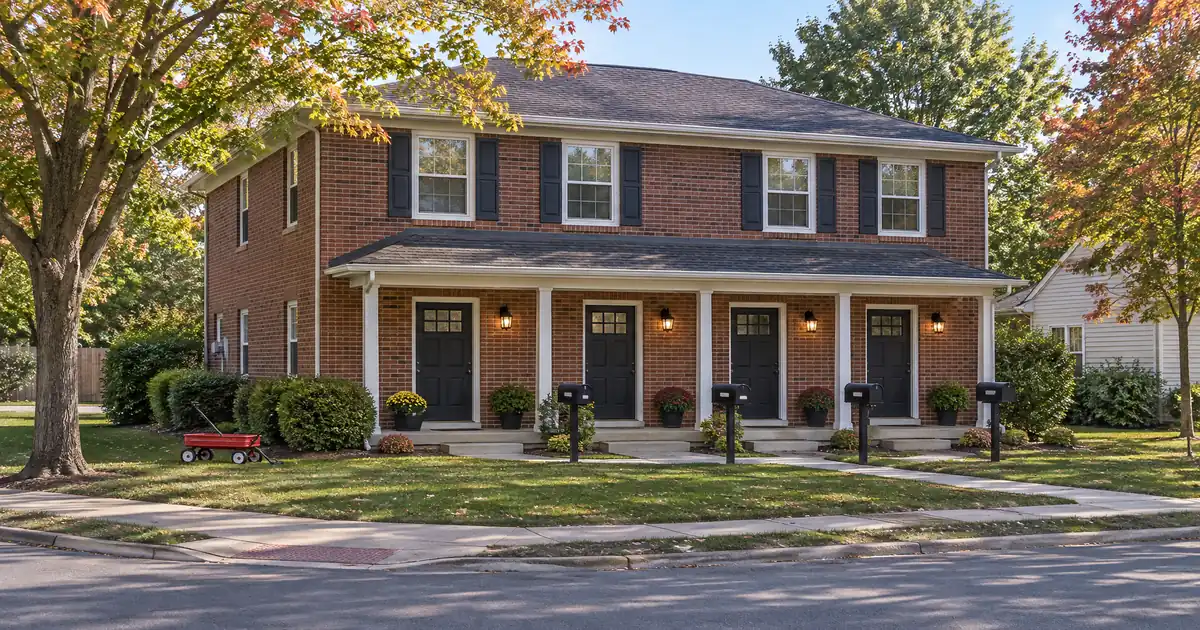
The Quick Read: On a fourplex cash-out refinance, a DSCR lender counts the documented rent on each unit, which usually means the lower of the signed lease or the appraiser’s market rent, added together into one gross monthly figure. That figure is divided by the new, larger payment on the cash-out balance, so pulling more cash lowers coverage.
- Rent is tested unit by unit. A lease above market is capped at market rent. A lease below market stays at the lease figure.
- A vacant, rent-ready unit is tested on the appraiser’s market rent.
- The appraisal on a two- to four-unit property uses Form 1025, which produces both the value and the per-unit rent opinion.
- Two caps apply and the lower one wins: the 75% LTV ceiling on a cash-out refinance, and the largest loan the rent can carry at the required coverage ratio.
- Clearing 1.00 does not mean positive cash flow. The ratio compares rent to PITIA only. Terms depend on the lender’s guidelines, the property type, the leverage, and a full review of the credit profile.
Each unit in a fourplex has its own lease, its own market rent opinion, and its own way of going wrong. This explainer walks through what a DSCR lender counts, step by step, and where the rule bends.
DSCR Cash-Out Calculator
Run the cash-out numbers in your market
Rate source: Freddie Mac 30-yr average via FRED® — Federal Reserve Bank of St. Louis · effective Nov 5, 2026
Prefilled with starting assumptions — enter your property’s value, balance, taxes, and insurance for a more accurate picture.
Program parameters update from Lendmire’s centralized guideline source. Taxes and insurance are editable estimates.
As of Nov 5, 2026 · General Freddie Mac market benchmark, not a Lendmire loan offer. Property value, balance, taxes, and insurance are editable estimates. Maximum loan-to-value varies by lender, program, property type, and seasoning. Not a Loan Estimate, approval, or commitment to lend. Program availability and eligibility are subject to lender guidelines, credit approval, property review, and underwriting.
What “Counted Rent” Means on a Fourplex
Counted rent is the monthly income a lender is willing to credit when it measures coverage. It is not what the building collects, and it is not what the investor hopes to collect. It is the documented figure that survives underwriting.
There is no federal rule that sets this. DSCR loans are business-purpose investor loans, so each program’s guidelines decide how rent is treated. Across the wholesale network of DSCR lenders that Lendmire works with, the common approach is the lower of lease rent and market rent on each unit. Some programs let a current lease carry more weight. Others lean on the appraiser’s number alone. The first question to ask before ordering an appraisal is which rule the chosen program applies.
The lender is looking for property-level income. DSCR loans qualify primarily on property-level rental income covering the payment, subject to lender guidelines. Lendmire’s complete DSCR loans guide covers the full program basics.
Why a Fourplex Is Still Residential
A fourplex is one property with four rents. It is underwritten as a single loan on the residential side of the line, not as four loans and not as commercial real estate. In this network the line sits at five units. Five or more units move toward net-operating-income underwriting and a commercial appraisal. Two to four units stay on the DSCR residential path.
That matters for the appraisal form. Fannie Mae’s Selling Guide lists Form 1025 for appraisals of two- to four-unit properties and Form 1007 only for one-unit investment properties. DSCR is not an agency product, so that citation is form-name context only.
How Underwriting Counts the Rent, Step by Step
Here is the sequence on a typical fourplex file.
1. The appraisal is ordered on Form 1025. It is a full interior and exterior appraisal. It produces a value for the equity test and a market rent for each unit for the income test. A low appraisal therefore hurts twice: it shrinks the loan ceiling and weakens the rent figure.
2. The appraiser reconciles rent unit by unit. The Form 1025 asks the appraiser to reconcile indicated market rents into an opinion of market rent for each unit. Its rent schedule sets leases, actual rent, and opinion of market rent side by side.
3. The borrower supplies a lease for each unit and a rent roll. The rent roll lists each unit’s tenant, lease terms, and rent. This is the usual document set.
4. The lender picks the figure for each unit. The next section shows how.
5. The unit figures are summed. The total is one gross monthly rent. It is not net operating income. Repairs, vacancy, management, utilities, and capex sit outside the calculation.
6. The total is divided by the new PITIA. PITIA is principal, interest, taxes, insurance, and any HOA dues on the new loan balance. A cash-out makes the balance larger against the same rent, so coverage falls as the investor pulls more cash.
7. The lower of two caps sets the loan. One cap is LTV on appraised value. On a cash-out refinance the network tops out around 75% LTV, subject to lender guidelines. The other is a rent cap, meaning the largest loan the rent can carry at the required coverage ratio. If the rent cannot cover the larger payment, the loan shrinks until it can.
Which Figure Wins on Each Unit
The rule is simple. The mechanics are where files get messy.
| Unit situation | Rent typically counted |
|---|---|
| Lease above market | Market rent (premium ignored) |
| Lease below market | The lease figure |
| Vacant, rent-ready | Appraiser’s market rent |
| Month-to-month or expired lease | Market rent, depending on program |
| No written lease | Market rent, depending on program |
A lease above market is the one that surprises investors. The extra income is real to the owner. It does nothing for the loan. Capping at market protects the lender from a rent that a new owner could not replace.
A below-market legacy lease works the other way. The lease governs and pulls coverage down. Renewing that lease at market rent before the appraisal can help. A lease renewed after the appraisal does not change the appraiser’s market rent opinion, so timing matters.
Worked Example: Uneven Rents, Three Outcomes
Take a modeled fourplex appraised at a round figure, with uneven rents. These are assumptions for illustration, not market data. Two units are leased at market. One is leased well below market from a long-tenured tenant. One is vacant and rent-ready.
- Units 1 and 2: lease equals market. Counted at the lease.
- Unit 3: lease below market. Counted at the lease, which drags the total.
- Unit 4: vacant. Counted at the appraiser’s market rent.
Now change one thing at a time.
Scenario A: unit 3 renews at market before the appraisal. The counted total rises. The same loan balance now shows stronger coverage, which may support a larger cash-out or better terms.
Scenario B: unit 1 has a lease above market. The premium is dropped. Counted rent stays at market, and coverage does not move.
Scenario C: the investor asks for more cash. The balance grows, the payment grows, and the rent stays flat. Coverage falls. If it dips below the program floor, the loan is resized downward, even when LTV room remains.
Picture an investor with ample equity but thin rents. The LTV cap might allow a large loan while the rent test allows a much smaller one. The rent cap sets the number, and no amount of equity changes that. A larger down payment or lower balance lowers the payment and can lift the ratio, but it never erases leverage caps, credit floors, reserve rules, or property eligibility. The strongest files clear both tests: enough equity and enough rental coverage.
Does the Owner’s Own Unit Count?
On a DSCR cash-out, the question mostly doesn’t arise, because these are non-owner-occupied investor loans. Cash-out on a fourplex generally isn’t available through DSCR programs while the owner lives in one of the units. DSCR loans are designed for non-owner-occupied investment properties. Because they are business-purpose investor loans, they are reviewed differently from a standard owner-occupied mortgage.
The appraisal form itself is neutral on this point. Form 1025 assigns market rent to every unit regardless of occupancy. The occupancy rule comes from the loan program, not the form. An owner who lives in a unit and wants to pull cash is usually looking at a different product, so the practical choice is whether to wait until the property is fully rented.
Where the General Rule Breaks
The lower-of rule is common, not universal. These are the named edge cases.
- Programs differ. One program may give a current lease weight. Another may use the appraiser’s market rent alone. Ask before ordering.
- One vacant unit. The vacant unit is tested on market rent. Vacancy does not disqualify a file, though a lender may still ask for proof of rent or deposit records on the occupied units.
- Fully vacant building. The market rent opinion carries the entire income side. Expect closer scrutiny of condition and rent-readiness.
- Rent-stabilized or rent-controlled units. Underwriting may reflect the legal registered rent rather than an open-market opinion. Form 1025 has a rent-controls field for exactly this reason.
- Short-term rental units. Form 1025 measures monthly rent, not nightly rates. The lender decides how short-term income is treated, usually through hosting history or a separate income lane. Short-term rental rules can vary by city, county, HOA, and property type, so investors should confirm local rules before relying on projected rental income.
- Illegal or unpermitted units. A unit that isn’t legal can drop out of the income and the value. It is also an eligibility question, separate from rent.
- Ineligible property types. Manufactured homes, log homes, and barndominiums are not offered through these DSCR programs, however many units they contain.
Coverage itself has paths. A 1.00 ratio is where many select programs start. A separate path through select lenders in the network takes coverage below 1.00, with leverage and terms adjusted. Stronger ratios open better pricing and leverage. No-ratio structures are available only through select lenders, generally for borrowers who already own a primary residence.
What a Lender Compares to Conventional Treatment
Some conventional investment programs haircut rent before counting it. DSCR programs generally count gross rent in full, then test it against PITIA. That difference is why a fourplex with solid leases can work on DSCR terms when personal income documents would cap the borrower elsewhere. The tradeoff is that gross rent is a blunt measure.
What the Investor Decision Looks Like
Run the file backward before applying. Start with the lowest realistic rent per unit, not the hoped-for one. Model coverage at the amount of cash wanted. If it falls short, there are levers.
- Take less cash. A smaller balance lowers PITIA and lifts coverage.
- Renew below-market leases at market before the appraisal, not after.
- Cure vacancy where practical, or accept that market rent will be used.
- Ask for the comps behind a low rent opinion. An appraisal reconsideration with documented, recent comparable rents can recover ground.
- Look at interest-only structures. These are available through select lenders in the network. Where they apply, the test uses interest-only payment instead of full PITIA. Extended 40-year terms and ARM structures also exist for investors who want them, subject to lender guidelines.
- Check the basics. Cash-out typically needs about 6 months of ownership, measured from title recording. Credit floors start around 620 in parts of the network, with most programs wanting about 660 and 700+ unlocking the strongest tiers. Reserves commonly run around 6 months of PITIA, stepping up toward 9 months on loans above $1,500,000. Loan sizes run up to $3,000,000 on standard programs.
DSCR loans are generally full recourse to the borrower or the LLC members, so the guarantor still carries the risk. When the borrower holds title in an LLC, that structure is accepted subject to lender program eligibility.
Key Terms Defined
Counted rent: the documented monthly rent a lender credits in the coverage calculation, usually the lower of lease and market rent per unit.
Market rent: the appraiser’s opinion of what a unit would rent for, set on Form 1025.
Rent roll: a schedule listing each unit’s tenant, lease terms, and rent.
PITIA: principal, interest, taxes, insurance, and any HOA dues on the new loan.
Rent cap: the largest loan the rent can carry at the required coverage ratio.
Form 1025: the appraisal form for two- to four-unit properties that reports value and per-unit market rent.
Myths and Facts
Myth: a vacant unit kills the cash-out. Fact: vacancy does not disqualify a file. Market rent carries that unit.
Myth: the 1007 applies to a fourplex. Fact: the 1007 covers one-unit investment homes. The fourplex rent analysis lives inside the 1025.
Myth: the appraiser sets my qualifying income. Fact: the appraiser documents market rent. The lender decides how income counts.
Myth: a renewal at higher rent after the appraisal raises counted rent. Fact: it does not change the appraised market rent.
Myth: a ratio above 1.00 means positive cash flow. Fact: the ratio compares rent to PITIA only. Vacancy, repairs, management, utilities, and capex are outside it.
For the rental-income mechanics in general, Lendmire’s piece How a Lender Counts Rental Income on a Cash-Out Refinance goes deeper on the lease-versus-appraisal question.
If you are buying or refinancing a rental property and want to see how the numbers work, Lendmire can help you compare DSCR loan options based on the property income, credit profile, leverage, and investor goals, arranged through select lenders in its wholesale network across 41 markets, including Washington, D.C. Qualification is subject to lender guidelines and credit approval. This is not a commitment to lend.
Frequently Asked Questions
Does every unit’s rent count, or only the occupied ones?
Every unit gets a figure. Occupied units are tested on the lower of lease and market rent. A vacant, rent-ready unit is tested on the appraiser’s market rent. Some lenders may still ask for deposit records or other proof of rent.
Why is my cash-out smaller than my equity suggests?
Two caps apply and the lower one wins. Cash-out tops out around 75% LTV across most of the network, and the rent has to cover the larger payment at the required ratio. On thin-rent fourplexes the rent cap often binds first, so the loan resizes downward.
Can a fourplex with a below-market lease still work?
It can, but the lease governs and pulls the counted total down. Renewing at market before the appraisal can lift coverage. A renewal signed after the appraisal does not change the appraiser’s rent opinion.
Does a DSCR above 1.00 mean the building cash flows?
No. The ratio compares rent to PITIA only. Repairs, vacancy, management, utilities, and capex are outside the calculation, so a file can clear 1.00 and still lose money to operating costs.
What if coverage lands below 1.00?
Many select programs start at 1.00. Taking less cash or an interest-only structure are other levers, subject to lender review.
A deeper walk-through of investment-property equity extraction lives in Lendmire’s guide to cash-out refinance on an investment property.
About Lendmire
Lendmire (NMLS# 2371349), a non-QM mortgage broker serving investors in 41 markets including Washington, D.C., helps structure DSCR scenarios commonly evaluated around a property’s rental income rather than personal income paperwork, subject to lender guidelines. A Scotsman Guide Top Mortgage Workplace in 2025 and 2026, Lendmire places loans through wholesale investor lenders and is not a direct lender.
Get Started
Ready to find the right loan for you?
See your offer in seconds. No credit pull, no obligation.
Informational only. Not a Loan Estimate, approval, or commitment to lend. Program availability and eligibility are subject to lender guidelines, credit approval, property review, and underwriting.
References
1. Fannie Mae Selling Guide B4-1.2-01
This article is part of Lendmire’s investment property cash-out refinance program — full qualification details, guidelines, and scenarios live on the program page.
Related reading: How to Get a DSCR Cash-Out Refinance When a Conservator Manages the Rental · How Much Cash-Out a Landlord Can Take to Buy Another Rental · How Much Cash Comes Out of a Short-Term Rental Cash-Out Refinance Right After Rehab?
Brandon Miller
Founder & CEO, Mortgage Loan Originator, Lendmire LLC
- Mortgage Loan Originator · NMLS# 1129696 · Verify on NMLS Consumer Access
- North Carolina Real Estate Broker · License# 343312 · Verify on NCREC
- North Carolina Insurance Producer · License# 19053198 · Property, Casualty, Life, Health · Verify on NAIC SBS
- Lendmire LLC · Firm NMLS# 2371349 · Verify firm licensure
Disclosures. The information presented in this article is general market commentary, not financial, legal, or tax advice. Lendmire is a mortgage brokerage (NMLS# 2371349) — not a direct lender or depository institution — and loan placement is subject to lender underwriting. Nothing in this content represents a commitment to lend. Loan terms, pricing, and program availability vary based on borrower qualifications, property characteristics, and state of subject property, and are subject to change at any time. Lendmire complies with Equal Housing Opportunity requirements. Consumer access: nmlsconsumeraccess.org.