
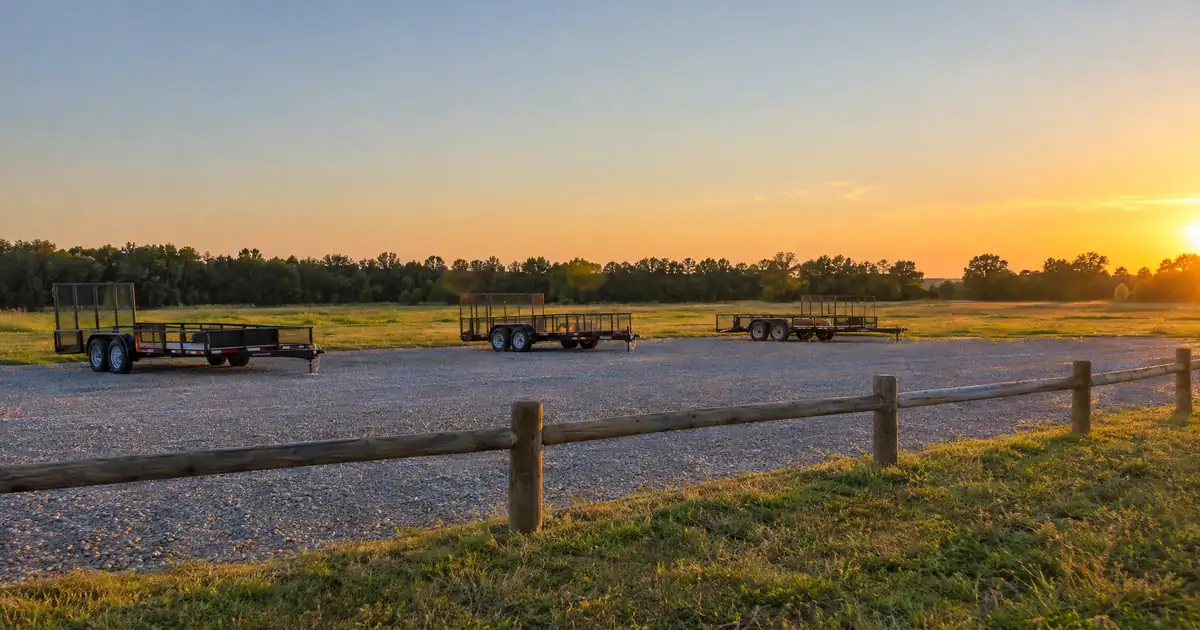
The Quick Read: A rental lot HELOC is not a standalone product: on the network Lendmire works with, a vacant lot cannot secure a home equity line, but you can borrow against an eligible home or rental you already own and put the money toward the lot, while the lot’s rent plays almost no part in approval.
- The lot is not the collateral. The residential property named in the lien is.
- An investment-property line typically tops out at 70% CLTV (combined loan-to-value) and $500,000, with a 700 minimum credit score.
- The line is underwritten on your credit, debt-to-income ratio, and equity, not on lot rent.
- Raw land and vacant lots are not offered for DSCR loans, so lot rent cannot qualify you that way either.
Everything below is subject to lender guidelines and full file review. None of it is a commitment to lend.
How large a line the equity supports.
An equity line is sized by combined loan-to-value, occupancy, and credit — not by rental coverage. Switch the occupancy or the credit band and the ceiling moves with it.
Investment-property lines require a 700 minimum credit score; second-home lines start at a 640 minimum and primary-residence lines at 600, and the combined-LTV ceiling steps down as the credit band drops on primary-residence and second-home lines and holds on investment-property lines; the line cap steps down on primary-residence lines and holds at every tier on investment-property and second-home lines.
A debt-to-income ratio above 45% requires 680+ credit. Profiles under 640 are limited to single-family homes. At least 75% of the approved line is drawn at closing. Ceilings, floors, and caps update from Lendmire’s centralized guideline source.
Line estimate
Illustrative estimate only — not a quote, Loan Estimate, approval, or commitment to lend. The rate is an editable assumption; equity-line pricing is variable through both the draw and repayment periods and never converts to fixed. Occupancy and credit drive the ceiling together: an investment property tops out at 70% combined LTV (minimum credit 700, line cap $500,000); a second home tops out at 90% combined LTV (minimum credit 640, line cap $500,000), with the ceiling stepping down as the credit band drops (the cap holds at every tier); a primary residence tops out at 90% combined LTV (minimum credit 600), and its $750,000 maximum line is available only at 75% combined LTV or below with a 700-or-better credit profile (720 on the longer-runway program) and a full appraisal. Lines above $500,000 require a full appraisal. Credit, debt-to-income, property type, and full underwriting review all affect the final line.
What Is a Rental Lot HELOC, Really?
The phrase blends two separate questions, and keeping them apart saves you from chasing a product that does not exist.
Question one: can the vacant lot itself secure the line? In this network, no. Raw land, agriculturally zoned land, and vacant lots are all off the eligible list for an investment-property HELOC.
Question two: can you use a HELOC on a different property to buy, improve, or hold the lot? Yes. That is an ordinary home equity line on a house or rental. The lot is simply where the money goes.
Most confusion comes from mixing these up. Investors see land, see rent, and assume the rent works like it does on a duplex. It does not. A HELOC is a borrower-underwritten loan, which means the lender looks at you and your equity, not at what the collateral earns.
Key Terms Defined
HELOC: a revolving line of credit secured by a property you own. You borrow, repay, and borrow again within a limit.
CLTV (combined loan-to-value): all liens on the property, including the new line, divided by the property’s value.
Draw period: the stretch when you can pull funds. On an investment line in this network, it is five years of interest-only payments.
Repayment period: the stretch after the draw period when you pay down principal and interest. Here it is 25 years.
DTI (debt-to-income ratio): your monthly debt payments divided by your monthly income.
DSCR (debt service coverage ratio): monthly rent divided by the monthly payment on the property, including principal, interest, taxes, insurance, and any HOA dues. It applies to a rental purchase or refinance, not to a HELOC.
Vesting: how title to the property is held, such as in your own name, in a trust, or in an LLC.
Why the Lot Cannot Be the Collateral
The property that secures the line carries the foreclosure risk. Collateral is whatever the lien attaches to, not whatever the money buys. The FTC’s guidance on home equity loans and lines of credit says the same thing in plain terms: the line is secured by property, and borrowing means putting that property on the line.
Across the wholesale network, eligible collateral for an investment line is residential. That means single-family homes, 2-4 unit properties, PUDs, townhomes, and condominiums, including non-warrantable condos. Not eligible are manufactured homes, co-ops, condotels, log homes, commercial, mixed-use, agriculturally zoned land, and raw land.
A parcel with a livable dwelling on it may fall under a residential property type. Agricultural zoning still disqualifies it. A bare lot does not fit any eligible category.
Lenders in the wider market that do lend on land treat it as its own category. A land loan uses the land as collateral, and those lenders often ask for a larger down payment and charge more than they would on a home equity line. That is a different product from the one described here, and the network does not offer it.
How Underwriting Treats It, Step by Step
An investment HELOC is sized and approved in a fixed order. Here is how it runs when the goal is to fund a lot.
1. Pick the collateral. It must be an eligible residential property that you own individually or through a revocable living trust. The lot is not that property.
2. Size the line. Take the property’s value, apply the CLTV cap, and subtract every existing lien. The CFPB’s HELOC booklet walks through the same arithmetic: a percentage of appraised value, minus what you still owe. On an investment property, the cap is 70% CLTV, and the line is capped at $500,000.
3. Underwrite you. The lender checks credit, DTI, and how many properties you finance. An investment line requires a 700 minimum score. DTI tops out at 50%, calculated on the interest-only payment at the maximum draw. Every financed property counts in that ratio, whoever holds title. A credit report can be no more than 90 days old at closing.
4. Value the collateral. Because investment lines cap at $500,000 and full appraisals begin above that size, automated valuation is the ordinary route. You can still request a full appraisal.
5. Close and draw. At least 75% of the line is drawn at closing. The payment floats and never converts to fixed. For a lot buyer, that matters: most of the line starts costing you immediately.
6. Rent the lot. The lease is a business matter after closing. It does not decide the HELOC outcome.
The CFPB describes a HELOC as an open-end line you can borrow against repeatedly, with available equity equal to the home’s value minus what you owe. It also warns that falling behind could cost you your home. That warning applies to your collateral rental, not to the lot.
Here is the sizing logic in percentages. Say your collateral rental has a first lien equal to 50% of its value. At a 70% CLTV cap on an investment property, the room is about 20% of value before the $500,000 line cap applies. A 700 score and a 720 score land at the same 70% ceiling, so a higher score buys wider lender eligibility rather than more leverage.
Structures and Variations That Exist
Several structures can fund a lot, and each one underwrites something different.
| Structure | Collateral | What gets underwritten |
|---|---|---|
| HELOC on an investment property | Your rental | Credit, DTI, CLTV |
| HELOC on a primary residence | Your home | Credit, DTI, CLTV |
| Land loan | The lot itself | Down payment, land plan |
| DSCR loan on a leased rental | The rental | Rent against payment |
A HELOC can sit in first or second lien position, so you do not have to touch a low-rate first mortgage. Line size runs from $25,000 up to a $500,000 ceiling on investment property. A line above $500,000 is available on primary residences only, with stronger credit and a full appraisal. Ceilings also depend on occupancy, so a primary-residence line can reach higher combined leverage than an investment line. The investment figure is the one that applies to a rental.
Using your own home as collateral is a real option, but it puts the roof over your head behind a land purchase. That tradeoff is the biggest judgment call in the structure.
DSCR does a different job. It finances the purchase or refinance of a rental by comparing that rental’s income to its own payment. Lendmire arranges DSCR investor loans across 40 states plus Washington, D.C. A HELOC, in contrast, is offered only in the 16 states where Lendmire has full-service mortgage operations, so availability is narrower. Both are brokered through select wholesale lenders, and Lendmire is never the lender.
Why Lot Rent Cannot Qualify the Deal
DSCR math needs a rent number to compare against a payment, and raw land has no rent to underwrite. That is why a vacant lot is not offered under DSCR. Hard money or a bridge loan is the more common tool at the acquisition stage, and a DSCR refinance can come later once a property is leased and stabilized. That path applies to a building, not to the bare ground.
A HELOC ignores the collateral’s rent as well. Lenders count rental income at a discount in any case. The network has no confirmed treatment for land-lease income, so plan on the lot’s rent counting for little or nothing toward your approval. Treat any lot rent that does get counted as a bonus, not as the basis for the deal.
That also means a vacant or between-tenant collateral rental generally needs no lease or rent roll for the HELOC. A vacancy will not change approval, but it can strain your cash flow when the payment starts on most of the line.
Lot rent is also a weaker income stream than it looks. Only a documented, enforceable lease creates a paper trail. BiggerPockets threads on land leasing point investors toward leasing the whole parcel rather than individual spaces, and toward covering liability and security. Another BiggerPockets discussion on RV storage suggests checking with the planning department even where zoning appears to allow storage, because requirements such as paving can surface. Those are individual investor posts, so use them as prompts for your own diligence, not as rules.
Where the General Rule Breaks
The lot is your only asset. There is no residential collateral, so there is no eligible HELOC. Land-secured equity loans exist in the wider market, but the network does not offer them. A land loan or hard money is the alternative.
Your rental sits in an LLC. A HELOC cannot be written on property held by an LLC, corporation, partnership, or an irrevocable, blind, or land trust. Title must be held by you or by a revocable living trust. A rental already deeded to an LLC needs a vesting change, or a DSCR cash-out refinance may fit better, subject to program terms on LLC-titled properties. Lendmire’s piece Who Qualifies For A DSCR Cash Out Refinance On A Rental? covers that route.
The parcel has a structure. A livable dwelling may place it in a residential property class. Agricultural zoning excludes it, and modular factory-built homes are accepted only under certain programs.
You hold many properties. You are limited to three lines, and a borrower with more than 15 financed properties is not eligible. Combined exposure caps also apply.
A listed property. In several states, a collateral property that is listed for sale, or was listed in the past 60 days, is ineligible.
You want it all drawn flexibly. At least 75% of the line is drawn at closing, so the revolving feature is smaller than the word suggests.
What the Investor Decision Looks Like
Start with the job, then match the tool. A HELOC finances equity you already hold. A DSCR loan finances a target rental on its own income. A land loan finances the ground itself.
Ask four questions in order:
1. Do you have an eligible residential property with room at 70% CLTV on an investment property? If not, a HELOC is off the table.
2. Does your credit reach 700, and does your DTI hold at the interest-only payment on the full line? Run the line at the maximum draw, because that is how it is qualified.
3. Can you carry the payment if the lot sits empty? The payment floats and starts on most of the line, while lot rent can be seasonal or informal.
4. Would you rather risk the rental or your home? Either one is the collateral that can be lost.
The other path is to skip the HELOC and buy the lot with cash or with a land loan, then use the HELOC for site prep. A strong file clears two tests: enough equity and enough personal capacity. A lot cannot supply either one for you.
DSCR comes into play later. If you build or place a leasable dwelling on the lot, a DSCR refinance becomes possible once the property is leased. Coverage of 1.00 is where select programs start, and stronger ratios open better pricing and leverage. Clearing that number is not the same as positive cash flow, since repairs, vacancy, and management sit outside the calculation.
Tax treatment can depend on how the funds are used and how the property is held; investors should keep clear records and speak with a qualified tax professional before relying on any deduction.
Frequently Asked Questions
Can I get a HELOC secured by a vacant lot I rent out?
Not through this network. Raw land and vacant lots are not eligible collateral for an investment-property HELOC. The line must be secured by an eligible residential property, such as a single-family home, a 2-4 unit rental, a townhome, or a condo.
Does the rent from my lot count toward qualifying?
Plan on little or nothing. A HELOC is underwritten on your credit, DTI, and combined loan-to-value, not on the collateral’s income. Lenders discount rental income when they count it at all, and there is no confirmed treatment for land-lease income here.
What are the limits on an investment HELOC?
Typically 70% CLTV on an investment property, a $500,000 line cap, and a 700 minimum credit score. The structure is a 5-year interest-only draw followed by 25 years of repayment. Pricing floats. Figures are subject to lender guidelines and file review.
Can my LLC take out the line?
No. Title must be held by an individual or a revocable living trust. If the rental is in an LLC, you would need a vesting change or a different product, such as a DSCR cash-out refinance, subject to lender program eligibility.
Is a DSCR loan an option for a vacant lot?
No. Raw land and vacant lots are not offered, because there is no rent to compare against a payment. DSCR becomes available once a leasable property exists and is stabilized.
Next Steps
If you are considering a home equity line and want to see how the numbers work, Lendmire can help you compare HELOC options based on the property, the equity available, credit profile, combined leverage, and your goals. For the broader picture of how rental-property financing fits together, see the complete DSCR loans guide, and for where investors can find these lines, see Lendmire’s piece Where Rental HELOC Programs Are Available and Who Texas Investors Use.
Vacant land rewards the investor who borrows against a building and treats the lot’s rent as a bonus, never as the thing that holds the loan up.
About Lendmire
Lendmire — NMLS# 2371349 — is a mortgage broker that arranges home equity lines of credit in its 16 full-service states through wholesale lenders, on primary residences, second homes and investment properties. Every line is subject to the lender’s guidelines and full underwriting. Scotsman Guide named Lendmire a Top Mortgage Workplace in both 2025 and 2026.
Get Started
Ready to find the right loan for you?
In about 30 seconds you can review financing options available for your home or investment property. No commitment required.
Informational only. Not a Loan Estimate, approval, or commitment to lend. Program availability and eligibility are subject to lender guidelines, credit approval, property review, and underwriting.
References
1. FTC – Home equity loans and HELOCs
3. BiggerPockets – land lease for truck parking
4. BiggerPockets – vacant land RV storage
This article is part of Lendmire’s investment property HELOC program — full qualification details, guidelines, and scenarios live on the program page.
Related reading: Investment Property HELOCs for Investors Whose Bank Said No · Rental HELOCs for Investors Starting at a Local Bank: What to Ask · Cash Out Refinance Rental Property Rules
Brandon Miller
Founder & CEO, Mortgage Loan Originator, Lendmire LLC
- Mortgage Loan Originator · NMLS# 1129696 · Verify on NMLS Consumer Access
- North Carolina Real Estate Broker · License# 343312 · Verify on NCREC
- North Carolina Insurance Producer · License# 19053198 · Property, Casualty, Life, Health · Verify on NAIC SBS
- Lendmire LLC · Firm NMLS# 2371349 · Verify firm licensure
Disclosure information. Lendmire is a state-licensed mortgage brokerage under NMLS# 2371349. Lendmire is not a depository institution, direct lender, or financial advisor — all loans referenced are placed through wholesale lender partners and are subject to each lender's underwriting standards. This article is provided for general informational purposes and is not a commitment to lend, nor does it constitute financial, legal, or tax advice. Loan programs, terms, rates, and qualification standards change without notice and depend on borrower profile, property type, and the state in which the subject property is located. Equal Housing Opportunity provider. NMLS Consumer Access: nmlsconsumeraccess.org.