
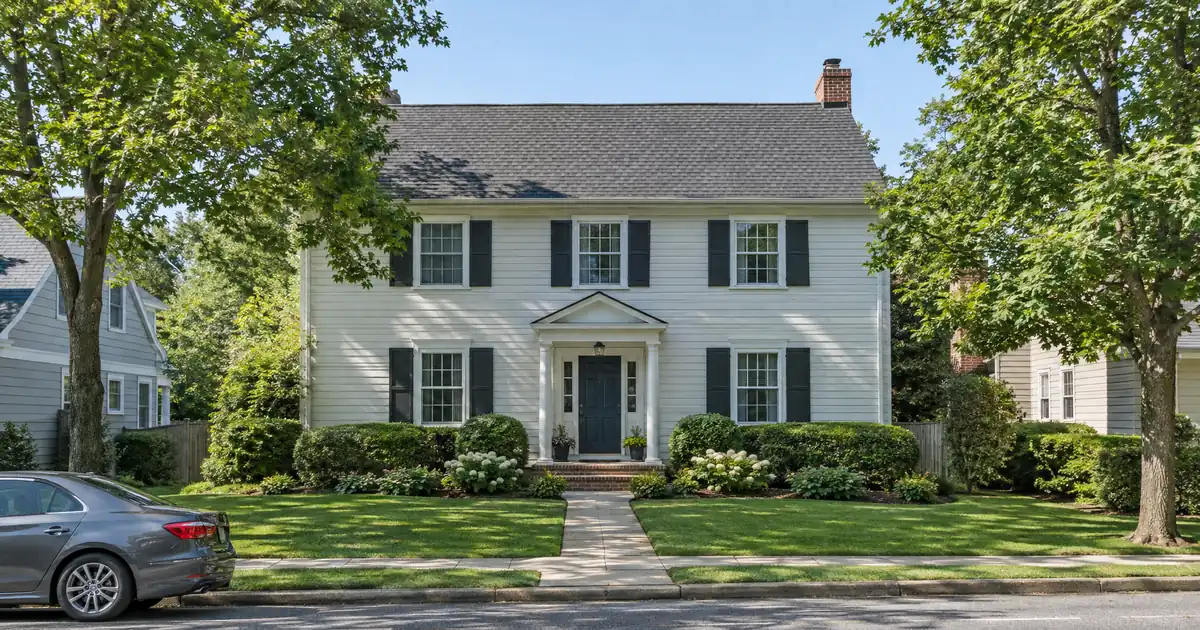
The Quick Read: A cash-out refinance fits the owner who wants to keep the property and has enough equity and rental coverage to fund the buyout. Selling fits the owner who cannot close that gap, or who no longer wants the property. This article is about co-owned investment property, not tenant leases or roommates. A refinance keeps the asset and adds debt. A sale ends the debt and gives up the asset.
Key Takeaways
- A refinance only works if the new loan covers the old payoff, the partner’s share, and closing costs. Paper equity is not the same as reachable equity.
- Most programs in Lendmire’s wholesale network cap standard-rental cash-out at about 75% LTV, so the cap, not the partner’s contract, limits the cash.
- The remaining owner usually qualifies primarily on property-level rental income covering the payment, subject to lender guidelines.
- A sale is cleaner when the equity gap is too wide or the rent would not support the larger loan.
- Fund the partner and clear the old loan at one closing. Never deed the partner off first.
Side-by-Side
Here is how the two paths compare on the points that decide most files. The refinance column reflects what you see across a wholesale network of DSCR lenders. Program terms vary by lender, and every file is underwritten individually.
DSCR Cash-Out Calculator
Run the cash-out numbers in your market
Rate source: Freddie Mac 30-yr average via FRED® — Federal Reserve Bank of St. Louis · effective Oct 8, 2026
Prefilled with starting assumptions — enter your property’s value, balance, taxes, and insurance for a more accurate picture.
Program parameters update from Lendmire’s centralized guideline source. Taxes and insurance are editable estimates.
As of Oct 8, 2026 · General Freddie Mac market benchmark, not a Lendmire loan offer. Property value, balance, taxes, and insurance are editable estimates. Maximum loan-to-value varies by lender, program, property type, and seasoning. Not a Loan Estimate, approval, or commitment to lend. Program availability and eligibility are subject to lender guidelines, credit approval, property review, and underwriting.
| Factor | Cash-Out Refinance Buyout | Sell the Rental |
|---|---|---|
| Review basis | Property rent vs. its payment | Buyer’s financing, not yours |
| Documentation | Appraisal, lease, entity file, title | Listing, contract, payoff statement |
| Property types | Standard rentals; no manufactured or log homes | Any property a buyer will take |
| Entity vesting | LLC borrower possible, subject to program eligibility | Entity sells, then winds down |
| Steps involved | Appraisal, title work, one closing | Marketing, buyer closing, distribution |
| Reserves | Commonly around 6 months PITIA | None required of you |
| Who keeps the asset | Remaining owner | Nobody |
| Loan release | Partner leaves the old loan | Old loan paid off in full |
PITIA means principal, interest, taxes, insurance, and any association dues. It is the monthly obligation the rent has to cover.
How a Cash-Out Refinance Buyout Works
A cash-out refinance replaces the old loan with a new, larger one and uses the extra to pay your partner. The new loan has to cover three things: the existing payoff, the partner’s agreed share, and closing costs. If it falls short, the buyout is not fully funded.
DSCR stands for debt service coverage ratio. It compares the property’s rent to its PITIA. DSCR loans are designed for non-owner-occupied investment properties. Because they are business-purpose investor loans, they are reviewed differently from a standard owner-occupied mortgage.
That difference matters when a partner leaves. A standard refinance asks the remaining owner to carry the loan on personal income alone. If you cannot, you may have to sell or find another arrangement. A DSCR loan looks at the rent against the payment instead. Your personal income stays in the background.
Across our wholesale network, the typical terms look like this:
- Leverage: cash-out tops out around 75% LTV on standard rentals. LTV is loan-to-value, the new loan as a share of appraised value.
- Seasoning: about 6 months of ownership, measured from title recording. Seasoning is the waiting period before a lender will let you pull cash out.
- Coverage: 1.00 is where many select programs start. A separate select-lender path takes coverage below 1.00, with leverage and terms adjusted.
- Credit: a 620 floor exists in parts of the network. Most programs want around 660. A 700+ score unlocks the strongest leverage tiers.
- Reserves: commonly around 6 months of PITIA, stepping up to about 9 months on loans above $1,500,000. Reserves are cash you hold after closing.
- Loan size: standard programs run up to $3,000,000. Smaller balances route through select lenders.
These are guideline ranges, not promises, and they are subject to lender guidelines and credit approval.
One more point on coverage. Clearing 1.00 does not mean the property cash-flows. Repairs, vacancy, management, utilities, and capex sit outside the DSCR calculation. Keep that in mind, because a buyout adds debt.
The Equity Gap
This is where most buyouts break. The partner is owed a contractual share. The lender only releases what the cap allows.
Run the numbers on a modeled property. Assume it appraises at 100 units of value and the old loan sits at 55 units. Equity is 45 units, so a 50/50 partner is owed 22.5 units. A 75% cap puts the new loan at 75 units. Subtract the 55-unit payoff and closing costs, and you have under 20 units to hand over. The gap is real, and a single refinance cannot close it.
Those are modeled assumptions, not market data. The pattern is common on properties that were bought with high leverage and have not appreciated much.
You have a few ways to close a gap like that:
- Negotiate a staged payout, with part at closing and the rest later.
- Bring in cash from outside the property.
- Bring in a new investor to buy part of the partner’s share.
- Sell.
A rate-and-term refinance, which returns no cash at closing, can go up to about 85% LTV. It does not fund a buyout by itself. It helps when the partner is paid from other money and you only need to move the loan into one name. Final terms depend on lender guidelines, property type, leverage, and the borrower’s complete credit picture.
When Cash-Out Refinance Is the Better Fit
Choose the refinance when you want to keep the property and the numbers support it. A few conditions point that way.
Reachable equity covers the buyout. Subtract the old payoff and closing costs from the cap, and compare what remains with the partner’s share. If the gap is small or zero, the refinance works on paper.
Rent still covers the bigger loan. A larger balance means a larger payment. Picture a rental that clears the old payment at roughly 1.35x. After the buyout it might land near 1.1x. That still clears 1.00 but leaves less cushion, and thin cushion is where vacancy hurts. Stronger coverage opens better leverage and pricing, so a duplex or fourplex with strong rent per unit has an edge.
The property is worth keeping. Maybe it sits near a major employer, or the rent keeps rising. Perhaps you simply like the cash flow. A refinance leaves your depreciation history in place and avoids the transaction costs of a sale. Sellers face those costs whether or not they feel like paying them.
Your credit and reserves hold up. A 660+ score and about six months of reserves put you in the middle of the pack. At 700+, you see the best leverage tiers.
Title is clean and seasoned. A recent purchase may not be eligible for cash-out yet. If the partner’s share was itself bought recently, a lender may look closely at that transfer.
The paperwork follows a pattern. Expect an operating or partnership agreement, a buyout or assignment document, entity papers if an LLC holds the property, the guarantor file, an appraisal, the lease, and a title report. DSCR lenders can often lend to an LLC, subject to lender program eligibility. Be aware that large retail lenders usually want title in a person’s name. That can force a deed-out you would rather avoid.
Sequence matters most. DivorceNet makes the point in a co-owner buyout context: complete the refinance and pay the money before the exiting owner signs a transfer deed. The loan funds, the old loan is paid off, the partner is paid, and the deed is recorded at one escrow closing.
Due-on-sale is the related trap. Most mortgages let the lender call the loan when title moves without consent. That is federal law under 12 U.S.C. §1701j-3. The refinance retires the old loan at closing, so the clause matters less. It matters a lot if you deed the partner off while the old loan stays in place. Get lender consent or an attorney’s view first.
Not every property qualifies. DSCR programs in the network do not offer manufactured homes, log homes, or barndominiums. Everything else is reviewed against the property and the file.
When Selling Is the Better Fit
Choose a sale when the refinance cannot clear the gap, or when you no longer want the asset. A few signals point here.
The equity gap is too wide. If the cap leaves the buyout well short and neither partner can fund the difference, selling splits the proceeds without anyone borrowing more.
Coverage would be too thin. A bigger loan on a flat-rent property can push coverage toward 1.00 or below. Programs below 1.00 are available through select lenders in the network, with leverage and terms adjusted. Even so, running a rental on near-zero cushion is a risk you should size carefully.
You plan to sell soon anyway. Adding debt to a property you will sell in a few years rarely makes sense. You pay closing costs twice.
The partners want different things. One wants cash and one wants to keep going. Sometimes the cleanest answer is to let a third party take the property.
The partner relationship is the real problem. A buyout ties you to the other person until the closing. A sale ends it.
Selling does come with a tax bill, and depreciation recapture is a large part of it. Per Hiltzik CPA, the recapture rate is a ceiling rather than a flat rate. The same source notes that components reclassified through cost segregation can be taxed as ordinary income up to the depreciation claimed. Together, those rules can make a sale cost more than the headline number suggests. A refinance defers all of it.
Tax treatment can depend on how the property is held and how the sale or buyout is structured; investors should keep clear records and speak with a qualified tax professional before relying on any particular tax outcome.
A 1031 exchange can defer gain on a sale, but partnerships add friction. IPX1031 explains that exiting partners cannot simply take their share and run separate exchanges, and that paying out a partner at closing can hurt the partnership’s deferral. Its named workarounds are a buyout before the exchange, or a refinance after the exchange to fund the buyout. That second path shows how the two options can combine.
Lendmire’s broader look at refinancing versus selling a rental property as an exit strategy covers this decision beyond partner buyouts.
Where Most Partners Get It Wrong
Four mistakes show up over and over.
First, assuming the partner’s equity share is what you can pull out. The lender’s cap limits the cash. The partner’s contract does not shrink to fit. Always compute the reachable amount before you agree on a number.
Second, skipping the agreement. Your operating agreement may set a buyout formula, a first-refusal right, or a required valuation method. Read it before you negotiate.
Third, disagreeing on value without a tiebreaker. Dual appraisals or an agreed formula keep the talks from stalling. A partner who feels cheated is a partner who delays.
Fourth, confusing property title with entity ownership. If an LLC holds the rental, the partner may sell a membership interest and no deed changes hands. That changes the lender’s file and the documents you need.
Here is a quick practitioner observation. Buyout files stall far more often on the equity gap than on rent coverage. Owners assume rent will carry the bigger loan and then discover the cap leaves them short. Run the gap first. Coverage second.
A Balanced Verdict
Neither path wins in general. The refinance is for the owner with enough equity, enough rental coverage, and a reason to hold. The sale is for the owner facing a gap, thin coverage, or a wish to move on.
Here is a simple way to sort it:
1. Compute reachable equity: the cap, minus the old payoff, minus closing costs. 2. Compare it with the partner’s share. If it covers, the refinance is live. 3. Test coverage on the larger loan. If it stays comfortable, keep going. 4. If either test fails, look at a staged payout or a new investor before you list. 5. If those fail too, sell.
Extra cash from outside the property can lower the new loan and help coverage. It never erases leverage caps, credit floors, reserve rules, or property eligibility. The strongest files clear both tests: enough equity and enough rental coverage.
For the full picture of how these loans work, read the complete DSCR loans guide.
Key Terms Defined
Reachable equity: the cash a lender will release after the old payoff and closing costs, which can be less than your paper equity.
Cash-out refinance: a new loan larger than the old one, with the difference paid to you at closing.
Seasoning: the waiting period between buying a property and pulling cash out of it.
Reserves: liquid cash you hold after closing to cover payments if rent stops.
Vesting: how title is held, whether by individuals or in an entity such as an LLC.
Frequently Asked Questions
Can I buy out my partner without having cash on hand?
Often yes, if the property has enough reachable equity. A cash-out refinance funds the buyout from the property itself. You still need reserves, commonly around six months of PITIA, and the new loan has to clear the old payoff and costs. A staged payout can reduce the cash needed at closing.
Does the refinance remove my partner from the loan and from title?
It removes them from the old loan, because that loan is paid off at closing. Title is a separate step. The partner’s interest has to be conveyed, usually by a deed recorded at the same closing. If an LLC holds the property, an assignment of the membership interest may replace the deed.
What if my partner and I disagree on the property’s value?
Use a tiebreaker. Two independent appraisals, or a formula already written in your agreement, usually settles it. The lender’s appraisal will set the value for the loan, but it does not decide what you owe your partner. Settle the price before you apply.
Can a refinance work if the property was bought recently?
Possibly, but seasoning matters. Most programs in the network want about six months of ownership from title recording before cash-out. A purchase from a relative or business partner can draw extra review. Check the details against current guidelines before you plan around it.
What if the rental sits in an LLC?
Expect to provide entity documents and a personal guaranty. Moving title into an LLC partway through the process may trigger a title review, so decide the vesting early.
Run Your Numbers
If you are buying or refinancing a rental property and want to see how the numbers work, Lendmire can help you compare DSCR loan options based on the property income, credit profile, leverage, and investor goals. Lendmire is a broker that arranges financing through select lenders in its wholesale network, across 41 markets including Washington, D.C. Nothing here is a commitment to lend.
Investors weighing their equity options can start with Lendmire’s guide to cash-out refinance on an investment property.
About Lendmire
A non-QM mortgage broker (NMLS# 2371349), Lendmire arranges DSCR financing for real estate investors in 41 markets — 40 states plus Washington, D.C. Because deals are underwritten primarily on property cash flow rather than personal income documentation, the structure suits self-employed buyers and entity-owned portfolios. Lendmire places loans through wholesale investor lenders; it is not a direct lender. Scotsman Guide named Lendmire a Top Mortgage Workplace in both 2025 and 2026.
Get Started
Ready to find the right loan for you?
In about 30 seconds you can review financing options available for your investment property. No commitment required.
Informational only. Not a Loan Estimate, approval, or commitment to lend. Program availability and eligibility are subject to lender guidelines, credit approval, property review, and underwriting.
References
1. Cornell LII, 12 U.S.C. §1701j-3
This article is part of Lendmire’s investment property cash-out refinance program — full qualification details, guidelines, and scenarios live on the program page.
Related reading: How to Decide a Rental Cash-Out on Payment Math Not Market Timing · How to Apply for a DSCR Second Lien When Banks Won’t Do Second Position · Can You Get a Second Lien on a Rental Using Only Cash Flow?
Brandon Miller
Founder & CEO, Mortgage Loan Originator, Lendmire LLC
- Mortgage Loan Originator · NMLS# 1129696 · Verify on NMLS Consumer Access
- North Carolina Real Estate Broker · License# 343312 · Verify on NCREC
- North Carolina Insurance Producer · License# 19053198 · Property, Casualty, Life, Health · Verify on NAIC SBS
- Lendmire LLC · Firm NMLS# 2371349 · Verify firm licensure
Legal disclosures. Lendmire (NMLS# 2371349) is a state-licensed mortgage brokerage that arranges financing through wholesale lender relationships. Lendmire is not a direct lender, depository institution, or registered financial advisor. The discussion above is general informational content about real estate financing — it is not financial, legal, or tax advice, and readers should consult licensed professionals for guidance on their individual circumstances. Loan inquiries are subject to lender underwriting; this article does not represent a commitment to lend. Loan terms, rates, and qualification standards vary by borrower, property, and state, and are subject to change at any time. Equal Housing Opportunity. NMLS Consumer Access: nmlsconsumeraccess.org.