
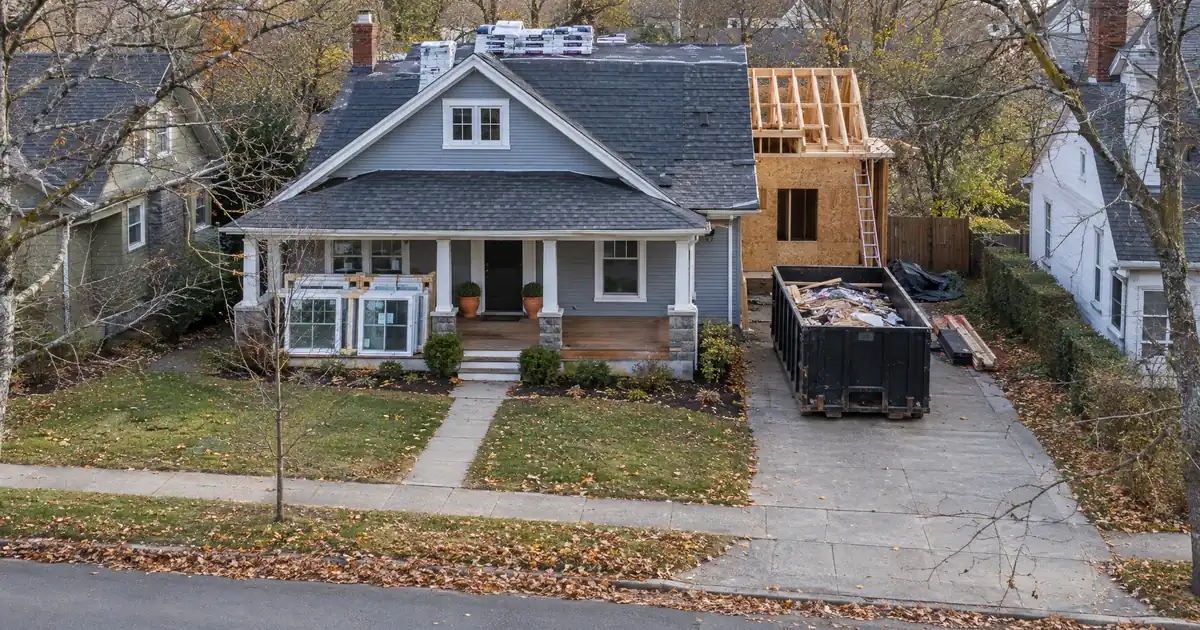
The Quick Read: Lenders send a tenant-occupied group of rentals to hard money when the properties cannot be financed on their rent alone: they are not rent-ready, the leases do not cover the payment, or the ownership timing does not fit a permanent loan. A package that is rentable, leased, and covers its payment usually fits DSCR financing instead. Hard money is sized on cost, value, and your exit plan. DSCR financing is sized on rent against the monthly obligation.
- A DSCR loan is reviewed primarily on property-level rental income covering the payment, subject to lender guidelines.
- Property condition is the first gate. A property that is not rentable cannot be financed on rent.
- Hard money is a short-term bridge: 6-18 months, interest-only, with no prepayment penalty.
- The permanent loan has its own leverage cap, so plan around the exit loan, not the bridge.
- Programs, leverage, and terms vary by lender, property, and experience, and nothing here is a commitment to lend.
What Does “Rented Package” Mean to a Lender?
A rented package is a group of tenant-occupied rentals bought or refinanced together. It can sit under one blanket note, or it can be several single-property loans closed side by side.
Lenders rarely use that phrase themselves. They ask about each property: is it rentable, is there a lease, what does the rent look like against the full payment, and how long has the borrower owned it?
The answers decide the product. A lease alone does not make a package ready for permanent financing. The lender decides which rent evidence it accepts and how much rent it will count.
Key Terms Defined
DSCR (debt service coverage ratio): Monthly rent divided by the full monthly housing payment, so a result above 1.00 means rent exceeds the payment.
PITIA: The full housing payment: principal, interest, taxes, insurance, and association dues.
Hard money: A short-term, asset-based loan sized on the property, the project, and your exit plan rather than on rent coverage.
ARV (after-repair value): What the property is expected to be worth once the work is done.
Loan-to-cost (LTC): The loan amount as a share of total project cost, usually purchase price plus renovation budget.
Seasoning: The waiting period between buying a property and refinancing it with cash out.
Blanket note: One loan secured by several properties at once.
Rent schedule: An appraiser’s opinion of market rent, reported on the standard appraisal forms (1007 for single-family, 1025 for 2-4 units).
How Do Lenders Decide, Step by Step?
Across the wholesale network we place files with, the decision runs as a sequence of gates. The first failure usually sends the file to hard money.
1. Is each property rentable? Underwriters want habitable, legally rentable, rent-ready or near-rent-ready property. A gutted unit or a mid-renovation building fails here, and the reason is not vacancy. It simply cannot produce rent yet. Heavy rehab goes to hard money first.
2. What rent number will the lender use? For a tenant-occupied property, the lender looks at the lease and the appraiser’s rent schedule. Some programs use the lower of the two. Others lean on the lease. Rent already being collected counts as evidence, while rent merely projected counts as a promise. Lenders treat the two very differently.
3. Does the rent cover the payment? On a portfolio structure, coverage is often measured on pooled rent against pooled payment, so stronger rentals can offset weaker ones. Whether pooling is allowed depends on the program. A coverage of 1.00 is where many select programs start, and stronger ratios open better pricing and leverage. A separate path takes coverage below 1.00 through select lenders in the network, with leverage and terms adjusted.
4. Do value and leverage fit? A property can have equity and still fail coverage. It can also pass coverage and fall short on equity. The strongest files clear both tests. On a standard rental purchase, most programs land at 75%-80% LTV. Cash-out refinances top out around 75% LTV on standard rentals.
5. Has the ownership clock run? Cash-out generally wants about 6 months of seasoning, usually counted from the recorded deed date. Signing a lease or finishing a rehab typically does not start the clock. Programs vary.
6. Is the paperwork in place? Expect leases, a rent roll for multi-unit buildings, appraisals with rent schedules, entity documents, asset statements, and insurance.
7. Decide. If the properties are rentable, rent covers the payment, value supports the leverage, and timing clears, the package goes to DSCR financing. If any of those fail, it needs a bridge.
Ranked by how often each one decides the outcome: rentable condition, rent versus payment, appraised value versus loan amount, ownership timing, then borrower experience and liquidity.
DSCR vs. Hard Money: What Each One Underwrites
| Factor | DSCR loan | Hard money |
|---|---|---|
| Sized on | Rent against PITIA | Cost, ARV, and exit plan |
| Property needs | Rent-ready, leased or marketable | Can be unfinished or distressed |
| Role | Long-term hold | Short-term bridge |
| Exit | Refinance or hold | Sale or refinance into long-term loan |
| Borrower focus | Credit, reserves, entity papers | Experience, liquidity, project plan |
Hard money skips the rent-coverage test, but it is not easier. The lender still underwrites the project, the value, and you. For the network’s hard money program, credit starts at a 620 minimum with additional conditions below 660. First-time investors qualify at the lower leverage tiers, and the top tier is reserved for experienced investors.
What Does Each Scenario Usually Look Like?
| Scenario | Why a lender reads it this way | Likely path |
|---|---|---|
| Clean leased package | Rent evidence, condition, and timing all clear | DSCR |
| Rented but needs work | Rent exists, but condition blocks permanent financing | Bridge, then DSCR |
| Rent below market or undocumented | Coverage may fall short or evidence is thin | Adjusted DSCR or bridge |
| Lease-up still in progress | Rent is a projection, not a collected fact | Bridge until stabilized |
| Tenant leaves mid-loan | Refinance may need a lease, so the exit slips | Plan the exit early |
Where Does the General Rule Break?
A mixed pool. Some properties are stabilized and some are not. One structuring approach is to finance the stabilized ones on DSCR and bridge the rest. That is a choice, not a rule. On a blanket note, one problem property can drag the whole pool.
Vacancy inside a multi-unit building. Some guidelines treat a 2-4 unit building with heavy vacancy as unleased. Whether that applies depends on the program.
A refinance on a vacant property. Refinances usually want the property leased. Exceptions exist for recently rehabbed properties listed for rent, and where allowed, leverage tends to be lower.
Hard money purchase, then cash-out. Some programs treat any lien from purchase onward as disqualifying for delayed-financing treatment. A payoff-only refinance may be the realistic first step, with cash-out later.
Short-term rentals. The monthly-lease method does not fit nightly income. STR files use booking history or a short-term rent analysis. On the DSCR side, STR purchases go to 75% LTV, refinances around 70%, and cash-out 70%. Expect a 640+ score and about 12 months of hosting history. Coverage floors are 1.00 on purchases and refinances. Short-term rental rules can vary by city, county, HOA, and property type, so investors should confirm local rules before relying on projected rental income. Leverage, reserves, and pricing vary by lender and program; the final terms follow the full file review.
Leases to family members. Some programs bar them.
Ineligible property types. Manufactured homes, log homes, and barndominiums are not offered on the DSCR side of the network. No amount of rent changes that.
Bank blanket vs. DSCR portfolio. A bank blanket loan reviews the borrower and guarantor. A DSCR portfolio reviews pooled rent. Neither is hard money, and release clauses, which set the price to free one property, matter in both.
What Do Three Rented Packages Look Like in Practice?
These are illustrative, not data.
Clean case. Picture an investor buying three leased single-family rentals, all rent-ready, with leases in hand and appraisal rent schedules close to the lease amounts. Pooled coverage clears about 1.25x. Nothing blocks a DSCR purchase at standard leverage, subject to lender guidelines.
Borderline case. Say you own a four-unit building and two houses. The houses are leased and healthy. Two units in the fourplex are mid-renovation with no tenants. Pooled coverage lands near 0.90x because the vacant units earn nothing. A lender may review sub-1.00 coverage through select lenders, with leverage and terms adjusted. The cleaner move is often splitting the package: DSCR on the two houses and a bridge on the fourplex until the units are rented.
Fails both paths. Consider an investor with a first-time project, a 600 score, and a package that is half unrentable. Hard money needs a 620 minimum, and the project plan is thin. DSCR coverage fails on condition. Here the fix is not a different lender. It is a smaller first deal, a stronger credit profile, or more equity.
How Do Lenders Judge Whether the Exit Will Work?
Hard money and the exit loan are sized on different tests. The bridge looks at cost and ARV, while the permanent loan wants rent coverage and a value that supports its cap. Many investors plan around the bridge leverage and get surprised by the exit.
On hard money, fix-and-flip leverage runs 93% of project cost at 5+ completed projects, 90% at 2+, and 85% below that, each capped at 75% of ARV. Bridge purchases without rehab go up to 80% of purchase price. Cash-out and rate/term refinances go up to 65% of value. Up to 100% of the rehab budget funds in draws against completed work. Loan amounts run up to $5,000,000, and larger by exception. All of this varies by lender, property, and experience.
A DSCR exit loan then sets its own ceiling, such as roughly 75% LTV on a standard cash-out. If the appraisal lands light or seasoning has not run, the gap between the two ceilings comes out of your pocket. For more on equity math, see Lendmire’s piece How Much Equity a Top-Leverage Hard Money Rehab Needs for DSCR Cash-Out. Terms vary by lender guidelines, property type, leverage, credit profile, and full file review.
Terms run 6-18 months. If lease-up or seasoning slips past maturity, you face extensions or a forced sale. Many investors refinance out of hard money into long-term DSCR investor loans once the property is stabilized, and Lendmire brokers that path.
Why Is Business Purpose Part of the File?
DSCR loans are designed for non-owner-occupied investment properties. Because they are business-purpose investor loans, they are reviewed differently from a standard owner-occupied mortgage. The Federal Register’s ability-to-repay rulemaking treats investment-purpose loans as business purpose. As Compliance Alliance explains, the exemption turns on the loan’s purpose rather than the label “investment property.” That is why your file carries a business-purpose and non-owner-occupancy attestation.
What Should You Prepare Before You Call?
- Leases and a current rent roll for every unit
- Proof rent is actually being collected, such as deposits
- Entity documents and a list of properties with purchase dates
- Insurance and recent repair or renovation records
- A budget and scope for any unfinished work
- Your exit plan: sell, hold, or refinance, and when
- Asset statements covering reserves, which commonly run about 6 months of PITIA but vary by lender, leverage, loan size, and transaction type
If a hard money lender is your first stop, Lendmire’s piece Top Hard Money Lenders helps you compare what to ask for. For the DSCR side of the exit, the complete DSCR loans guide covers coverage, leverage, and credit tiers in one place.
Remember that clearing 1.00 is not the same as positive cash flow. DSCR compares rent to PITIA only. Repairs, vacancy, management, utilities, and capital expenses sit outside it. Tax treatment varies; consult a qualified professional.
Frequently Asked Questions
Can a package with tenants in place still need hard money?
Yes. Tenants do not fix a property that is not rentable, a lease-up that is incomplete, or ownership timing that has not run. If condition or timing fails, a bridge holds the position until the package is stabilized.
Is hard money easier to get than DSCR financing?
It skips the rent-coverage test, but it is not easier. The lender still reviews the property’s rental income, the plan, and you. The network’s program starts at a 620 credit score, adds conditions below 660, and gives its best leverage only to experienced investors. Exact terms depend on the lender’s guidelines, property type, leverage, and a full review of the borrower’s file.
Does a bigger down payment fix a failing package?
It can lift coverage by lowering the payment. It never erases leverage caps, credit floors, reserve rules, or property eligibility. A property that is not rentable stays not rentable.
Can I do a cash-out right after a hard money purchase?
Often not right away. Seasoning usually runs from the recorded deed date, and some programs treat a lien from purchase as disqualifying for delayed-financing treatment. A payoff-only refinance may come first, with cash-out later, subject to lender guidelines.
Does a hard money loan carry a prepayment penalty?
Not on the network’s program, which is interest-only with 6-18 month terms. Still, a long stay on a bridge adds carrying cost, so treat it as temporary.
Next Step
If you are buying, rehabbing or refinancing an investment property on a short timeline and want to see how the numbers work, Lendmire can help you compare hard money options based on the project, the exit plan, leverage, and your goals.
Rented packages sort themselves out when you ask one question first: can each property earn its rent today? If the answer is yes, permanent financing is on the table. If the answer is not yet, the bridge buys time to get there.
About Lendmire
A DSCR-focused mortgage broker, Lendmire (NMLS# 2371349) places investor financing across 41 markets — 40 states plus Washington, D.C. — with DSCR eligibility generally reviewed by the lender on property cash flow instead of tax returns, subject to lender guidelines. Scotsman Guide named Lendmire a Top Mortgage Workplace in 2025 and 2026.
Get Started
Ready to find the right loan for you?
In about 30 seconds you can review financing options available for your investment property. No commitment required.
Informational only. Not a Loan Estimate, approval, or commitment to lend. Program availability and eligibility are subject to lender guidelines, credit approval, property review, and underwriting.
References
1. Federal Register – Ability-to-Repay and Qualified Mortgage Standards Under Regulation Z
2. Compliance Alliance – Regulation Z and Investment Properties
This article is part of Lendmire’s hard money loan program — full qualification details, guidelines, and scenarios live on the program page.
Related reading: DSCR Substitution vs Release and Add on a Tenant-Occupied Package · Fixed vs Adjustable DSCR Loan for Houses, Duplexes and Condos in One LLC · How to Consolidate Rental Loans Into One DSCR Loan Without Cash Out
Brandon Miller
Founder & CEO, Mortgage Loan Originator, Lendmire LLC
- Mortgage Loan Originator · NMLS# 1129696 · Verify on NMLS Consumer Access
- North Carolina Real Estate Broker · License# 343312 · Verify on NCREC
- North Carolina Insurance Producer · License# 19053198 · Property, Casualty, Life, Health · Verify on NAIC SBS
- Lendmire LLC · Firm NMLS# 2371349 · Verify firm licensure
Required disclosures. Lendmire (NMLS# 2371349) operates as a licensed mortgage broker, not a direct lender or depository. The discussion in this article is general in nature and should not be relied upon as financial, legal, or tax advice — every investment scenario is unique and should be reviewed by a qualified professional. Any loan inquiry is subject to lender underwriting, and this article is not a commitment to lend or a guarantee of approval. Mortgage rates, loan terms, and program guidelines vary by borrower, property, and state, and may change without notice. Equal Housing Opportunity. Verify licensure at NMLS Consumer Access.