
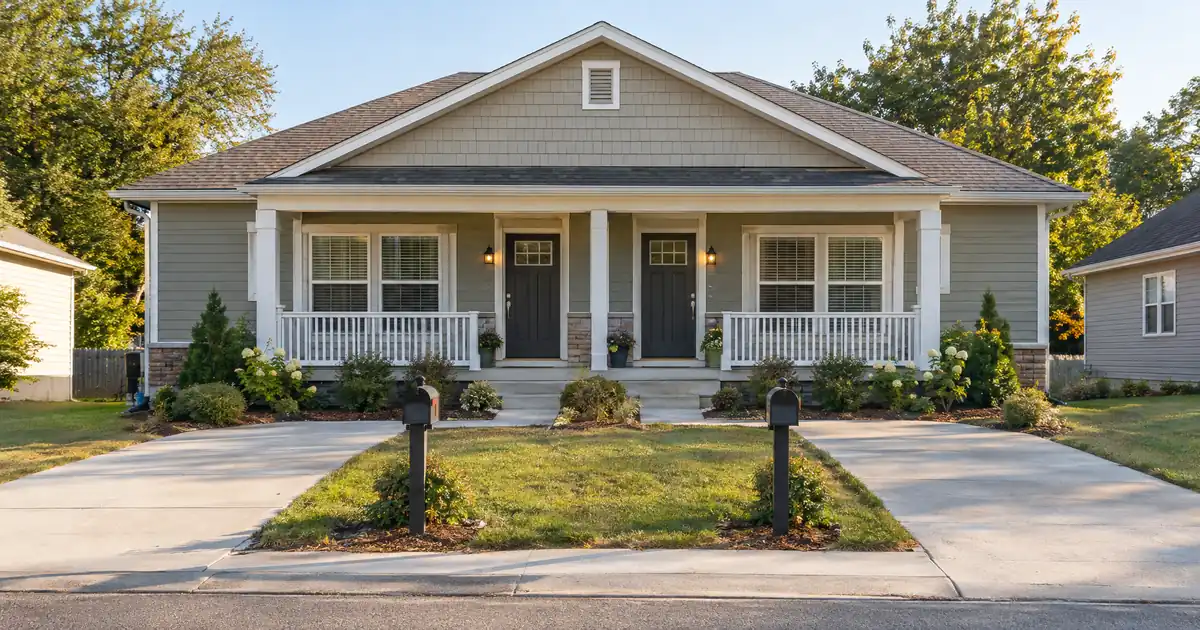
The Quick Read: A fixed-rate DSCR loan suits most investors holding a house, a duplex and a condo in one LLC. It keeps principal and interest steady, so the coverage ratio only moves when taxes, insurance or HOA dues move. An adjustable loan fits a planned shorter hold, and it adds a reset that the original underwriting never measured.
- Rate type changes the payment path. It does not change the DSCR framework: rent is compared to the full housing payment (PITIA).
- A fixed note is the spine of the network’s programs. Adjustable structures exist for investors who want them.
- Clearing 1.00x is a program floor, not positive cash flow. Repairs, vacancy and management sit outside the ratio.
- An LLC does not remove the guarantor’s exposure. A payment reset lands on the guarantor too.
Lendmire is a mortgage broker. It arranges DSCR investor loans through select lenders in its wholesale network, across 41 markets including Washington, D.C. The broker’s view of this choice is below. For the full program picture, see the complete DSCR loans guide.
The Honest Answer: Who Each Option Is For
Fixed is for the investor who wants the coverage number to stay put. The note payment does not change, so a house, duplex and condo that clear today’s test keep clearing it unless escrowed costs rise. Most files placed through the network are fixed, and the 30-year fixed is the spine of the lineup.
Adjustable is for the investor with a defined exit. If the plan is to sell or refinance before the initial fixed period ends, the reset may never matter. If the plan is to hold indefinitely, the reset is the main risk on the file.
Neither option makes the LLC structure easier or harder. The entity paperwork, the appraisal and the guarantor review are the same either way.
Side-by-Side
The fixed column reflects how most programs in the network work. The adjustable column reflects published industry norms for ARM structures, and the note itself controls the details.
| Factor | Fixed | Adjustable |
|---|---|---|
| Review basis | Property rent vs. PITIA | Property rent vs. PITIA |
| Payment path | Steady for the full term | Steady at first, then resets |
| Qualifying payment | Note payment | Varies by program |
| Documentation | Entity, lease or rent schedule, guarantor | Same, plus a close read of the note |
| Property types | Houses, 2-4 units, condos | Same eligibility, per program |
| Entity vesting | LLC borrower, personal guarantee | Same |
| Reserves | Commonly about 6 months PITIA | Same range, per lender |
| Main risk | Locked in if you exit early | Coverage after the reset |
Two rows deserve a note. The qualifying payment on an adjustable loan is a program-level rule, and some programs test it differently than the start payment. Ask before you assume. And the reserve range is not a universal number. It shifts with lender, leverage, loan size and transaction type.
When Fixed Is the Better Fit
Fixed is the better fit when the hold is long, or the exit date is unknown. It is also the better fit when the file is tight. A property sitting near the program’s coverage floor has little room for a payment change, and a fixed note removes that variable.
It fits a mixed portfolio well. Picture an LLC with a single-family house, a duplex and a condo, each bought at 75% to 80% LTV on a purchase. The house and duplex clear comfortably. A fixed note on the condo keeps that thin margin from getting thinner. Every figure here varies by lender and program — guidelines, property type, leverage, and credit profile all apply.
Fixed also simplifies the stress test. You are modeling rent and escrow changes only. There is no reset date to model on top.
Loan size points the same way. Above $2,500,000 the network generally holds to 30-year fixed structures, so larger balances do not offer the choice at all.
When Adjustable Is the Better Fit
Adjustable is the better fit when the investor plans to sell or refinance inside the initial fixed period. The reset only matters if you are still holding the note when it arrives.
Consider an investor who buys a duplex for a defined value-add plan: renovate, re-lease, then refinance into a long-term loan. The adjustable note matches that horizon. The investor needs to know the index, margin, caps, adjustment dates and floor before signing. The CFPB explains the reset formula in general terms: the new rate is the index plus the margin, subject to caps. The lender picks the index at application, and the margin is set in the loan agreement and does not change after closing.
One detail catches people. The CFPB’s ARM handbook notes that an ARM’s rate is generally never lower than the margin, and that the contract may allow the lender to switch indexes in some situations. A reset can lower the payment, but caps and floors can keep it from falling far.
Reading the ARM label correctly helps. In a 5/1 or 7/1, the first number is the fixed period in years. The second is how often it adjusts afterward. In the “/6” variants, the 6 means every six months.
Adjustable structures run through select lenders in the network, so availability depends on the property, the leverage and the program.
Mixing Houses, Duplexes and Condos in One LLC
Each property is its own note. The LLC takes title and signs, and each loan is underwritten on that property’s own coverage. A strong duplex does not rescue a weak condo.
How the three types differ inside the file:
- House: Rent comes from the in-place lease or a market rent schedule on the appraisal.
- Duplex: This is a 2-4 unit property, supported by the small-income-property appraisal form (Form 1025). One or more units can be leased.
- Condo: HOA dues sit inside PITIA. The project must pass the lender’s eligibility review, and HOA questionnaire completeness is where condo files stall.
Whether a program allows a mixed set of property types, and whether rate type can differ from note to note, is a program question. Nothing prevents a fixed note on one property and an adjustable on another. But a blend means two different stress tests. Run each property’s coverage separately, then look at the portfolio as a whole.
DSCR loans are designed for non-owner-occupied investment properties. If you plan to live in one unit of the duplex, that is an owner-occupied file, not a DSCR file. Under the CFPB’s Regulation Z, credit extended for a non-owner-occupied rental property is generally treated as business purpose.
Business-purpose investor loans generally don’t come with the consumer ARM disclosures by default, so the note itself is where the adjustable-rate terms are spelled out. Read it carefully.
What Stays the Same Under Either Rate Type
Several parts of the file do not change.
Entity documents. Expect articles of organization, an operating agreement, an EIN letter and guarantor identification. The LLC’s loan is subject to lender program eligibility, and most programs require a personal guarantee from the individual owners.
Leverage. Most purchase files land at 75% to 80% LTV. Select high-leverage programs reach 85% LTV on a purchase with roughly a 700+ score. Cash-out tops out around 75% LTV, with about 6 months of seasoning the common expectation. A larger down payment can lift coverage, but it does not erase leverage caps, credit floors or reserve rules. Final terms depend on lender guidelines, property type, leverage, and the borrower’s complete credit picture.
Credit. A 620 floor exists in parts of the network. Most programs want around 660, and 700+ unlocks the strongest leverage tiers.
Coverage. 1.00 is where select programs start, and stronger ratios open better terms. A separate select-lender path takes coverage below 1.00, with leverage and terms adjusted. No-ratio qualification is available only through select lenders, generally for borrowers who already own a primary residence.
Reserves. About 6 months of PITIA is common. Conservative rate-term files at modest leverage under $1,500,000 can see reserves waived. Loans above that size typically step up to about 9 months.
Treat all of these as typical ranges. Eligibility depends on lender guidelines, credit profile, property review and state overlays, and none of it is a commitment to lend.
Where Files Get Stuck
Three failure points show up often on multi-property LLC files.
1. Coverage that moved after underwriting. Rent is partly predictable, and escrowed costs can rise. Coverage at the reset date is not the number the original file measured.
2. Condo paperwork. An incomplete HOA questionnaire or an unclear project status can hold the whole condo note. Order it early.
3. Entity gaps. A missing operating agreement, a mismatched member list or an unsigned guarantee delays a file that otherwise works. Match the vesting on the contract, the title and the loan.
A fourth, less obvious: assuming one coverage number covers the LLC. It does not. Every note stands on its own property.
Interest-only is a separate choice from rate type. It can pair with either fixed or adjustable, and the payment, and therefore the ratio, can change when the interest-only period ends.
Key Terms Defined
DSCR: The property’s rent divided by its monthly housing payment (principal, interest, taxes, insurance and any HOA dues).
PITIA: Principal, interest, taxes, insurance and association dues. It is the denominator in the coverage ratio.
Index and margin: On an adjustable loan, the new rate after a reset equals the index plus the margin, within caps.
Warrantable condo: A condo project that meets the lender’s eligibility test for financing. Non-warrantable projects face tighter eligibility and leverage limits.
Personal guarantee: The owner’s promise to repay if the LLC does not. It sits outside the entity.
A Balanced Verdict
Choose fixed when the hold is long, the file is tight, or the exit is open-ended. Choose adjustable when the exit is defined and shorter than the initial fixed period, and the investor has read every term in the note. Either way, every property in the LLC has to clear its own test.
If you are buying or refinancing a rental property and want to see how the numbers work, Lendmire can help you compare DSCR loan options based on the property income, credit profile, leverage, and investor goals.
This article is general information, not legal or tax advice. Tax treatment varies; consult a qualified professional, and talk with an attorney or CPA about how your own LLC and loans should be structured.
Frequently Asked Questions
Can one LLC hold a house, a duplex and a condo under DSCR financing?
Generally yes, subject to lender program eligibility. Condos add an HOA questionnaire and project review, and a duplex is supported by a small-income-property appraisal.
Can I mix fixed and adjustable notes inside one LLC?
Each note is a separate contract, so the rate type can differ by property where a program allows it. The tradeoff is that you carry two stress tests. Check each property’s coverage on its own and the portfolio in aggregate.
Does an adjustable DSCR loan qualify at the start payment?
It depends on the program. Some programs test an adjustable loan at something other than the starting payment, which can make fixed qualify better on a tight file. Ask the lender how the qualifying payment is set before you choose.
Does the LLC protect me if a payment reset becomes a problem?
Not fully. Most programs require a personal guarantee, and that sits outside the entity. A reset is therefore a risk to the guarantor as well as the property.
Is a DSCR above 1.00 enough to be approved?
No. The ratio is one factor. Credit, reserves, leverage and property eligibility are reviewed too, and clearing 1.00 is not the same as positive cash flow.
About Lendmire
Lendmire is a non-QM mortgage brokerage (NMLS# 2371349) arranging DSCR investor loans in 41 markets, including Washington, D.C. DSCR eligibility is generally reviewed around property-level rental income rather than personal income, subject to lender and program guidelines, a fit for self-employed investors and LLC-owned portfolios. Lendmire was recognized as a Scotsman Guide Top Mortgage Workplace in 2025 and 2026.
Get Started
Ready to find the right loan for you?
In about 30 seconds you can review financing options available for your investment property. No commitment required.
Informational only. Not a Loan Estimate, approval, or commitment to lend. Program availability and eligibility are subject to lender guidelines, credit approval, property review, and underwriting.
References
2. CFPB Consumer Handbook on Adjustable-Rate Mortgages
This article is part of Lendmire’s DSCR loan program — full qualification details, guidelines, and scenarios live on the program page.
Related reading: Portfolio DSCR Loan vs Bank Portfolio Loan on What Each Verifies · How to Consolidate a Trust and an LLC for a Portfolio DSCR Loan · How a DSCR Portfolio Loan Counts HOA Dues on Condos
Brandon Miller
Founder & CEO, Mortgage Loan Originator, Lendmire LLC
- Mortgage Loan Originator · NMLS# 1129696 · Verify on NMLS Consumer Access
- North Carolina Real Estate Broker · License# 343312 · Verify on NCREC
- North Carolina Insurance Producer · License# 19053198 · Property, Casualty, Life, Health · Verify on NAIC SBS
- Lendmire LLC · Firm NMLS# 2371349 · Verify firm licensure
Legal disclosures. Lendmire (NMLS# 2371349) is a state-licensed mortgage brokerage that arranges financing through wholesale lender relationships. Lendmire is not a direct lender, depository institution, or registered financial advisor. The discussion above is general informational content about real estate financing — it is not financial, legal, or tax advice, and readers should consult licensed professionals for guidance on their individual circumstances. Loan inquiries are subject to lender underwriting; this article does not represent a commitment to lend. Loan terms, rates, and qualification standards vary by borrower, property, and state, and are subject to change at any time. Equal Housing Opportunity. NMLS Consumer Access: nmlsconsumeraccess.org.