
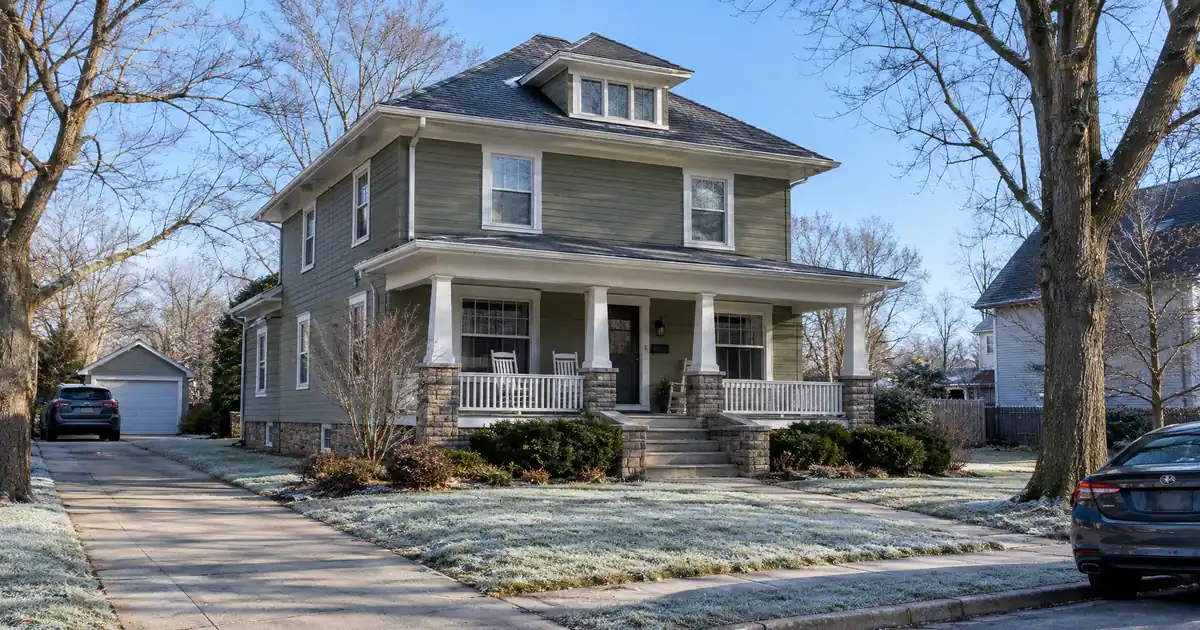
The Quick Read: Present each rental as its own file, with market-specific rent evidence and real tax, insurance, and HOA inputs, and only then choose between separate loans and one pooled loan, because the lender tests every address before it blends anything into a pooled coverage number. A weak property in a soft market looks different from a strong one in a tight market, so the file should say so plainly. The structure choice comes second.
- Each address needs its own lease, rent proof, and cost sheet, even when the loan is pooled.
- A pooled test lets strong properties offset weak ones, but it ties every property to one lender.
- Separate loans keep each rental independent and easier to sell or refinance later.
- Short-term rentals, rent-regulated units, and mixed property types each need their own evidence path.
- Leverage, credit, and reserve rules still apply on top of coverage, subject to lender guidelines.
Key Terms Defined
Scattered rentals: Rental properties in different neighborhoods, metros, or states rather than one cluster.
Per-property test: A coverage check run on one rental by itself, using that address’s rent and payment.
Pooled (blended) coverage: Total rent used for lender review across all properties divided by total payment across all properties.
Blanket or cross-collateralized loan: One note secured by several properties, so each property backs the whole debt.
PITIA: Principal, interest, taxes, insurance, and any HOA dues, which is the full monthly housing payment.
Market rent: An appraiser’s estimate of what the unit would lease for, supported by comparable leases.
How Does a Lender Read a Multi-Market Set?
A lender reads a scattered set one address at a time and then adds it up. DSCR compares a property’s rent to its full PITIA. It does not look at your personal income. Each rental qualifies primarily on property-level rental income covering the payment, subject to lender guidelines.
Here is the sequence underwriting follows on most files across the wholesale network Lendmire works with:
1. Rent is set for each address. The lease and the appraiser’s market rent are compared. Some programs credit the lower of the two. An above-market lease adds nothing, and a below-market lease pulls the number down.
2. Payment is built from real inputs. Taxes, insurance, and HOA dues come from that address, not from a portfolio average.
3. Coverage is computed. It is computed per property on separate loans, or on the pool for a portfolio loan.
4. Other guidelines then apply. Leverage caps, credit floors, reserves, and property eligibility are checked on top of coverage.
A vacant unit has no lease to lean on. It relies on market rent alone, or on how that lender treats vacancy.
Appraisal forms follow the property type. Fannie Mae’s Selling Guide names the Single-Family Comparable Rent Schedule (Form 1007) for a one-unit investment property. Its forms list pairs it with Form 1025 for small residential income properties. DSCR files borrow those formats, but agency rules do not govern them.
A short note on market context. Cotality’s rent index shows U.S. single-family rents rising year over year, with low-priced rentals growing more slowly than high-priced ones, and national rental vacancy remains a separate figure worth checking. Those national averages hide wide gaps. Several Midwest and Northeast metros post stronger growth while some Sun Belt metros slip, and that spread is why your file should carry market-specific evidence for each address.
Separate Loans or One Pooled Loan?
Separate loans suit portfolios with different markets, different exit plans, or properties you may sell. A pooled loan suits stabilized holds you plan to keep together. The answer depends on your map, your timeline, and how much cross-exposure you will accept.
| Factor | Separate loans | Pooled loan |
|---|---|---|
| Coverage test | Each property alone | Whole pool together |
| Weak property | Must stand on its own | Strong ones can offset it |
| Collateral | One property per loan | Properties back each other |
| Selling one rental | Simple payoff | Follows release terms |
| Best fit | Mixed markets, near-term sales | Long-term stabilized holds |
The network offers two pooled structures, and they differ a good deal.
The 30-year portfolio DSCR loan puts two to twenty properties under one note. Loan sizes run from $300,000 to $5,000,000, with larger balances on review. Leverage goes up to 80% of value on a purchase or rate-and-term refinance. The coverage floor is 1.00, measured on the pool. Terms are fixed or adjustable on a 30-year schedule, with an interest-only period available. Eligible property types are single-family, two-to-four-unit, condo, and townhome.
The rental portfolio term loan is built for five or more rental properties or units. Loan sizes run from $500,000 to $50,000,000, with larger balances on review. Leverage tops out at 75% of value. Terms are fixed at three, five, seven, or ten years with a balloon at maturity. It comes in recourse and non-recourse versions. A non-recourse loan looks to the real estate, with recourse limited to carve-outs such as fraud and bankruptcy. A recourse loan carries a personal guarantee. Prepayment runs on yield maintenance, and reserves are held for taxes, insurance, and capital expenditures. Properties in several markets or states may sit under one loan, and small multifamily is eligible on this structure. All of this is subject to lender guidelines.
Contrast both with a loan on one rental. A single-property DSCR purchase typically lands at 75% to 80% LTV, and a cash-out tops out around 75% LTV on investment property. Credit floors start around 620 in parts of the network for single-property loans, while the pooled structures typically want 640 or higher. Some want 680 or 720.
Two flip points matter. If your balances are small, say two modest rentals, the portfolio minimums may rule out a pool, and separate loans are the practical path. If you expect to sell one property within a few years, a pool adds release mechanics you may not want.
The pooled route has a real cost, because every property secures the same debt. A default on one can put the others at risk. Some lenders also use portfolio to mean a loan held on their own books, with separately secured loans that close together. That is a different sense of the word from a true blanket, so ask which one a lender means.
How Do You Present the Set, Step by Step?
Build the package in this order, because a clean, consistent file lets the lender focus on the numbers.
1. Create a property schedule. One row per address with property type, unit count, ownership entity, lease status, and market label.
2. Order the properties. Lead with the strongest coverage, then the middle, then any outliers. Flag outliers yourself.
3. Write a one-page cover summary. State the structure you want, why, and your plan for any weak property.
4. Assemble a rent package per address. The lease, proof the tenant pays, and a rent opinion for the property type.
5. Assemble a cost sheet per address. Current tax, insurance, and HOA figures for that address.
6. Document management. Say who manages each property, how reporting works, and who handles repairs locally.
7. Prepare entity documents. Title each property consistently. Titling in an LLC is possible, subject to lender program eligibility.
Label everything the same way across documents. A lease called Unit A in one file and 12-B in another slows review.
Presenting Each Market Type
The constant parts of a file are the lease, the cost sheet, and the entity paperwork. What changes by market is which evidence leads and what a lender will probe.
| Market type | Lead with | Document closely | Expect questions on |
|---|---|---|---|
| Steady long-term rental | Lease plus market rent | Tax and insurance | Little; keep it clean |
| Soft or oversupplied | Market rent opinion | Concessions, lease dates | Whether lease exceeds market |
| High-insurance region | Current insurance quote | Full PITIA worksheet | Whether cost is stale |
| Short-term rental | Hosting history | Booking records | Separate coverage path |
| Rent-regulated | Registered legal rent | Registration paperwork | Rent above legal limit |
Steady long-term markets. Keep the file simple. A current lease at or near market rent, proof of payment, and accurate cost inputs carry the case. Most coverage disputes here come from stale tax or insurance numbers.
Soft markets. The appraiser’s market rent matters more than your lease. If a lease sits above what comparables support, expect coverage to be run on the lower figure. Present the market rent opinion first so nothing surprises you.
High-insurance regions. Insurance moves coverage more here than almost anywhere. Get a fresh quote before submission, since last year’s number may not hold. Taxes and insurance vary widely by market, and that variation is why identical-looking rentals produce different ratios.
Short-term rentals. Form 1007 measures monthly market rent, so nightly rates times thirty does not fit it. Short-term rentals run a separate path built on hosting history. Typical guidance in the network is purchase leverage up to 75% LTV, refinance around 70%, and cash-out at 70%. Expect a 640 or higher credit score and about twelve months of hosting history. The coverage floor is 1.00 on purchases and refinances. Short-term rental rules vary by city, county, HOA, and property type, so confirm local rules before relying on projected rental income. Final terms depend on the lender’s guidelines, the property type, and the borrower’s complete credit picture.
Rent-regulated units. Underwriting generally follows the legal registered rent, not what the market might bear. Document the registration and lease terms.
Worked Example: Four Rentals, Four Markets
Run the numbers on a hypothetical file. The coverage ratios below are modeled assumptions, not market data.
- Property A, steady long-term market: coverage near 1.35x.
- Property B, steady long-term market: coverage near 1.20x.
- Property C, soft market with a lease at market: coverage near 1.05x.
- Property D, soft market with a below-market lease: coverage near 0.92x.
If the four carry similar monthly obligations, pooled coverage lands near 1.13x. That clears a 1.00 pooled floor with some room. Under separate loans, Property D would be tested alone and would not clear 1.00.
There are three ways to handle Property D.
Keep it in the pool. A pooled structure can carry D because the stronger properties lift the total, and underwriting tests the pooled coverage, leverage, and terms. D is not exempt from review. It still needs a lease or an appraiser-supported market rent. The trade-off is that D now backs the other three.
Finance it separately. Coverage below 1.00 is available through select lenders in the network, with leverage and terms adjusted. The other three can then form their own pool or stand as individual loans. Property D keeps its own risk.
Cure it or drop it. If the below-market lease is the problem, a renewal at market rent moves the number. A larger down payment lowers the monthly payment and lifts coverage, but it never erases leverage caps, credit floors, or reserve rules. If none of that works, leave D out of this submission.
The better choice depends on the plan. If D is a long-term hold, the pool is reasonable. If D is a likely sale, finance it alone.
Where the General Rule Breaks
Clearing 1.00 is not positive cash flow. DSCR compares rent to PITIA only. Repairs, vacancy, management, utilities, and capital expenses sit outside the calculation. A pool at 1.13x can still be thin after real operating costs.
Mixed property types. One-unit properties use a single-family rent schedule, and two-to-four-unit properties use the small income property format. Mixing them is allowed in the portfolio structures, but label each clearly.
Ineligible property types. Owner-occupied property, co-ops, mixed-use, and commercial property are not offered in the pool.
Manufactured and mobile homes cannot be financed on any of these programs. Log homes and barndominiums are not offered in the network’s DSCR programs either.
Appraised value below price. Loan sizing follows the lower of price and value, so you fund the gap. Test every purchase against that risk.
Cash-out on a pool. Cash-out never exceeds 75% of pooled value on a seasoned portfolio. Inside the first six months of ownership, the loan is also capped at 90% of total cost (purchase price plus documented improvements), and at 100% of total cost from six to twelve months. The leverage ceiling still applies, so the loan is the lower of the two. After twelve months the appraised value alone is the basis, and a rate-and-term refinance is not subject to the cost-basis cap. Lendmire’s piece on how to split DSCR cash-outs on five or more rentals by lender covers how that works.
Selling out of a pool. Partial releases and substitutions follow the loan documents. The remaining properties must still cover their debt service. Read the release terms before signing, not when you want to sell.
What Should You Check Before Submitting?
Run this self-screen on every address:
- Does the lease match the market rent opinion, or sit above it?
- Is the lease current, with proof the tenant pays?
- Do tax, insurance, and HOA numbers match this year’s bills?
- Does the property type fit the program?
- Is the title or entity consistent across documents?
- Can you show who manages it and how repairs are handled?
- Does it clear coverage alone, or does it need the pool?
The mistakes that slow files are mundane: stale leases, missing HOA information, mismatched labels, and unflagged outliers. A short cover note that names the weak property up front reads better than a surprise. Tax treatment varies, so consult a qualified professional.
The complete DSCR loans guide covers the broader qualification picture, including credit tiers and reserves. On single-property loans, reserves commonly run about six months of PITIA, stepping up to about nine months above $1,500,000. Pooled structures hold reserves differently, as described above.
Frequently Asked Questions
Can one DSCR loan cover properties in different states?
Yes, on the pooled structures. The rental portfolio term loan allows multi-market cross-collateralization, so properties in several markets or states may sit under one loan. Eligibility depends on lender guidelines and the property mix.
Is coverage tested per property or on the pool?
It depends on the structure. Separate loans test each property alone. The portfolio structures measure coverage on pooled rents against pooled debt service, so stronger properties can offset weaker ones. Every property still needs a lease or an appraiser-supported market rent.
What if one rental is below 1.00 coverage?
In a pool, that property can sit alongside stronger ones, but underwriting tests the pooled coverage, leverage, and terms. On its own, sub-1.00 coverage is available through select lenders in the network, with leverage and terms adjusted. Neither path is a commitment to lend.
Do I need a separate appraisal for each property in a pool?
Expect each property to get its own valuation and rent opinion. Pooling does not remove underwriting. It changes how coverage is tested.
Should I use separate loans if I may sell one property?
Often yes. Separate loans keep each rental independent, so a sale is a simple payoff. A pool follows the loan’s release terms, and the remaining properties must still cover their debt service.
Where This Leaves an Investor
If you are buying or refinancing a rental property and want to see how the numbers work, Lendmire can help you compare DSCR loan options based on the property income, credit profile, leverage, and investor goals. Lendmire is a broker that arranges financing through select lenders in its wholesale network, with DSCR programs in 41 markets, including Washington, D.C. The file you build market by market is the same file that makes the structure decision easier, and a rental you can explain in one paragraph is usually a rental a lender can read.
About Lendmire
A non-QM mortgage broker (NMLS# 2371349), Lendmire arranges DSCR financing for real estate investors in 41 markets — 40 states plus Washington, D.C. Because deals are underwritten primarily on property cash flow rather than personal income documentation, the structure suits self-employed buyers and entity-owned portfolios. Lendmire places loans through wholesale investor lenders; it is not a direct lender. Scotsman Guide named Lendmire a Top Mortgage Workplace in both 2025 and 2026.
Get Started
Ready to find the right loan for you?
In about 30 seconds you can review financing options available for your investment property. No commitment required.
Informational only. Not a Loan Estimate, approval, or commitment to lend. Program availability and eligibility are subject to lender guidelines, credit approval, property review, and underwriting.
References
1. Fannie Mae Selling Guide B4-1.2-01
2. Fannie Mae Selling & Servicing Guide Forms
3. Cotality Single-Family Rent Index
This article is part of Lendmire’s DSCR loan program — full qualification details, guidelines, and scenarios live on the program page.
Related reading: How a DSCR Lender Tests Coverage With Weak Rentals in the Pool · How a DSCR Lender Releases a House Sold in an Exchange · How to Clear Title on a Group of Rentals Before a DSCR Loan
Brandon Miller
Founder & CEO, Mortgage Loan Originator, Lendmire LLC
- Mortgage Loan Originator · NMLS# 1129696 · Verify on NMLS Consumer Access
- North Carolina Real Estate Broker · License# 343312 · Verify on NCREC
- North Carolina Insurance Producer · License# 19053198 · Property, Casualty, Life, Health · Verify on NAIC SBS
- Lendmire LLC · Firm NMLS# 2371349 · Verify firm licensure
Important disclosures. Lendmire (NMLS# 2371349) is a licensed mortgage brokerage. Lendmire is not a direct lender, depository institution, or financial advisor. All loan inquiries are subject to lender underwriting; this article does not constitute a commitment to lend. Rates, terms, and program guidelines are subject to change without notice and vary by borrower profile, property type, and state. Information in this article is general in nature and is not financial, legal, or tax advice. Equal Housing Opportunity. NMLS Consumer Access: nmlsconsumeraccess.org.