
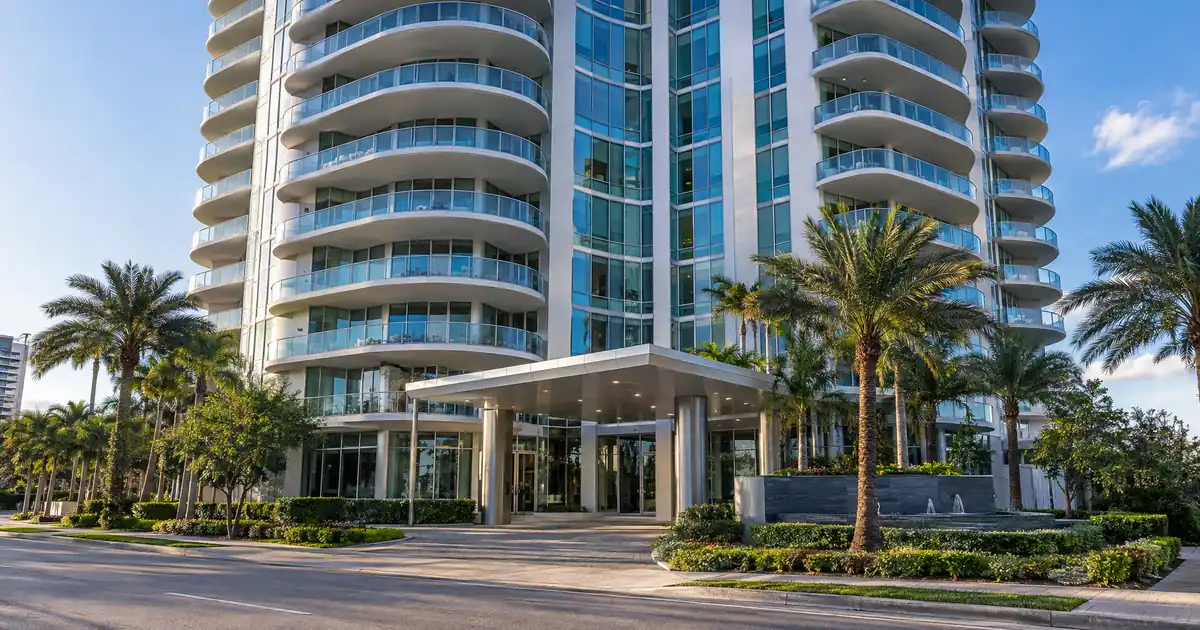
Can A Retiree Living On Assets Get A DSCR Loan On A Condotel — The Quick Read: Yes, in most cases — but it’s really two separate questions getting answered at once. The retiree’s income situation is judged by the property’s rent, not a paycheck. The condotel is judged by the building’s operating style, not the borrower’s balance sheet. Both gates have to clear on their own terms, and neither one solves the other.
That’s the part people miss. A retiree with a strong portfolio sometimes assumes the assets will “carry” a weak building, or that a great rental unit will excuse thin reserves. Neither is quite how it works. Here’s how each side actually gets reviewed, and where the two questions run into each other.
DSCR Calculator
Run the numbers in your market
Rate source: Freddie Mac 30-yr average via FRED® — Federal Reserve Bank of St. Louis · effective Sep 17, 2026
Prefilled with local estimates — enter your own rent or nightly figures, taxes, insurance, and HOA for a more accurate picture.
Program parameters update from Lendmire’s centralized guideline source. Taxes and insurance are editable estimates.
As of Sep 17, 2026 · General Freddie Mac market benchmark, not a Lendmire loan offer. Rent, nightly rate, occupancy, taxes, and insurance are editable estimates. Short-term rental figures are estimates only and vary significantly by season, property type, management approach, and local short-term-rental rules — confirm local regulations before relying on them. Qualifying income for short-term rentals varies by program — some use appraisal market rent, others use documented STR history or projections — and is confirmed in underwriting. Not a Loan Estimate, approval, or commitment to lend. Program availability and eligibility are subject to lender guidelines, credit approval, property review, and underwriting.
The Retiree Side: Assets Are a Reserves Signal, Not an Income Formula
A retiree without traditional employment income can qualify for a DSCR loan because the loan looks at the property’s rent, not the borrower’s paycheck. DSCR stands for debt-service-coverage-ratio — a simple test of whether the monthly rent a property brings in covers its own monthly obligation. It’s a business-purpose loan on a rental property, not a personal mortgage.
DSCR loans are made for non-owner-occupied investment properties. Because of this, lenders review them differently than a standard owner-occupied mortgage. There’s no tax-return pull, no W-2 request, and no talk about employment gaps. Instead, qualification mainly depends on whether the property’s rental income covers the payment, subject to lender guidelines.
So where do the retirement accounts come in? Mostly as reserves — proof the borrower has enough set aside, separate from the down payment, to ride out a vacancy or a surprise repair. Across the wholesale network Lendmire places files through, that reserve expectation typically runs around six months of PITIA held against the subject property, stepping up toward twelve months for a first-time rental investor, subject to underwriting. That’s a liquidity check, not an income-replacement calculation.
This is the single biggest thing retirees get wrong going in. They assume their IRA or brokerage account has to run through some depletion formula — assets divided by a number of months, converted into a monthly income figure — the way it might on a personal, owner-occupied asset-depletion mortgage. On the DSCR path, that math generally doesn’t apply. The property’s rent carries the qualification. The retirement account mostly just needs to be there, liquid, and documented.
It helps to keep these two loan types separate. An asset-qualifier or asset-depletion mortgage is a different tool for a different job. Lenders usually use it for a primary residence or second home, and it’s typically capped at lower leverage than the investment-property leverage ladder. If your goal is to buy a rental property, that’s a DSCR conversation, not an asset-depletion one. Lendmire’s team explains this comparison in more depth on the DSCR path versus asset-based qualification for a retiree. It’s worth a look before you assume one program can replace the other.
The Condotel Side: A Property Question, Not a Borrower Question
Condotels get rejected by conventional lenders because of the building’s operating style, not because of anything the buyer brings to the table. A condotel is a condominium unit inside a building that runs, at least partly, like a hotel — front desk, daily housekeeping, or a mandatory rental pool. Agency lenders like Fannie Mae won’t buy loans secured by that kind of project.
Fannie Mae’s own guide explains this plainly: Fannie Mae will not purchase or securitize mortgage loans secured by units in condo or co-op projects that carry certain disqualifying traits. Condotel characteristics sit near the top of that list. Fannie Mae’s own project-status data confirms this too: condotel operation and heavy short-term-rental activity are among the most common reasons a project gets marked ineligible. This is an agency rule, not a general statement that condotels can’t be financed anywhere. It just means the loan moves to the non-QM and portfolio lending space instead — which is exactly where DSCR programs operate.
Here’s the wrinkle worth knowing: a building doesn’t need the official “condotel” label to get treated as one. Heavy short-term-rental activity and a public booking presence can pull a project into the same underwriting review regardless of what the HOA calls it. If the units are showing up on booking platforms and the building runs like a resort, expect the file to be reviewed as a condotel even if the paperwork says “condominium.”.
What Actually Changes on the Loan Itself
Once a unit is classified as a condotel, the leverage ceiling drops and the reserve bar rises — the rest of the file works the same as any DSCR loan. Across the wholesale network, condotels run to roughly 75% loan-to-value on a purchase and 65% on a rate-and-term refinance, at loan amounts up to $1,500,000 with cash-in-hand around $250,000 on that program tier, subject to underwriting. That’s meaningfully tighter than a standard warrantable condo, and non-warrantable condos land in between — typically to 75% and $1,500,000.
None of this changes because the borrower is retired. What changes is the collateral, not the income-review method. A retiree buying a condotel still is reviewed on the property’s rent; the condotel classification just moves the leverage ceiling and reserve requirement, not the underwriting logic. Final terms depend on lender guidelines, property type, leverage, and the borrower’s complete credit picture.
Lenders document rental income on a condotel carefully, and this is where a lot of DIY math goes sideways. Appraisers pull comparable rent using the standard rent-schedule form. They don’t just grab a nightly rate off a booking site and multiply it by thirty. That shortcut ignores vacancy, personal-property costs, and the operating expenses that come with short-term rental activity. As a result, it overstates income almost every time.
Short-term rental income itself can qualify through the network, but real conditions apply. On a refinance, you need twelve months of documented operating history. On a purchase, you can use the appraisal’s short-term-rent analysis instead. Either way, lenders count roughly 80% of gross income, and this option is generally reserved for investors who’ve already owned income property in the past three years. Coverage generally needs to clear 1.00 or better on this path, and it’s not available through the no-ratio route. You’ll also need to document municipal permission to run a short-term rental for that specific property. Since short-term rental rules can vary by city, county, HOA, and property type, confirming local rules before relying on projected rental income matters more here than almost anywhere else in DSCR lending.
Where the Two Problems Actually Overlap
Here’s where it gets interesting: a retiree buying a condotel stacks two separate discount factors. First, the property type reduces leverage. Second, the borrower profile shifts qualification to a reserves-based approach instead of an income-based one. Neither factor disqualifies the deal on its own. But together, they change the deal math more than either one would alone.
Say a retiree living on portfolio distributions wants a condotel priced at $450,000. At 75% purchase leverage on the condotel tier, that’s a meaningfully smaller loan than the same price point would generate on a standard single-family rental at 80%. The retiree needs a bigger equity check up front, plus reserves calculated against the higher of the two thresholds — the condotel’s own PITIA, not a discounted version of it. If the retiree is also a first-time rental investor, that reserve figure trends toward the higher end of the range rather than the lower one.
None of that means the deal doesn’t work. It means the retiree should model the leverage ceiling and reserve requirement together before falling in love with a unit, rather than assuming a large net worth automatically clears both hurdles. A borrower sitting on $2 million in liquid assets can still get turned down on a specific condotel if the rent doesn’t clear the coverage bar the program wants — assets don’t substitute for the property cash-flowing. That’s the trap worth naming directly: net worth is not the same thing as qualifying DSCR income. These specifics are subject to lender guidelines and a full review of property, leverage, and credit.
Above $3,000,000 in loan size, condotels and other property types alike move to a tighter credit floor — 700 rather than 660 — along with a longer credit-event seasoning window of 48 months and citizenship or permanent-residency requirements. For a retiree shopping premium resort-market condotels at a higher price point, that’s the threshold to know about before pricing gets serious. Retirees comparing a condotel purchase against a larger, non-condotel rental portfolio might also want to see how the size ladder plays out on super jumbo DSCR versus a bank portfolio program, since leverage steps down differently once loan size crosses those thresholds.
Key Terms Defined
DSCR (debt-service-coverage ratio): a measure of whether a property’s monthly rent covers its own monthly payment obligation — the core number DSCR loans qualify on.
Condotel: a condominium unit inside a building that operates, in whole or part, like a hotel — front desk service, daily housekeeping, or a mandatory rental pool.
Asset-depletion (asset-qualifier) mortgage: a personal-purpose loan that converts a borrower’s liquid assets into a monthly qualifying-income figure — typically used for primary residences or second homes, not rental property.
DSCR vs. conventional financing
Two common ways to finance an investment property in this market. They qualify you differently — here’s how investors weigh them.
Why investors choose it
- Qualifies on the property’s rental income — no personal tax returns, W-2s, or pay stubs needed to document income.
- No personal debt-to-income ceiling to clear, so existing mortgages and obligations don’t cap your borrowing the same way.
- Can be closed in an LLC, keeping the property inside a business entity.
- Built for scaling — not held to the limit on number of financed properties that conventional financing applies.
- Underwriting centers on the deal: generally qualifies when the rent covers the payment, a 1.00x coverage ratio being a common baseline (confirmed in underwriting).
- Designed specifically for investment property, including long-term and, where the program allows, short-term rentals.
Where it’s strong
- Often the lowest ongoing financing cost for a buyer who fully qualifies on personal income — a fit for a first property or a cost-first purchase.
Trade-offs for investors
- Requires full personal income documentation and must fit within a debt-to-income limit — salary, existing debts, and other mortgages all count.
- Typically held in your personal name rather than a business entity.
- Caps how many financed properties you can carry, which can become a ceiling as a portfolio grows.
- Evaluates you as a borrower as much as the property, which usually means more paperwork.
How investors usually choose: a first or single property often optimizes for the lowest financing cost; portfolio builders often optimize for leverage, vesting in an LLC, and scaling past conventional caps. The right answer depends on your goals, the property, and current guidelines — both paths run through select lenders in Lendmire’s wholesale network, with eligibility and terms confirmed in underwriting.
Reserves: liquid funds a borrower holds, separate from the down payment, that a lender wants available to cover several months of the property’s payment if rent income is interrupted.
Non-warrantable condo: a condominium project that doesn’t meet conventional agency standards — often due to high investor concentration, litigation, or commercial space — and requires non-QM or portfolio financing instead.
Frequently Asked Questions
Does a retiree need to show any income at all to qualify?
No personal income documentation is required — qualification runs on the property’s rental income covering the payment, subject to lender guidelines. Credit history, reserves, and the property’s own numbers carry the file instead of pay stubs or traditional personal-income documentation.
Will my IRA or 401(k) get discounted the way it would on an asset-depletion loan?
On the DSCR path, retirement accounts are generally reviewed as reserves and liquidity, not run through an income-replacement formula. That distinction is specific to DSCR versus asset-qualifier programs, and it’s worth confirming which path a given lender is actually quoting before assuming either math applies.
Can I use both a brokerage account and a retirement account toward reserves?
Generally yes — reserves held in cash or other liquid assets typically support the file, whether they sit in a personal account, a retirement account, or an entity account tied to the property’s ownership structure, subject to lender guidelines.
What if the condotel allows the building to book me on Airbnb even though the HOA doesn’t call it a condotel? Heavy short-term rental activity and a public booking presence can still pull the building into condotel-style underwriting, regardless of the HOA’s label. Expect the file to be reviewed on the building’s actual operating characteristics, not its paperwork name.
Is there a cash-out option once I own a condotel outright?
Cash-out is available on the network up to roughly 65% loan-to-value on condotels, scoped to that property type specifically — a 75% ceiling applies instead to standard, non-condotel rentals, and figures shift with loan size and credit profile, subject to underwriting.
Should a retiree buying a condotel also think about how the property gets titled?
Entity vesting is generally accepted on these files, and how a retiree titles a rental property — personally or through an LLC — is worth thinking through separately from the condotel and income questions. Lendmire’s guide on second-home versus investment classification for a retiree covers that classification question in more depth.
For a fuller walkthrough of how DSCR lender review works property by property, Lendmire’s complete DSCR loans guide covers the mechanics in more depth than any single article can.
Are you a retiree thinking about buying or refinancing a condotel? You may want to see how leverage, reserves, and property type actually fit together. Lendmire can help you compare DSCR loan options based on the specific unit, your credit profile, and your reserve position.
Tax treatment can depend on how the funds are used and how the property is held; investors should keep clear records and speak with a qualified tax professional before relying on any deduction.
For current guidelines and terms, see Lendmire’s super jumbo DSCR loan programs page.
Self-employed borrowers can compare both super jumbo programs on Lendmire’s self-employed mortgages page.
About Lendmire
Lendmire is a non-QM mortgage brokerage (NMLS# 2371349) arranging DSCR investor loans in 40 markets, including Washington, D.C. DSCR eligibility is generally reviewed around property-level rental income rather than personal income, subject to lender and program guidelines, a fit for self-employed investors and LLC-owned portfolios. Lendmire was recognized as a Scotsman Guide Top Mortgage Workplace in 2025 and 2026.
Lendmire’s Top Mortgage Workplace recognition is documented by Scotsman Guide 2025 Top Mortgage Workplace and Scotsman Guide 2026 Top Mortgage Workplace.
Get Started
Ready to find the right loan for you?
In about 30 seconds you can review financing options available for your home or investment property. No commitment required.
Informational only. Not a Loan Estimate, approval, or commitment to lend. Program availability and eligibility are subject to lender guidelines, credit approval, property review, and underwriting.
References
1. Fannie Mae Selling Guide — Ineligible Projects (B4-2.1-03)
2. Fannie Mae Condo Status Finder
Brandon Miller
Founder & CEO, Mortgage Loan Originator, Lendmire LLC
- Mortgage Loan Originator · NMLS# 1129696 · Verify on NMLS Consumer Access
- North Carolina Real Estate Broker · License# 343312 · Verify on NCREC
- North Carolina Insurance Producer · License# 19053198 · Property, Casualty, Life, Health · Verify on NAIC SBS
- Lendmire LLC · Firm NMLS# 2371349 · Verify firm licensure
Compliance and disclosures. Lendmire (NMLS# 2371349) is a licensed mortgage broker and is not a direct lender, depository institution, financial advisor, or tax professional. Content in this article is general market analysis and educational information — not financial, legal, or tax advice for any specific situation. Lendmire does not guarantee loan approval; every transaction is subject to underwriting by the funding lender. Mortgage pricing and loan program guidelines are subject to change at any time without notice and vary by borrower characteristics, property type, and state regulations. Lendmire complies with Equal Housing Opportunity. Licensure verification: NMLS Consumer Access.


