
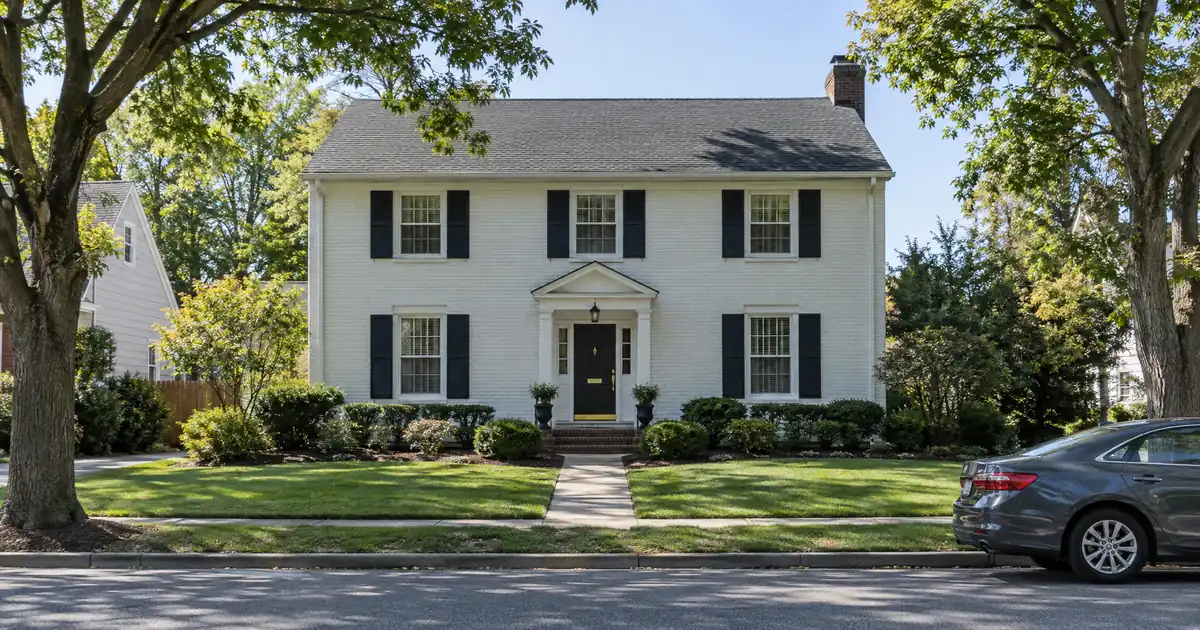
The Quick Read: Being exempt from the VA funding fee makes a VA cash-out refinance cheaper, but it does not make that loan the right tool for every veteran. The VA loan still requires a home you live in and replaces your whole first mortgage. A home equity line typically adds a second lien, or sits as a standalone line, and suits a smaller or more flexible equity need.
- The exemption removes one fee. Occupancy, credit, income, and appraisal rules stay the same.
- VA cash-out is for the home you live in. It cannot pull equity out of a pure rental.
- A HELOC can sit on a primary home, a second home, or a rental, but only in the borrower’s own name or a revocable trust.
- For a rental held in an LLC, a DSCR cash-out is often the third route worth pricing.
Who is each option really for? VA cash-out suits a veteran who lives in the home, wants a large lump sum, and is happy to replace the existing mortgage. A HELOC suits a borrower who wants to keep the first mortgage in place and take a defined slice of equity. Neither one is built for a rental held in an entity.
How large a line the equity supports.
An equity line is sized by combined loan-to-value, occupancy, and credit — not by rental coverage. Switch the occupancy or the credit band and the ceiling moves with it.
Investment-property lines require a 700 minimum credit score; second-home lines start at a 640 minimum and primary-residence lines at 600, and the combined-LTV ceiling steps down as the credit band drops on primary-residence and second-home lines and holds on investment-property lines; the line cap steps down on primary-residence lines and holds at every tier on investment-property and second-home lines.
A debt-to-income ratio above 45% requires 680+ credit. Profiles under 640 are limited to single-family homes. At least 75% of the approved line is drawn at closing. Ceilings, floors, and caps update from Lendmire’s centralized guideline source.
Line estimate
Illustrative estimate only — not a quote, Loan Estimate, approval, or commitment to lend. The rate is an editable assumption; equity-line pricing is variable through both the draw and repayment periods and never converts to fixed. Occupancy and credit drive the ceiling together: an investment property tops out at 70% combined LTV (minimum credit 700, line cap $500,000); a second home tops out at 90% combined LTV (minimum credit 640, line cap $500,000), with the ceiling stepping down as the credit band drops (the cap holds at every tier); a primary residence tops out at 90% combined LTV (minimum credit 600), and its $750,000 maximum line is available only at 75% combined LTV or below with a 700-or-better credit profile (720 on the longer-runway program) and a full appraisal. Lines above $500,000 require a full appraisal. Credit, debt-to-income, property type, and full underwriting review all affect the final line.
Side-by-Side
The VA column below reflects published industry norms, and each file is set by the VA and the individual lender. The HELOC column reflects the guidelines of the wholesale programs in Lendmire’s network, subject to lender guidelines and full file review.
| Factor | VA Cash-Out Refinance | Home Equity Line |
|---|---|---|
| Review basis | Personal credit, income, residual income | Personal credit, income, DTI, combined LTV |
| Core documents | Certificate of Eligibility, income, occupancy | Full personal file; leases for rentals |
| Occupancy | Must live in or plan to live in the home | Primary, second home, or investment |
| Entity vesting | Individual veteran; no LLC | Individual or revocable trust; no LLC |
| Lien structure | New first lien replaces old mortgage | Standalone line, first or second lien |
| Draw shape | One lump sum at closing | Interest-only draw, then amortizing repayment |
| Max leverage | Set by VA and lender overlays | 70% CLTV investment; 90% only primary or second home at 720+ |
| Size | Loan sized to entitlement and value | $25,000 to $750,000 line; $500,000 max on investment |
| Reserves | Lender-specific | Lender-specific; varies by file |
| Funding fee | Waived for exempt borrowers | Not applicable |
What the Exemption Actually Changes
The exemption changes cost and nothing else. VA News lists who is exempt: veterans receiving VA compensation for a service-connected disability, veterans eligible for compensation who take retirement or active-duty pay instead, certain Dependency and Indemnity Compensation recipients, service members with a proposed or memorandum rating from a pre-discharge claim, and active-duty Purple Heart recipients. The same page says more than half of Veterans who obtained a VA-guaranteed home loan since 2021 were exempt.
The VA’s cash-out refinance page sets three conditions for everyone. You qualify for a Certificate of Eligibility. You meet VA and lender credit and income standards. You will live in the home you are refinancing. Nothing there moves with a rating level.
The exemption also does not erase the other closing costs. Appraisal, title, lender charges, and prepaids still apply to a VA cash-out. A HELOC has its own, smaller cost set. Compare the full cost of both, not just the line that disappeared.
On timing, the exemption has to be documented. Proof usually comes from the Certificate of Eligibility. A veteran with a pending claim may be charged the fee and have to seek a refund afterward. Confirm the exact refund steps on VA.gov before relying on them.
When VA Cash-Out Is the Better Fit
VA cash-out is the better fit when the home is your residence and the equity need is large. It converts equity into a single lump sum and replaces the old mortgage with a new VA-guaranteed first lien. It can also refinance a non-VA loan into a VA-backed one.
Three situations point toward VA cash-out:
- A big, one-time need. Paying off a large balance or funding a major project in one move fits a lump sum better than a line.
- A first mortgage not worth keeping. If the existing loan has no features you want to protect, replacing it costs you nothing. If it does, a line that leaves it alone may be smarter.
- A borrower whose income is mostly disability compensation. Lenders generally count documented compensation as income, and the VA structure is built around it. Residual income is the VA’s own test of what is left each month after major obligations.
Picture a veteran with a rated disability who lives in a duplex and wants a large sum to renovate the second unit. Occupying one unit of a 1-4 unit property may fit VA cash-out, depending on lender guidelines. The veteran gets the lump sum and the fee waiver on the same file.
Two catches. First, occupancy is a hard line. A veteran who moved out and rented the home cannot truthfully certify intent to live there, and the file breaks at that point. Second, the net tangible benefit and seasoning tests are real VA tests. The VA’s cash-out guidance in VBA Circular 26-19-05 separates cash-out refinances into types by how the new loan compares with the payoff. Lenders apply that guidance, so ask yours which tests apply to your file.
For a deeper look at how an exempt veteran compares VA cash-out with a conventional loan, see Lendmire’s piece VA Cash-Out vs Conventional for a Veteran Exempt From the Funding Fee.
When a HELOC Is the Better Fit
A HELOC is the better fit when you want to keep the first mortgage, need a smaller amount, or hold equity in a property that is not your residence. A home equity line is an open-end line of credit that lets you borrow repeatedly against your equity. It has a draw period, followed by a repayment period. Monthly payments are often significantly higher once repayment starts.
The wholesale programs in Lendmire’s network follow the same two-phase shape, with a few specifics that matter for a veteran:
- Leverage depends on occupancy. On an investment property, the ceiling is 70% CLTV, with a 700 minimum credit score and a $500,000 maximum line. On primary residences and second homes, the ceiling reaches 90% CLTV, but only at a 720-or-better credit profile and up to $500,000.
- Line size. Lines run from $25,000 up to $750,000 on a primary residence. Michigan has a lower floor.
- Draw structure. Investment lines use a 5-year interest-only draw with a 25-year repayment period. Primary residences and second homes can also take a 3-year draw with a 17-year repayment period.
- Not a flexible-from-zero line. At least 75% of the line is drawn at closing, and pricing floats through both phases without converting to fixed.
- Debt-to-income. The maximum is 50%, and the file is qualified on the interest-only payment calculated on the maximum draw. Ratios above 45% need a 680 minimum.
- Valuation. Lines at or below $500,000 ordinarily use an automated valuation rather than a traditional appraisal. A borrower may still ask for a full appraisal.
- Properties. Single-family, 2-4 units, PUDs, townhomes, and condominiums, including non-warrantable condos, are eligible. Manufactured homes, co-ops, condotels, log homes, and commercial or mixed-use properties are not.
- Vesting. Title must sit with the individual borrower or a revocable living trust. An LLC cannot hold title.
HELOC placement in this network covers Lendmire’s 16 full-service states only. That is narrower than the 41-market DSCR footprint, which includes Washington, D.C.
Consider a veteran with a low-balance first mortgage that is worth keeping and a mid-sized equity need for repairs. A line leaves the first lien alone. It also avoids resetting the whole balance, which is the trade-off the VA loan forces.
The downside is payment shape. Interest-only draw payments end, and an amortizing repayment begins. For a household on fixed disability income, plan for the step-up before you draw.
What Neither Product Does: The Rental in an LLC
Neither VA cash-out nor a HELOC works on a rental held in an LLC. VA cash-out requires a veteran who lives in the home. A HELOC requires title in a person’s name or a revocable trust. A rental already deeded to an LLC would need a vesting change for a HELOC, which can give up liability separation and may affect an existing first mortgage. Talk to an attorney before re-vesting anything.
For a pure rental, a DSCR cash-out is the third route. DSCR loans are designed for non-owner-occupied investment properties. The loan is reviewed primarily on property-level rental income covering the payment, subject to lender guidelines. Across Lendmire’s wholesale network, typical shapes look like this:
- Cash-out leverage: tops out around 75% LTV on most standard rentals, with about 6 months of seasoning as the common expectation. Short-term-rental collateral runs lower, around 70% on cash-out.
- Coverage: 1.00 is where select programs start, not a universal standard. Stronger ratios open better terms. Coverage below 1.00 is available through select lenders in the network, with leverage and terms adjusted.
- Credit: a 620 floor exists in parts of the network, most programs want around 660, and 700 or better opens the strongest leverage tiers.
- Entity: an LLC can often take title on a DSCR file, subject to program terms.
- Reserves: commonly around 6 months of the full monthly obligation. Conservative, modest-leverage files under $1,500,000 can see reserves waived, and larger loans typically step up to about 9 months.
Clearing 1.00 on a DSCR file is not the same as positive cash flow. Repairs, vacancy, management, and utilities sit outside the calculation.
Lendmire’s complete DSCR loans guide covers how these files are built from the ground up.
The Verdict
Use VA cash-out when the home is yours to live in, the need is large and one-time, and the existing first mortgage is not worth protecting. The fee waiver makes that structure cheaper, and the VA wrapper was built for veterans.
Use a HELOC when you want to keep the first lien, need a defined slice of equity, or the property is a second home or a rental held in your own name. Check the 75% drawn-at-closing rule and the step-up in payments before you commit.
Use neither when the property is a rental in an LLC. That file belongs on a DSCR cash-out. Tax treatment can depend on how the funds are used and how the property is held; investors should keep clear records and speak with a qualified tax professional before relying on any deduction.
In practice, the strongest files clear two tests: enough equity, and enough income or coverage to carry the new debt. The exemption helps with neither one.
Frequently Asked Questions
Does a higher disability rating unlock more cash or looser rules on a VA cash-out?
No. Exemption turns on receiving VA compensation, not on the rating tier. The three eligibility conditions are the same for every veteran: a Certificate of Eligibility, VA and lender credit and income standards, and occupancy. Confirm any rating-based claim directly on VA.gov.
Can a VA cash-out pull equity from a rental property?
No. The VA requires you to live in, or plan to live in, the home you are refinancing. A pure rental fails that condition. A house-hack where you occupy one unit of a 1-4 unit building may fit, depending on lender guidelines.
Can I put a HELOC on a rental owned by my LLC?
Not as titled. The wholesale HELOC programs require the property to be held by an individual or a revocable living trust. An LLC-owned rental needs a vesting change first, or a DSCR cash-out instead, subject to program terms.
What happens if my disability claim is still pending at application?
The fee is generally not waived unless a proposed or memorandum rating exists from a pre-discharge claim. Otherwise the fee may be charged and later refunded once the rating is awarded. The refund steps are set by the VA, so confirm them there before you close.
Does the exemption lower the other costs of a VA cash-out?
No. It waives the VA funding fee only. Appraisal, title, lender fees, and prepaids remain, and a new loan replaces the entire existing balance.
If you are weighing a home equity line against a cash-out refinance and want to see how the numbers work, Lendmire can help you compare HELOC options based on the property, the equity available, credit profile, combined leverage, and your goals. Reach the team at 828-256-2183 or request a quote at Lendmire’s quote page. The site’s illustrative calculator gives an editable estimate, not a quote or commitment to lend.
For the mechanics of pulling equity out of a rental property, see Lendmire’s guide to cash-out refinance on an investment property.
About Lendmire
Lendmire (NMLS# 2371349) is a mortgage broker. Home equity lines of credit — on a primary residence, a second home or an investment property — are arranged through wholesale lenders in Lendmire’s 16 full-service states, and every line is underwritten by the lender under its program guidelines. Scotsman Guide named Lendmire a Top Mortgage Workplace in both 2025 and 2026.
Get Started
Ready to find the right loan for you?
In about 30 seconds you can review financing options available for your home or investment property. No commitment required.
Informational only. Not a Loan Estimate, approval, or commitment to lend. Program availability and eligibility are subject to lender guidelines, credit approval, property review, and underwriting.
References
1. VA News – Funding fee: who pays and who is exempt
2. VA.gov – Cash-out refinance loan
This article is part of Lendmire’s home equity line of credit program — full qualification details, guidelines, and scenarios live on the program page.
Related reading: How to Fold a First Mortgage and a HELOC Into One VA Cash-Out · Cash-Out Refinance vs HELOC Checklist for a Condo · Can a Veteran Who Paid Off Their Home Choose a HELOC Over VA Cash-Out?
Brandon Miller
Founder & CEO, Mortgage Loan Originator, Lendmire LLC
- Mortgage Loan Originator · NMLS# 1129696 · Verify on NMLS Consumer Access
- North Carolina Real Estate Broker · License# 343312 · Verify on NCREC
- North Carolina Insurance Producer · License# 19053198 · Property, Casualty, Life, Health · Verify on NAIC SBS
- Lendmire LLC · Firm NMLS# 2371349 · Verify firm licensure
Disclosures. The information presented in this article is general market commentary, not financial, legal, or tax advice. Lendmire is a mortgage brokerage (NMLS# 2371349) — not a direct lender or depository institution — and loan placement is subject to lender underwriting. Nothing in this content represents a commitment to lend. Loan terms, pricing, and program availability vary based on borrower qualifications, property characteristics, and state of subject property, and are subject to change at any time. Lendmire complies with Equal Housing Opportunity requirements. Consumer access: nmlsconsumeraccess.org.