
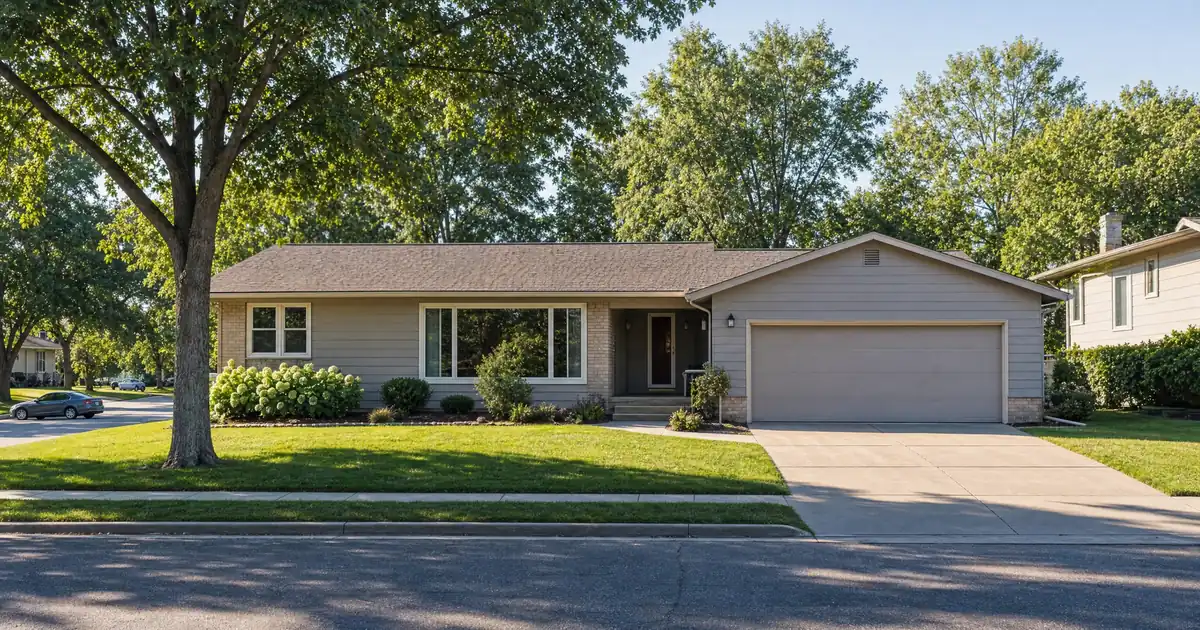
Single-Family DSCR HELOC Complete Guide — The Quick Read: A single-family DSCR HELOC is usually marketed as a revolving line qualified on a rental property’s income, but most equity lines on investment property are actually underwritten on the borrower’s credit and debt-to-income ratio, not the property’s rent. True property-rent-based lender review on a single-family rental almost always shows up in a different structure: a first-lien DSCR cash-out refinance. This guide walks through both paths, where the labels blur, and how to pick the right one for a specific file.
Key Takeaways
- A “DSCR HELOC” is often a marketing label — the underlying equity line is frequently qualified on borrower DTI and credit, not rent.
- Investment-property equity lines commonly cap around 70% combined loan-to-value (CLTV) and a $500,000 line size, with a 700 minimum credit score on most wholesale-network programs.
- LLC-titled properties generally can’t use this equity-line product — that’s the sharpest structural fork between a HELOC and a true DSCR loan.
- A first-lien DSCR cash-out refinance is the more common route to rent-qualified equity access on a single-family rental.
- Rules differ sharply by occupancy — primary and second-home lines behave nothing like the investment-property version.
Key Terms Defined
- DSCR (debt-service coverage ratio): monthly rental income divided by the full monthly housing payment — principal, interest, taxes, insurance, and HOA dues (PITIA) — used to judge whether a property’s rent covers its own debt.
- HELOC (home equity line of credit): a revolving line secured by a lien on real estate, where the borrower draws and repays funds up to a set limit, similar to a credit card.
- HELOAN (home equity loan): a lump-sum loan secured by home equity, repaid on a fixed schedule instead of drawn as needed.
- CLTV (combined loan-to-value): the total balance of every lien on a property — first mortgage plus any second lien — divided by the property’s value.
- Business-purpose loan: financing used for investment or business activity rather than personal or household use. This classification is what typically excuses investor loans from many standard consumer-mortgage disclosures.
- Draw period: the phase of a HELOC when the borrower can pull funds against the line, often interest-only, followed by a repayment period when the balance amortizes.
For a full walkthrough of how DSCR underwriting works across purchase, refinance, and cash-out scenarios, Lendmire’s complete DSCR loans guide covers the base mechanics this article builds on.
How large a line the equity supports in your market.
An equity line is sized by combined loan-to-value, occupancy, and credit — not by rental coverage. Switch the occupancy or the credit band and the ceiling moves with it.
Investment-property lines require a 700 minimum credit score. Second-home tiers reach 640; primary-residence tiers reach 600.
A debt-to-income ratio above 45% requires 680+ credit. Profiles under 640 are limited to single-family homes. At least 75% of the approved line is drawn at closing. Ceilings, floors, and caps update from Lendmire’s centralized guideline source.
Line estimate
Illustrative estimate only — not a quote, Loan Estimate, approval, or commitment to lend. The rate is an editable assumption; equity-line pricing is variable through both the draw and repayment periods and never converts to fixed. Occupancy and credit drive the ceiling together: investment property runs to 70% combined LTV with a 700 credit floor and a $500,000 cap; a second home runs to 90% at a 640 floor with a $500,000 cap; a primary residence reaches up to 90% at a 600 floor, and its $750,000 maximum line applies only at 75% combined LTV or below with 720+ credit and a full appraisal. Lines above $500,000 require a full appraisal. Credit, debt-to-income, property type, and full underwriting review all affect the final line.
What a “DSCR HELOC” Actually Is (and Isn’t)
Most of what gets marketed as a “DSCR HELOC” is a standard equity line that happens to sit on a rental property — not a line qualified the way a true DSCR loan is qualified. Across Lendmire’s wholesale network, the equity-line product built for investment property is underwritten on the borrower’s credit profile and debt-to-income ratio, calculated against the interest-only payment at the line’s maximum draw. Rent doesn’t enter that calculation directly, the way it does on a DSCR term loan or a DSCR cash-out refinance.
Part of the reason: most DSCR programs won’t sit behind another loan in second-lien position, so a genuinely rent-qualified revolving second lien is a narrow, select-lender product rather than the default. That’s a real structural limit, not a lender preference — and it’s why so much of the equity access investors want actually runs through a first-lien DSCR cash-out refinance instead of a stacked line.
DSCR-qualified lending overall is a growing slice of investor financing — DSCR loans now account for roughly 30% of all non-QM securitization issuance. Very little of that growth shows up as true rent-qualified second-lien HELOCs, though. Most of it is first-lien.
| Product | How It’s Qualified | Lien Position | LLC Title Eligible? |
|---|---|---|---|
| Investment-property equity line | Borrower credit + DTI | First or second | No — individual or revocable trust only |
| HELOAN (lump-sum equity loan) | Borrower credit + DTI | Second | Program-dependent |
| DSCR cash-out refinance | Property rent vs. payment | First | Yes, on most programs |
| Select-lender DSCR second lien | Property rent vs. payment | Second | Program-dependent, rare |
How Underwriting Actually Works, Step by Step
The decision of which product actually fits — a credit-and-DTI equity line, or a rent-qualified first-lien DSCR cash-out — gets made before paperwork moves, because it determines valuation method, documentation, and who’s really being underwritten: the borrower or the property.
Step 1 — Product identification. An investor with an LLC-titled property, thin personal income documentation, or a preference for property-rent-based lender review is usually pointed toward a DSCR cash-out refinance from the start. An investor with individually titled property, a 700-plus credit score, and a preference for revolving access is a better fit for the equity line.
Step 2 — Valuation. A line at or below $500,000 typically runs on an automated valuation model rather than a full appraisal — and since the investment-property ceiling on this product is $500,000, an investment equity line almost always stays in that automated-valuation lane. A traditional appraisal only enters the picture above that threshold, or when a lender calls for a secondary check. On a DSCR cash-out refinance, the appraiser instead completes a comparable-rent analysis using Fannie Mae’s Form 1007 Single-Family Comparable Rent Schedule — a form built for agency loans but borrowed widely across non-agency and DSCR underwriting because appraisers already know it.
Step 3 — The income test. On the equity line, the number that matters is DTI — up to 50% of gross income against the fully-drawn interest-only payment, with a tighter 45% ceiling for credit profiles between 600 and 679. Because investment lines already require a 700 minimum, that tighter tier rarely applies on the investment side — investment borrowers clear straight through to the 50% ceiling. On a DSCR cash-out refinance, the number that matters instead is the coverage ratio itself: rent divided by the full payment, with select programs opening the door around a 1.00x floor and stronger coverage buying better pricing and leverage.
Step 4 — Credit and derogatory review. The equity line runs on a single-bureau score model tied to the primary wage earner, with a credit report no older than 90 days and no rescores allowed. Bankruptcy generally seasons four years from discharge or dismissal, and foreclosure history typically follows a 7-year path (4 years for a deed-in-lieu, pre-foreclosure, or short sale) on investment files.
Step 5 — Title and vesting. This is where the two products genuinely diverge. The equity line typically requires the property be titled to an individual borrower or an inter vivos revocable living trust — LLCs, corporations, partnerships, and irrevocable or land trusts generally can’t hold title. A DSCR cash-out refinance, by contrast, is commonly built from the ground up to accommodate LLC ownership, subject to lender program eligibility. An investor who already holds a rental inside an LLC and wants equity out is usually looking at a vesting change to use the equity-line product — or moving straight to a DSCR cash-out refinance instead, a path covered in more depth in Lendmire’s investment property refinance playbook.
What the Investment-Property Equity Line Actually Requires
Across Lendmire’s network, an investment-property equity line typically tops out at 70% CLTV, on a line capped around $500,000, with a 700 minimum credit score — and that ceiling doesn’t move with a stronger score. Credit profiles at 700 and 720 land on the same 70% CLTV tier; clearing higher than 700 buys eligibility and pricing consideration, not more leverage. That’s a genuinely different shape than the primary-residence version of this product, which can reach up to 90% CLTV — but only at a 720-or-better profile, a ceiling that never applies to a rental.
Structurally, the investment line typically runs one draw shape only: a 5-year interest-only draw period followed by 25 years of full amortization, with a large share of the line drawn at closing. Primary-residence and second-home borrowers get a choice between that structure and a shorter 3-year draw with 17-year repayment (Tennessee shortens both versions). Investment borrowers don’t get that choice on most programs — the 5-year/25-year shape is generally what’s offered.
Bank-statement income can support a file if needed, with roughly a 680 minimum for a business-account deposit analysis — but since investment lines already floor at 700, bank statements are rarely the deciding factor on this product. Investors working from self-employment income who need a documentation path built specifically around deposits should look at Lendmire’s 12-month bank statement loan guide, which is a different program entirely.
Exposure is capped, too: a borrower can typically hold up to three of these lines at once, with combined exposure ceilings that scale by program. On the investment side, though, the per-line ceiling is usually the binding number long before any aggregate exposure limit comes into play. A handful of states carry their own overlays — New Mexico and Ohio, for instance, scale the CLTV cap to the credit profile, and Texas treats investment and second-home properties as non-homestead transactions, sidestepping the waiting-period and seasoning rules that bind primary residences (though Texas properties are capped at 10 acres regardless of occupancy). Worth flagging directly: this equity-line product runs through a narrower footprint than the DSCR loan programs Lendmire arranges in 39 states plus D.C. — the equity line itself is available only through Lendmire’s 16 full-service states. Every figure above reflects typical guidelines across the wholesale network; review details are subject to lender overlays and full file review, and individual programs can differ.
Reach Lendmire’s team directly at 828-256-2183 to walk through which structure a specific property and credit profile actually fits.
Where the “DSCR” Label Breaks Down
Five spots are where the marketing label and the underwriting reality genuinely part ways.
LLC titling. Already covered above, but worth repeating because it’s the single biggest surprise investors run into: the equity line wants an individual or revocable-trust owner. Not an LLC.
The second-lien bottleneck. Because most DSCR programs generally can’t sit behind another loan, investors following a buy-rehab-rent-refinance-repeat strategy typically retire interim debt through a first-lien DSCR refinance rather than layering a permanent DSCR second lien on top of it. Field commentary on investor forums like BiggerPockets backs this up — the common advice is to refinance into a DSCR loan first, then consider a line against it, rather than expecting a genuine DSCR second lien to be widely available.
Short-term rentals. Form 1007 is a monthly-rent comparison tool. Appraisers can’t take a nightly rate, multiply it by 30, and call that a monthly rent figure, according to appraisal continuing-education provider McKissock. STR income needs its own income-approach analysis. On the DSCR side specifically, purchase and refinance leverage on short-term rentals aren’t the same number — purchases typically allow somewhat higher leverage, generally paired with roughly 640-plus credit and about 12 months of hosting history, while refinances (rate-term or cash-out) generally sit at a more conservative leverage level, each with its own coverage floor.
DSCR vs. conventional financing
Two common ways to finance an investment property in this market. They qualify you differently — here’s how investors weigh them.
Why investors choose it
- Qualifies on the property’s rental income — no personal tax returns, W-2s, or pay stubs needed to document income.
- No personal debt-to-income ceiling to clear, so existing mortgages and obligations don’t cap your borrowing the same way.
- Can be closed in an LLC, keeping the property inside a business entity.
- Built for scaling — not held to the limit on number of financed properties that conventional financing applies.
- Underwriting centers on the deal: generally qualifies when the rent covers the payment, a 1.00x coverage ratio being a common baseline (confirmed in underwriting).
- Designed specifically for investment property, including long-term and, where the program allows, short-term rentals.
Where it’s strong
- Often the lowest ongoing financing cost for a buyer who fully qualifies on personal income — a fit for a first property or a cost-first purchase.
Trade-offs for investors
- Requires full personal income documentation and must fit within a debt-to-income limit — salary, existing debts, and other mortgages all count.
- Typically held in your personal name rather than a business entity.
- Caps how many financed properties you can carry, which can become a ceiling as a portfolio grows.
- Evaluates you as a borrower as much as the property, which usually means more paperwork.
How investors usually choose: a first or single property often optimizes for the lowest financing cost; portfolio builders often optimize for leverage, vesting in an LLC, and scaling past conventional caps. The right answer depends on your goals, the property, and current guidelines — both paths run through select lenders in Lendmire’s wholesale network, with eligibility and terms confirmed in underwriting.
Sub-1.00 coverage. A coverage ratio below 1.00 doesn’t automatically kill a DSCR deal. Select lenders in the network will still look at the file, adjusting leverage and terms rather than declining outright. That’s a DSCR cash-out feature specifically — the equity line doesn’t offer it at all, since it isn’t rent-qualified in the first place. A related structure worth knowing: no-ratio qualification, available only through select lenders and generally reserved for borrowers who already own a primary residence, covered in more detail in Lendmire’s no-ratio DSCR loan guide.
Business-purpose classification. A HELOC is legally open-end consumer credit under the Truth in Lending Act, and whether it needs full consumer disclosures — like rescission rights — turns on the credit’s primary purpose, not on what property secures it. Regulation Z exempts credit extended primarily for a business or investment purpose, and a loan secured by a residence but used to fund a rental or business activity generally falls inside that exemption. DSCR loans are designed for non-owner-occupied investment properties. Because they’re business-purpose investor loans, they’re reviewed — and disclosed — differently from a standard owner-occupied mortgage, which is part of why a rent-qualified investor line looks so different on paper from a personal-use HELOC.
Single-Family Eligibility: What Qualifies, What Doesn’t
Single-family homes, PUDs, townhomes, and condominiums — including non-warrantable condos — are all eligible collateral for the investment-property equity line. Two-to-four unit properties and modular factory-built homes are typically eligible only on the primary and second-home version of this product, not on the investment tier.
Manufactured homes (single- and double-wide), co-ops, condotels, log homes, barndominiums, commercial and mixed-use property, and agricultural-zoned parcels aren’t offered on either program — regardless of equity position or credit profile. Listing status matters, too: a property listed for sale, or listed within the past 60 days, is generally ineligible for this equity line in Indiana, North Carolina, Pennsylvania, Tennessee, and Texas.
HELOC, HELOAN, or DSCR Cash-Out Refinance?
| Investor Situation | Better Fit |
|---|---|
| Property titled to an LLC | DSCR cash-out refinance |
| Want to protect a low-rate first mortgage | Investment equity line, if title and credit qualify |
| Rent alone doesn’t cover the payment | DSCR cash-out via a select sub-1.00 program |
| Need one lump sum for a single project | HELOAN-style structure, where offered |
| 700+ credit, individual title, want revolving access | Investment equity line |
The stronger play for an LLC-titled rental is almost always the cash-out refinance over a title change just to chase revolving access — though an investor planning to sell within a year or two might weigh that differently, since disturbing title has its own friction.
Consider an investor holding a single-family rental valued in the $300,000s, titled to an LLC, currently financed with a first mortgage they don’t want to disturb. Because the property is titled to an LLC, the equity line is off the table immediately — that product requires individual or revocable-trust title. The realistic paths: transfer title to the individual or a revocable trust and use an equity line, up to a modest ceiling on an investment property, if the investor is comfortable doing so (revolving access sounds appealing until you hit that title wall), or refinance through a first-lien DSCR cash-out, provided rent clears whatever coverage the file needs — generally in the 1.00x-and-up range for standard leverage. If rent runs light against the payment, select programs in the network will still review the file at reduced leverage rather than declining it.
Frequently Asked Questions
Can an LLC get a DSCR HELOC on a single-family rental?
Generally no — not through a standard investment-property equity line, which requires individual or revocable-trust title on most programs. The workaround is either a vesting change to individual ownership or a DSCR cash-out refinance, which is commonly built to accommodate LLC-held title, subject to lender program eligibility.
What credit score do I need for an investment-property equity line?
Most programs in the network set a 700 minimum for investment property, with 700 and 720 landing on the same leverage tier. Primary and second-home lines can go lower, down toward a 600 program floor, though leverage and structure shift with the score.
Is a DSCR HELOC qualified on rent or on my personal income?
Most equity lines marketed under this name are qualified on borrower credit and debt-to-income, not rent — despite the label. Genuinely rent-qualified equity access on a single-family rental almost always runs through a first-lien DSCR cash-out refinance instead, subject to lender guidelines and property review.
Can I get this equity line on a short-term rental property?
It follows the same collateral and title rules as any other investment property, but the underlying appraisal tool used for long-term rent comparisons can’t simply be annualized from nightly rates. STR-specific financing decisions on the DSCR side use separate purchase and refinance leverage tiers rather than one blended number.
How much equity can I actually pull from a single-family rental?
It depends on the product. An investment-property equity line typically caps around 70% CLTV up to a $500,000 line size, while a DSCR cash-out refinance may reach a similar or somewhat higher leverage ceiling on some programs, depending on credit, seasoning, and the property’s coverage ratio.
If you’re weighing a rental-property equity line against a DSCR cash-out refinance, Lendmire can help you compare property income, credit profile, and leverage side by side before committing to either path. Request a quote to see which structure actually fits the file.
About Lendmire
Lendmire (NMLS# 2371349) is a DSCR-focused mortgage broker that helps arrange investor financing across 40 markets, including Washington, D.C., through wholesale and investor-lending channels. DSCR eligibility is generally reviewed by the lender around the property’s rental income rather than personal income documentation, subject to lender guidelines — which works for self-employed investors, LLC operators, and portfolios above four financed properties. Scotsman Guide named Lendmire a Top Mortgage Workplace in both 2025 and 2026.
Get Started
Ready to find the right loan for you?
In about 30 seconds you can review financing options available for your home or investment property. No commitment required.
Informational only. Not a Loan Estimate, approval, or commitment to lend. Program availability and eligibility are subject to lender guidelines, credit approval, property review, and underwriting.
References
1. Fannie Mae — Form 1007 Single-Family Comparable Rent Schedule
2. CFPB — Regulation Z §1026.3, Exempt Transactions
Brandon Miller
Founder & CEO, Mortgage Loan Originator, Lendmire LLC
- Mortgage Loan Originator · NMLS# 1129696 · Verify on NMLS Consumer Access
- North Carolina Real Estate Broker · License# 343312 · Verify on NCREC
- North Carolina Insurance Producer · License# 19053198 · Property, Casualty, Life, Health · Verify on NAIC SBS
- Lendmire LLC · Firm NMLS# 2371349 · Verify firm licensure
Required disclosures. Lendmire (NMLS# 2371349) operates as a licensed mortgage broker, not a direct lender or depository. The discussion in this article is general in nature and should not be relied upon as financial, legal, or tax advice — every investment scenario is unique and should be reviewed by a qualified professional. Any loan inquiry is subject to lender underwriting, and this article is not a commitment to lend or a guarantee of approval. Mortgage rates, loan terms, and program guidelines vary by borrower, property, and state, and may change without notice. Equal Housing Opportunity. Verify licensure at NMLS Consumer Access.


