
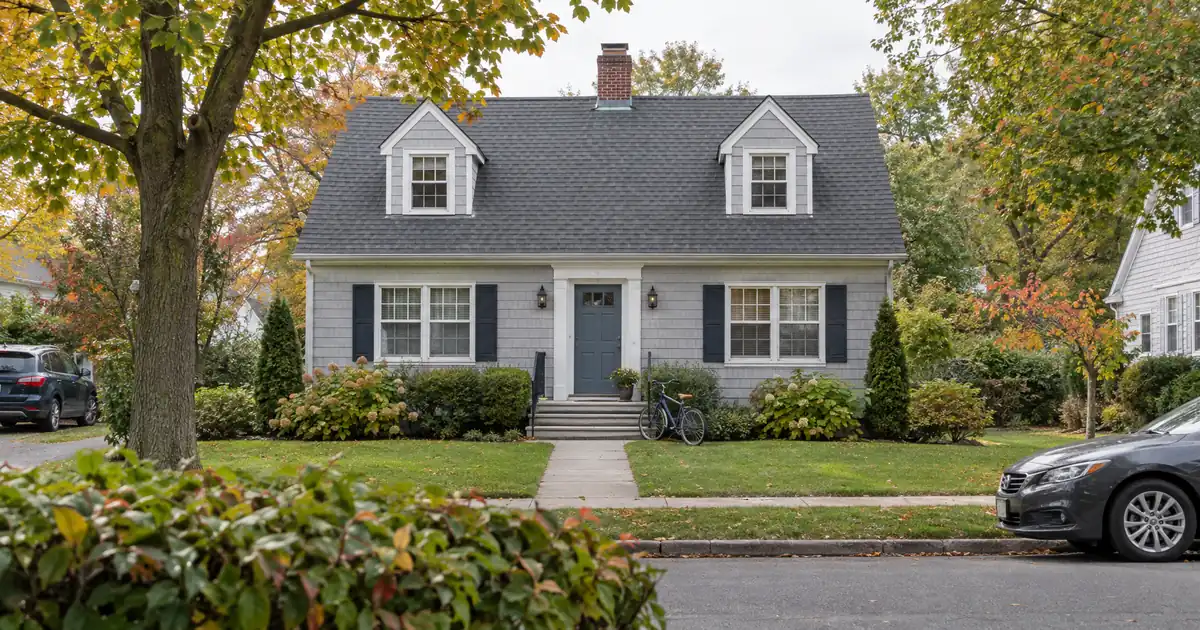
The Quick Read: A standard single-family house leased whole to one household is the cleaner DSCR file, because the rent is one number the lender can test against the payment, while a house rented room by room without a rooming-house license faces program restrictions, a whole-house appraisal cap on rent used for lender review, and legal questions that can sink the file.
- A DSCR loan is reviewed primarily on property-level rental income covering the payment, subject to lender guidelines.
- Many programs restrict or exclude by-the-room rentals, and treatment varies from program to program.
- Summed room rents rarely become rent used for lender review, because the appraisal produces one whole-house market figure.
- Legal status and lender status are two different tests, and a house can fail one while passing the other.
- You cannot live in the house on a DSCR loan, so house hacking belongs to a different loan product.
Here is the honest answer on who each option is for. The whole-house lease suits an investor who wants financing that moves through underwriting with the fewest questions. The room-rental setup suits an operator who accepts a narrower lender pool, a conservative appraisal, local licensing homework, and a heavier management load. Operating by the room can be a legitimate business. It just does not belong in the loan file as the plan unless a program has accepted that property type.
DSCR Calculator
Run the numbers in your market
Rate source: Freddie Mac 30-yr average via FRED® — Federal Reserve Bank of St. Louis · effective Oct 15, 2026
Prefilled with starting assumptions — enter your own rent or nightly figures, taxes, insurance, and HOA for a more accurate picture.
Program parameters update from Lendmire’s centralized guideline source. Taxes and insurance are editable estimates.
As of Oct 15, 2026 · General Freddie Mac market benchmark, not a Lendmire loan offer. Rent, nightly rate, occupancy, taxes, and insurance are editable estimates. Short-term rental figures are estimates only and vary significantly by season, property type, management approach, and local short-term-rental rules — confirm local regulations before relying on them. Qualifying income for short-term rentals varies by program — some use appraisal market rent, others use documented STR history or projections — and is confirmed in underwriting. Not a Loan Estimate, approval, or commitment to lend. Program availability and eligibility are subject to lender guidelines, credit approval, property review, and underwriting.
Side-by-Side
The right column below reflects published industry norms and common practice. The left column reflects how files typically run through the programs Lendmire places. Treatment of room rentals changes from one lender to the next.
| Factor | Single-family, whole-house lease | Unlicensed room rental (industry norms) |
|---|---|---|
| Review basis | Rent vs. full monthly obligation | Same ratio, but rent source is contested |
| Rent figure used | Lease or appraised market rent | Often capped at whole-house market rent |
| Documentation | One lease or rent appraisal | Room leases, rent roll, deposit proof |
| Property eligibility | Broadly eligible | Often restricted or excluded |
| Entity vesting | Individual or LLC, by program | Same, if the program accepts the type |
| Occupancy | Non-owner-occupied | Non-owner-occupied; no borrower room |
| Reserves | About 6 months, more on larger loans | Varies; often stricter |
| Legal exposure | Low in most places | Zoning and rooming-house rules may apply |
Why the Rent Figure Is the Whole Fight
DSCR stands for debt service coverage ratio. It divides the property’s monthly rent by the full monthly obligation: principal, interest, taxes, insurance, and any HOA dues. Taxes, insurance, and HOA dues are the “T,” “I,” and “A” in PITIA, the shorthand for that total. Everything else in the file is built around whether that ratio clears the program’s minimum.
For a single-family house, the appraiser typically completes a rent schedule alongside the value appraisal. The Fannie Mae rent schedule form lets the appraiser estimate market rent for one subject property from three comparable rentals. Freddie Mac hosts the same form. DSCR loans are not agency products, but the form is a common yardstick for rent. The layout ends in one reconciled market-rent figure. It has no per-bedroom schedule, so room-by-room income has nowhere to go. That is an inference from the form’s design, not a published rule.
This is why a room-rent pro forma can look strong while the coverage figure looks thin. The extra income above whole-house market rent is real money to the operator. It is usually upside, not qualifying income.
When Single-Family Is the Better Fit
Choose the whole-house lease when your goal is a clean financing path and a predictable file. It fits most investors, especially first-time ones.
Across our wholesale network, standard single-family rentals are the most broadly eligible property type. Here is what typical files look like:
- Leverage: Most purchases land at 75%-80% LTV on an investment property. LTV is loan-to-value, the loan as a share of the property’s value. Select high-leverage programs reach 85% LTV with roughly a 700+ score.
- Cash-out: Cash-out refinances top out around 75% LTV across most of the network, with about 6 months of seasoning as the common expectation. Seasoning is the waiting period between buying and refinancing.
- Credit: A 620 floor exists in parts of the network. Most programs want around 660, and 700+ opens the strongest leverage tiers.
- Loan size: Standard programs run up to $3,000,000.
- Reserves: Commonly about 6 months of PITIA, and about 9 months on loans above $1,500,000. Conservative files at modest leverage can see reserves waived.
- Coverage: 1.00 is where many select programs start. A separate select-lender path takes coverage below 1.00, with leverage and terms adjusted.
All of this is subject to lender guidelines, credit approval, and property review. A larger down payment lowers the payment and can lift the ratio, but it never erases a leverage cap, a credit floor, or a property-eligibility rule.
Picture a three-bedroom house leased to one family. The appraiser’s market rent and the signed lease agree. The payment is covered at around 1.2x on modeled numbers, and the file needs one lease, entity documents if you are buying through an LLC (subject to lender program eligibility), and the standard asset checks. Nothing in the file asks the underwriter to make a judgment call about classification.
If your longer plan involves pulling equity later, Lendmire’s piece Cash-Out Equity Caps on a 2–4 Unit Rental vs Single-Family shows how property type changes the ceiling.
One caution applies to both options. Clearing 1.00 is not the same as positive cash flow. DSCR compares rent to PITIA only. Repairs, vacancy, management, utilities, and capital expenses sit outside the calculation.
When the Room-Rental House Is the Better Fit
Choose the room-rental route when your business model genuinely depends on per-bedroom income and you are willing to shop the property type before you shop the rate of return. It is a fit for experienced operators with systems, not for someone hoping the room math rescues a thin deal.
Start with program eligibility, not the appraisal. Many programs restrict or exclude by-the-room properties, and the pool of lenders that accept them is smaller. Eligibility is program-specific, so one lender’s answer tells you little about the next. Lendmire’s wholesale network places both kinds of files, but the room-rental column above reflects published industry norms, not a promise about any one program.
If a program does accept the type, expect a heavier file:
- Separate leases for each room, or a master lease.
- A current rent roll that reconciles to the leases.
- Proof that rent deposits are actually arriving.
- Stricter reserves or lower leverage than a plain rental, depending on the program.
Run the conservative example before you commit. Say the room-rent pro forma shows coverage near 1.5x. The appraisal returns a whole-house market rent that tests nearer 0.9x. The lender uses the lower figure, so the file lands below 1.00 on the number that counts. That is a modeled illustration, not a market statistic.
A sub-1.00 result does not end the conversation, but it changes it. Other paths include a larger down payment, a different structure, or restructuring the lease. Each remains subject to lender guidelines, credit approval, and property review.
This is the place where experience shows. In files for properties operated by the room, the stronger packages tend to be the ones where the application, the listing language, the lease structure, and the management agreement all describe the same business. Mismatches between those documents slow files down more than a thin ratio does. Listing wording sometimes ends up in front of the appraiser and underwriter.
Legal Status vs. Lender Status
The word “unlicensed” is where investors get hurt. A house can be fully acceptable to a lender and still violate local rules. A house can also be legal to operate and still be ineligible for a program. These are separate tests, and passing one tells you nothing about the other.
On the legal side, many local ordinances limit how many unrelated people can live together in one home. A legal explainer on unrelated-occupant limits notes that the cap commonly falls between two and five, varying by city, and that a growing number of states have curtailed these definitions. Past that cap, a house can be classified as a rooming house, which generally brings licensing, inspection, and fire-code requirements that a single-family home does not carry.
Classification can turn on use rather than construction. A law-firm note on a state lodging-house case describes an appeals court holding that leasing to four or more unrelated adults violated the state statute. It is an older, state-specific example, so treat it as an illustration of how courts can read the facts, not as a rule for your market. Features that tend to push a house toward the rooming-house reading include:
- Separate leases for each bedroom.
- Locks on every bedroom door.
- Per-room pricing and per-room marketing.
- A shared kitchen with no single household behind it.
Features that keep a house reading as a standard rental include one joint lease signed by roommates, or one master lease to a single operator. Many practitioners treat a joint lease as an ordinary rental. Even that varies by program, so confirm it before you rely on it.
The same habit applies here. Check your local occupancy and licensing rules first, then the program, then order the appraisal.
Owner-Occupancy, Student Housing, and Where Lending Ends
DSCR loans are designed for non-owner-occupied investment properties. Because they are business-purpose investor loans, they are reviewed differently from a standard owner-occupied mortgage.
That has a direct consequence for room rentals. If you plan to live in one of the rooms, the loan product is wrong for the plan. Owner-occupied financing fits that strategy better. A relative living in the house can raise the same occupancy question.
True by-the-room student housing is generally the hardest version of the property type to place, so expect the narrowest set of options there. At the other end of the ladder, houses with individual rooms and shared facilities, and anything with five or more units, usually fall outside residential investor programs altogether.
DSCR vs. conventional financing
There are two common ways to finance an investment property, and they qualify you differently — here’s how investors weigh them.
Why investors choose it
- Qualifies on the property’s rental income — no personal tax returns, W-2s, or pay stubs needed to document income.
- No personal debt-to-income ceiling to clear, so existing mortgages and obligations don’t cap your borrowing the same way.
- Can be closed in an LLC, keeping the property inside a business entity.
- Built for scaling — not held to the limit on number of financed properties that conventional financing applies.
- Underwriting centers on the deal: generally qualifies when the rent covers the payment, a 1.00x coverage ratio being a common baseline (confirmed in underwriting).
- Designed specifically for investment property, including long-term and, where the program allows, short-term rentals.
Where it’s strong
- Often the lowest ongoing financing cost for a buyer who fully qualifies on personal income — a fit for a first property or a cost-first purchase.
Trade-offs for investors
- Requires full personal income documentation and must fit within a debt-to-income limit — salary, existing debts, and other mortgages all count.
- Typically held in your personal name rather than a business entity.
- Caps how many financed properties you can carry, which can become a ceiling as a portfolio grows.
- Evaluates you as a borrower as much as the property, which usually means more paperwork.
How investors usually choose: a first or single property often optimizes for the lowest financing cost; portfolio builders often optimize for leverage, vesting in an LLC, and scaling past conventional caps. The right answer depends on your goals, the property, and current guidelines — both paths run through select lenders in Lendmire’s wholesale network, with eligibility and terms confirmed in underwriting.
Key Terms Defined
Rooming house: A building used for lodging by people who are not one household. Local law often requires a license, and a single-family zone often does not allow one.
Master lease: One lease between the owner and a single operator, who then sublets the rooms. Lenders generally read it as one lease.
Joint lease: One lease signed by all roommates together, each responsible for the whole rent.
Market rent: The rent the appraiser estimates the whole property would bring, based on comparable rentals.
Rent roll: A current list of each tenant, each lease, and the rent collected.
The Verdict
Pick the whole-house single-family lease if your priority is a clean, broadly eligible financing file with the fewest judgment calls. For most investors weighing this choice, it is the stronger starting point.
Pick the room-rental house only when per-room income is the point of the business, and only after you confirm three things in order: your local rules, the program’s property-type eligibility, and the whole-house rent the appraiser is likely to support. If the deal works only on summed room rents, treat that as a warning sign about the underwriting, not a reason to push harder.
A middle path exists. Buy a house that works as a standard whole-house rental on day one. Whether to operate it by the room afterward is a separate decision with its own zoning, insurance, and lease risks. Financing the house and running the business do not have to be the same bet.
Next Step
If you are buying or refinancing a rental property and want to see how the numbers work, Lendmire can help you compare DSCR loan options based on the property income, credit profile, leverage, and investor goals. Lendmire is a mortgage broker arranging DSCR investor financing through select lenders in its wholesale network across 41 markets, including Washington, D.C. For the full picture of how these loans work, start with the complete DSCR loans guide.
Frequently Asked Questions
Can I use the total of my room rents to qualify?
Usually not. The appraisal returns one whole-house market rent, and rent used for lender review is often capped there. The excess from per-room pricing is generally upside for the operator, not income the lender counts.
Does a joint lease for roommates count as renting by the room?
Many practitioners treat one joint lease as a standard rental, while separate per-bedroom leases are the common trigger for the by-the-room label. The line is program-specific. Listing language and management agreements can also influence how the file is read.
Can I live in one room and rent the others on a DSCR loan?
No, that plan does not fit the product. DSCR loans are for non-owner-occupied investment properties, so house hacking belongs under an owner-occupied loan instead.
Does a DSCR lender check whether my house is a legal rooming house?
The lender’s eligibility test and the local legal test are separate. A lender may still ask questions if the application, listing, and leases describe a lodging-style operation. Check local occupancy and licensing rules yourself, because a property can be eligible for a loan and still violate local rules.
What if the whole-house rent does not cover the payment?
Coverage below 1.00 is available through select lenders in the network, with leverage and terms adjusted. A larger down payment or a restructured lease may also help. Each option is subject to lender guidelines, credit approval, and property review.
About Lendmire
As a DSCR and non-QM mortgage broker, Lendmire — NMLS# 2371349 — connects investors with wholesale lending channels across 41 markets, including Washington, D.C. The property’s rental income, not the borrower’s tax returns, is central to lender review, which works for self-employed operators and portfolios beyond four financed properties. Scotsman Guide named Lendmire a Top Mortgage Workplace in both 2025 and 2026.
Get Started
Ready to find the right loan for you?
In about 30 seconds you can review financing options available for your investment property. No commitment required.
Informational only. Not a Loan Estimate, approval, or commitment to lend. Program availability and eligibility are subject to lender guidelines, credit approval, property review, and underwriting.
References
1. Fannie Mae Form 1007, Single-Family Comparable Rent Schedule
2. Freddie Mac Form 1000, Single-Family Comparable Rent Schedule
3. LegalClarity, How Many Non-Relatives Can Live Together
4. Flood & Favata, P.C., Landlords Beware: Four Unrelated Persons Equal a Rooming House
This article is part of Lendmire’s DSCR loan program — full qualification details, guidelines, and scenarios live on the program page.
Related reading: How to Refinance a Newly Leased Rental With a DSCR Loan · Can You Refinance a Rental Awarded in Divorce With a DSCR Loan? · Short Sale vs Lost Rental for a DSCR Loan Waiting Period
Brandon Miller
Founder & CEO, Mortgage Loan Originator, Lendmire LLC
- Mortgage Loan Originator · NMLS# 1129696 · Verify on NMLS Consumer Access
- North Carolina Real Estate Broker · License# 343312 · Verify on NCREC
- North Carolina Insurance Producer · License# 19053198 · Property, Casualty, Life, Health · Verify on NAIC SBS
- Lendmire LLC · Firm NMLS# 2371349 · Verify firm licensure
Important disclosures. Lendmire (NMLS# 2371349) is a licensed mortgage brokerage. Lendmire is not a direct lender, depository institution, or financial advisor. All loan inquiries are subject to lender underwriting; this article does not constitute a commitment to lend. Rates, terms, and program guidelines are subject to change without notice and vary by borrower profile, property type, and state. Information in this article is general in nature and is not financial, legal, or tax advice. Equal Housing Opportunity. NMLS Consumer Access: nmlsconsumeraccess.org.