
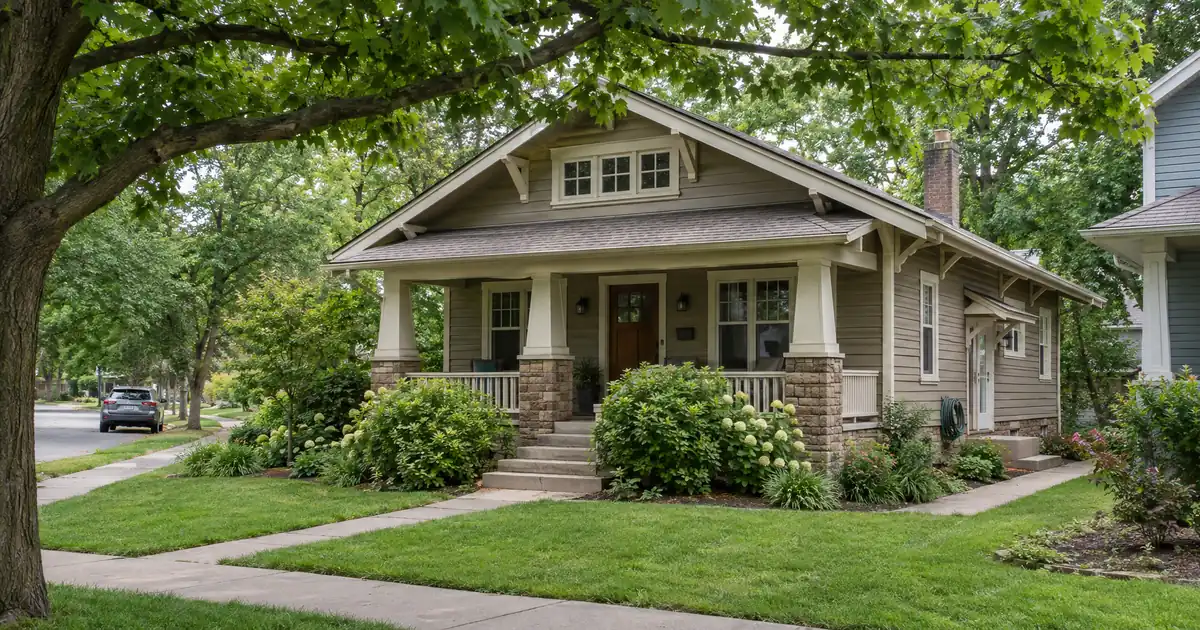
The Quick Read: Two couples buy a rental by forming a multi-member LLC as the borrower, with the individuals who meet the program’s ownership threshold signing a personal guaranty. The property’s rent against its full payment drives qualification, subject to lender guidelines. Settle three things before you go under contract: the ownership split, who guarantees, and what the operating agreement says about exits.
- Four owners means up to four credit files, four sets of reserves to verify, and up to four people on the hook.
- Most purchase files land at 75%-80% LTV on an investment property, and the program’s weaker guarantor often sets the terms.
- Clearing 1.00x coverage is where select programs start. It is not the same as positive cash flow.
- The LLC does not erase a guaranty. It limits liability to outsiders, not to the lender.
- Changing ownership after underwriting starts can force the file to be reviewed again.
DSCR loans are designed for non-owner-occupied investment properties. Because they are business-purpose investor loans, they are reviewed differently from a standard owner-occupied mortgage. The file qualifies primarily on property-level rental income covering the payment, subject to lender guidelines. Lendmire is a broker that arranges these loans through select lenders in its wholesale network, across 41 markets including Washington, D.C. The complete DSCR loans guide covers the basics. This piece covers the four-person problem.
DSCR Calculator
Run the numbers in your market
Rate source: Freddie Mac 30-yr average via FRED® — Federal Reserve Bank of St. Louis · effective Oct 15, 2026
Prefilled with starting assumptions — enter your own rent or nightly figures, taxes, insurance, and HOA for a more accurate picture.
Program parameters update from Lendmire’s centralized guideline source. Taxes and insurance are editable estimates.
As of Oct 15, 2026 · General Freddie Mac market benchmark, not a Lendmire loan offer. Rent, nightly rate, occupancy, taxes, and insurance are editable estimates. Short-term rental figures are estimates only and vary significantly by season, property type, management approach, and local short-term-rental rules — confirm local regulations before relying on them. Qualifying income for short-term rentals varies by program — some use appraisal market rent, others use documented STR history or projections — and is confirmed in underwriting. Not a Loan Estimate, approval, or commitment to lend. Program availability and eligibility are subject to lender guidelines, credit approval, property review, and underwriting.
Key Terms Defined
DSCR: Monthly rent divided by the full monthly obligation on the property.
PITIA: Principal, interest, taxes, insurance, and any HOA dues. This is the payment rent is measured against.
Guarantor: A person who signs a separate personal guaranty on the loan the LLC signs.
Operating agreement: The written contract that sets each member’s percentage, authority, contributions, and exit terms.
Member-managed vs. manager-managed: Either all members run the LLC, or named managers do.
Why Use an LLC, and Where It Falls Short
Most investors in this setup close in an LLC to hold title in one entity and keep the rental separate from their personal assets. That is a reasonable goal. The limit is that the LLC signs the note and mortgage, while the guarantors sign a guaranty that reaches their personal assets. The LLC does not cancel that. Subject to program terms, loans to LLC-titled borrowers are common on DSCR files, and true non-recourse is a narrow exception with tighter terms.
The shield also weakens if the LLC is run sloppily. Mixing personal and LLC money, letting filings lapse, or having no signed agreement all give a creditor an argument. Open a separate bank account, get an EIN, and document every capital contribution as it goes in.
What Does the Tax Treatment Look Like?
Default tax treatment is a partnership. The IRS treats a domestic LLC with two or more owners as a partnership unless it elects corporate taxation, and partnerships file an information return on Form 1065. Each member gets a Schedule K-1. The spouse-only joint venture exception does not help when four people own the entity. Tax treatment varies; consult a qualified professional.
One more point that older articles get wrong. FinCEN says U.S.-created entities and their beneficial owners are exempt from beneficial ownership reporting, and the Federal Register carries the rule that exempted domestic companies. A lender may still collect ownership information for its own file. That is underwriting, not a federal filing.
Four Ways to Hold Title
For two couples, the cleanest design is usually one LLC with either four individual members or two couple-level members. The right one depends on who must sign and how decisions get made.
| Design | Who signs | Control | Complexity |
|---|---|---|---|
| Four individual members | Each member at or above the program threshold | Votes per person | Moderate |
| Two couple-level members | Individuals behind each couple | Two votes, 50/50 | Lower on paper |
| Holding entities per couple | Depends on program | Layered | High |
| Tenancy in common | No LLC borrower | Per deed | Different loan path |
Layered holding companies are often not accepted. Programs differ, so confirm before forming anything. A tenancy-in-common agreement is an alternative for unrelated co-owners, but it moves you away from LLC vesting entirely.
A 50/50 couple-versus-couple split carries a deadlock risk. If every decision needs unanimous consent, one unavailable partner can stall a closing. Name a manager or add a tie-breaker.
Who Signs the Guaranty?
Each program sets its own ownership threshold for guarantors, and no regulator does. In a four-way even split, expect most or all members to qualify as guarantors. In a couple-weighted split, the number may shrink.
Across the wholesale network, many programs underwrite on the weaker guarantor’s credit profile. Credit tiers in the network run from a 620 floor in parts of the network, to about 660 on most programs, to 700+ for the strongest leverage tiers. One couple’s thinner file can pull terms down for everyone. Some groups respond by shifting percentages so a weaker partner falls below the threshold. That is a governance trade-off, not just a loan trick. Less ownership usually means less say. Keep it subject to program rules.
Spouses add a wrinkle. Whether a spouse must appear on the guaranty or loan documents can depend on state law. Ask counsel rather than assuming.
Operating Agreement Clauses That Matter
Use an attorney-drafted agreement, not a template. A Maryland real estate attorney notes the operating agreement overrides default state law, and that without a written buyout clause the main remedy can be a court partition action.
| Clause | Why the lender cares | Why the partners care |
|---|---|---|
| Member names and percentages | Matches the guarantor list | Sets ownership |
| Authority to borrow and pledge | Confirms who can sign | Prevents a stalled close |
| Capital contributions | Supports reserves | Prevents disputes |
| Buyout, death, divorce | Less direct | Prevents forced sales |
| Deadlock mechanism | Less direct | Keeps decisions moving |
The lender’s interest is consistency. The ownership table, the signers, and the guarantor list should match across the agreement, title, insurance, and application. Name mismatches stall files.
Worked Example: Two Layers
Run the numbers on a modeled rental at 75% LTV on an investment property purchase. The rent is not pulled from any market. Say the appraisal’s rent schedule supports coverage around 1.2x against the full PITIA. That is the lender’s test: rent over the full payment, with an appraisal and rent schedule supporting value and rent. Standard forms are the 1004 for a single-family home, the 1007 rent schedule, and the 1025 for 2-4 units. These specifics are subject to lender guidelines and a full review of property, leverage, and credit.
Layer two is the owners’ economics, and the lender never sees it. A 1.2x ratio does not mean positive cash flow. Repairs, vacancy, management, utilities, and capex sit outside the calculation. Four owners dividing what is left need a written rule for it. If coverage lands below 1.00x, a separate select-lender path exists with leverage and terms adjusted. Qualification stays subject to lender guidelines, credit approval, and property review.
Closing Sequence
1. Form the LLC and sign the operating agreement. Do this before you apply, with percentages and signers settled.
2. Get an EIN and open the LLC bank account. Fund it from members with documented contributions.
3. Decide the guarantors. Check the program’s threshold against your split.
4. Assemble entity documents. Expect articles of organization, the operating agreement, the EIN letter, a good standing certificate, and member ID. Each guarantor also provides a credit authorization and bank statements.
5. Underwrite the property. Rent is measured against PITIA, supported by the appraisal.
6. Close in the LLC’s name. Title vests in the LLC. The LLC signs the note and mortgage. Guarantors sign separately.
7. File taxes afterward. The LLC files Form 1065 and issues K-1s.
DSCR vs. conventional financing
There are two common ways to finance an investment property, and they qualify you differently — here’s how investors weigh them.
Why investors choose it
- Qualifies on the property’s rental income — no personal tax returns, W-2s, or pay stubs needed to document income.
- No personal debt-to-income ceiling to clear, so existing mortgages and obligations don’t cap your borrowing the same way.
- Can be closed in an LLC, keeping the property inside a business entity.
- Built for scaling — not held to the limit on number of financed properties that conventional financing applies.
- Underwriting centers on the deal: generally qualifies when the rent covers the payment, a 1.00x coverage ratio being a common baseline (confirmed in underwriting).
- Designed specifically for investment property, including long-term and, where the program allows, short-term rentals.
Where it’s strong
- Often the lowest ongoing financing cost for a buyer who fully qualifies on personal income — a fit for a first property or a cost-first purchase.
Trade-offs for investors
- Requires full personal income documentation and must fit within a debt-to-income limit — salary, existing debts, and other mortgages all count.
- Typically held in your personal name rather than a business entity.
- Caps how many financed properties you can carry, which can become a ceiling as a portfolio grows.
- Evaluates you as a borrower as much as the property, which usually means more paperwork.
How investors usually choose: a first or single property often optimizes for the lowest financing cost; portfolio builders often optimize for leverage, vesting in an LLC, and scaling past conventional caps. The right answer depends on your goals, the property, and current guidelines — both paths run through select lenders in Lendmire’s wholesale network, with eligibility and terms confirmed in underwriting.
Contributions, Reserves, and Shortfalls
Reserves are commonly around 6 months of PITIA, though they vary by lender, leverage, loan size, and transaction type, and loans above $1,500,000 typically step up to about 9 months. In a four-owner entity, the file needs to show where those reserves sit and whose they are. Put it in the agreement.
Also decide what happens when rent falls short. A capital call clause names who funds the gap and what happens to a couple that can’t. Unequal contributions are fine if ownership percentages and distributions say so in writing. A larger down payment can lift coverage, but it does not erase leverage caps, credit floors, reserve rules, or property eligibility.
Divorce, Death, and Exit
| Event | What the lender sees | What the agreement should say |
|---|---|---|
| One couple splits | Guarantor still on the loan | Buyout terms and valuation method |
| A member dies | Ownership change | Successor rights, buyout option |
| One couple wants out | Possible re-underwrite | Right of first refusal |
| One couple stops paying | Default risk for all | Capital call and remedies |
A deed or LLC amendment does not remove anyone from a signed guaranty. Removing a guarantor generally means a new loan or a refinance. Lendmire’s piece Can a Two-Partner Rental LLC Fund a Buyout With a Cash-Out Refinance? covers that path. Cash-out tops out around 75% LTV across most of the network, with about 6 months of seasoning as the common expectation.
Mistakes That Stall Files
- Ownership percentages in the agreement that differ from the application.
- An agreement that is silent on default, buyout, and departure.
- Unanimous-consent language with no tie-breaker.
- Deeding or transferring interests after underwriting begins.
- Mixing personal and LLC funds.
- Assuming one couple’s credit carries the file.
The files that stall are rarely about the property. They are about a guarantor list that does not match the agreement.
When Two Couples Should Skip This
If the couples do not agree on exits, do not buy together yet. Alternatives include separate properties, a tenancy-in-common agreement, or one couple buying while the other lends. Manufactured homes, log homes, and barndominiums are not offered in the network’s DSCR programs, so confirm property type early.
This article is general information, not legal or tax advice. Consult a qualified attorney and CPA about your own situation.
If you are buying or refinancing a rental property and want to see how the numbers work, Lendmire can help you compare DSCR loan options based on the property income, credit profile, leverage, and investor goals. Lendmire’s piece How to Structure Seller Credits on a DSCR Rental Loan Purchase in an LLC is a useful next read.
Frequently Asked Questions
Do all four of us have to sign the loan?
It depends on the program’s guarantor threshold. The LLC signs the note and mortgage, and members at or above the threshold sign a guaranty. In an even four-way split, expect most or all to sign.
Does one couple’s weaker credit affect the whole file?
Often, yes. Many programs underwrite on the weaker guarantor’s profile. Credit tiers run from a 620 floor in parts of the network up to 700+ for the strongest leverage. Terms are subject to lender guidelines.
Do we have to file a beneficial ownership report for the LLC?
Not for a U.S.-formed LLC. FinCEN exempts U.S. entities and their owners from that reporting. A lender may still collect ownership details for its own file.
Can we close in the LLC from the start?
Yes, many investors form the LLC first and close in its name, so no transfer is needed afterward. Form it and sign the operating agreement before applying.
Is clearing 1.00x the same as making money?
No. DSCR compares rent to PITIA only. Repairs, vacancy, management, utilities, and capex are outside the calculation.
For current guidelines and terms, see Lendmire’s DSCR loan programs page.
About Lendmire
Lendmire, NMLS# 2371349, is a mortgage brokerage focused on investor financing, arranging DSCR loans in 40 states plus Washington, D.C. — 41 markets total. Qualification is based on the property’s income rather than personal income documentation, subject to lender guidelines, making it a fit for LLC-held rentals and scaling portfolios. Scotsman Guide named Lendmire a Top Mortgage Workplace in both 2025 and 2026.
Get Started
Ready to find the right loan for you?
In about 30 seconds you can review financing options available for your investment property. No commitment required.
Informational only. Not a Loan Estimate, approval, or commitment to lend. Program availability and eligibility are subject to lender guidelines, credit approval, property review, and underwriting.
References
2. FinCEN – Beneficial Ownership Information
3. MS Evans Law – Co-ownership agreements
This article is part of Lendmire’s DSCR loan program — full qualification details, guidelines, and scenarios live on the program page.
Related reading: Can a Five-Unit Short-Term Rental Building Get a DSCR Loan? · How to Get a DSCR Loan on Your First Rental After a Bank Said No · Can You Deed a Home to an LLC and Still Get a DSCR Loan on a Lease?
Brandon Miller
Founder & CEO, Mortgage Loan Originator, Lendmire LLC
- Mortgage Loan Originator · NMLS# 1129696 · Verify on NMLS Consumer Access
- North Carolina Real Estate Broker · License# 343312 · Verify on NCREC
- North Carolina Insurance Producer · License# 19053198 · Property, Casualty, Life, Health · Verify on NAIC SBS
- Lendmire LLC · Firm NMLS# 2371349 · Verify firm licensure
Legal disclosures. Lendmire (NMLS# 2371349) is a state-licensed mortgage brokerage that arranges financing through wholesale lender relationships. Lendmire is not a direct lender, depository institution, or registered financial advisor. The discussion above is general informational content about real estate financing — it is not financial, legal, or tax advice, and readers should consult licensed professionals for guidance on their individual circumstances. Loan inquiries are subject to lender underwriting; this article does not represent a commitment to lend. Loan terms, rates, and qualification standards vary by borrower, property, and state, and are subject to change at any time. Equal Housing Opportunity. NMLS Consumer Access: nmlsconsumeraccess.org.