
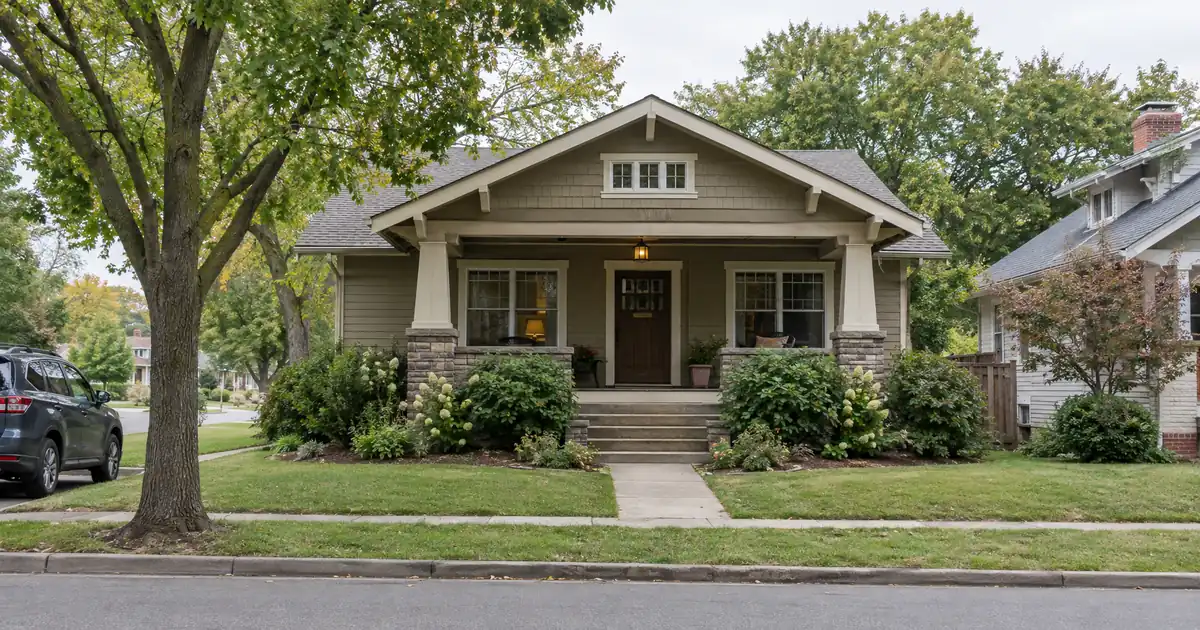
Summer Renovations And Refinancing — The Quick Read: For a rental property, a DSCR loan is usually the exit from a renovation, not the money that pays for it. You have two workable routes. Either pull equity from a stabilized rental with a cash-out refinance, or use short-term rehab financing first and refinance into a DSCR loan once the property is rent-ready. Both routes depend on the appraisal, which sets the value and the market rent.
Key Takeaways
- A DSCR (debt service coverage ratio) loan compares the property’s rent to its full monthly housing payment. It does not fund a gut rehab on a property that can’t yet be rented.
- Cash-out refinances on standard rentals top out around 75% LTV, and about 6 months of seasoning is the common expectation.
- The appraiser’s rent opinion, not your projected rent, becomes the top number in the coverage math.
- Clearing 1.00 coverage is not the same as positive cash flow.
- The holiday itself matters less than the order of your steps. Office closures and tight contractor calendars punish late starts. Exact terms depend on the lender’s guidelines, property type, leverage, and a full review of the borrower’s file.
Key Terms Defined
DSCR: The property’s monthly rent divided by its full monthly payment, including principal, interest, taxes, insurance, and association dues where they apply.
DSCR Calculator
Run the numbers in your market
Rate source: Freddie Mac 30-yr average via FRED® — Federal Reserve Bank of St. Louis · effective Sep 24, 2026
Prefilled with local estimates — enter your own rent or nightly figures, taxes, insurance, and HOA for a more accurate picture.
Program parameters update from Lendmire’s centralized guideline source. Taxes and insurance are editable estimates.
As of Sep 24, 2026 · General Freddie Mac market benchmark, not a Lendmire loan offer. Rent, nightly rate, occupancy, taxes, and insurance are editable estimates. Short-term rental figures are estimates only and vary significantly by season, property type, management approach, and local short-term-rental rules — confirm local regulations before relying on them. Qualifying income for short-term rentals varies by program — some use appraisal market rent, others use documented STR history or projections — and is confirmed in underwriting. Not a Loan Estimate, approval, or commitment to lend. Program availability and eligibility are subject to lender guidelines, credit approval, property review, and underwriting.
PITIA: That full payment: principal, interest, taxes, insurance, and association dues.
LTV (loan-to-value): The loan balance as a percentage of the property’s appraised value.
Cash-out refinance: A new loan that pays off the old one and hands you the extra eligible equity.
Seasoning: The minimum time a lender wants you to hold title before allowing a cash-out refinance.
ARV (after-repair value): What a property is projected to be worth once the work is finished.
BRRRR: Buy, rehab, rent, refinance, repeat. Investors use it to pull renovation capital back out and reuse it.
Draws: Staged releases of rehab funds as work is completed, instead of one lump sum at closing.
What Does a DSCR Loan Actually Do for a Renovation?
A DSCR loan qualifies primarily on property-level rental income covering the payment, subject to lender guidelines. That makes it a stabilization tool. It works best when the property already rents, or is about to.
Across the wholesale network Lendmire works with, most programs want the property rent-ready at appraisal. A house with no kitchen and torn-up floors doesn’t fit. A gutted duplex needs a bridge or hard-money loan first. The DSCR loan then takes that short-term lien out once the property can produce rent.
Some private lenders package rehab financing that converts into a DSCR hold, as HardMoneyHome describes. But “DSCR rehab loan” is not a universal product. Ask for the actual note, the draw agreement, and the conversion conditions.
One quick contrast: government renovation programs like FHA 203(k) and HomeStyle are built for owner-occupants. They are not a route for a rental. Skip them.
DSCR loans are designed for non-owner-occupied investment properties. Because they are business-purpose investor loans, they are reviewed differently from a standard owner-occupied mortgage.
Which Path Fits: Cash-Out Refinance or Bridge First?
The right path depends on the property’s condition today. If it already rents and the work is an upgrade, cash-out is usually the cleaner tool. If the property isn’t rentable yet, bridge financing comes first.
| Factor | Cash-out refinance | Bridge, then DSCR refinance |
|---|---|---|
| Starting condition | Rented, stabilized | Vacant or needs major work |
| Funds arrive | At closing | In draws during the work |
| Sized on | Current appraised value | Projected ARV, then real appraisal |
| Cash-out ceiling | About 75% LTV on standard rentals | Set by the DSCR exit loan |
| Main risk | Coverage shrinks as the loan grows | Exit fails if the appraisal disappoints |
The BRRRR pattern is the second column. The cash-out refinance is the step that recaptures renovation capital for the next property. If you want the full mechanics, Lendmire’s complete DSCR loans guide walks through the program from the ground up.
How Underwriting Treats a Renovation, Step by Step
Here is the sequence a file follows. Each step feeds the next.
1. Scope and budget. Lenders and appraisers respond to documented work. Keep the contract, scope, permits, change orders, invoices, and dated photos. A rehab-lending guide suggests a 10% contingency in the budget. Costs drift. Plan for it.
2. Bridge phase, if you need one. Bridge and rehab loans don’t hand over the full budget at closing. Funds come out in draws. They are sized on projected after-repair value, which is a forecast. A projected ARV is not a guaranteed future appraisal.
3. Rent-ready condition. Once the work is done, the property gets reappraised at its post-repair condition. Rent is re-established at that point too.
4. The appraisal does two jobs. It sets value, which drives LTV. It also sets market rent, which drives coverage. For single-family homes, the rent opinion comes on Form 1007. For two-to-four-unit properties, it comes on Form 1025.
5. Income determination. Underwriting almost always uses the lower number: the appraiser’s market rent or the actual lease. For a vacant, freshly renovated unit, the appraiser’s opinion is the only number. Your own research generally can’t override it, except through a second appraisal or formal reconsideration.
6. The coverage test. Rent divided by PITIA. Most files across the network want at least 1.00 coverage, and select programs start there. Stronger ratios open better pricing and leverage. Coverage below 1.00 is available through select lenders in the network, with leverage and terms adjusted.
7. Proceeds sizing. Value, maximum LTV, DSCR, and loan limits all cap the loan. The lowest result governs. The bridge payoff, closing costs, and prepaids come off the top of whatever is left.
A Modeled Example, in Ratios
Run the numbers on a rented single-family home. Assume it appraises after upgrades, and the existing mortgage sits at about 50% of that appraised value. The standard-rental cash-out ceiling is 75% LTV, so the value test leaves roughly 25 percentage points of value before costs. Every figure here varies by lender and program — guidelines, property type, leverage, and credit profile all apply.
Now the second test. Suppose the appraiser’s market rent supports about 1.25x coverage at the current balance. A larger loan means a larger payment, and coverage shrinks. If the bigger loan pushes coverage toward 1.00, coverage becomes the binding limit instead of LTV.
That’s why two properties with the same appraised value can support very different cash-out amounts. Rent decides. The inputs here are modeled assumptions, not market data.
Where the General Rule Breaks
The steps above hold for most files. These edge cases are where they bend.
Cosmetic versus value-add work. New paint helps a listing photo. A finished basement unit or an added bedroom can change the rent comps. Work that moves rent moves the coverage number.
The exit fails even when the work is finished. If the appraised rent doesn’t support the loan you planned on, the DSCR exit can fall short. Model the exit before you start swinging hammers.
Short-term rentals. Form 1007 was built for monthly rent, not nightly pricing. Most programs in the network want about 12 months of hosting history on a refinance. Cash-out on a short-term rental is generally capped at 70% LTV, while a standard long-term rental cash-out is capped at 75%. Expect a score around 640 or higher, and 1.00 as the coverage floor on refinances. Short-term rental rules can vary by city, county, HOA, and property type, so investors should confirm local rules before relying on projected rental income.
Rent control. If a property is subject to rent control, the appraiser’s market rent may be pinned to what the ordinance allows. That caps the income side of the coverage math regardless of what nearby open-market units rent for.
Title seasoning versus value seasoning. You can be perfectly seasoned on title and still get valued conservatively. The common expectation is about 6 months of seasoning for cash-out. Documented, substantial improvements can help the value conversation, but they don’t waive the program’s rules.
Delayed financing. After an all-cash purchase, this exception lets you refinance sooner than the usual seasoning period. Proceeds are generally capped near the cash you originally spent.
Property types that are out. DSCR on manufactured homes (single- and double-wide), log homes, and barndominiums is not offered in this network.
Does the Money Still Pencil After the Work?
Homeowners are spending heavily on improvements. Harvard’s Joint Center for Housing Studies forecasts $518 billion in homeowner improvement spending, with growth of 2.1 percent at midyear easing to 1.6 percent by year-end. That index covers owner-occupied homes, not rentals. Read it as background, not a rental forecast.
A more useful point for you: clearing 1.00 is not positive cash flow. DSCR compares rent to PITIA only. Repairs, vacancy, management, utilities, and capital expenses sit outside the calculation. Model those separately. (A file that squeaks past 1.00 can still bleed cash every month.).
Small exterior and curb-appeal projects usually return more of their cost than big interior remodels. Treat that as a rule of thumb, not a promise. Rentals also need durable finishes more than showpiece ones.
Tax treatment can depend on how the funds are used and how the property is held; investors should keep clear records and speak with a qualified tax professional before relying on any deduction.
What About Reserves, Credit, and Loan Size?
Larger down payments lower the payment and can lift the coverage ratio. They never erase leverage caps, credit floors, or reserve rules. The strongest files clear both tests: enough equity and enough rent.
Typical ranges across the network, subject to lender guidelines:
- Purchase leverage: most files land at 75%–80% LTV. Select high-leverage programs reach 85% with roughly a 700+ score.
- Credit: a 620 floor exists in parts of the network. Most programs want around 660. A 700+ score unlocks the strongest tiers.
- Reserves: commonly about 6 months of PITIA, stepping up to about 9 months above $1,500,000.
- Loan size: up to $3,000,000 on standard programs. Smaller balances route through select lenders in the network.
Exact terms vary by borrower, property, and loan scenario. Nothing here is a commitment to lend.
Where Does the Holiday Fit In?
Independence Day matters mostly as a calendar squeeze. Federal and county offices close. Contractor and appraiser schedules tighten around it. Nobody can tell you exactly how that plays out on your file, so don’t build a plan around a date.
Sequence it instead. Get the scope and budget locked first. Confirm which path fits, and line up the appraisal and title early. Then let the work start. A finished renovation with no appraisal scheduled just sits there costing you holding expense.
Consider a two-unit owner who wants a refreshed kitchen and bath before a fall lease-up. The stronger play is to gather invoices and photos as work proceeds, order the appraisal only when the rent-ready condition is real, and run coverage on a conservative rent figure. This one’s a toss-up on the bridge question, honestly. A rented property with modest upgrades leans cash-out, while a vacant fixer leans bridge.
Two related Lendmire reads cover the neighboring ground. If you’re weighing a credit line instead, see HELOC options for rental property renovations. And for a look at whether the work really builds equity, see whether home renovations count as equity investments.
Frequently Asked Questions
Can a DSCR loan pay for my renovation directly?
Usually not on a property that isn’t rentable. A DSCR loan fits best after the work is done, or as a cash-out on a rental that already produces income. Bridge or rehab financing typically covers the construction phase.
How much cash can I pull out after the work?
On a standard rental, cash-out generally tops out around 75% LTV across most of the network. The real number is the lowest of the value cap, the coverage limit, and the loan limits. Payoff of any bridge lien and closing costs come off the top.
Will my planned rent count?
Not by itself. Underwriting uses the lower of the appraiser’s market rent or the actual lease. For a vacant unit, the appraiser’s opinion is the only figure.
What if coverage lands below 1.00 after the renovation?
Sub-1.00 coverage is available through select lenders in the network, with leverage and terms adjusted. Expect lower leverage or more cash in. Eligibility depends on credit, reserves, and property review.
Do I need to wait before a cash-out refinance?
About 6 months of seasoning is the common expectation. Delayed financing is the named exception after an all-cash purchase, with proceeds generally capped near the original cash spent.
The Bottom Line
If you are buying or refinancing a rental property and want to see how the numbers work, Lendmire can help you compare DSCR loan options based on the property income, credit profile, leverage, and investor goals. Lendmire is a mortgage broker arranging DSCR financing through select lenders in its wholesale network across 41 markets, including Washington, D.C. Reach the team at 828-256-2183.
Summer is a good time to build, but the appraisal doesn’t care what month you finished.
About Lendmire
Lendmire (NMLS# 2371349) is a DSCR-focused mortgage broker that helps arrange investor financing across 41 markets, including Washington, D.C., through wholesale and investor-lending channels. DSCR eligibility is generally reviewed by the lender around the property’s rental income rather than personal income documentation, subject to lender guidelines — which works for self-employed investors, LLC operators, and portfolios above four financed properties. Scotsman Guide named Lendmire a Top Mortgage Workplace in both 2025 and 2026.
Get Started
Ready to find the right loan for you?
In about 30 seconds you can review financing options available for your home or investment property. No commitment required.
Informational only. Not a Loan Estimate, approval, or commitment to lend. Program availability and eligibility are subject to lender guidelines, credit approval, property review, and underwriting.
References
1. HardMoneyHome – Rehab Loans for Investment Property
2. Harvard JCHS – Remodeling Growth Set to Downshift
3. Harvard JCHS – Leading Indicator of Remodeling Activity
This article is part of Lendmire’s Mortgage Refinance series — every loan program’s qualification details, guidelines, and scenarios live on the loan options page.
Related reading: Cash Out Refinance Investment Property Joplin Missouri · Cash-Out Refinance for Primary Residence: How It Works and What to Expect · What the Current Drop in Mortgage Rates Could Mean for the Housing Market
Brandon Miller
Founder & CEO, Mortgage Loan Originator, Lendmire LLC
- Mortgage Loan Originator · NMLS# 1129696 · Verify on NMLS Consumer Access
- North Carolina Real Estate Broker · License# 343312 · Verify on NCREC
- North Carolina Insurance Producer · License# 19053198 · Property, Casualty, Life, Health · Verify on NAIC SBS
- Lendmire LLC · Firm NMLS# 2371349 · Verify firm licensure
Compliance and disclosures. Lendmire (NMLS# 2371349) is a licensed mortgage broker and is not a direct lender, depository institution, financial advisor, or tax professional. Content in this article is general market analysis and educational information — not financial, legal, or tax advice for any specific situation. Lendmire does not guarantee loan approval; every transaction is subject to underwriting by the funding lender. Mortgage pricing and loan program guidelines are subject to change at any time without notice and vary by borrower characteristics, property type, and state regulations. Lendmire complies with Equal Housing Opportunity. Licensure verification: NMLS Consumer Access.