
The Quick Read: Yes, South Carolina investors can access super jumbo DSCR financing, because no state rule caps or bans it and the tier is set by lenders rather than by regulators. Through select wholesale programs, loan amounts run from $150,000 up to $10,000,000, though leverage steps down as the balance climbs, subject to underwriting.
- The standard DSCR program stops at $3,000,000; larger balances move to a portfolio investor program.
- Short-term-rental and no-ratio files stop at $2,000,000.
- Leverage runs 80% on a purchase to $1,000,000, 75% to $3,000,000, then 65% and 60% above that, with files over $4,000,000 reviewed case by case.
- Cash-out ends above $3,000,000.
- Two appraisals are required above $2,000,000, and everything is subject to underwriting.
Here is the longer answer, including where the exceptions live and when a big South Carolina rental simply will not cash-flow at this size.
DSCR Calculator
Run the numbers in South Carolina
Rate source: Freddie Mac 30-yr average via FRED® — Federal Reserve Bank of St. Louis · effective Oct 15, 2026
Prefilled with starting assumptions — enter your own rent or nightly figures, taxes, insurance, and HOA for a more accurate picture.
Program parameters update from Lendmire’s centralized guideline source. Taxes and insurance are editable estimates.
As of Oct 15, 2026 · General Freddie Mac market benchmark, not a Lendmire loan offer. Rent, nightly rate, occupancy, taxes, and insurance are editable estimates. Short-term rental figures are estimates only and vary significantly by season, property type, management approach, and local short-term-rental rules — confirm local regulations before relying on them. Qualifying income for short-term rentals varies by program — some use appraisal market rent, others use documented STR history or projections — and is confirmed in underwriting. Not a Loan Estimate, approval, or commitment to lend. Program availability and eligibility are subject to lender guidelines, credit approval, property review, and underwriting.
What Makes a DSCR Loan “Super Jumbo”?
“Super jumbo” is a lender-defined label, not a regulated category. The only official dollar line is the conforming loan limit, which FHFA announced at $832,750 for one-unit properties in most of the country, with a high-cost ceiling of $1,249,125. A loan above the applicable limit is jumbo by definition. Where “jumbo” turns into “super jumbo” depends on who is asking.
That limit decides which loans Fannie Mae and Freddie Mac may buy. DSCR loans never go to them. They are non-agency, business-purpose investor loans, so the conforming limit is just a label here. Most South Carolina counties sit at the national baseline, which means a loan near $850,000 is already jumbo.
In practice, brokers and lenders treat balances above $1,000,000 as the start of large-loan territory, and above $3,000,000 as super jumbo. The standard DSCR program stops at $3,000,000. The broader portfolio investor program, which Lendmire’s wholesale network uses to carry qualified investors past that line, reaches $10,000,000. Nothing in South Carolina law changes that.
DSCR loans are designed for non-owner-occupied investment properties. Because they are business-purpose investor loans, they are reviewed differently from a standard owner-occupied mortgage. The loan is reviewed primarily on property-level rental income covering the payment, subject to lender guidelines. Lendmire is a broker: it arranges these loans through select lenders in its wholesale network across 41 markets, including Washington, D.C., and the lenders do the underwriting.
What Changes as the Loan Gets Bigger?
Every step up in balance costs the investor leverage and adds conditions. Across the network, the ladder below describes the best available cell at a 1.00 coverage ratio or higher. Each figure is a ceiling, and lower credit takes a lower cell inside the same band, subject to underwriting.
| Loan size | Purchase / rate-term | Cash-out | Credit for this leverage |
|---|---|---|---|
| $150K–$1M | 80% | 75% | 660+ |
| $1M–$1.5M | 75% | 70% | 700+ |
| $1.5M–$2M | 75% | 60% | 720+ |
| $2M–$3M | 75% | 60% | 720+ |
| $3M–$4M | 65% | — | 700+ |
| $4M–$10M | 60% on review | — | 700+ |
A few mechanics matter more than the table suggests.
Credit. The program floor is 660. Above $3,000,000, the super jumbo overlay lifts that to 700, with a clean 0x30x24 housing history, 48-month seasoning on credit events, and eligibility limited to citizens and permanent residents. Rural property is excluded at that size, and acreage is capped at ten acres.
Reserves. Most files need six months of payment reserves on the subject property, twelve for first-time investors. Cash-out proceeds cannot satisfy reserves on the largest loans.
Appraisals. Two appraisals are required above $2,000,000. On a DSCR file the appraiser sets both the collateral value and, for vacant or newly leased property, the market rent that drives the ratio. Two appraisers can disagree, and that cuts both ways.
Review. Above $4,000,000, every request is reviewed case by case before submission. Treat 60% as a ceiling on review, not an entitlement.
Cash-out. Proceeds are unlimited at or below 60% LTV and capped at $1,500,000 above 60%. There is no cash-out above $3,000,000. Terms depend on the lender’s guidelines, the property type, the leverage, and a full review of the credit profile.
For a broader walkthrough of the program, see the complete DSCR loans guide.
Where Do Super Jumbo Deals Show Up in South Carolina?
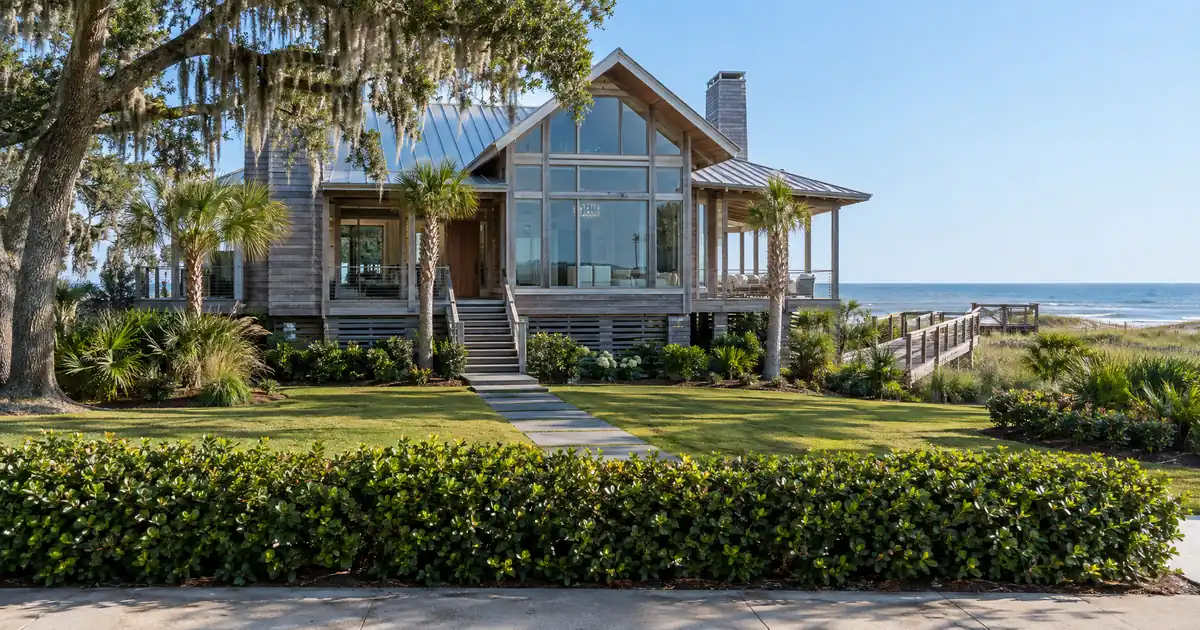
They show up wherever a rental sells for well above the conforming limit. Think of waterfront and barrier-island houses, golf and lake communities, and high-end multifamily or mixed rental assets near the coast. These are the property types where a $1,000,000-plus balance is ordinary rather than exotic.
Two state-specific realities shape these files. First, luxury coastal rentals often lean on short-term income, and short-term-rental files stop at $2,000,000. They require 1.00 coverage or better, and the program counts income at 80% of gross. That means twelve months of operating history on a refinance, or the appraisal’s short-term-rent analysis on a purchase. The investor also needs experience, meaning twelve months owning income property in the last thirty-six. Short-term rental rules can vary by city, county, HOA, and property type, so investors should confirm local rules before relying on projected rental income.
Second, amenity-heavy properties have thin comparables. Unusual homes make both appraisals harder, and at this size an appraisal gap can reshape the leverage or the coverage number.
Condos work, with limits. Warrantable and non-warrantable condos are both eligible, but non-warrantable units top out at 75% and $1,500,000. Condotels are held to 75% on a purchase and 65% on a refinance, also capped at $1,500,000 with $250,000 cash in hand. Entity vesting is welcome, with no layered entities, subject to lender program eligibility.
Will a High-Priced Rental Actually Cover Its Payment?
Often not at maximum leverage. This is the part most investors underestimate. A coverage ratio divides monthly rent by the full monthly obligation: principal, interest, taxes, insurance, and any HOA or POA dues. As the price rises faster than rent, the ratio sags. Lower leverage helps, but it also means more cash goes into the deal.
Picture a luxury coastal rental priced at $2,400,000 on a purchase at 75% LTV. If rent covers the obligation at around 1.05x, the file sits comfortably in full-leverage territory. If the same house rents for less and coverage lands near 0.85x, the picture changes. Those inputs are modeled assumptions, not market data. The exact numbers vary by lender and program and follow a full review of property, leverage, and credit.
Below 1.00, there are still paths. Select lenders in the network will review coverage between 0.75 and 0.99 on loans to $2,000,000, with LTV and terms adjusting, subject to underwriting. No-ratio is a narrower option: through select wholesale programs it reaches $2,000,000, within the envelope of LTV, credit, and reserves, with a seven-year clean housing history and 0x30x24, subject to underwriting. Short-term-rental files cannot use the no-ratio path.
Interest-only is another lever. A 120-month interest-only period is available on 30- and 40-year terms, capped at 75% leverage, with coverage of 0.75 or better qualified on interest, taxes, and insurance. It helps the number now. It also means the payment resets later, so run that stress test before relying on it. Final terms depend on the lender’s guidelines, the property type, and the borrower’s complete credit picture.
This one is a genuine judgment call. If the only way a deal works is sub-1.00 coverage at a thin margin, the better question may be whether the price, the market, or the property type is wrong, not which loan fits it.
A practitioner note: on large-balance files, the trouble usually starts in the appraisal, not the application. Files get re-cut when the rent schedule comes in lower than the investor’s pro forma, or when a second appraisal lands apart from the first. Getting realistic rent comps and insurance and HOA figures in hand before submission avoids most of the surprises.
Purchase, Rate-and-Term, or Cash-Out at This Size?
Purchase and rate-and-term are the workhorses above $3,000,000. Cash-out disappears there entirely. Between $1,500,000 and $3,000,000, cash-out caps at 60% LTV, and anyone with credit at 680 or below has no cash-out above $1,500,000. Each figure is subject to lender guidelines and a complete review of property type, leverage, and credit.
So the equity-pull thesis depends on size. A $1,200,000 balance can still support meaningful cash-out. A $3,500,000 balance cannot. Investors who plan to refinance and redeploy should keep that cliff in mind before they stretch on a purchase. Up to 20 financed properties are allowed, with no extra reserves for other financed properties, so portfolio scaling is not the constraint. The subject property’s own numbers are.
For the refinance side of the decision, Lendmire has a related piece on super jumbo DSCR loans in South Carolina.
DSCR vs. conventional financing
There are two common ways to finance an investment property, and they qualify you differently — here’s how investors weigh them.
Why investors choose it
- Qualifies on the property’s rental income — no personal tax returns, W-2s, or pay stubs needed to document income.
- No personal debt-to-income ceiling to clear, so existing mortgages and obligations don’t cap your borrowing the same way.
- Can be closed in an LLC, keeping the property inside a business entity.
- Built for scaling — not held to the limit on number of financed properties that conventional financing applies.
- Underwriting centers on the deal: generally qualifies when the rent covers the payment, a 1.00x coverage ratio being a common baseline (confirmed in underwriting).
- Designed specifically for investment property, including long-term and, where the program allows, short-term rentals.
Where it’s strong
- Often the lowest ongoing financing cost for a buyer who fully qualifies on personal income — a fit for a first property or a cost-first purchase.
Trade-offs for investors
- Requires full personal income documentation and must fit within a debt-to-income limit — salary, existing debts, and other mortgages all count.
- Typically held in your personal name rather than a business entity.
- Caps how many financed properties you can carry, which can become a ceiling as a portfolio grows.
- Evaluates you as a borrower as much as the property, which usually means more paperwork.
How investors usually choose: a first or single property often optimizes for the lowest financing cost; portfolio builders often optimize for leverage, vesting in an LLC, and scaling past conventional caps. The right answer depends on your goals, the property, and current guidelines — both paths run through select lenders in Lendmire’s wholesale network, with eligibility and terms confirmed in underwriting.
Who Should Look Elsewhere?
Super jumbo DSCR fits investors whose property income tells a cleaner story than their traditional personal-income documentation. That typically means self-employed owners, LLC-held portfolios, and investors with complex returns. It also fits those who want entity vesting.
It is a weaker fit in a few situations:
- Owner-occupied or second-home use. These are business-purpose investor loans, so personal-residence financing is a different product entirely.
- Borrowers with strong documented income and one property. A bank jumbo may carry simpler terms, though it uses a different underwriting basis.
- Investors whose income is documented through deposits rather than rent. A bank-statement structure may fit better. Lendmire covers it in its piece on super jumbo bank statement loans in South Carolina.
- Deals that only work at the highest leverage. At super jumbo size, the high-leverage cells are gone.
The licensing question also deserves a sentence. South Carolina regulates mortgage lenders and originators under Title 37, Chapter 22 and mortgage brokers under Title 40, Chapter 58 of the state code. Whether a particular business-purpose loan falls under those chapters turns on each statute’s definitions, so the practical advice is simple: work with a licensed professional.
Key Terms Defined
DSCR (debt service coverage ratio): Monthly rent divided by the full monthly obligation on the property.
Jumbo: A loan above the applicable conforming loan limit.
Super jumbo: A lender-defined tier for balances well above jumbo, commonly starting around $3,000,000 in this market.
No-ratio: A path through select wholesale programs that does not rely on a coverage number, subject to underwriting.
ITIA: Interest, taxes, insurance, and association dues, used to qualify interest-only loans.
Rate-and-term refinance: A refinance that changes the loan’s terms without taking out extra proceeds.
Frequently Asked Questions
Can I get a super jumbo DSCR loan on a South Carolina vacation rental?
Possibly, with limits. Short-term-rental files stop at $2,000,000, require coverage of 1.00 or better, and count income at 80% of gross. Municipal permission must be documented for the specific property, since local rules are set locally and change. Above $2,000,000, the property generally needs to qualify on long-term rent.
How much do I need to put down at super jumbo size?
Typically 20% on a purchase up to $1,000,000, 25% up to $3,000,000, 35% from $3,000,000 to $4,000,000, and 40% above that on review. These are ceilings on leverage, subject to underwriting, and lower credit takes a lower leverage cell.
What credit score do I need?
The program floor is 660. Above $3,000,000, the super jumbo overlay requires 700. Each size band lists the score its top leverage needs, so a lower score typically means lower leverage within the same band.
Does a business-purpose loan mean no compliance rules apply?
No. The federal Ability-to-Repay rule does not cover business-purpose loans, and investment-purpose loans count as business-purpose. That is not the same as being free of all regulation, and the borrower’s stated purpose matters. DSCR loans are also exempt from TRID disclosures.
Can an LLC borrow at this size?
Yes, subject to lender program eligibility, with single-entity vesting rather than layered entities. Under the CFPB’s TILA examination material, credit to a non-natural person falls outside Regulation Z, although a consumer-purpose loan to a trust can still fall within it.
Next Step
If you are buying or refinancing a high-balance rental property and want to see how the numbers work, Lendmire can help you compare super jumbo DSCR loan options based on the property income, the loan balance, credit profile, leverage, and investor goals. Tax treatment varies; consult a qualified professional. Programs change and every file is underwritten individually; nothing here is a commitment to lend.
The real constraint in South Carolina’s luxury rental markets is rarely whether the loan exists, but whether a trophy property’s rent can carry a balance that large.
Lendmire’s self-employed mortgages page presents both super jumbo programs, bank statement and DSCR, side by side.
About Lendmire
Lendmire — NMLS# 2371349 — is a DSCR and non-QM mortgage brokerage with investor loan programs in 41 markets, including Washington, D.C. DSCR eligibility is commonly reviewed by the lender around property-level rent rather than personal income documentation, subject to lender guidelines, and the brokerage helps arrange financing for LLC-owned portfolios beyond conventional financed-property limits. Recognized by Scotsman Guide as a Top Mortgage Workplace in 2025 and 2026.
Get Started
Ready to find the right loan for you?
In about 30 seconds you can review financing options available for your investment property. No commitment required.
Informational only. Not a Loan Estimate, approval, or commitment to lend. Program availability and eligibility are subject to lender guidelines, credit approval, property review, and underwriting.
References
1. FHFA, 2026 conforming loan limit announcement
2. South Carolina Code, Title 37, Chapter 22
This article is part of Lendmire’s super jumbo DSCR loan program — full qualification details, guidelines, and scenarios live on the program page.
Related reading: How to Document a 40-Year Super Jumbo DSCR Loan · Can a Retiree With No Job Qualify for a Super Jumbo DSCR Loan? · Full-Doc Jumbo vs Super Jumbo DSCR Loan on a 2-4 Unit Rental
Guides: Super Jumbo DSCR Loans in South Carolina
Brandon Miller
Founder & CEO, Mortgage Loan Originator, Lendmire LLC
- Mortgage Loan Originator · NMLS# 1129696 · Verify on NMLS Consumer Access
- North Carolina Real Estate Broker · License# 343312 · Verify on NCREC
- North Carolina Insurance Producer · License# 19053198 · Property, Casualty, Life, Health · Verify on NAIC SBS
- Lendmire LLC · Firm NMLS# 2371349 · Verify firm licensure
Disclosures. The information presented in this article is general market commentary, not financial, legal, or tax advice. Lendmire is a mortgage brokerage (NMLS# 2371349) — not a direct lender or depository institution — and loan placement is subject to lender underwriting. Nothing in this content represents a commitment to lend. Loan terms, pricing, and program availability vary based on borrower qualifications, property characteristics, and state of subject property, and are subject to change at any time. Lendmire complies with Equal Housing Opportunity requirements. Consumer access: nmlsconsumeraccess.org.