
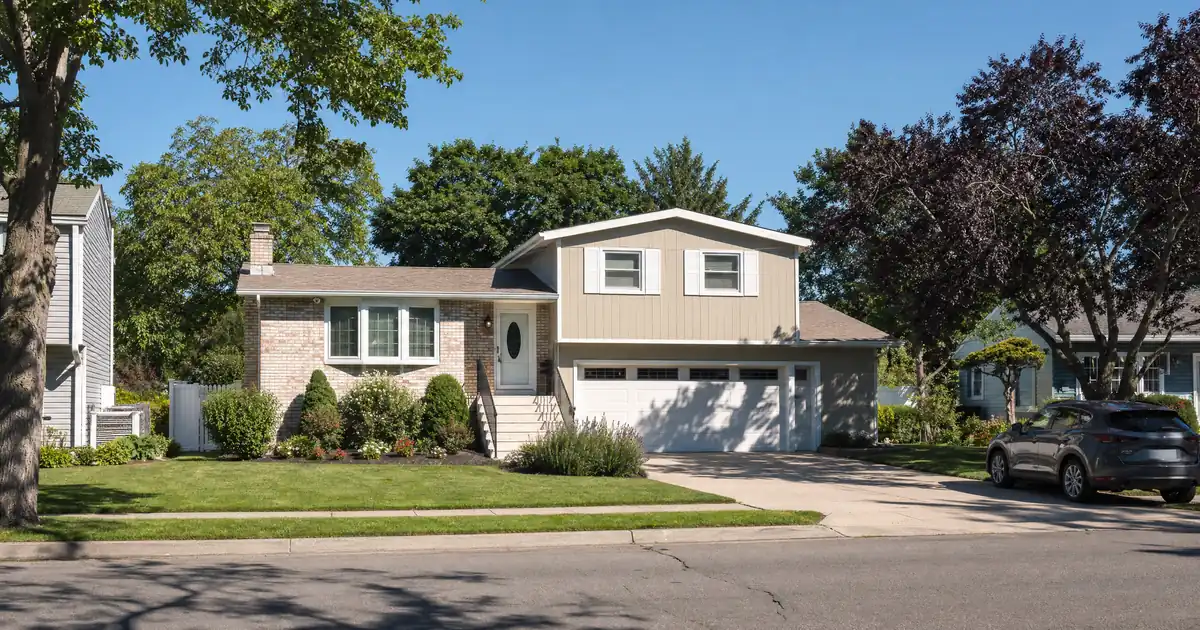
The Quick Read: Yes — investors often tap equity in a primary residence or an existing rental to fund the down payment on a new investment property. Then they finance the rental itself with a separate loan, often a DSCR loan. A DSCR loan qualifies on the property’s own rental income, not the borrower’s paycheck. The equity draw and the new rental loan are two separate debts. Lenders underwrite them two different ways. The strategy runs into real friction in three spots: LLC-titled property, short-term rental income, and combined loan-to-value limits on the equity side. Know these details before you sign anything.
Key Takeaways
- A home equity loan or HELOC and the new rental loan get underwritten separately. One looks at the borrower’s credit and equity. The other looks at the property’s rent.
- Equity pulled from a primary residence works differently than equity pulled from an existing rental. Different products, different limits, different paperwork.
- DSCR loans usually don’t count an existing HELOC payment against the borrower the way a conventional loan would. That’s because DSCR lender review runs off the subject property’s own income.
- LLC-titled properties can’t hold title on most home equity lines. A vesting change or a DSCR cash-out refinance is usually the workaround.
- Short-term rental income and this strategy don’t mix cleanly. The standard rent-verification form used across the industry was built for long-term leases, not nightly rates.
Key Terms Defined
Home equity loan — a lump-sum second loan secured by a home. It’s repaid on a fixed schedule and paid out all at once.
How large a line the equity supports in your market.
An equity line is sized by combined loan-to-value, occupancy, and credit — not by rental coverage. Switch the occupancy or the credit band and the ceiling moves with it.
Investment-property lines require a 700 minimum credit score. Second-home tiers reach 640; primary-residence tiers reach 600.
A debt-to-income ratio above 45% requires 680+ credit. Profiles under 640 are limited to single-family homes. At least 75% of the approved line is drawn at closing. Ceilings, floors, and caps update from Lendmire’s centralized guideline source.
Line estimate
Illustrative estimate only — not a quote, Loan Estimate, approval, or commitment to lend. The rate is an editable assumption; equity-line pricing is variable through both the draw and repayment periods and never converts to fixed. Occupancy and credit drive the ceiling together: investment property runs to 70% combined LTV with a 700 credit floor and a $500,000 cap; a second home runs to 70% at a 640 floor with a $500,000 cap; a primary residence reaches up to 80% at a 600 floor, and its $750,000 maximum line applies only at 75% combined LTV or below with 720+ credit and a full appraisal. Lines above $500,000 require a full appraisal. Credit, debt-to-income, property type, and full underwriting review all affect the final line.
HELOC (home equity line of credit) — a revolving credit line secured by home equity. The borrower draws what’s needed during a set draw period, then repays it.
CLTV (combined loan-to-value) — the total of all loans secured by a property, divided by its value. Lenders cap this number on an equity line, not just the new draw alone.
DSCR (debt-service coverage ratio) — a comparison of a rental property’s monthly rent to its own monthly obligation (principal, interest, taxes, insurance, and HOA dues where they apply). It’s the qualifying metric on most investor loans that skip personal income documentation.
Seasoning — the amount of time that must pass — after a purchase, or after pulling cash out — before a lender will count a property’s equity or issue a new loan against it.
Can You Actually Buy a Rental Property With a Home Equity Loan?
Yes. It’s one of the more common ways investors fund a down payment. The home equity loan or HELOC doesn’t buy the rental directly. It supplies cash that gets applied toward the purchase. A separate loan on the rental itself carries the bulk of the acquisition cost.
Two different money events happen here, and mixing them up is where most confusion starts. Event one: a homeowner, or an existing rental owner, draws against equity secured by that property to raise cash. Event two: that cash becomes the down payment — or occasionally the full purchase price — on a new rental, financed through its own loan. The two loans rarely share the same underwriting logic. The equity draw looks at the borrower: credit, income, existing debt, equity position. The new rental loan, if it’s a DSCR loan, looks mainly at whether the property’s own rent covers its own payment. It doesn’t rely on the borrower’s traditional personal-income paperwork, subject to lender guidelines.
How the Two Loans Actually Work Together
The mechanics run in a fairly predictable order. The order matters more than most investors expect.
First, the equity draw gets sourced and documented. A HELOC draw or home equity loan payout shows up as a clean, traceable deposit into the borrower’s account. Underwriters generally treat this as legitimate down payment money on the new rental loan. That’s a much better paper trail than an unsourced deposit or a family gift. It matters because most DSCR programs across the wholesale network Lendmire works with don’t accept gift funds for an investment property down payment at all. The funds need to be the borrower’s own money, sourced and seasoned.
Second, the new rental gets its own loan application. This is where the property-income logic takes over. DSCR loans are built for non-owner-occupied investment properties. Because they’re business-purpose investor loans, lenders review them differently than a standard owner-occupied mortgage. Qualification runs mainly on whether the property’s rental income covers its own payment, subject to lender guidelines. It doesn’t rely on a full personal-income underwrite the way a DSCR-vs-conventional comparison would show for a traditional loan.
Third — and this is the part that surprises a lot of first-time investors — the existing equity-line payment on the primary residence usually doesn’t count against the new rental’s DSCR math at all. That’s because this ratio is built off the subject property’s rent and PITIA, not the borrower’s household debt-to-income. Under a conventional (agency) loan, a HELOC payment that requires principal or interest gets folded straight into the borrower’s monthly debt. A DSCR loan skips that personal-DTI calculation by design. This is a real structural advantage worth understanding. An investor can often stack a primary-home equity line and a new DSCR loan without the equity payment dragging down the rental deal’s own coverage number. That said, the equity line’s payment is still a real monthly bill the investor is carrying somewhere.
Home Equity Loan vs. HELOC vs. Cash-Out Refi vs. DSCR Loan
| Feature | Home Equity Loan | HELOC | Cash-Out Refinance | DSCR Loan (new rental) |
|---|---|---|---|---|
| Structure | Lump sum, fixed schedule | Revolving draw, then repayment | Replaces existing mortgage | New purchase or refi loan |
| Secures against | Existing property, 2nd lien | Existing property, 2nd lien | Existing property, 1st lien | The rental being financed |
| Reviewed on | Borrower credit/equity | Borrower credit/equity | Borrower credit/equity | Property’s rental income |
| Best fit | One known, one-time cost | Phased or uncertain draws | A single large capital need | Acquiring or holding the rental |
The home equity loan and the HELOC answer one question: where do I get the down payment? The DSCR loan answers a different one: how do I finance the rental itself? Investors sometimes treat these as one decision. They’re really two separate financing choices, made back to back.
Where the Equity Comes From Changes Everything
Pulling equity from a primary residence and pulling equity from an existing rental are not the same transaction. People casually call both “home equity loans,” but they’re not the same product. The collateral property’s occupancy status changes the leverage limits, the credit floor, and — in one important case — who’s even allowed to hold title.
Lendmire’s 16 full-service states support this equity-line product (AL, CA, CO, FL, GA, IN, MI, MT, NM, NC, OH, PA, TN, TX, VA, WA — a smaller footprint than the 40-market DSCR platform). Across that network, lines secured by an existing rental property usually need a minimum 700 credit score and cap around 70% combined loan-to-value. The program also sets a $500,000 ceiling on that investment-property tier specifically. That $500,000 ceiling sits right at the point where a full appraisal would otherwise kick in. Because of that, investment-property lines commonly close on an automated valuation model instead of a traditional appraisal. This is one structural quirk of the product that catches investors off guard when they’re used to a full appraisal on every loan. Exact terms depend on lender and investor guidelines, credit profile, reserves, and property review.
Tennessee shortens the runway on both network structures: a 3-year draw with a 12-year repayment on the higher-leverage program, and a 5-year draw with a 10-year repayment on the longer-runway program. At least 75% of the approved line must be drawn at closing. Pricing floats across both the draw and repayment periods on this product — it never converts to a fixed structure. Exposure is capped too. A borrower can hold up to three lines, with combined exposure to $2,000,000 on the higher-leverage program ($750,000 on the longer-runway program) and a 15-financed-property limit on both. An investor already holding more than 15 financed properties typically isn’t eligible for a new one.
Here’s the detail that trips up entity-holding investors most: title on this equity line has to sit with an individual borrower or an inter vivos revocable living trust. LLCs, corporations, partnerships, and irrevocable or land trusts can’t hold title on it. That’s a sharp contrast to a DSCR loan, which can typically close to an LLC-titled property, subject to program eligibility. If the rental an investor wants to pull equity from is already deeded to an LLC, there are two practical paths. One: change the vesting back to individual ownership. Two: pull equity through a DSCR cash-out refinance instead, which keeps the LLC vesting intact. That single detail often decides which product an investor actually ends up using.
Six Places This Strategy Gets Complicated
The general rule — pull equity, fund a down payment, finance the rental separately — holds up most of the time. It breaks, or at least bends, in a handful of specific situations.
The equity line is on the collateral property, not the money’s destination. If the security property is the borrower’s primary residence, the loan carries a mandatory three-business-day cancellation window before funds go out. This consumer protection follows the collateral, not the intended use of the cash. That same right generally doesn’t apply to loans on a second home, vacation property, or investment property. That’s why a rental-secured equity line and a primary-home-secured equity line can feel procedurally different even though they’re structurally similar products.
DSCR loans are business-purpose and skip that consumer disclosure framework entirely. No three-day rescission period. No Loan Estimate/Closing Disclosure sequence built for owner-occupied lending. The new rental loan lives in a different regulatory lane than the equity draw funding its down payment.
Short-term rental income breaks the standard rent-verification math. The industry-standard rent schedule used to verify long-term market rent wasn’t built to capture nightly-rate income. That means a straight long-term-lease DSCR calculation can understate what an STR property actually earns. For a rental bought with STR plans in mind, most programs in Lendmire’s network instead qualify off a dedicated short-term-rental DSCR path. That path generally tops out around 75% loan-to-value on a purchase, requires roughly a 640+ credit profile, calls for about 12 months of hosting history, and sets a coverage floor starting around 1.00 — subject to lender guidelines. Short-term rental rules can also vary by city, county, HOA, and property type. Confirm local rules before relying on projected nightly income, no matter how you finance the deal.
An existing HELOC payment counts differently depending on which loan is judging it. As noted above, Fannie Mae’s own selling guide requires lenders to count a HELOC payment in a borrower’s recurring monthly obligations when that agency loan is the one being underwritten. DSCR loans qualify on the subject property’s rent instead, so they generally don’t pull that same payment into their own ratio. That’s one reason investors sometimes prefer stacking an equity line with a DSCR purchase rather than a conventional one.
Not every property type is eligible for the equity line itself. Manufactured homes, log homes, barndominiums, co-ops, condotels, timeshares, and raw or agriculturally zoned land aren’t offered on this product. Full stop — not a “harder to finance” situation, just outside the program.
State overlays add friction in specific places. Texas caps this collateral to 10 acres and treats primary-home draws under a distinct set of state-specific rules, though Texas second homes and investment properties get handled as separate, non-homestead transactions. New Mexico and Ohio scale their combined loan-to-value cap by credit tier instead of using one flat number. A handful of states — Indiana, North Carolina, Pennsylvania, Tennessee, Texas, and Washington — won’t allow a line against a property that’s currently listed for sale or was listed within the past 60 days.
Is It Actually Profitable? Run the Numbers
Whether this strategy pencils out comes down to one comparison almost nobody actually runs before signing: does the rental income on the new property comfortably clear its own required coverage, on its own — separate from what the equity line itself costs to carry?
Run a hypothetical (modeled figures, not market data): an investor holds meaningful equity in a primary residence and draws against a portion of it to fund a 25% down payment on a rental duplex. That duplex is financed through a DSCR loan at 75% loan-to-value. The rental loan needs the property’s own rent to clear roughly 1.15x–1.20x coverage against its own monthly obligation to qualify comfortably on most files across the network. That threshold has nothing to do with the equity line’s own carrying cost, which sits as a completely separate monthly bill the investor pays elsewhere. Most standard DSCR programs are built around a 1.00x benchmark as a baseline. Rent simply covering the payment at that level is the floor most lenders start from. Stronger ratios open better pricing and leverage tiers. Select programs will review scenarios below 1.00x with compensating factors — lower leverage, stronger credit, more reserves — subject to lender guidelines, and never guaranteed.
Clearing 1.00x is not the same thing as positive cash flow. The ratio only compares rent to the rental’s own mortgage payment, taxes, insurance, and any HOA dues. It says nothing about vacancy, repairs, management fees, utilities, or capital expenses — all of those sit outside that number entirely. A property that clears 1.10x on paper can still run negative in a real month if a unit sits empty or a furnace fails. This is the honest gap in the “run the numbers” advice that gets repeated everywhere: the coverage ratio is a qualifying test, not a profitability guarantee.
Across the DSCR files placed through Lendmire’s wholesale network, the files that hold up best under this kind of stress test share one thing. The investor sized the equity draw conservatively enough that the equity line’s own payment wouldn’t force a sale even in a slow rent month on the new property. That’s because the equity line doesn’t disappear if the rental underperforms.
The Real Risk: Three Obligations, Two Properties
Here’s the part competitors mention but rarely quantify clearly: pulling equity to buy a rental often leaves an investor carrying three separate monthly bills across two properties. Those are the original mortgage on the primary home, the new equity loan or HELOC on that same home, and the new loan on the rental itself. None of those three bills disappears if one property underperforms.
The exposure compounds in a downturn. If home values soften, the equity cushion an investor was counting on to support that combined loan-to-value ratio can compress or vanish. That risk has nothing to do with how the rental itself performs. There’s also an exit-timing risk that rarely gets discussed: what happens if the homeowner wants or needs to sell the primary residence while the rental purchased with that equity is still underperforming, or hasn’t sold. The equity line has to be paid off at closing on the primary home no matter how the rental is doing. The two properties’ timelines aren’t linked, but the debt is.
None of this makes the strategy wrong. It makes it a leverage decision, not a cash decision. Leverage decisions deserve the same stress-testing on the downside that the profitability math gets on the upside.
What Investors Should Actually Do Next
Size the equity draw to something the primary residence can carry on its own, no matter how the rental performs. That’s the single biggest lesson from watching these deals get structured across a wide range of investor profiles. Confirm which collateral the equity is coming from — primary residence versus an existing rental — before assuming a set of terms. The two paths carry different credit floors, different combined loan-to-value caps, and, critically for entity-holding investors, different rules about who can hold title. If the target property is a short-term rental, plan for a dedicated STR-DSCR lender review path rather than assuming standard long-term rent math will apply. And if an existing rental is already titled to an LLC, expect to either change vesting or use a DSCR cash-out refinance instead of a standard equity line, subject to program eligibility.
Tax treatment can depend on how the funds are used and how the property is held. Investors should keep clear records and speak with a qualified tax professional before relying on any deduction.
For investors comparing this approach against financing the new rental purchase directly, Lendmire’s complete DSCR loans guide walks through qualification mechanics in more depth. The rental property home equity loan and pulling equity out of a rental to buy another property pages cover the two most common variations of this exact question. Lendmire, a mortgage broker under NMLS# 2371349, arranges DSCR investor loans. The team works with investors weighing property income, credit profile, leverage, and available equity against each other before committing to a structure. Investors can request a quote or talk through a specific scenario at 828-256-2183 or through Lendmire’s quote request form.
Loan approval is never guaranteed, and nothing here is a commitment to lend. Every scenario described here is subject to lender approval and to borrower, property, and program guidelines that can change. This article is general information only — not financial, legal, or tax advice.
Frequently Asked Questions
Does an existing HELOC payment count against me when I apply for a DSCR loan on a new rental?
Generally, no. DSCR loans qualify mainly on the new property’s own rental income covering its payment, not on the borrower’s overall household debt, subject to lender guidelines. That’s a real contrast to a conventional loan, where an existing HELOC payment typically gets folded into the borrower’s debt-to-income calculation.
Can I use a HELOC on a rental I already own to buy another rental?
Yes, subject to program eligibility. Equity lines secured by an existing rental typically need a stronger credit profile and a lower combined loan-to-value cap than a primary-residence line — generally around a 700 floor and roughly 70% CLTV on Lendmire’s network. Title also has to sit with an individual or a revocable living trust, not an LLC, so entity-held rentals often need a vesting change or a DSCR cash-out refinance instead.
Is HELOC interest still deductible if I use it to buy a rental?
It can be, but the deduction generally follows how the money was used, not which property secures the loan. This is an interest-tracing question worth confirming with a tax professional before relying on it. This article isn’t tax advice, and treatment can vary by situation.
Will a short-term rental purchased with equity-funded down payment money qualify the same way as a long-term rental?
Not automatically. Standard rent verification is built around long-term lease income, which tends to understate what a short-term rental actually earns. Most STR purchases run through a dedicated short-term-rental DSCR path instead, with its own credit, leverage, and hosting-history requirements, rather than the standard long-term-rent calculation.
What happens if my property is titled to an LLC and I want to pull equity out of it?
Most home equity lines require title in an individual’s name or a revocable living trust, so an LLC-titled rental generally isn’t eligible for that product as-is. The two common workarounds are changing vesting back to individual ownership, or using a DSCR cash-out refinance, which can typically stay in the LLC’s name, subject to lender program eligibility.
About Lendmire
Lendmire, NMLS# 2371349, is a mortgage brokerage focused on investor financing. It arranges DSCR loans in 39 states plus Washington, D.C. — 40 markets total. Qualification is based on the property’s income rather than personal income documentation, subject to lender guidelines, which makes it a fit for LLC-held rentals and growing portfolios. Scotsman Guide named Lendmire a Top Mortgage Workplace in both 2025 and 2026.
Get Started
Ready to find the right loan for you?
In about 30 seconds you can review financing options available for your home or investment property. No commitment required.
Informational only. Not a Loan Estimate, approval, or commitment to lend. Program availability and eligibility are subject to lender guidelines, credit approval, property review, and underwriting.
References
1. Barnes Walker – Three-Day Right of Rescission
2. Class Valuation – Appraisal Form 1007 and Short-Term Rental Income
3. Fannie Mae Selling Guide B3-6-05, Monthly Debt Obligations
Brandon Miller
Founder & CEO, Mortgage Loan Originator, Lendmire LLC
- Mortgage Loan Originator · NMLS# 1129696 · Verify on NMLS Consumer Access
- North Carolina Real Estate Broker · License# 343312 · Verify on NCREC
- North Carolina Insurance Producer · License# 19053198 · Property, Casualty, Life, Health · Verify on NAIC SBS
- Lendmire LLC · Firm NMLS# 2371349 · Verify firm licensure
Required disclosures. Lendmire (NMLS# 2371349) operates as a licensed mortgage broker, not a direct lender or depository. The discussion in this article is general in nature and should not be relied upon as financial, legal, or tax advice — every investment scenario is unique and should be reviewed by a qualified professional. Any loan inquiry is subject to lender underwriting, and this article is not a commitment to lend or a guarantee of approval. Mortgage rates, loan terms, and program guidelines vary by borrower, property, and state, and may change without notice. Equal Housing Opportunity. Verify licensure at NMLS Consumer Access.


