
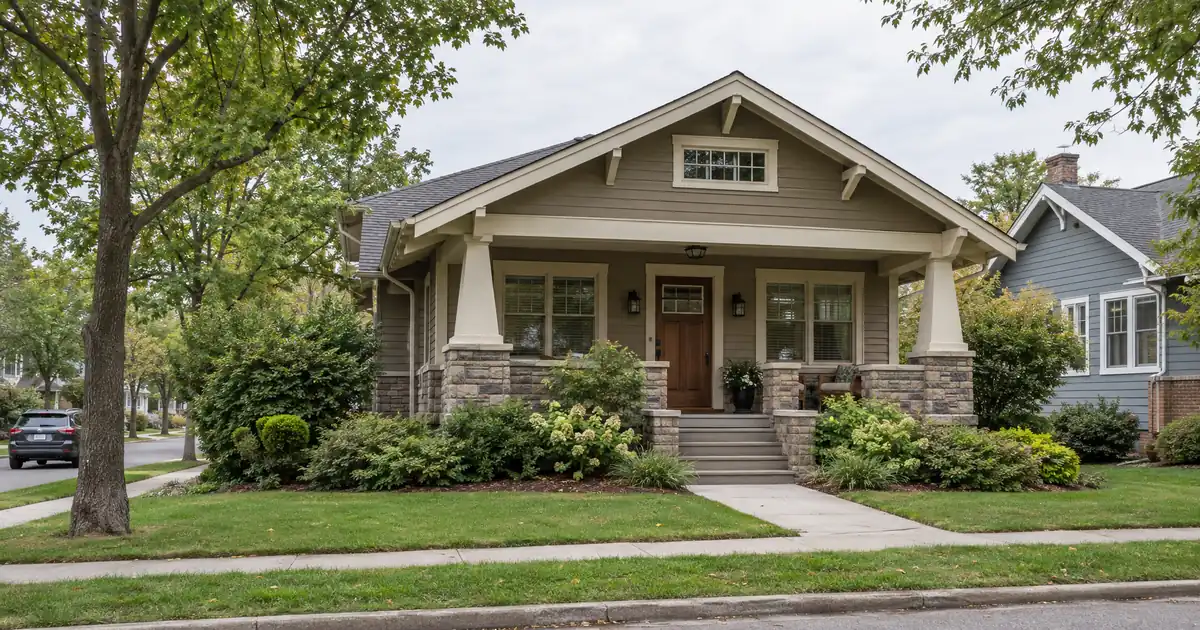
The Quick Read: Usually, yes: when the new loan is larger than the old payoff and the extra money goes to the other heirs, the refinance is treated as a cash-out, and having tenants in place does not change that label. The check goes to the heirs instead of to you, but the loan is still sized as cash-out, subject to lender guidelines.
- On a standard rental, cash-out refinances top out around 75% LTV across most of our network. Short-term-rental collateral is lower, at 70%.
- Lenders generally want about 6 months of seasoning, and the clock usually starts at the recorded deed.
- The rent must cover the new, larger payment. On many files, rent coverage limits the buyout before equity does.
- A deed moves title but not the debt. Only a payoff releases a departing heir from the old loan.
- Whether a lender can classify an heir buyout differently is lender-specific, so confirm before you build the deal around it.
Why a Buyout Is Called Cash-Out
A cash-out refinance replaces the current loan with a bigger one and pays the difference at closing. The label depends on the loan size against the old payoff. It does not depend on who receives the check.
DSCR Cash-Out Calculator
Run the cash-out numbers in your market
Rate source: Freddie Mac 30-yr average via FRED® — Federal Reserve Bank of St. Louis · effective Oct 8, 2026
Prefilled with starting assumptions — enter your property’s value, balance, taxes, and insurance for a more accurate picture.
Program parameters update from Lendmire’s centralized guideline source. Taxes and insurance are editable estimates.
As of Oct 8, 2026 · General Freddie Mac market benchmark, not a Lendmire loan offer. Property value, balance, taxes, and insurance are editable estimates. Maximum loan-to-value varies by lender, program, property type, and seasoning. Not a Loan Estimate, approval, or commitment to lend. Program availability and eligibility are subject to lender guidelines, credit approval, property review, and underwriting.
Picture two siblings who inherit a duplex with a loan still on it. One wants to keep the building and pay out the other. A new loan pays off the old one, pays the departing sibling, and covers closing costs. The new balance is larger than the old payoff. That is cash-out, even though the keeping sibling never touches the money.
Rate-and-term is the other category. It restructures the loan for a different term or payment and returns no cash. An equity payout to an heir pulls value out of the property, so it lands on the cash-out side. Across the wholesale network we place files with, most lenders underwrite it that way. A few may classify a documented structure differently. That varies by lender, so ask early.
If the rental has no mortgage, the answer is simpler. There is no old payoff to offset anything, so a new loan used to pay heirs is almost certainly cash-out.
Does a Tenant Change the Classification?
No. The tenant affects the rent evidence and the appraisal, not the label.
DSCR loans are designed for non-owner-occupied investment properties. Because they are business-purpose investor loans, they are reviewed differently from a standard owner-occupied mortgage. A tenanted rental fits that lane well. The lease and rent history are the income the lender looks at.
Here is what a tenant actually changes:
- Rent proof. The lender wants the lease and some rent evidence. An appraiser also supplies a market rent schedule, using the investment-property appraisal forms (Form 1007 for rent, Form 1025 for small income properties).
- Appraisal access. The appraiser has to get inside a lived-in unit. Give tenants notice and cooperate with scheduling.
- Lease continuity. The lease generally stays with the property. Have the buyout agreement say who collects rent and holds the security deposit during the transfer, and ask an attorney if the lease terms are unusual.
- Probate timing. If the estate is still open, rent collection and access can be muddled. Settle who manages the property before the lender asks.
A vacant property is not a problem either, but it removes the lease from the file. The lender then leans on the appraiser’s market rent.
Key Terms Defined
Cash-out refinance: a new loan larger than the old payoff, with the difference paid out at closing.
Rate-and-term refinance: a new loan that changes the rate, term, or lender and returns no cash.
LTV (loan-to-value): the loan amount as a percentage of the appraised value.
DSCR (debt service coverage ratio): monthly rent divided by the full monthly payment of principal, interest, taxes, insurance, and any HOA dues.
PITIA: that full monthly payment, the bottom half of the DSCR fraction.
Seasoning: the waiting period a lender wants between owning a property and cashing out of it.
Reserves: liquid savings a lender wants left after closing, often counted in months of PITIA.
Vesting: how title is held, such as individual heirs, an estate, a trust, or an LLC.
How the Deal Runs, Step by Step
1. Clean title first. Every heir must hold title in recorded form. A deed that still lists the decedent, or leaves out a co-owner, stalls the file. Heirs’ property often arrives with exactly this kind of clouded title, as a national assessment of heirs’ property records in the Agricultural and Resource Economics Review describes.
2. Appraise. The appraised value sets the maximum loan. It is also the sensible anchor for the buyout price.
3. Agree on a price. The heirs negotiate it, or a court sets it. A signed buyout agreement and a deed from the departing heirs are the usual paper trail.
4. Underwrite the rent. The lender divides rent by PITIA on the new, larger loan.
5. Size the loan. The new loan is capped at the cash-out LTV. From that, subtract the old payoff, closing costs, and any reserve funding. What remains funds the heirs.
6. Close. The title company pays off the old loan, pays the departing heirs, and records the deed.
Notice what is not on the list: a purchase. Inheritance is not a purchase, so purchase-based workarounds such as delayed financing do not fit. Whether a lender could underwrite a buyout as a purchase of an interest is lender-specific, and you should not plan around it.
Run the Percentages
These are modeled assumptions, not market data. Express everything as a share of the appraised value.
Say a rental appraises at 100% of value and the old loan is 40% of that value. Equity is 60%. Two equal heirs each own half, so buying one out costs 30% of value. The loan can reach 75% on a cash-out of a standard rental. That leaves 35% of value to cover the old payoff gap, closing costs, and the buyout. The 30% payout fits, though the closing costs make it tight.
Change one input. The old loan is 60% of value. Equity is 40%, and the sibling’s half is 20%. The loan ceiling leaves only 15% of value above the old payoff. The deal is short even before closing costs. The keeping heir has to bring cash, find a second source, or negotiate a smaller payout.
Rent is the second test. The same rent now sits against a bigger loan, so the coverage ratio thins. A file that cleared 1.20x on the old payment may land near 1.00x on the new one. Coverage of 1.00 is where many select programs start. A separate select-lender path takes coverage below 1.00, with leverage and terms adjusted.
Clearing 1.00 is also not the same as positive cash flow. Repairs, vacancy, management, utilities, and capital expenses sit outside the DSCR math. Budget for them separately.
The Scenarios Side by Side
| Situation | Likely label | What to watch |
|---|---|---|
| Rental with no loan | Cash-out | No old payoff to offset |
| Rental with a loan, heir paid | Cash-out | Payoff plus payout under 75% LTV |
| Title still in the estate | Cash-out, after title fix | Probate and recorded deed first |
| Title already in your name | Cash-out | Seasoning clock from recording |
The tenant does not change any row. Title, equity, and rent do.
Seasoning and the Inheritance Question
Most programs we place files with want about 6 months of ownership before a cash-out, measured from title recording. Seasoning is a lender rule, not a law, and each lender sets its own clock. On inherited property, the clock usually starts at the recorded deed. It does not start at the date of death, and it does not start at the closing date.
That makes the deed timeline a real planning item. If probate drags, or the deed is recorded late, the closing moves with it.
There is one useful contrast from the agency world. Freddie Mac’s special purpose cash-out refinance is a named product that lets an owner use proceeds to buy out a co-owner’s equity. It exists because that payout is otherwise treated as cash-out. A DSCR lender is not bound by it, and its terms do not carry over to your file. Some non-QM lenders follow agency logic on inheritance in spirit. Ask the lender what it will actually do.
When the Rule Bends
- Rate-and-term treatment. A lender may classify a documented structure differently. It varies by lender, and you should get the answer in writing before you rely on it.
- One heir buying out several. The cash-out logic is the same, with more signatures and releases. All co-owners generally need to agree.
- Unlocatable heir or clouded title. This usually needs a probate or court fix before any lender can proceed.
- Held in an LLC or trust. The entity papers and vesting are part of the file. An LLC can borrow on a DSCR cash-out, subject to program terms.
- A partner who holds only a note. That is a debt payoff, not a transfer of ownership, so it is not an heir buyout.
- A court-ordered buyout. Partition law can give co-owners a right to buy out the petitioner at appraised value before a forced sale. The American Bar Association reports that the Uniform Partition of Heirs Property Act is law in roughly two dozen states plus D.C., and some states have extended it to all partition actions.
The buyout window under partition is finite. If you might need that right, line up financing early.
Release of Liability
A deed moves title. It does not move the debt.
An heir who quitclaims their interest stays liable on the old loan until it is paid off. A cash-out that pays it off is what releases them. This matters to the heirs who are leaving, and it is a good selling point in the negotiation. Departing heirs often care about this more than about the price.
Other Ways to Fund the Buyout
| Route | Fit for a rental | Tradeoff |
|---|---|---|
| Investor cash-out refinance | Rent-based, business-purpose | Capped at 75% LTV on a standard rental |
| Estate or probate loan | Bridges until title is clear | Short-term, costlier |
| Equity line | Supplements a shortfall | Investment-property lines cap at $500,000 total |
| Bridge loan | Useful when seasoning is unmet | Needs a clear exit |
| Note between heirs | Keeps cash out of the deal | Departing heir stays exposed |
| Sell and split | No new debt | You lose the property |
A common pattern is a cash-out refinance plus a small second source when equity falls just short. Keep your total debt coverage in mind, because every added payment thins the ratio. Our piece on cash-out rules for a rental used long-term and as an Airbnb covers how the structure changes if the plan shifts from a lease to nightly stays.
What Lenders Look For
Across the network, a typical cash-out file looks like this, subject to lender guidelines:
- Leverage: about 75% LTV on a cash-out of a standard rental, 70% on short-term-rental collateral.
- Coverage: 1.00 is where many select programs start. Stronger ratios open better terms.
- Credit: a 620 floor exists in parts of the network, most programs want around 660, and 700 and up opens the strongest tiers.
- Reserves: commonly about 6 months of PITIA, stepping up to about 9 months on loans above $1,500,000.
- Loan size: up to $3,000,000 on standard programs.
- Property type: manufactured homes, log homes, and barndominiums are not offered.
A bigger down payment or equity stake can lift coverage, but it never erases the leverage cap, the credit floor, or the reserve rules. The strongest files clear both tests: enough equity and enough rent. Our complete DSCR loans guide walks through each of these in more detail.
Tax treatment can depend on how the funds are used and how the property is held; investors should keep clear records and speak with a qualified tax professional before relying on any deduction.
Common Mistakes
- Assuming the sibling’s check makes it not cash-out. The label follows the loan size, not the recipient.
- Counting on agency exceptions. They do not govern DSCR files.
- Starting the seasoning clock at the date of death. It often starts at the recorded deed.
- Skipping a signature. All co-owners generally need to agree, and a missing one can push you into partition.
- Forgetting the payoff costs. Closing costs and reserves come out of what is left for the heirs.
- Planning on rent that is not documented. Get the lease and rent evidence organized before the appraisal.
Questions to Ask Your Lender
- Will you underwrite an heir buyout as cash-out, and why or why not?
- When does your seasoning clock start on an inherited property?
- What is your cash-out LTV cap for this property type?
- How do you count rent: the lease, or the appraiser’s market rent?
- What reserves do you want on this loan size?
- What documents do you need from departing heirs?
Frequently Asked Questions
Does a paid-off inherited rental count as cash-out if I use the loan to pay heirs?
Almost certainly yes. With no old loan to pay off, every dollar above closing costs is proceeds, and lenders treat that as cash-out. Plan around the 75% LTV cap on a standard rental, plus the seasoning and reserve rules. Terms depend on the lender’s guidelines, the property type, the leverage, and a full review of the credit profile.
Do I need my tenants’ consent to refinance?
Generally not for the loan itself, because the lease stays with the property. You do need to give them notice for the appraisal and access. If the lease has unusual terms, run them past an attorney.
What if one heir will not sign?
You cannot close without every co-owner’s agreement. An unresolved heir can also trigger a partition action, which may set a court-supervised price. Where partition law gives co-owners a buyout right, the window is limited, so arrange financing early.
Can I use purchase leverage because I am buying someone out?
Usually not. Inheritance is not a purchase, and the heir already holds equity in the property. Some lenders may view a transfer differently, but that is lender-specific and should be confirmed in writing before you rely on it.
What if the rent does not cover the bigger payment?
Then the loan may need to shrink, which means a smaller payout or a second funding source. Coverage below 1.00 is available through select lenders in the network, with leverage and terms adjusted, but expect a tighter file.
Next Step
If you are buying or refinancing a rental property and want to see how the numbers work, Lendmire can help you compare DSCR loan options based on the property income, credit profile, leverage, and investor goals. Lendmire is a broker arranging financing through select lenders in its wholesale network across 41 markets, including Washington, D.C.; this is not a commitment to lend, and every file is underwritten individually.
For how equity extraction works on an investment property, see Lendmire’s guide to cash-out refinance on an investment property.
About Lendmire
Lendmire is a non-QM mortgage brokerage (NMLS# 2371349) arranging DSCR investor loans in 41 markets, including Washington, D.C., through wholesale and investor-lending channels. DSCR loans are evaluated by the lender on rental income rather than personal income, subject to lender guidelines — a fit for LLC-owned portfolios, self-employed investors, and operators scaling beyond conventional loan caps. Recognized as a Scotsman Guide Top Mortgage Workplace in 2025 and 2026.
Get Started
Ready to find the right loan for you?
In about 30 seconds you can review financing options available for your investment property. No commitment required.
Informational only. Not a Loan Estimate, approval, or commitment to lend. Program availability and eligibility are subject to lender guidelines, credit approval, property review, and underwriting.
References
1. Agricultural and Resource Economics Review: Relative Changes to Heirs’ Property
2. Freddie Mac Guide, Section 4301.6
3. American Bar Association, Probate & Property: Uniform Laws Update
This article is part of Lendmire’s investment property cash-out refinance program — full qualification details, guidelines, and scenarios live on the program page.
Related reading: DSCR Cash-Out Documentation When a Lease Expires During Refinance · How to Clear a Solar Lien on Your First Rental Before a DSCR Cash-Out · How to Keep a Standing HELOC on a Rental to Fund the Next Deal
Brandon Miller
Founder & CEO, Mortgage Loan Originator, Lendmire LLC
- Mortgage Loan Originator · NMLS# 1129696 · Verify on NMLS Consumer Access
- North Carolina Real Estate Broker · License# 343312 · Verify on NCREC
- North Carolina Insurance Producer · License# 19053198 · Property, Casualty, Life, Health · Verify on NAIC SBS
- Lendmire LLC · Firm NMLS# 2371349 · Verify firm licensure
Legal disclosures. Lendmire (NMLS# 2371349) is a state-licensed mortgage brokerage that arranges financing through wholesale lender relationships. Lendmire is not a direct lender, depository institution, or registered financial advisor. The discussion above is general informational content about real estate financing — it is not financial, legal, or tax advice, and readers should consult licensed professionals for guidance on their individual circumstances. Loan inquiries are subject to lender underwriting; this article does not represent a commitment to lend. Loan terms, rates, and qualification standards vary by borrower, property, and state, and are subject to change at any time. Equal Housing Opportunity. NMLS Consumer Access: nmlsconsumeraccess.org.