
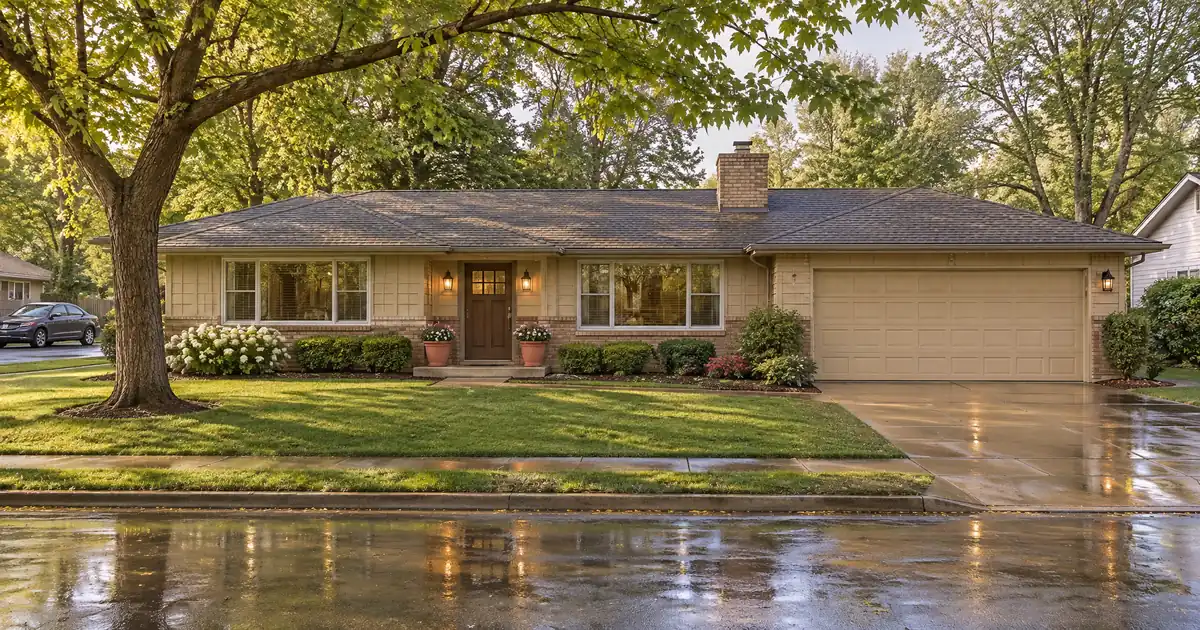
The Quick Read: A franchise owner qualifies for a bank statement home equity line the same way any self-employed borrower does. The line is secured by personal real estate, income is read from deposits, and the franchise brand plays no role in approval. Which provider fits depends on the property you pledge, your credit profile, and how much leverage you need.
- No franchise-only HELOC exists. Franchisors and the Small Business Administration do not approve or guarantee a home equity line.
- Lendmire is a broker and never the lender. It shops a network of wholesale HELOC lenders and matches your file to a program.
- Leverage depends on occupancy: an investment property tops out at 70% combined loan-to-value, while a primary residence or second home can reach 90% only at a 720 credit profile.
- Title must sit in your personal name or a revocable living trust. An LLC cannot hold title on this product.
- A newly opened franchise without deposit history may need a different income path.
What a Bank Statement HELOC Is
A HELOC is a revolving credit line secured by your property. A bank statement version reads your account deposits to establish income instead of leaning only on tax returns.
How large a line the equity supports.
An equity line is sized by combined loan-to-value, occupancy, and credit — not by rental coverage. Switch the occupancy or the credit band and the ceiling moves with it.
Investment-property lines require a 700 minimum credit score; second-home lines start at a 640 minimum and primary-residence lines at 600, and the combined-LTV ceiling steps down as the credit band drops on primary-residence and second-home lines and holds on investment-property lines; the line cap steps down on primary-residence lines and holds at every tier on investment-property and second-home lines.
A debt-to-income ratio above 45% requires 680+ credit. On the longer-runway program, profiles under 640 are limited to single-family homes. At least 75% of the approved line is drawn at closing. Ceilings, floors, and caps update from Lendmire’s centralized guideline source.
Rate assumption as of November 23, 2026.
Line estimate
Illustrative estimate only — not a quote, Loan Estimate, approval, or commitment to lend. The rate is an editable assumption; equity-line pricing is variable through both the draw and repayment periods and never converts to fixed. Occupancy and credit drive the ceiling together: an investment property tops out at 70% combined LTV (minimum credit 700, line cap $500,000); a second home tops out at 90% combined LTV (minimum credit 640, line cap $500,000), with the ceiling stepping down as the credit band drops (the cap holds at every tier); a primary residence tops out at 90% combined LTV (minimum credit 600), and its $750,000 maximum line is available only at 75% combined LTV or below with a 700-or-better credit profile (720 on the longer-runway program) and a full appraisal. Lines above $500,000 require a full appraisal. Credit, debt-to-income, property type, and full underwriting review all affect the final line.
Estimate only, not a loan offer or a commitment to lend. The rate is variable and can go up. The payment shown is interest only. Full calculator disclaimer.
Franchise owners fit this product for a practical reason. Depreciation and write-offs can shrink taxable income on a return while the business still moves real money through its accounts. Deposit-based underwriting looks at the cash that actually lands.
Two misconceptions come up often. The first is that the franchisor or the SBA has a say in the line. They do not. Approval rests on your equity, credit, and documented income. The second is that gross deposits count dollar for dollar. Business deposits are adjusted for operating costs before they become qualifying income.
How Underwriting Treats a Franchise Owner
The underwriter sees a self-employed borrower with a property. The franchise name, the store count, and the franchise agreement do not change the program rules. Here is how the deal works, step by step.
1. Property and occupancy are confirmed. The home you pledge is classed as a primary residence, second home, or investment property. That choice sets the credit floor, the leverage ceiling, and the maximum line.
2. Credit is pulled. The network uses a single-bureau score keyed to the primary wage earner. The report can be no more than 90 days old at closing, and rescores are not part of the process.
3. Income is verified electronically first. Across the network, income is checked through payroll-database matches and borrower-permissioned account connections. Document review is a fallback when those checks cannot confirm the figures. A hand-counted stack of statements is not the primary way a file is underwritten.
4. Debt-to-income is tested. The maximum is 50%, and 45% for credit profiles from 600 to 679. A ratio above 45% requires at least a 680 profile. The test uses the interest-only payment on the maximum draw, not your actual draw.
5. Value is established. Lines at or below $500,000 ordinarily run an automated valuation. Every line above $500,000 requires a full appraisal.
Two Programs, Two Structures
The network places HELOC files with two wholesale programs. Their draw structures differ, and so do some of their rules.
The first is the 3-year draw program, which this article calls the higher-leverage program. It runs a 3-year interest-only draw followed by a 17-year fully amortizing repayment. The second is the 5-year draw program, called the longer-runway program here. It runs a 5-year interest-only draw followed by a 25-year repayment.
The higher-leverage program pairs its shorter 17-year repayment with higher leverage limits. The longer-runway program spreads repayment over 25 years and offers lower leverage limits. On both, the interest rate is variable through the draw and repayment periods and never converts to fixed. At least 75% of the line is drawn at closing on both programs.
During an interest-only draw, payments cover accrued interest only, so the principal balance stays untouched until repayment begins. A franchise owner who borrows for expansion should plan for the day the payment steps up.
Which Providers Fit Depends on the Property You Pledge
The best program for your situation turns on occupancy more than anything else. The table below shows the strongest wholesale cell at each occupancy, and every figure is subject to lender guidelines and full file review.
| Occupancy | Credit floor | Max CLTV | Max line |
|---|---|---|---|
| Primary residence | 600 | 90% (720+ only) | $500,000 at 90% CLTV; $750,000 at 75% CLTV, 700+ (720 on the longer-runway program) |
| Second home | 640 | 90% (720+ only) | $500,000 |
| Investment property | 700 | 70% at every tier | $500,000 |
Combined loan-to-value (CLTV) adds your existing first mortgage and the new line, then divides by the property’s value. The ceiling shrinks as credit drops. On a primary residence, the 90% cell needs a 720 profile and a line up to $500,000. At a 640 profile, a primary residence reaches 80%. At 600, it reaches 60%.
The $750,000 line exists only on a primary residence. It requires a 700 credit profile or better (720 on the longer-runway program), caps at 75% CLTV, and requires a full appraisal.
On an investment property, the floor and the ceiling coincide. Eligibility starts at 700, and the cap is 70% CLTV at every eligible tier. A higher score buys eligibility, not leverage. A franchise owner who wants to pledge a rental should expect that ceiling.
A few state overlays apply. Tennessee shortens both repayment periods, and New Mexico and Ohio cap CLTV by credit tier. A property listed for sale, or listed in the past 60 days, is ineligible on the higher-leverage program everywhere. It is also ineligible on the longer-runway program in several states. HELOC availability runs through Lendmire’s 16 full-service states: AL, CA, CO, FL, GA, IN, MI, MT, NM, NC, OH, PA, TN, TX, VA, and WA.
How Business Deposits Count
Business-account deposit qualification opens at a 680 credit profile in this network. The two programs read that threshold differently. The longer-runway program admits a 680 score exactly and keeps a returns-based fallback. The higher-leverage program requires a score strictly above 680 and runs the electronic connection only, with no manual fallback.
Occupancy decides whether the gate matters. An investment line starts at 700, so the gate never binds there. It does bind for second-home borrowers between 640 and 679 and for primary borrowers below 680. Those borrowers qualify on personal deposits, payroll, or other documented income.
Self-employed files on the longer-runway program have additional paths. These include a permissioned connection to personal and business accounts, retrieval of two years of personal returns, or underwriter review of personal and business returns. Where a personal account is jointly owned, the joint owner is generally added as a co-borrower.
Franchise owners with a pay-yourself-a-salary structure sometimes have a simpler route through payroll. Lendmire’s piece Top Bank Statement HELOC Providers Without W-2s or Pay Stubs covers that side in detail.
Where the Rules Break for Franchise Owners
Four edge cases show up repeatedly in franchise files: a new location, title held in an LLC, co-owners on title, and property type.
A brand-new location. Deposit-based income needs a deposit history to analyze. A franchise open for only a short stretch gives the underwriter little to work with. The file may qualify on other documented income under the applicable program instead, subject to lender guidelines.
Title in an LLC. Many franchise owners hold property in an entity for liability protection. This product cannot close that way. Title must be held by the individual borrower or an inter vivos revocable living trust. LLCs, corporations, partnerships, and irrevocable, blind, or land trusts cannot hold title. A home already deeded to an LLC needs a vesting change before closing, or a DSCR cash-out refinance instead.
Co-owners on title. Everyone on title signs the security instrument, even if only some borrowers’ income and credit are used to qualify. The piece Top Bank Statement HELOC Providers Without Your Spouse or Co-Owner Signing explains how that plays out.
Property type. Eligible collateral includes single-family homes, 2-4 units, PUDs, townhomes, and condominiums, including non-warrantable condos. Manufactured homes, co-ops, condotels, log homes, commercial, mixed-use, and agriculturally zoned properties are not eligible.
Using the Line for a Franchise
The line is personal debt secured by your real estate. You draw the money and put it into the business as you choose, subject to the lender’s use-of-funds terms. Franchise fees, build-out costs, inventory, and partner buyouts are the common reasons borrowers ask. Which uses a given program permits depends on the program and the file.
Tax treatment can depend on how the funds are used and how the property is held; borrowers should keep clear records and speak with a qualified tax professional before relying on any deduction.
Equity is the starting point. A bank statement line lets a self-employed owner draw on the equity in a home without disturbing a first mortgage.
When a DSCR Loan Is the Better Route
A HELOC is a poor match for a franchise owner who holds rentals in entities or keeps adding properties. The product limits a borrower to three lines, and a borrower with more than 15 financed properties is not eligible. Investment lines also cap at 70% CLTV and $500,000.
A DSCR loan works differently. DSCR means debt service coverage ratio, which compares a property’s rent to its full monthly obligation (principal, interest, taxes, insurance, and any HOA dues). DSCR loans are designed for non-owner-occupied investment properties. Because they are business-purpose investor loans, they are reviewed differently from a standard owner-occupied mortgage. The loan is reviewed primarily on property-level rental income covering the payment, subject to lender guidelines.
A few DSCR parameters help for comparison. These are typical ranges across the network, not guarantees.
- On a purchase, most files land at 75% to 80% LTV.
- On a cash-out refinance of a standard rental, most programs top out around 75% LTV, with about six months of ownership typically expected before the loan is available.
- Credit floors start at 620 in parts of the network, and most programs want around 660. A 700 score or better unlocks the strongest leverage tiers.
- Coverage of 1.00 is where many select programs start. A separate select-lender path takes coverage below 1.00, with leverage and terms adjusted.
- Loan sizes reach up to $3,000,000 on standard programs, with smaller balances available through select lenders.
- Reserves vary by lender, leverage, and loan size, and commonly run around six months of PITIA (principal, interest, taxes, insurance, and association dues).
Clearing 1.00 is not the same as positive cash flow. Repairs, vacancy, management, utilities, and capital expenses sit outside the calculation. LLC-titled properties can be financed, subject to lender program eligibility. The complete DSCR loans guide walks through the full structure.
Key Terms Defined
Combined loan-to-value (CLTV): the total of all loans against a property, divided by its value.
Interest-only draw: the period when payments cover interest alone and the principal balance does not fall.
Vesting: the legal form in which title to the property is held, such as an individual name or a revocable trust.
Automated valuation: a computer-generated property value used instead of a traditional appraisal on smaller lines.
Non-QM: a loan that qualifies outside standard agency guidelines, often using alternative income documentation.
DSCR: the ratio of a property’s rent to its full monthly obligation.
For deeper background on the mechanics discussed here, see HousingWire.
Frequently Asked Questions
Is there a HELOC made specifically for franchise owners?
No. Franchise owners use the same bank statement and self-employed paths as other business owners. The franchise brand, the franchisor, and the storefront do not enter the approval. The line rests on your property equity, credit profile, and documented income.
Can my franchise LLC hold title to the home I pledge?
No. This product requires title in your individual name or a revocable living trust, and entities cannot hold title. If the property is already in an LLC, it needs a vesting change before closing. A DSCR cash-out refinance is the usual alternative for entity-held rentals.
What if my franchise just opened?
A newly opened location has little deposit history, so deposit-based income may be thin. Qualification may run on personal deposits, payroll, or other documented income under the applicable program, subject to lender guidelines. A broker can match the file to the program whose income path fits.
Do business accounts count toward income?
They can, with a credit profile of 680 or better. The longer-runway program admits a 680 score exactly. The higher-leverage program requires a score above 680. Investment-property lines start at 700, so that threshold does not limit them.
How much can I borrow against a rental?
The ceiling on an investment property is 70% combined loan-to-value at a 700 credit profile or better, with a line up to $500,000. That limit applies to every eligible credit tier. Existing mortgage balances count toward the combined figure.
Next Steps
If you are considering a home equity line and want to see how the numbers work, Lendmire can help you compare HELOC options based on the property, the equity available, credit profile, combined leverage, and your goals. Lendmire is a broker that arranges financing through select lenders in its wholesale network, with HELOC lines in 16 full-service states and DSCR investor loans across 41 markets, including Washington, D.C. Every figure above is subject to lender guidelines and full file review, and nothing here is a commitment to lend.
Franchise growth and equity decisions often run on the same calendar, so the useful question is which property you pledge and how it is titled before any lender is chosen.
About Lendmire
Lendmire, LLC, NMLS# 2371349, is a mortgage brokerage that arranges home equity lines of credit through wholesale lending partners in its 16 full-service states. Lines on primary residences, second homes and investment properties are each reviewed individually by the lender under the program’s occupancy, credit and combined-loan-to-value guidelines. Scotsman Guide named Lendmire a Top Mortgage Workplace in both 2025 and 2026.
Get Started
Ready to find the right loan for you?
See your offer in seconds. No credit pull, no obligation.
Informational only. Not a Loan Estimate, approval, or commitment to lend. Program availability and eligibility are subject to lender guidelines, credit approval, property review, and underwriting.
References
1. HousingWire
This article is part of Lendmire’s bank statement HELOC program — full qualification details, guidelines, and scenarios live on the program page.
Related reading: Bank Statement HELOC Lenders for Franchise Owners · Best Bank Statement HELOC Program for a Franchise · Can a Self-Employed Owner Use a Bank Statement HELOC for a Franchise? · Top Bank Statement HELOC Providers Without Your Spouse on the Loan · Top Bank Statement HELOC Providers When You Need Approval Quickly
Brandon Miller
Founder & CEO, Mortgage Loan Originator, Lendmire, LLC
- Mortgage Loan Originator · NMLS# 1129696 · Verify on NMLS Consumer Access
- North Carolina Real Estate Broker · License# 343312 · Verify on NCREC
- North Carolina Insurance Producer · License# 19053198 · Property, Casualty, Life, Health · Verify on NAIC SBS
- Lendmire, LLC · Firm NMLS# 2371349 · Verify firm licensure
Compliance and disclosures. Lendmire, LLC (NMLS# 2371349) is a licensed mortgage broker and is not a direct lender, depository institution, financial advisor, or tax professional. Content in this article is general market analysis and educational information — not financial, legal, or tax advice for any specific situation. Lendmire does not guarantee loan approval; every transaction is subject to underwriting by the funding lender. Mortgage pricing and loan program guidelines are subject to change at any time without notice and vary by borrower characteristics, property type, and state regulations. Lendmire complies with Equal Housing Opportunity. Licensure verification: NMLS Consumer Access.