
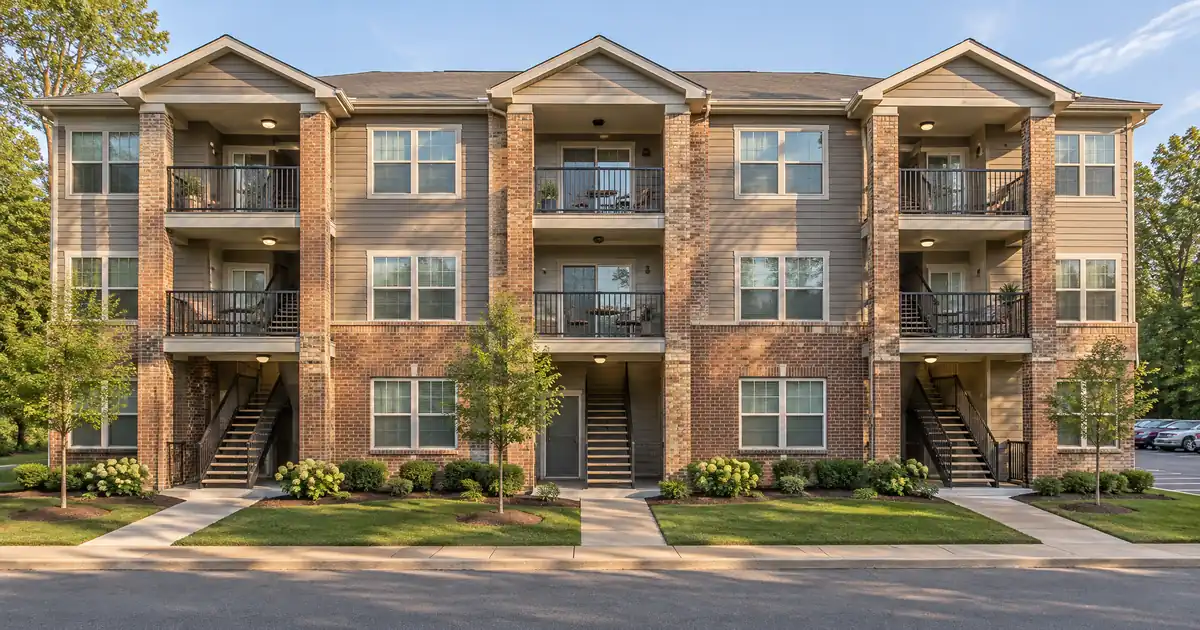
The Quick Read: The right provider depends on three things: whether you live in the building, whose name is on title, and how the lender counts income. One empty unit rarely disqualifies a duplex, triplex, or fourplex by itself. It mostly changes how much rental income a lender can document.
- Live in one unit: Treated as a primary residence, which unlocks the highest leverage tiers.
- Own it as a pure rental: The network’s investment lines cap at 70% combined loan-to-value, with a 700 minimum credit profile.
- Title in an LLC: A home equity line is off the table unless the property is deeded to you or a revocable trust. A DSCR cash-out refinance is the usual alternative.
- Choosing a lender: The best provider for your situation depends on the file. A broker that shops several wholesale lenders matches the scenario to the program.
Lendmire is a mortgage broker, not a lender. It works with a network of wholesale HELOC lenders and does not rank or name companies. What follows is how those lenders look at a partly vacant 2-4 unit building, so you can see which kind of program fits before anyone pulls your credit.
How large a line the equity supports.
An equity line is sized by combined loan-to-value, occupancy, and credit — not by rental coverage. Switch the occupancy or the credit band and the ceiling moves with it.
Investment-property lines require a 700 minimum credit score; second-home lines start at a 640 minimum and primary-residence lines at 600, and the combined-LTV ceiling steps down as the credit band drops on primary-residence and second-home lines and holds on investment-property lines; the line cap steps down on primary-residence lines and holds at every tier on investment-property and second-home lines.
A debt-to-income ratio above 45% requires 680+ credit. On the longer-runway program, profiles under 640 are limited to single-family homes. At least 75% of the approved line is drawn at closing. Ceilings, floors, and caps update from Lendmire’s centralized guideline source.
Rate assumption as of November 23, 2026.
Line estimate
Illustrative estimate only — not a quote, Loan Estimate, approval, or commitment to lend. The rate is an editable assumption; equity-line pricing is variable through both the draw and repayment periods and never converts to fixed. Occupancy and credit drive the ceiling together: an investment property tops out at 70% combined LTV (minimum credit 700, line cap $500,000); a second home tops out at 90% combined LTV (minimum credit 640, line cap $500,000), with the ceiling stepping down as the credit band drops (the cap holds at every tier); a primary residence tops out at 90% combined LTV (minimum credit 600), and its $750,000 maximum line is available only at 75% combined LTV or below with a 700-or-better credit profile (720 on the longer-runway program) and a full appraisal. Lines above $500,000 require a full appraisal. Credit, debt-to-income, property type, and full underwriting review all affect the final line.
Estimate only, not a loan offer or a commitment to lend. The rate is variable and can go up. The payment shown is interest only. Full calculator disclaimer.
Key Terms Defined
- HELOC: A home equity line of credit, a revolving line secured by a property that you borrow against in a draw phase and repay in a repayment phase.
- CLTV (combined loan-to-value): Your first mortgage balance plus the new line, divided by the property’s appraised value.
- Draw period: The stretch when you can borrow from the line, usually paying interest only.
- Vesting: The legal name that holds title, such as an individual, a trust, or an LLC.
- Form 1025: The appraisal report used for 2-4 unit income properties. It estimates market rent for every unit.
- DSCR: Debt service coverage ratio, meaning the property’s rent compared with its full monthly housing obligation.
- Subordination: A second-lien lender’s agreement to stay in second position if you later refinance the first mortgage.
Why Do Most Big Banks Pass on This Property?
Large retail lenders tend to avoid equity lines on non-owner-occupied rentals. Investor education platforms such as BiggerPockets describe landlords struggling to find banks willing to write a line on a rental they do not live in. A vacant unit adds another question mark to a file that was already harder to place.
That is the gap a broker fills. Wholesale lenders each set their own credit box. One may accept 2-4 unit buildings and another may not. One may allow a trust on title and another may require your personal name. Shopping the file across that network matters more than any single brand name.
How Does Occupancy Change Which Program Fits?
Occupancy is the first fork. If you live in one of the units, the building is a primary residence. If you rent every unit, it is an investment property. The network’s ceilings differ sharply between the two.
On a primary residence, the ceiling is 90% CLTV. That figure exists only at a 720 or better credit profile and a line up to $500,000. Lower tiers step down: 85% CLTV at 660 through 700, and 80% at 640. The network’s largest line, up to $750,000, is primary-residence only. It requires a 700 or better credit profile (720 on the longer-runway program described below), caps at 75% CLTV, and requires a full appraisal.
On an investment property, the ceiling is 70% CLTV at every eligible tier. The minimum credit profile is 700, and the maximum line is $500,000. A 740 score buys no extra leverage on an investment line. It only confirms you are eligible.
Two draw structures sit behind these numbers. The higher-leverage program uses a 3-year interest-only draw followed by a 17-year repayment. The longer-runway program uses a 5-year interest-only draw followed by a 25-year repayment. Investment lines run on the longer-runway program only. On both, the rate is variable through the draw and repayment, and at least 75% of the line is drawn at closing. All figures are typical ranges subject to lender guidelines and full file review.
Home equity lines are available in Lendmire’s 16 full-service states, a narrower footprint than the 41-market DSCR footprint. The broker must hold a license where the property sits.
How Does One Vacant Unit Change the Underwriting?
On these home equity lines, income is judged mostly on you, not the building. The file is tested against a 50% maximum debt-to-income ratio, calculated on the interest-only payment at the maximum draw. Income is verified electronically first, with document review as a fallback. A vacant unit mainly matters in two places.
Rental income. The longer-runway program accepts documentable rental income by lease or tax return. An empty unit has no lease, so it adds nothing until you sign a tenant. If your prior-year tax return shows stable rent, the turnover may matter less. Lenders differ here, which is why the match matters.
Valuation. Lines at or below $500,000 ordinarily run on an automated valuation, and you can request a full appraisal. A full appraisal on a 2-4 unit property normally uses Form 1025, which values the building and estimates market rent for each unit, occupied or vacant. The form requires interior photos of kitchens and bathrooms. A clean unit between tenants reads as routine turnover.
Duplex, Triplex, or Fourplex: Does Unit Count Matter?
Unit count sets how much one empty door weighs. Picture a duplex with one unit empty. Half the building has no lease, so documented rent drops by roughly half. Now picture a fourplex with one empty unit. Three of four units still produce documented rent, so the vacancy is about a quarter of the building.
On a DTI-based line, that difference shows up as how much rent offsets your debts. On a DSCR cash-out refinance, it shows up directly in the coverage ratio. A DSCR is simply rent compared with the full monthly obligation. Coverage of 1.00 is where many select programs start. A separate select-lender path goes below 1.00, with leverage and terms adjusted. Clearing 1.00 is not the same as positive cash flow, because repairs, vacancy, and management sit outside the ratio.
Smaller buildings are more exposed because one door is a bigger share of the income. That is a general pattern, not a rule that a duplex cannot qualify.
Which Path Fits Which Owner?
| Path | Title allowed | Income test | One vacant unit |
|---|---|---|---|
| Primary-residence line | Individual or revocable trust | Personal income, DTI | Unit adds no rent until leased |
| Investment-property line | Individual or revocable trust | Personal income, DTI | Same; 70% CLTV cap |
| DSCR cash-out refinance | LLC allowed, per program terms | Rent vs. full payment | Counts against coverage |
| Line on your own home | Individual or revocable living trust | Personal income, DTI | Not affected |
A few of these deserve a fuller look.
Personal-income line on the building. If your own income carries the debt, an empty unit is a small factor. You are the borrower, and the property is the collateral. The tradeoff is that your tax returns and debts drive the answer.
DSCR cash-out refinance. This replaces your first mortgage. It tops out around 75% LTV on a cash-out refinance of a standard rental, and about 6 months of seasoning is the common expectation. Seasoning is the waiting period you must own the property before refinancing. Sub-1.00 coverage is available through select lenders in the network, with leverage and terms adjusted. The tradeoff is giving up the first mortgage you already have. Each figure is subject to lender guidelines and a complete review of property type, leverage, and credit.
A line on your own home. If you own a primary residence separate from the vacant building, equity there may fund the rehab or a down payment. It sits at primary-residence leverage tiers and carries no vacancy issue at all.
For the full picture of how DSCR loans work, see the complete DSCR loans guide.
Where the Rules Break
LLC title. Entity vesting is not available on these lines at all. Limited liability companies, corporations, partnerships, and irrevocable, blind, or land trusts cannot hold title. A rental already deeded to an LLC needs a vesting change before closing, or a DSCR cash-out instead. That is the sharpest structural difference between a HELOC and a DSCR loan. Any DSCR loan to an LLC remains subject to lender program eligibility.
A gutted unit. A unit torn down to framing is a different case from one between tenants. Appraisers photograph kitchens and baths, and lenders generally want habitable collateral. Many investors open the line before demolition starts, or fund the rehab from equity elsewhere.
A recent listing. A property listed for sale, or listed within the past 60 days, is ineligible everywhere on the higher-leverage program. It is also ineligible on the longer-runway program in Indiana, North Carolina, Pennsylvania, Tennessee, Texas, and Washington.
Portfolio size. A borrower is limited to three lines and cannot own more than 15 financed properties. Growing portfolios often hit that wall and move to DSCR structures.
Property type. Two- to four-unit buildings are eligible, and the longer-runway program wants a 640 minimum credit profile for them. Manufactured homes, log homes, barndominiums, mixed-use, and agricultural-zoned properties are not offered.
Texas primary residences. These cap at 80% combined loan-to-value on the higher-leverage program. Second homes and investment properties follow their normal tables.
Line freezes and later refinances. A lender can freeze or reduce an open line if value drops materially or your finances change, as federal home equity rules allow. Do not treat an undrawn line as your only cushion for a rehab. A second-lien holder may also refuse to subordinate when you later refinance the first mortgage. The federal three-business-day right to cancel applies only when the line is secured by your principal residence, not a second home or investment property.
What Does the Decision Look Like in Practice?
Consider a triplex owner who lives in one unit and has a second unit vacant for repainting. Credit sits in the 700s. This is a primary-residence file, and the leverage tiers above apply. The empty unit lowers documented rent but not eligibility.
Now take a landlord who holds a fourplex in an LLC, with one unit mid-rehab. The home equity line is out unless title moves into the owner’s name or a revocable trust. Otherwise the file shifts to a DSCR cash-out. There, the three leased units carry the coverage ratio, and the rehab unit may be underwritten at market rent or excluded, depending on the program.
A few steps help in either case:
1. Decide first whether you will occupy a unit or rent all of them.
2. Confirm how title is held.
3. Gather leases for occupied units.
4. Check your credit tier against the ceilings above.
5. Where possible, sign a tenant for the empty unit before the valuation.
Program details change, and every file is underwritten individually.
Frequently Asked Questions
Can I get a HELOC if one unit in my duplex is vacant?
Often yes, if the rest of the file fits. On the network’s lines, your personal income and credit carry the test. The empty unit simply adds no documented rent until it is leased. Occupancy and title still decide which program applies.
Does it matter if I plan to move into the vacant unit?
Yes. Living in the building makes it a primary residence, which opens higher leverage tiers than an investment property. On primary residences the ceiling reaches 90% CLTV at a 720 or better credit profile. On investment properties it stops at 70%. The lender’s occupancy review applies either way.
Will a unit under renovation block approval?
It can block approval, since a unit that is torn out or unlivable often draws repair conditions, and lenders generally want habitable collateral. A clean unit between tenants is treated as ordinary turnover. Opening the line before demolition begins avoids the problem.
My building is in an LLC. What are my options?
Home equity lines require title in your name or a revocable trust. You can change vesting before closing, or look at a DSCR cash-out refinance. Whether an LLC borrower qualifies is subject to lender program eligibility.
Is a DSCR cash-out better than a HELOC on a partly vacant building?
Neither is better in general. A HELOC keeps your existing first mortgage but ties the answer to your personal income and title. A DSCR cash-out replaces the first loan and tests the property’s rent. Which fits depends on your credit, equity, title, and goals.
If you are considering a home equity line and want to see how the numbers work, Lendmire can help you compare HELOC options based on the property, the equity available, credit profile, combined leverage, and your goals. Reach the team at 828-256-2183 or request a quote.
Whatever the building’s vacancy, a partly empty multi-unit is easiest to finance once the occupancy, title, and income path are settled before anyone orders a valuation.
About Lendmire
Lendmire, LLC — NMLS# 2371349 — is a mortgage broker that arranges home equity lines of credit in its 16 full-service states through wholesale lenders, on primary residences, second homes and investment properties. Every line is subject to the lender’s guidelines and full underwriting. Scotsman Guide named Lendmire a Top Mortgage Workplace in both 2025 and 2026.
Get Started
Ready to find the right loan for you?
See your offer in seconds. No credit pull, no obligation.
Informational only. Not a Loan Estimate, approval, or commitment to lend. Program availability and eligibility are subject to lender guidelines, credit approval, property review, and underwriting.
References
1. BiggerPockets: How to Get a HELOC on Investment Property
2. Consumer Financial Protection Bureau: Regulation Z, 12 CFR § 1026.40
This article is part of Lendmire’s HELOC & home equity loan program — full qualification details, guidelines, and scenarios live on the program page.
Related reading: Can You Get a HELOC on a Duplex With One Unit Vacant? · Top HELOC Providers on a Duplex When You Rent the Other Unit · Top HELOC Providers on a Fourplex When You Live in One Unit · Top HELOC Providers for an Accessory Dwelling Unit · Best HELOC Program on a Multi-Unit Home With One Unit Vacant
Brandon Miller
Founder & CEO, Mortgage Loan Originator, Lendmire, LLC
- Mortgage Loan Originator · NMLS# 1129696 · Verify on NMLS Consumer Access
- North Carolina Real Estate Broker · License# 343312 · Verify on NCREC
- North Carolina Insurance Producer · License# 19053198 · Property, Casualty, Life, Health · Verify on NAIC SBS
- Lendmire, LLC · Firm NMLS# 2371349 · Verify firm licensure
Legal disclosures. Lendmire, LLC (NMLS# 2371349) is a state-licensed mortgage brokerage that arranges financing through wholesale lender relationships. Lendmire is not a direct lender, depository institution, or registered financial advisor. The discussion above is general informational content about real estate financing — it is not financial, legal, or tax advice, and readers should consult licensed professionals for guidance on their individual circumstances. Loan inquiries are subject to lender underwriting; this article does not represent a commitment to lend. Loan terms, rates, and qualification standards vary by borrower, property, and state, and are subject to change at any time. Equal Housing Opportunity. NMLS Consumer Access: nmlsconsumeraccess.org.