
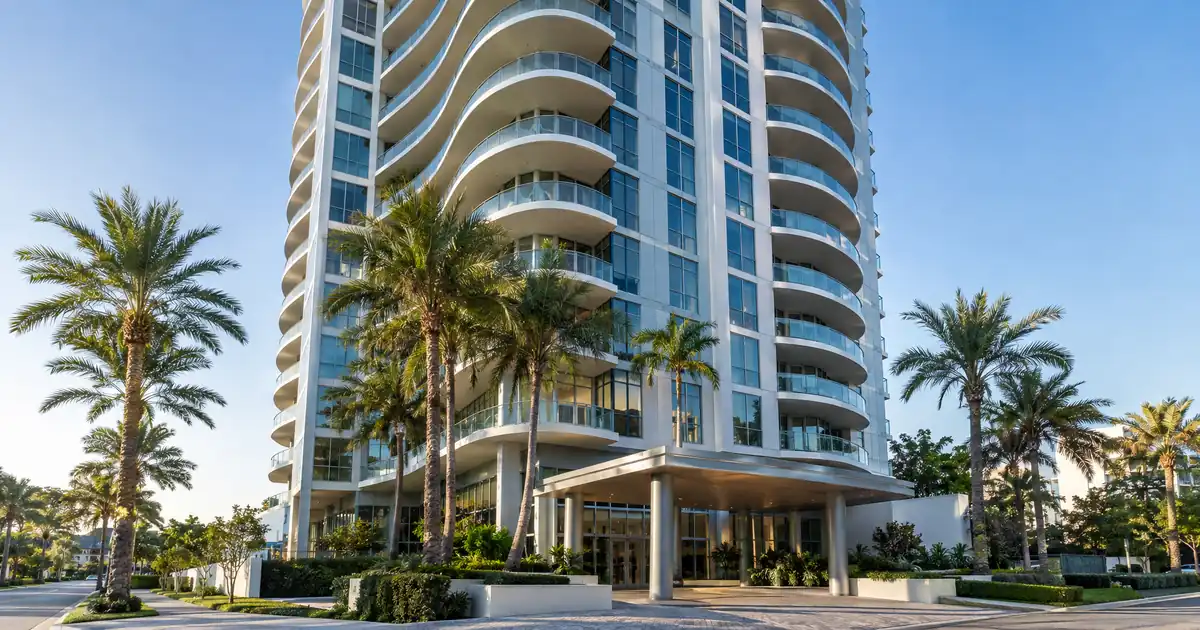
Trust-held Condo Qualify For A Super Jumbo — The Quick Read: Yes. A condo held in a trust can qualify for a super jumbo DSCR loan, because the trust and the condo are two separate underwriting questions, not one combined roadblock. The lender checks whether the trust can legally pledge the unit, then checks whether the condo itself — warrantable or not — fits the leverage ceiling for its type. Neither one disqualifies the file on its own.
That’s the short version. Here’s what actually happens in underwriting, where trusts run into real friction, and what a condo’s classification does to your leverage on a large loan.
DSCR Calculator
Run the numbers in your market
Rate source: Freddie Mac 30-yr average via FRED® — Federal Reserve Bank of St. Louis · effective Sep 17, 2026
Prefilled with local estimates — enter your own rent or nightly figures, taxes, insurance, and HOA for a more accurate picture.
Program parameters update from Lendmire’s centralized guideline source. Taxes and insurance are editable estimates.
As of Sep 17, 2026 · General Freddie Mac market benchmark, not a Lendmire loan offer. Rent, nightly rate, occupancy, taxes, and insurance are editable estimates. Short-term rental figures are estimates only and vary significantly by season, property type, management approach, and local short-term-rental rules — confirm local regulations before relying on them. Qualifying income for short-term rentals varies by program — some use appraisal market rent, others use documented STR history or projections — and is confirmed in underwriting. Not a Loan Estimate, approval, or commitment to lend. Program availability and eligibility are subject to lender guidelines, credit approval, property review, and underwriting.
What A DSCR Loan Even Checks
A DSCR loan (debt-service coverage ratio loan) is reviewed around the property’s rental income, not your traditional personal-income documentation or W-2s. The lender divides the property’s monthly rent by its full monthly housing cost — principal, interest, taxes, insurance, and any HOA dues — to get a coverage ratio. A ratio at or above 1.00 means the rent covers the payment.
Because DSCR loans are non-QM (non-qualified mortgage) and non-agency, the lender never has to satisfy Fannie Mae or Freddie Mac’s rules on the borrowing entity or the property. That single fact is why trusts and non-warrantable condos, which routinely get rejected by conventional lenders, are both fair game here.
Does Trust Ownership Block DSCR Qualification?
No. Entity vesting — including trusts — is accepted across most of Lendmire’s wholesale network, subject to program eligibility, though layered structures like an LLC owned by a trust owned by another LLC generally aren’t supported on a single file. The trust question and the condo question get answered separately, in sequence, not stacked into one bigger problem.
Underwriters look at trust type, settlors, trustees, beneficiaries, borrowing powers, and vesting before the deal works any further. They need to know if the trust is revocable or irrevocable, who has signing authority, and whether the trustee can legally encumber this specific unit.
Title and settlement carry the real weight here. The title company has to confirm the trust is valid, the trustee has authority, and the trust can legally pledge the property before it will issue a policy. In practice, that’s usually done with a certification of trust rather than handing over the entire trust document — a mechanism built into most states’ adoption of the Uniform Trust Code. The certificate has to be signed by every trustee, confirm the trust hasn’t been revoked or amended in a way that changes its terms, and identify the settlor, trustee, and the trustee’s powers — all without exposing the private terms of the trust. Lender counsel and the title company rely on that certificate to close, and it protects the family’s privacy at the same time. Lewis Rice breaks down exactly what a compliant certificate needs to contain.
Does Condo Warrantability Block Approval?
No — non-warrantability caps your leverage, it doesn’t kill the deal. Non-warrantable is a Fannie Mae and Freddie Mac label meaning a building doesn’t meet the rules for being sold on the secondary market. A DSCR lender that never intended to sell your loan to an agency doesn’t care about that label the way a conventional lender does.
Within Lendmire’s super jumbo network, both warrantable and non-warrantable condos are eligible property types. The difference shows up in the numbers: non-warrantable condo financing tops out at 75% loan-to-value and a $1,500,000 loan amount, typically. Condotels are tighter still — 75% on a purchase, 65% on a refinance, also capped near $1,500,000, with a documented cash-in-hand requirement around $250,000 on refinance transactions, on most files.
That matters for deal sizing. An investor eyeing a $2 million non-warrantable condo held in trust needs to know upfront that leverage caps out well below the loan’s headline size. A deal above that ceiling generally needs a bigger down payment, a different property classification, or a straight rethink of the unit type.
Non-warrantability isn’t one thing, either. The label gets applied for a long list of reasons — investor concentration, pending litigation, delinquent HOA dues, short-term rental concentration in the building, commercial space mixed into the project. Some of those reasons only matter to a conventional lender chasing agency eligibility. Others, like litigation exposure or a structurally troubled building, matter to any lender because they affect the collateral itself. A DSCR underwriter can look past the first category while still caring a great deal about the second.
How Leverage Actually Steps Down By Size
Loan size drives leverage more than anything else on a super jumbo DSCR file, and it steps down in stages rather than one flat cutoff. Here’s how the ladder typically runs across Lendmire’s network:
| Loan Amount | Purchase LTV | Cash-Out LTV | Credit Floor |
|---|---|---|---|
| $150K–$1M | 80% | 75% | 660+ |
| $1M–$1.5M | 75% | 70% | 700+ |
| $1.5M–$3M | 75% | 60% | 720+ |
| $3M–$4M | 65% | none | 700+ |
| $4M–$10M | 60% | none | 700+, case-by-case |
Above $4,000,000, every request gets reviewed case by case before submission — purchase and rate-and-term only, no cash-out. Cash-out itself runs out above $3,000,000 regardless of the property or the vesting entity. None of this changes because the borrower is a trust; the ladder is identical for an individual, an LLC, or a trust holding title.
Coverage ratio also affects where you land on that ladder. A property clearing 1.00x DSCR or better earns full leverage at its size tier. Coverage between 0.75x and 0.99x is a real path through select programs up to $2,000,000, but leverage and terms adjust downward, subject to underwriting. No-ratio qualification exists too, up to $2,000,000 through a handful of lenders in the network, generally requiring a seven-year clean housing history and no late payments over the last two years — though leverage on those files runs tighter, subject to underwriting.
Revocable Vs. Irrevocable: Where Trusts Actually Diverge
A revocable trust behaves like individual ownership for underwriting purposes; an irrevocable trust does not, and lender appetite splits sharply. With a revocable living trust, the settlor usually retains full control, and the lender’s risk profile looks close to a normal individual borrower.
Irrevocable trusts are different animals. The trustee applying for the loan may not be the beneficial owner. The trust’s own terms might restrict borrowing or encumbering assets. Foreclosure on trust-held property can get legally messier. Some lenders in the network won’t touch irrevocable trusts at all. Others will, but they add requirements — a trustee personal guaranty, an attorney opinion letter confirming the trust actually has authority to borrow. This is exactly why our team asks about trust type on day one of a file, before anyone spends time on comps or appraisal ordering.
Land trusts are a separate animal entirely, common in states like Illinois and Florida mostly for privacy reasons. Title sits with the land trust while a separate beneficiary — usually the investor or their LLC — actually controls the property. Most DSCR programs will work with a land trust, but the lender underwrites the beneficiary as the effective borrower, not the trust itself. Land trusts don’t add much asset protection; they’re a privacy tool, and lenders treat them that way.
One more wrinkle worth flagging: some programs prefer closing in the investor’s individual name with a same-day or later transfer into the trust, rather than closing directly in the trust’s name. Both approaches show up across the non-QM space, and which one a given lender allows depends entirely on that lender’s own program rules.
What Documents Actually Move The File
Across our wholesale network, the trust review happens before the appraisal even gets ordered — it’s cheaper to find a trust problem on day one than after paying for two appraisals. On loans above $2,000,000, two appraisals are typically required regardless of vesting. Appraisers still use the standard Fannie Mae rent forms even on a non-agency file — Form 1007 for a single unit, Form 1025 for 2-4 unit properties — simply because every appraiser already knows how to fill them out, not because the loan is agency-eligible.
Reserves scale with loan size independent of vesting. Standard reserve requirements typically run around 6 months of PITIA on the subject property (interest, taxes, and insurance only if the loan is interest-only), stepping up to 12 months for first-time investors. An investor can hold up to 20 financed properties in the network without extra reserve requirements piling up against the rest of the portfolio.
Interest-only structuring is common on larger balances: a 120-month interest-only period on 30- and 40-year terms, up to 75% LTV, requiring coverage of roughly 0.75x or better, qualified on the interest-only payment. Every figure here varies by lender and program — guidelines, property type, leverage, and credit profile all apply.
Does This Change How The Loan Is Taxed?
Not for a revocable trust — rental income still runs through the owner’s personal return, because a revocable living trust is disregarded for tax purposes. Tax treatment can depend on how the funds are used and how the property is held, so investors should keep clear records and speak with a qualified tax professional before relying on any deduction.
Why This Loan Isn’t Treated Like A Consumer Mortgage
DSCR loans are designed for non-owner-occupied investment properties. Because they’re business-purpose investor loans, they’re reviewed differently from a standard owner-occupied mortgage. Under Regulation Z, credit extended to acquire, improve, or maintain a rental property that isn’t owner-occupied is treated as a business-purpose transaction, regardless of unit count. That’s the federal doctrine that lets these loans close in a trust or an LLC in the first place, and it’s why they sit outside the disclosure timelines that apply to a consumer mortgage.
DSCR vs. conventional financing
Two common ways to finance an investment property in this market. They qualify you differently — here’s how investors weigh them.
Why investors choose it
- Qualifies on the property’s rental income — no personal tax returns, W-2s, or pay stubs needed to document income.
- No personal debt-to-income ceiling to clear, so existing mortgages and obligations don’t cap your borrowing the same way.
- Can be closed in an LLC, keeping the property inside a business entity.
- Built for scaling — not held to the limit on number of financed properties that conventional financing applies.
- Underwriting centers on the deal: generally qualifies when the rent covers the payment, a 1.00x coverage ratio being a common baseline (confirmed in underwriting).
- Designed specifically for investment property, including long-term and, where the program allows, short-term rentals.
Where it’s strong
- Often the lowest ongoing financing cost for a buyer who fully qualifies on personal income — a fit for a first property or a cost-first purchase.
Trade-offs for investors
- Requires full personal income documentation and must fit within a debt-to-income limit — salary, existing debts, and other mortgages all count.
- Typically held in your personal name rather than a business entity.
- Caps how many financed properties you can carry, which can become a ceiling as a portfolio grows.
- Evaluates you as a borrower as much as the property, which usually means more paperwork.
How investors usually choose: a first or single property often optimizes for the lowest financing cost; portfolio builders often optimize for leverage, vesting in an LLC, and scaling past conventional caps. The right answer depends on your goals, the property, and current guidelines — both paths run through select lenders in Lendmire’s wholesale network, with eligibility and terms confirmed in underwriting.
Three Things Investors Get Wrong
Trust ownership doesn’t automatically disqualify a file — that’s a conventional-lender posture, not a DSCR one. Most conventional lenders balk at trust ownership and demand a transfer to individual names before closing; DSCR underwriting doesn’t require that.
Non-warrantable doesn’t mean unfinanceable. Investors frequently walk away from a deal the moment a conventional lender flags a building as non-warrantable — even when the location is right, the numbers pencil, and the HOA allows rentals. The label describes secondary-market eligibility, not the property’s actual cash flow.
Not every trust works the same way. Revocable trusts, irrevocable trusts, and land trusts get underwritten very differently, and lender appetite varies sharply by type. Treating them interchangeably is the single most common cause of a last-minute closing delay our team sees.
If you’re weighing entity vesting more broadly, Lendmire’s guide on vesting a jumbo DSCR loan in a trust walks through the mechanics in more depth, and the complete DSCR loans guide covers how coverage ratios, leverage, and property types fit together across the full program.
This article is for general information only and isn’t legal or tax advice. Trust structuring, beneficiary rights, and tax treatment vary by state and by individual circumstances — talk to a qualified attorney or CPA about your specific trust before closing on financing.
Frequently Asked Questions
Does the trustee have to be the borrower on a DSCR loan?
Usually yes, or at minimum the trustee has to sign with documented authority to encumber the property. Lenders verify who holds signing power under the trust’s own terms before underwriting moves forward, and some irrevocable trust files add a trustee personal guaranty on top of that.
Can a LLC-owned trust hold a super jumbo condo loan?
Generally not on a single file. Layered entity structures — an LLC owned by a trust, or a trust owned by another LLC — typically aren’t supported through Lendmire’s network. A simpler, single-layer vesting structure moves through underwriting far more cleanly.
What’s the biggest condo loan a trust can get on a non-warrantable building?
Non-warrantable condo financing typically caps at 75% LTV and a $1,500,000 loan amount, regardless of whether the title sits in a trust, an LLC, or an individual’s name. Going above that ceiling usually means a smaller loan relative to price, or reclassifying the property type.
Does a condotel change anything for a trust-held property?
Yes — condotels get their own tighter caps: 75% on a purchase, 65% on a refinance, both capped near $1,500,000, with roughly $250,000 in documented cash-in-hand typically required on refinance transactions. That applies the same way whether the borrower is an individual or a trust.
Do I need two appraisals if the condo is held in trust?
Loan size decides that, not vesting. Two appraisals are typically required above $2,000,000 regardless of whether title sits in a trust, an LLC, or an individual name.
If you’re weighing whether a trust-held condo pencils out at the size you need, Lendmire can help you compare DSCR loan options across leverage, coverage ratio, credit profile, and how the property is titled.
For current guidelines and terms, see Lendmire’s super jumbo DSCR loan programs page.
Self-employed borrowers can compare both super jumbo programs on Lendmire’s self-employed mortgages page.
About Lendmire
As a non-QM mortgage broker (NMLS# 2371349), Lendmire facilitates DSCR investor loans across 40 markets, including Washington, D.C. DSCR eligibility is generally reviewed around property-level rental income instead of personal income documentation, subject to lender guidelines, serving LLC-structured portfolios and self-employed borrowers who don’t fit conventional boxes. A two-time Scotsman Guide Top Mortgage Workplace (2025, 2026).
Lendmire’s Top Mortgage Workplace recognition is documented by Scotsman Guide 2025 Top Mortgage Workplace and Scotsman Guide 2026 Top Mortgage Workplace.
Get Started
Ready to find the right loan for you?
In about 30 seconds you can review financing options available for your home or investment property. No commitment required.
Informational only. Not a Loan Estimate, approval, or commitment to lend. Program availability and eligibility are subject to lender guidelines, credit approval, property review, and underwriting.
References
1. Uniform Law Commission — Trust Code Committee
2. Lewis Rice — “Trust but Verify: Trust Certificates”
3. CFPB Regulation Z §1026.3 Exempt Transactions
Brandon Miller
Founder & CEO, Mortgage Loan Originator, Lendmire LLC
- Mortgage Loan Originator · NMLS# 1129696 · Verify on NMLS Consumer Access
- North Carolina Real Estate Broker · License# 343312 · Verify on NCREC
- North Carolina Insurance Producer · License# 19053198 · Property, Casualty, Life, Health · Verify on NAIC SBS
- Lendmire LLC · Firm NMLS# 2371349 · Verify firm licensure
Disclosure information. Lendmire is a state-licensed mortgage brokerage under NMLS# 2371349. Lendmire is not a depository institution, direct lender, or financial advisor — all loans referenced are placed through wholesale lender partners and are subject to each lender's underwriting standards. This article is provided for general informational purposes and is not a commitment to lend, nor does it constitute financial, legal, or tax advice. Loan programs, terms, rates, and qualification standards change without notice and depend on borrower profile, property type, and the state in which the subject property is located. Equal Housing Opportunity provider. NMLS Consumer Access: nmlsconsumeraccess.org.


