
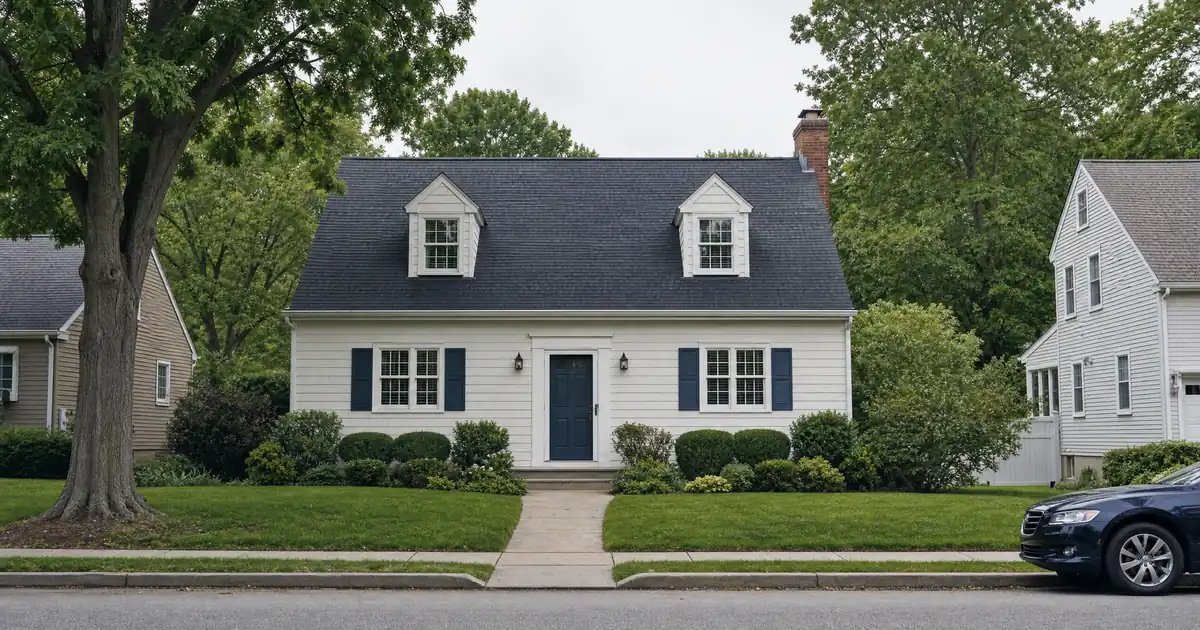
Turnkey Rental Property For First Time Investors — The Quick Read: A turnkey rental property is a home a provider has already fixed up and made ready to rent. Sometimes it comes with a tenant already living there and a management company already in place. There’s no official rulebook for this term. The label just means whatever the seller wants it to mean. Most buyers finance these deals with a DSCR loan. This type of loan qualifies the deal based on the property’s rental income, not your personal income or W-2s. Here’s what first-time buyers miss the most: the lender’s appraiser sets the rent number used to underwrite the loan. The seller’s marketing sheet does not set that number. And the appraiser’s number can come in lower than what was advertised.
Key Takeaways
- “Turnkey” means renovated and rent-ready. Sometimes it’s tenant-occupied and managed. But nobody standardized the term. Confirm exactly what’s included before signing anything.
- DSCR financing qualifies the purchase based on the property’s rent. That’s why turnkey buyers like it. No digging through tax returns. No debt-to-income math built from a paycheck.
- The appraiser sets the rent figure a lender actually uses — not the seller. Underwriting picks the lower of two numbers: the appraised market rent or an in-place lease. It never picks the higher one.
- Purchase leverage typically runs 75%-80% LTV across most files. Select high-leverage programs stretch to 85% LTV for borrowers around a 700 credit score.
- Turnkey convenience costs extra. The appraisal is one of the only independent checks that stops you from paying above market for it.
What a Turnkey Rental Property Actually Is (No Two Sellers Define It the Same)
A turnkey property is one a provider has already fixed up and made ready to rent. Sometimes a tenant and property manager are already lined up. But no licensing body or lending rule defines this term. So it means something different depending on who’s selling.
DSCR Calculator
Run the numbers in your market
Rate source: Freddie Mac 30-yr average via FRED® — Federal Reserve Bank of St. Louis · effective Aug 13, 2026
Prefilled with local estimates — enter your own rent or nightly figures, taxes, insurance, and HOA for a more accurate picture.
Program parameters update from Lendmire’s centralized guideline source. Taxes and insurance are editable estimates.
As of Aug 13, 2026 · General Freddie Mac market benchmark, not a Lendmire loan offer. Rent, nightly rate, occupancy, taxes, and insurance are editable estimates. Short-term rental figures are estimates only and vary significantly by season, property type, management approach, and local short-term-rental rules — confirm local regulations before relying on them. Qualifying income for short-term rentals varies by program — some use appraisal market rent, others use documented STR history or projections — and is confirmed in underwriting. Not a Loan Estimate, approval, or commitment to lend. Program availability and eligibility are subject to lender guidelines, credit approval, property review, and underwriting.
Chase’s own consumer-education page puts it simply: a turnkey property is already built, renovated, and ready to rent right away. Providers buy it, fix it up, and often bundle in management before selling it to an investor (Chase). That’s a fine starting point. But it’s a business description, not an underwriting one. TenantCloud states the real problem more bluntly: the term has no industry-standard definition. One provider’s “turnkey” means fresh systems, new paint, and a paying tenant. Another’s just means the roof doesn’t leak. Nobody checks the label at closing.
That gap matters once financing enters the picture. A DSCR lender doesn’t underwrite the word “turnkey” at all. It looks at the property’s rental income, its condition, its appraised value, and what it can actually rent for. What the flyer calls it doesn’t matter.
How the Turnkey Model Works, Step by Step
A turnkey deal moves through several stages before an investor ever sees the listing. A provider buys a distressed or underused property. They renovate it. They place a tenant or prep it for one. Then they sell — usually off-market — at a price the provider sets, not one shaped by competing offers.
Sourcing and renovation. This process starts long before the investor hears about it. A provider buys a distressed or underused property and fixes it up into rental condition. Then they price it for resale to an out-of-state or hands-off buyer. These sales are typically off-market. They’re never listed for competing bids. The provider sets the price. The market never gets a chance to find that number through negotiation. No bidding war happens. And no independent price check is built into the deal.
Tenant placement and management handoff. Many providers place a tenant and hand over a management contract before closing. The pitch is simple: day one of ownership should look like month six anywhere else.
Sale to the investor. This is where the appraisal enters. The number the provider advertises and the number an independent appraiser confirms are not always the same figure. The loan runs on the second one.
Closing and handoff. Title work, insurance, and underwriting review all happen at the same time. Once the file clears, ownership and the management relationship transfer together.
Key Terms Defined
- DSCR (debt-service coverage ratio): the property’s monthly rent divided by its full monthly housing payment. A ratio at or above 1.00 means the rent covers that payment on paper.
- PITIA: principal, interest, taxes, insurance, and association dues combined — the full monthly obligation the ratio is measured against.
- LTV (loan-to-value): the share of the appraised value the loan covers; the rest comes from the investor’s down payment.
- Form 1007 / Form 1025: the appraisal forms used to document comparable rents — 1007 for a single-family home, 1025 for a 2-4 unit building.
- Seasoning: how long a lender wants a property held (or renovated) before a refinance is considered.
- Reserves: liquid funds left over after closing, beyond the down payment and closing costs, that a lender wants documented in the borrower’s accounts.
- Business-purpose loan: a mortgage made to a non-owner-occupant for investment purposes, reviewed differently than a loan for a home someone plans to live in.
How a DSCR Lender Actually Prices a Turnkey Rental Property’s Rent
On a DSCR file, the appraiser does two jobs at once. First, they confirm the property’s value. Second, they estimate what it should rent for right now. That second number drives the coverage ratio the lender uses — not the seller’s pro forma, and not a preplaced lease priced at a premium rate.
In a standard mortgage, the appraisal answers one question: what’s this worth? On a DSCR file, it answers two questions. The appraiser fills out a comparable rent schedule — Form 1007 for a single-family home, Form 1025 for a 2-4 unit property. That schedule tells the lender what the market actually supports.
Say the turnkey property already has a tenant in place. Underwriting typically uses the lower of two numbers: the signed lease or the appraiser’s market-rent conclusion. It never uses the higher figure, and it never uses what the seller’s flyer promises. A provider might price a preplaced tenant above market to make the return math look better. That’s not necessarily wrong. But that inflated number rarely survives underwriting intact.
On a vacant unit, or a fresh purchase with no lease at all, the file runs entirely on the appraiser’s market-rent conclusion. Some programs then apply a modest discount to that figure. This builds in a cushion for vacancy before running the ratio. It’s a conservative step baked into the math — not a penalty aimed at turnkey deals specifically.
That cushion isn’t paranoia. National rental vacancy sat at 7.3% in the most recent quarter, per Census Bureau data. That’s a real, non-trivial share of rental inventory sitting empty at any given time. And that’s exactly what a rent-only pro forma tends to wave away.
Across the wholesale network Lendmire places files with, most programs treat a 1.00 coverage ratio as a floor. This is a select-program baseline, never a universal industry rule. It means the appraiser’s rent, after any vacancy discount, at least matches the full PITIA payment. Clear more than that, and pricing and leverage tend to open up. Land below it, and select lenders in the network still review the file. But leverage and terms adjust to reflect the thinner cushion.
What Can Go Wrong — The Turnkey-Specific Risks
Turnkey investing carries failure modes a local, hands-on purchase doesn’t have. These include appraisal-versus-price gaps, thin rental-comp markets, above-market leases that don’t survive underwriting, and management quality that never shows up in the loan file at all.
The rehab-needed-in-disguise problem. DSCR programs are built for stabilized, rentable assets, not renovation projects. Property condition has to be habitable and actually rentable. A home needing significant rehab doesn’t fit a DSCR program, no matter what the seller calls it. The “turnkey” label is supposed to signal this doesn’t apply. But since the term isn’t standardized, a first-time buyer still has to check condition independently. Don’t just trust the label.
The appraisal-versus-price gap. The deal is off-market and provider-priced. That makes the appraisal the main external check on that number. If it comes in below the purchase price, the loan-to-value calculation runs off the lower figure. That means more cash needed at closing. It could also mean a tighter coverage ratio if the appraiser’s rent conclusion is conservative next to the provider’s advertised pro forma.
Thin rental-comp markets. In smaller or secondary markets, the same appraisal mechanic that supports DSCR underwriting can get shaky. An appraiser needs comparable rentals nearby to build a reliable market-rent conclusion. In thinner markets, there simply may not be enough of them close by. Turnkey providers often work in exactly these lower-cost, secondary “cash-flow” markets. That’s where this edge case shows up most.
Management quality sits outside the loan file. DSCR underwriting looks at the appraised rent and the payment math. It doesn’t check whether the bundled property manager answers the phone. Poor management can mean higher vacancy and surprise repair costs down the road. None of that shows up in the ratio at closing.
Property type limits. Not every turnkey property qualifies for DSCR financing at all. Manufactured homes — single- or double-wide — along with log homes and barndominium conversions fall outside DSCR programs in Lendmire’s network entirely. Some lower-cost turnkey markets lean heavily on exactly these property types. It’s worth confirming eligibility before falling for a listing.
Turnkey vs. BRRRR vs. Fix-and-Flip vs. Buying Local
| Factor | Turnkey | BRRRR | Fix-and-Flip | Buying Local |
|---|---|---|---|---|
| Upfront work | Minimal — provider handles rehab | Heavy — investor manages rehab | Heavy — held short-term | Low to moderate |
| Time to cash flow | Fast — often day one | Slow — after rehab and refi | Not applicable — sold, not held | Moderate — after lease-up |
| Typical financing | DSCR purchase loan | Hard money, then DSCR refinance | Hard money / short-term loan | DSCR or conventional |
| Investor control | Low — provider sets scope | High | High | High |
| Price premium risk | Higher — provider markup | Lower — investor sets basis | Not applicable | Lower |
Is that premium worth paying? That’s a genuine toss-up. It comes down to what an investor’s time and distance from the market are worth. There’s no universal right answer.
What Financing Looks Like for a First-Time Buyer
Most first-time turnkey buyers finance with a DSCR loan. This loan qualifies primarily on property-level rental income covering the payment, subject to lender guidelines. It doesn’t rely on a debt-to-income ratio built from pay stubs. Across the wholesale network Lendmire places files with, purchase leverage typically runs 75%-80% LTV. Select high-leverage programs reach 85% LTV for borrowers around a 700 credit score.
Credit requirements vary by lender within the network. A 620 floor shows up on parts of the network. Most programs want closer to 660. Clearing 700 tends to unlock the strongest leverage tiers. Loan sizes typically run up to $3,000,000 on standard programs. Smaller balances are also placed through select lenders in the network. Reserve requirements move with loan size and leverage. Programs commonly want around six months of PITIA held in liquid accounts after closing. That figure steps up toward nine months on loans above $1,500,000. Conservative rate-term deals at modest leverage under that threshold sometimes see reserves waived entirely. It depends on the file.
The 30-year fixed structure is the spine of the market. Extended 40-year and interest-only structures are available through select lenders. Adjustable-rate structures exist too, for investors who want them. A handful of states — Connecticut, Florida, Illinois, and New Jersey among them — carry overlays. These generally cap purchase leverage near 75% LTV and hold overlay-state loan amounts near $2,000,000. That matters for turnkey buyers shopping across state lines. Purchase leverage there typically tops out around 75% LTV, with a 1.00 coverage floor on both purchases and refinances, and reduced leverage available below that floor through select lenders. Refinance and cash-out run closer to 70%. Short-term rentals qualify at a 1.00 coverage threshold on purchase and refinance at reduced maximum leverage, and require a 12-month income history or market data report at most lenders.
DSCR loans are designed for non-owner-occupied investment properties. Because they’re business-purpose investor loans, they’re reviewed differently than a standard owner-occupied mortgage. Some investors title the purchase in an LLC rather than their own name. DSCR programs generally accommodate that, subject to lender program eligibility.
Lendmire (NMLS# 2371349) arranges these loans as a mortgage broker. It places files with select lenders across a wholesale network spanning 40 states plus Washington, D.C. Want a deeper walkthrough of how the ratio itself gets built and priced? Lendmire’s complete DSCR loans guide covers the underwriting model in more depth. First-time buyers still weighing whether an investment property even fits before a primary residence often start with can you buy a rental property as a first-time buyer or should I buy a rental property before my first home. Investors who’d rather skip the turnkey markup and buy distressed themselves sometimes start with hard money lenders for first-time investors and refinance into a DSCR loan once the rehab is complete and the property is rent-ready.
Who This Fits — and Who It Doesn’t
Turnkey investing tends to fit an investor buying out-of-state, without renovation experience, who wants rent showing up close to day one. It works well for someone who values a pre-vetted management relationship over handling everything personally. It tends to fit less well for someone with contractor skills, deep local market knowledge, or a budget that can’t absorb a provider’s markup.
Picture someone juggling a full-time job three states from their target market. That person values the hands-off part more than someone who already owns a truck and a contractor’s phone number. Neither is wrong. They’re just solving different problems. One is buying back time. The other is buying equity at the lowest possible basis. This is worth sitting with before shopping listings, not after.
Turnkey purchase agreements, property manager contracts, and entity-structuring questions vary by state and situation. Tax treatment can also depend on how the funds are used and how the property is held.
None of this is a commitment to lend, and loan approval is never guaranteed. Every scenario described here is subject to lender approval and to borrower, property, and program guidelines that can change.
Frequently Asked Questions
Is a turnkey rental property actually cheaper than buying and renovating myself? Usually not. That’s the tradeoff, not the pitch. A provider’s price typically bakes in their renovation cost plus a margin. The appraisal is one of the few independent checks against paying above what the market actually supports for that condition and location.
Can a first-time investor really qualify for a DSCR loan with no landlord history? Generally yes on most files. Qualification runs primarily on the property’s rental income, not on your personal income or prior landlord experience. A handful of individual lenders in any wholesale network layer extra requirements onto brand-new investors. So exact terms are program-specific and worth confirming before shopping.
Does the in-place tenant’s lease guarantee the rent the loan will use? No. Underwriting typically uses the lower of the signed lease or the appraiser’s market-rent conclusion. It never uses the higher number, even if the lease is priced above market.
What happens if the appraisal comes in below the turnkey purchase price? The loan-to-value math runs off the lower appraised figure, not the purchase price. That usually means more cash needed at closing. It could also mean a tighter coverage ratio if the appraiser’s rent conclusion runs conservative.
Can I finance a turnkey manufactured home or barndominium with a DSCR loan? No. Manufactured homes, log homes, and barndominiums fall outside DSCR programs in Lendmire’s network. This holds true regardless of how a listing markets the property’s condition.
Important Disclaimer
This article is general information only and is not legal or tax advice. It does not constitute a commitment to lend, and loan approval is never guaranteed. Every scenario described is subject to lender approval and to borrower, property, and program guidelines that can change. Turnkey purchase agreements, property manager contracts, entity-structuring decisions, and the tax treatment of a rental purchase all vary by state and individual circumstance. Before signing any purchase agreement, forming an entity to hold title, or relying on any tax position, consult a licensed attorney and a qualified CPA or tax professional who can review the specifics of your situation.
About Lendmire
Lendmire (NMLS# 2371349) is a non-QM DSCR mortgage broker. It places borrower files with select lenders across a wholesale network serving 41 markets. Lendmire does not fund loans directly. It arranges financing through third-party lenders and underwrites nothing itself. Program availability, leverage, credit thresholds, and terms referenced here are set by individual lenders in that network. These vary by file and are subject to change without notice. Scotsman Guide named Lendmire a Top Mortgage Workplace in both 2025 and 2026.
Get Started
Ready to find the right loan for you?
In about 30 seconds you can review financing options available for your home or investment property. No commitment required.
Informational only. Not a Loan Estimate, approval, or commitment to lend. Program availability and eligibility are subject to lender guidelines, credit approval, property review, and underwriting.
References
1. Chase — Turnkey Property Education
2. U.S. Census Bureau — Housing Vacancies and Homeownership
This article is part of Lendmire’s DSCR loan program — full qualification details, guidelines, and scenarios live on the program page.
Related reading: Buying A Turnkey Airbnb Vs Renovating With A Bridge Loan · Do Seller Bookings Count As Income On A Short-term Rental DSCR? · Can A Vacant Property Qualify For A DSCR Purchase Loan?
Brandon Miller
Founder & CEO, Mortgage Loan Originator, Lendmire LLC
- Mortgage Loan Originator · NMLS# 1129696 · Verify on NMLS Consumer Access
- North Carolina Real Estate Broker · License# 343312 · Verify on NCREC
- North Carolina Insurance Producer · License# 19053198 · Property, Casualty, Life, Health · Verify on NAIC SBS
- Lendmire LLC · Firm NMLS# 2371349 · Verify firm licensure
Required disclosures. Lendmire (NMLS# 2371349) operates as a licensed mortgage broker, not a direct lender or depository. The discussion in this article is general in nature and should not be relied upon as financial, legal, or tax advice — every investment scenario is unique and should be reviewed by a qualified professional. Any loan inquiry is subject to lender underwriting, and this article is not a commitment to lend or a guarantee of approval. Mortgage rates, loan terms, and program guidelines vary by borrower, property, and state, and may change without notice. Equal Housing Opportunity. Verify licensure at NMLS Consumer Access.