
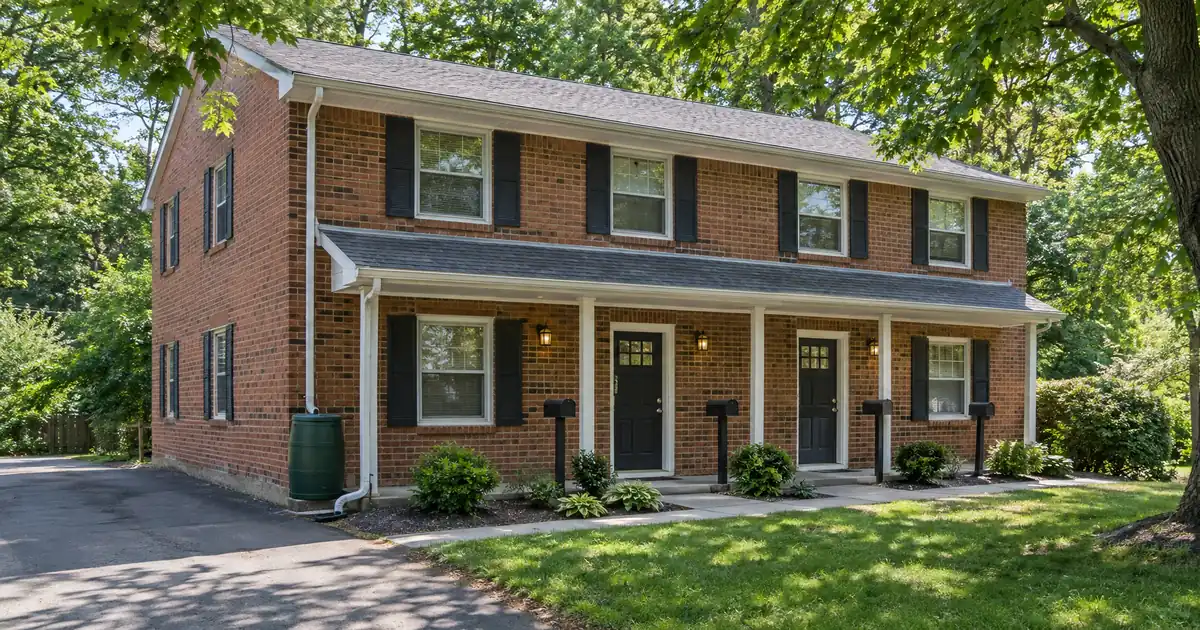
The Quick Read: A portfolio DSCR loan fits an investor who wants all three buildings under one note, qualified on the pooled rent rather than personal income. An agency loan fits a borrower with strong documented income and room under the financed-property cap, but it splits this deal in two. The fourplexes go through the 1-4 unit channel and the six-unit goes through a separate multifamily channel.
- Agency programs treat the buildings by unit count, so the deal becomes two separate loan files.
- A portfolio DSCR loan tests the pooled rent against the pooled debt, so stronger buildings can carry weaker ones.
- Six-unit eligibility is the swing factor: it is allowed only on the rental portfolio term loan, not on the 30-year portfolio DSCR loan.
- One note means every building secures the whole debt, so selling one building later needs a release.
- Agency loans require a natural-person borrower. DSCR programs commonly allow LLC vesting, subject to lender program eligibility.
The Honest Answer on Who Each Option Is For
Fourteen units in three buildings is an awkward package. Two fourplexes are residential-class. The six-unit is commercial-class. Agency financing follows that line. DSCR portfolio financing can sit across it, but only on one structure.
The agency route suits a W-2 or well-documented borrower who holds few financed properties and wants to keep the fourplexes in their own name. The portfolio route suits an investor who is self-employed, already carrying heavy rental debt, holding in an LLC, or close to the agency property cap. It also suits anyone who wants one file instead of two or three.
Neither is better in the abstract. The six-unit decides the shape of the file.
Side-by-Side
The agency column reflects published industry norms. The portfolio column reflects what Lendmire’s wholesale network of DSCR lenders places, subject to lender guidelines.
| Factor | Portfolio DSCR loan | Agency route (industry norms) |
|---|---|---|
| Review basis | Pooled rent vs pooled debt | Borrower’s documented personal income |
| Documentation | Leases or market rent, appraisals | Personal income and asset documents |
| Fourplexes | Eligible as 2-4 unit properties | 1-4 unit channel, per-building loan |
| Six-unit | Rental portfolio term loan only | Separate multifamily program |
| Entity vesting | LLC common, subject to program | Natural-person borrower |
| Structure | One note, cross-collateralized | Two or three separate notes |
| Reserves | Often about 6 months PITIA; varies | Set by each program’s rules |
| Exit | Release terms per loan documents | Each building sells on its own |
| Timeline | Depends on file and appraisals | Two channels, two appraisal types |
How the Three Buildings Split Under an Agency Route
The line sits between four and five units. Fannie Mae’s Selling Guide points to the Form 1025 small residential income report for two- to four-unit properties, with Form 1007 as the rent schedule. Both fourplexes ride that track.
The six-unit does not. Freddie Mac’s Small Balance Loan investor presentation describes its eligible property as conventional multifamily with five or more units, originated through its lender network. That is a separate program with its own appraisal, sponsor tests, and rulebook.
Two more agency facts matter. First, the borrower must be a natural person. The borrower signs the note and takes title individually, so an LLC cannot be the borrower on those loans. Second, Freddie Mac’s Single-Family Guide caps the number of financed 1-4 unit properties and does not count five-plus-unit multifamily toward it. Two fourplexes use two slots. For an investor with a long list of financed rentals, that cap can run out before the deal does.
Scattered buildings also do not combine into one five-plus-unit property. Fourteen total units across three separate buildings does not turn the deal into one multifamily asset. Treatment follows the building.
How a Portfolio DSCR Loan Treats the Same Three Buildings
A portfolio DSCR loan, also called a blanket or cross-collateralized loan, is one note secured by several rentals. The note and security instruments decide the structure, not the label. (A bank’s portfolio loan, meaning a loan the bank keeps on its books, is a different sense of the word.)
Lendmire’s wholesale network offers two structures, and they handle this deal differently.
The 30-year portfolio DSCR loan covers 2 to 20 properties under one note, with loan sizes typically from $300,000 to $5,000,000. Leverage runs up to 80% of value on a purchase or rate-and-term refinance. The coverage floor of 1.00 is measured on the pool, so pooled rent is weighed against pooled debt service. Property types are single-family, 2-4 unit, condo, and townhome. The fourplexes fit. The six-unit does not.
The rental portfolio term loan covers five or more rental properties or units under one note, with loan sizes typically from $500,000 to $50,000,000. Leverage runs up to 75% of value. Terms are fixed at 3, 5, 7, or 10 years with a balloon at maturity, and recourse and non-recourse options exist, with carve-outs on the non-recourse side. Small multifamily is eligible here and only here. This is the structure that can hold two fourplexes and a six-unit together, subject to lender guidelines and property review.
Both structures want a lease or appraiser-supported market rent on every property. A building that runs below 1.00 on its own can sit in the pool, but underwriting tests the pooled coverage, the leverage, and the terms. The credit floor on these portfolio programs is typically 640, with 680 or 720 on some structures. Some structures also require a special-purpose entity, usually an LLC.
Coverage on a pool is a blend. The fourplexes are normally run on rent against PITIA, and the six-unit leans toward income-based underwriting. How a given lender blends those two bases is a real structuring question, so ask it before choosing the structure.
When a Portfolio DSCR Loan Is the Better Fit
Choose the portfolio route when these describe the file:
- Income is hard to document. Self-employed borrowers with heavy write-offs often show thin personal income. The portfolio loan is reviewed primarily on property-level rental income covering the payment, subject to lender guidelines.
- Existing rental debt crowds the debt-to-income picture. Property income, not personal income, carries the file.
- The properties sit in an LLC. Entity vesting is common on DSCR programs, subject to program eligibility. An agency route would force personal title on the fourplexes.
- The financed-property count is near the cap. DSCR files do not run through that agency count.
- One file beats three. A single note means one underwriting file, one servicing relationship, and pooled coverage.
- One building is weaker than the others. On a pool, stronger buildings can offset weaker ones. Under separate loans, each building has to stand alone.
The trade-offs are real. Every building secures the whole debt. Selling one building later follows the release terms in the loan documents, and the release price runs above that property’s allocated balance. The remaining pool still has to cover its debt service. On the term loan, the balloon at maturity and the prepayment structure (yield maintenance) also need a plan, so the investor should map the exit before signing.
Equity matters too, but it does not replace coverage. A bigger down payment lowers the debt and can lift the ratio. It never erases leverage caps, credit floors, reserve rules, or property eligibility. The strongest files clear both tests.
When an Agency Loan Is the Better Fit
Choose the agency route when these describe the file:
- Personal income is strong and easy to document. W-2 or well-documented income carries the fourplexes.
- Financed-property slots are open. The borrower is nowhere near the cap.
- Personal title is fine. No LLC is needed or wanted on the fourplexes.
- Separation is the goal. Each building has its own note, so selling one fourplex does not touch the others. There is no cross-collateralization and no release price.
- The buildings are bought or refinanced on different schedules. Separate files let each one move on its own.
The trade-offs are also real. The six-unit still needs a multifamily program with property-level income tests and sponsor requirements, so the investor ends up running at least two channels with two appraisal types. Freddie Mac’s multifamily presentation frames those loans around five-plus-unit properties and its approved lender network, not around a mixed set of small buildings.
There is also a trap after closing. Moving an agency-financed property into an LLC later can cause problems. A property transferred to an LLC must be put back into a natural person’s name to refinance. An investor who plans to hold in an entity should settle that before the first closing.
Where Files on This Mix Go Sideways
Mixed-class portfolios fail in predictable places.
Program reach. An investor assumes one note can cover all three buildings, then finds the 30-year portfolio DSCR loan stops at 2-4 unit properties. The six-unit pushes the file onto the rental portfolio term loan. Check unit eligibility before pricing the deal in your head.
Rent evidence. Every building needs a lease or an appraiser-supported market rent. On the six-unit, expect a rent roll, leases, and an income-approach appraisal. A rent roll with gaps stalls the pool as a whole.
Entity paperwork. Operating agreement, EIN, and good standing for an LLC owner. Missing entity documents hold up a file that is otherwise clean.
Reserves documentation. Reserves vary by lender, leverage, loan size, and transaction type. About 6 months of PITIA is common, with about 9 months above $1,500,000, and conservative rate-term files at modest leverage can see reserves waived. On the term loan, reserves are held for taxes, insurance, and capital expenditures. Bring the asset statements early.
Cost-basis caps on recent purchases. Inside the first six months of ownership, the loan is also capped at 90% of total cost (purchase price plus documented improvements), and at 100% of total cost from six to twelve months, and the leverage ceiling still applies, so the loan is the lower of the two. After twelve months the appraised value alone is the basis. A rate-and-term refinance is not subject to the cost-basis cap. Cash-out on a portfolio loan never exceeds 75% of the pooled value.
Reading the ratio as cash flow. Clearing 1.00 measures rent against PITIA only. Repairs, vacancy, management, utilities, and capex sit outside it. A pool can clear the number and still run tight in practice.
A Decision Path by Borrower Profile
Run these questions in order.
1. Is title in an LLC, or going to be? If yes, the agency route on the fourplexes is out. Lean DSCR, subject to program eligibility.
2. How many financed 1-4 unit properties does the borrower already hold? If the count is near the cap, the agency route runs out of room.
3. Can the borrower document strong personal income cleanly? If yes, the agency route on the fourplexes is viable. If not, the portfolio route is the natural fit.
4. Does the six-unit need to share the note? If yes, the file belongs on the rental portfolio term loan. If the six-unit can stand alone, a split structure becomes possible: a DSCR or agency loan on the fourplexes and a separate multifamily loan on the six-unit.
5. How likely is it that one building sells in the next few years? If likely, favor separate notes or confirm release terms before choosing a blanket.
6. Can all three buildings show a lease or supported market rent? If one cannot, resolve that before the file goes in.
Coverage below 1.00 on a single building does not rule out a pool. Pooled coverage is what gets tested. Separately, a single-property DSCR path below 1.00 exists through select lenders in the network, with leverage and terms adjusted. That is a different path from the pooled structures here.
Key Terms Defined
DSCR (debt service coverage ratio): Rent measured against the debt obligation; on small residential buildings, gross rent divided by PITIA.
Blanket loan: One note secured by liens on several properties, also called a portfolio or cross-collateralized loan.
Natural-person borrower: An individual signing in their own name, not an LLC.
Release price: The amount paid to free one property from a blanket lien, which runs above that property’s allocated balance.
Financed-property cap: The agency limit on how many financed 1-4 unit properties one borrower can hold, which Freddie Mac’s guide lays out.
PITIA: Principal, interest, taxes, insurance, and any association dues.
The Verdict
For two fourplexes and a six-unit, the agency route is cleanest when the borrower has strong documented income, open financed-property slots, and no need for an LLC. It costs two channels and two separate files. A portfolio DSCR loan is cleaner when income is hard to document, the entity matters, or one file matters more than separation. The six-unit narrows that choice to the rental portfolio term loan if it must share the note. Neither route removes the need for clean rent evidence and reserves.
If you are buying or refinancing a rental property and want to see how the numbers work, Lendmire can help you compare DSCR loan options based on the property income, credit profile, leverage, and investor goals. Lendmire’s complete DSCR loans guide walks through the basics. DSCR programs are available through Lendmire’s network across 41 markets, including Washington, D.C., and nothing here is a commitment to lend.
Frequently Asked Questions
Can I put two fourplexes and a six-unit on one loan?
Yes, on the rental portfolio term loan, subject to lender guidelines and property review. The 30-year portfolio DSCR loan covers 2-4 unit properties, so it takes the fourplexes but not the six-unit. Small multifamily of five or more units is eligible only on the term structure.
Does the six-unit change the DSCR math?
Usually, yes. Small residential buildings are normally run on rent against PITIA, while larger buildings lean toward income-based underwriting. On a pooled file, the combined rent is weighed against the combined obligation, so ask how the program blends the two bases.
Do agency loans work for this mix?
Partly. The fourplexes fit the 1-4 unit channel in the borrower’s own name, and Fannie Mae’s guide requires a natural-person borrower. The six-unit needs a separate multifamily program, so the deal becomes at least two files.
Can I sell one building later?
On a blanket loan, yes, but it follows the release terms in the loan documents. The release price runs above that building’s allocated balance, and the remaining pool must still cover its debt service. Separate notes avoid this, at the cost of more files.
Do I need an LLC?
Not for an agency loan, which requires personal title. For DSCR programs, LLC vesting is common, subject to program eligibility, and some portfolio structures require a special-purpose entity.
About Lendmire
Lendmire (NMLS# 2371349) is a DSCR-focused mortgage broker that helps arrange investor financing across 41 markets, including Washington, D.C., through wholesale and investor-lending channels. DSCR eligibility is generally reviewed by the lender around the property’s rental income rather than personal income documentation, subject to lender guidelines — which works for self-employed investors, LLC operators, and portfolios above four financed properties. Scotsman Guide named Lendmire a Top Mortgage Workplace in both 2025 and 2026.
Get Started
Ready to find the right loan for you?
In about 30 seconds you can review financing options available for your investment property. No commitment required.
Informational only. Not a Loan Estimate, approval, or commitment to lend. Program availability and eligibility are subject to lender guidelines, credit approval, property review, and underwriting.
References
1. Fannie Mae Selling Guide B4-1.2-01
2. Freddie Mac Multifamily Small Balance Loan investor presentation
This article is part of Lendmire’s DSCR loan program — full qualification details, guidelines, and scenarios live on the program page.
Related reading: Does a Portfolio DSCR Loan Save Money Over One Loan per Rental? · Can a Portfolio DSCR Loan Get You Past the Conventional Loan Cap? · How to Count Duplexes and Fourplexes Toward a DSCR Portfolio Loan
Brandon Miller
Founder & CEO, Mortgage Loan Originator, Lendmire LLC
- Mortgage Loan Originator · NMLS# 1129696 · Verify on NMLS Consumer Access
- North Carolina Real Estate Broker · License# 343312 · Verify on NCREC
- North Carolina Insurance Producer · License# 19053198 · Property, Casualty, Life, Health · Verify on NAIC SBS
- Lendmire LLC · Firm NMLS# 2371349 · Verify firm licensure
Compliance and disclosures. Lendmire (NMLS# 2371349) is a licensed mortgage broker and is not a direct lender, depository institution, financial advisor, or tax professional. Content in this article is general market analysis and educational information — not financial, legal, or tax advice for any specific situation. Lendmire does not guarantee loan approval; every transaction is subject to underwriting by the funding lender. Mortgage pricing and loan program guidelines are subject to change at any time without notice and vary by borrower characteristics, property type, and state regulations. Lendmire complies with Equal Housing Opportunity. Licensure verification: NMLS Consumer Access.