
The Quick Read: A DSCR lender underwrites a finished, vacant or partly leased house on the appraiser’s market-rent opinion, not on a lease you hope to sign. The appraisal produces two numbers: value, which sets leverage, and market rent, which sets coverage. Where a lease exists, lenders typically count the lower of lease and market rent.
- Infill describes the property, not a program. The lender cares whether the house is finished, rent-ready, and supported by rent comps.
- A vacant house can be eligible on a purchase. Unfinished work usually sends you to a short-term bridge loan first.
- Rent above the appraiser’s number adds nothing. Rent below it can pull coverage down.
- Clearing 1.00 coverage is not positive cash flow. Vacancy, repairs, and management sit outside the ratio.
- Terms vary by program and lender, subject to lender guidelines.
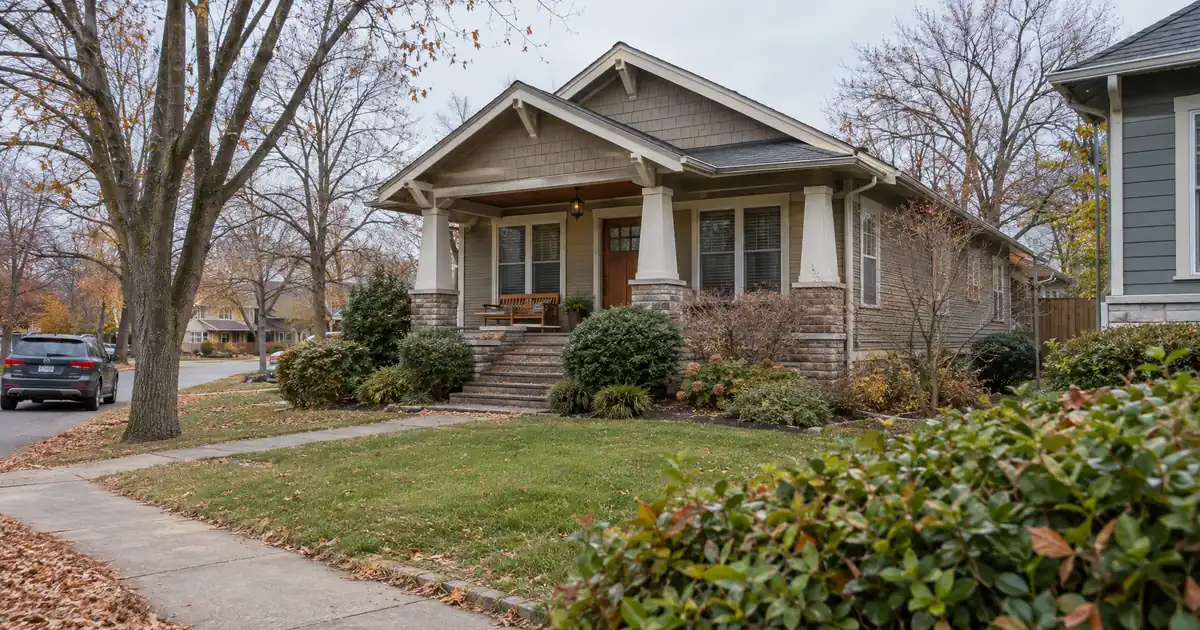
“Infill” is not a term lenders use in their guidelines. You mean a house on an existing neighborhood lot, newly built or renovated, that has no seasoned tenant history. The lender’s question is simple: what rent can this house reasonably earn, and is it ready to earn it? This piece walks through how that gets answered. For the full program picture, see the complete DSCR loans guide.
Key Terms Defined
DSCR (debt service coverage ratio): The property’s monthly rent divided by its monthly housing obligation. Higher means more cushion.
PITIA: Principal, interest, taxes, insurance, and HOA dues where they apply. It is the payment side of the ratio.
Market rent: The monthly rent an appraiser concludes a comparable house would earn today, based on nearby rentals.
In-place rent: The rent a tenant is actually paying under a signed lease.
Lease-up: The stretch between a house being finished and being fully tenanted.
Seasoning: The waiting period a lender wants between buying a property and refinancing it. On a cash-out refinance, about 6 months is the common expectation across most of the network.
Rent-ready: Finished, clean, safe, utilities on, and able to be occupied tomorrow without further work.
Takeout: The permanent loan that replaces short-term financing such as a construction or bridge loan.
Where Lease-Up Sits in the Sequence
Lease-up lives between “finished” and “stabilized.” A DSCR loan is a permanent rental loan. It does not fund construction, and it does not pay for rehab you have not completed.
| Phase | What happens | What the lender watches |
|---|---|---|
| Build or rehab | Short-term money pays for the work | Not a DSCR file yet |
| Completion | Occupancy approval, punch list done | Rent-ready condition |
| Listing | House is marketed at market rent | Asking rent vs. comps |
| First lease | Tenant signs, deposit paid | Lease vs. market rent |
| Appraisal | Value and rent schedule ordered | Comps and condition |
| Loan | DSCR purchase or refinance | Coverage, leverage, reserves |
Order matters. A rehab that finishes early does not start a seasoning clock on a refinance. Seasoning typically runs from the recorded deed, not from a signed lease or a finished punch list.
How the Lender Gets to a Rent Number
The appraiser sets the rent. You do not. On a one-unit house, the appraiser typically completes a rent schedule; for two to four units, a companion form. Fannie Mae’s appraiser guidance describes the one-unit form as the tool that documents estimated monthly market rent on an investment property. DSCR loans are not agency products, so those forms are borrowed, not binding. The program terms come from the lender.
The form’s own structure shows how the opinion gets built. Rent concessions on a comparable get adjusted to the market, not to your house.
Using market rent in place of a missing lease is not a DSCR invention. HUD‘s Mortgagee Letter 2023-17 has FHA lenders document proposed rental income on a one-unit property with the same rent schedule. That is a contrast, not our rulebook. It just shows that market rent standing in for a tenant not yet signed is a mainstream idea.
Which Rent Counts: Situation by Situation
Across most programs in the wholesale network, the rent counted follows the lease situation.
| Situation | Rent typically used | What to know |
|---|---|---|
| Vacant, rent-ready | Appraiser’s market rent | No lease needed on most purchases |
| Leased at market | Lease or market rent | Roughly the same number |
| Leased above market | Market rent | Extra rent earns no credit |
| Leased below market | The lower lease rent | Can drag coverage down |
| Month-to-month or expired | Usually market rent | Keep expired lease and rent receipts |
| Lease with concession | Depends on program | Free months can lower counted rent |
The “lower of” convention is the part investors miss. A tenant you sign at a bargain to show occupancy can hurt you. The appraisal supports the number, and a lease only counts if it reflects the market. Some lenders also discount vacancy or trim leverage on unleased houses. That varies by program, so ask at the scenario stage.
A lease may also be required to be in place before or after closing, depending on the lender. Do not assume. Ask.
The Infill Comp Problem
Infill is where the rent opinion gets tricky. A block with few rentals, a neighborhood in transition, or a house newer than everything around it gives the appraiser thin comps. Thin comps mean wider adjustments and a more cautious number.
You cannot choose the rent. You can hand the appraiser better evidence. Useful items include:
- Listing history for your own house and nearby rentals, with asking rents and days listed.
- Recent signed leases on similar houses, if you have them.
- A short note on why the asking rent fits the block: bedroom count, finishes, parking, and proximity to employment centers.
- Photos showing the house is finished, so the appraiser compares it to the right tier of rentals.
Describe demand with rent levels, vacancy, and lease length. Appraisers and lenders weigh those, not neighborhood impressions.
The Rent-Ready Package
Condition is the gate. A light-cosmetic vacant purchase typically goes through. Structural or incomplete work typically does not. Before you apply, gather:
- Occupancy approval and the signed-off punch list, where required.
- Utilities on and working, with photos of finished rooms and mechanicals.
- Insurance that covers a rental. Builder’s-risk or vacant-property coverage often has to convert to a landlord policy.
- Entity paperwork where you hold title in an LLC, subject to lender program eligibility, and names that match across the deed, insurance, and application.
- For any leased house, the executed lease. For month-to-month, the expired lease plus rent receipts.
Name mismatches, an uninsurable house, or a half-finished punch list are the usual red flags. All are fixable before application, and painful after.
Worked Example: Three Illustrative Scenarios
These use modeled ratios, not market data. Picture one house with appraised market rent covering its PITIA at about 1.20x.
Fully vacant. The lender counts market rent. Coverage reads about 1.20x. On a purchase, most files land at 75%-80% LTV, and select high-leverage programs reach 85% LTV with roughly a 700+ score. Clearing 1.00 is where select programs start, and stronger ratios open better pricing and leverage.
Signed at a discount. Say you sign a tenant at a rent that covers PITIA about 1.05x to fill the house. The lender typically uses the lower figure. Coverage drops from 1.20x to about 1.05x. You traded a better ratio for the appearance of occupancy.
Half leased across two houses. Suppose one house is leased at market and one is vacant. On a loan for each house, each is tested on its own rent basis. In a pooled package, coverage is measured on pooled rent against pooled debt, so the stronger house can offset the weaker one.
Now the caution. Clearing 1.00 is not positive cash flow. DSCR compares rent to PITIA only. Repairs, vacancy, management, utilities, and capital expenses sit outside it. A house that clears at 1.20x can still lose money during a slow lease-up. Budget your own carry, and hold cash beyond what the lender requires.
When the Takeout Isn’t Ready
If the house is not rent-ready, a DSCR purchase is the wrong tool today. A short-term bridge or hard-money loan funds the work, then a DSCR refinance takes it out once the house is finished and leasing.
Two frictions show up on that exit. First, seasoning. On a refinance, vacancy and seasoning are separate tests. Inside the seasoning window, lenders often size on cost basis, not appraised value. Cash-out tops out around 75% LTV across most of the network, with about 6 months of seasoning the common expectation. Second, paperwork. Once the tenant arrives, you need the executed lease and deposit records in clean order.
For the document side of this exit, see Lendmire’s guide How DSCR Takeout Documents Work for a Rental Still Leasing Up.
Where the Rule Breaks
- Short-term rentals. The rent schedule documents monthly market rent. It is not built to estimate a nightly rate, and multiplying a nightly rate by 30 is not valid support. Short-term rental programs use other data and typically want about 12 months of hosting history, a 640+ score, and 1.00 coverage on a purchase. Purchase leverage tops out at 75%. Short-term rental rules can vary by city, county, HOA, and property type, so confirm local rules before relying on projected rental income.
- Property type. Manufactured homes, log homes, and barndominiums are not offered on these DSCR programs.
- Coverage below 1.00. Coverage below 1.00 is available through select lenders in the network, with leverage and terms adjusted. It is a separate path from the standard 1.00 programs, not a lower floor on the same one.
- Down payment. A larger down payment lowers the payment and can lift coverage. It does not erase leverage caps, credit floors, reserve rules, or property eligibility. The strongest files clear both tests: enough equity and enough rental coverage.
The Investor Decision in Practice
Price the lease to the market before the appraisal. Do not sign a cheap lease to look occupied. Confirm early whether the lender wants a lease before or after closing. Confirm rent-ready status in writing. Then check your own numbers.
Credit and reserves matter too. A 620 floor exists in parts of the network, most programs want around 660, and 700+ unlocks the strongest leverage tiers. Reserves commonly run about 6 months of PITIA, stepping up to about 9 months on loans above $1,500,000. Loans run up to $3,000,000 on standard programs, and smaller balances are available through select lenders. Above $2,500,000 the network generally holds to 30-year fixed structures. The spine is the 30-year fixed, with extended terms, interest-only periods, and ARMs available through select lenders. Qualification rests primarily on property-level rental income covering the payment, subject to lender guidelines, and every file is underwritten individually.
If you are buying or refinancing a rental property and want to see how the numbers work, Lendmire can help you compare DSCR loan options based on the property income, credit profile, leverage, and investor goals.
Frequently Asked Questions
Can projected rent qualify a house with no tenant?
On many purchases, yes. The appraiser’s market-rent opinion stands in for the lease, provided the house is rent-ready. Some lenders attach a condition requiring a lease before or after closing, so ask early.
Does a tenant have to be in place before I apply?
Not necessarily. A vacant, finished house can be eligible on a purchase. A refinance is typically more restrictive, and seasoning is a separate test from vacancy.
What if my first lease comes in below the appraiser’s rent?
Lenders typically count the lower figure. A below-market lease can pull coverage down, so price the lease to the market before the appraisal.
Does a signed lease start the seasoning clock?
No. Seasoning typically runs from the recorded deed. A finished rehab or a signed lease does not start it.
Does clearing 1.00 mean the house cash flows?
No. The ratio compares rent to PITIA only. Vacancy, repairs, management, utilities, and capital expenses are your job to model.
About Lendmire
Lendmire is a non-QM mortgage brokerage (NMLS# 2371349) arranging DSCR investor loans in 41 markets, including Washington, D.C., through wholesale and investor-lending channels. DSCR loans are evaluated by the lender on rental income rather than personal income, subject to lender guidelines — a fit for LLC-owned portfolios, self-employed investors, and operators scaling beyond conventional loan caps. Recognized as a Scotsman Guide Top Mortgage Workplace in 2025 and 2026.
Get Started
Ready to find the right loan for you?
In about 30 seconds you can review financing options available for your investment property. No commitment required.
Informational only. Not a Loan Estimate, approval, or commitment to lend. Program availability and eligibility are subject to lender guidelines, credit approval, property review, and underwriting.
References
1. Fannie Mae Appraiser Update
2. HUD
This article is part of Lendmire’s DSCR loan program — full qualification details, guidelines, and scenarios live on the program page.
Related reading: How a Portfolio DSCR Lender Reads a Blanket Bridge Loan · Can BRRRR Rehabs Go in a DSCR Portfolio Loan Before Leasing? · How a DSCR Lender Reads a Stabilizing BRRRR Rehab Batch
Brandon Miller
Founder & CEO, Mortgage Loan Originator, Lendmire LLC
- Mortgage Loan Originator · NMLS# 1129696 · Verify on NMLS Consumer Access
- North Carolina Real Estate Broker · License# 343312 · Verify on NCREC
- North Carolina Insurance Producer · License# 19053198 · Property, Casualty, Life, Health · Verify on NAIC SBS
- Lendmire LLC · Firm NMLS# 2371349 · Verify firm licensure
Disclosure information. Lendmire is a state-licensed mortgage brokerage under NMLS# 2371349. Lendmire is not a depository institution, direct lender, or financial advisor — all loans referenced are placed through wholesale lender partners and are subject to each lender's underwriting standards. This article is provided for general informational purposes and is not a commitment to lend, nor does it constitute financial, legal, or tax advice. Loan programs, terms, rates, and qualification standards change without notice and depend on borrower profile, property type, and the state in which the subject property is located. Equal Housing Opportunity provider. NMLS Consumer Access: nmlsconsumeraccess.org.