
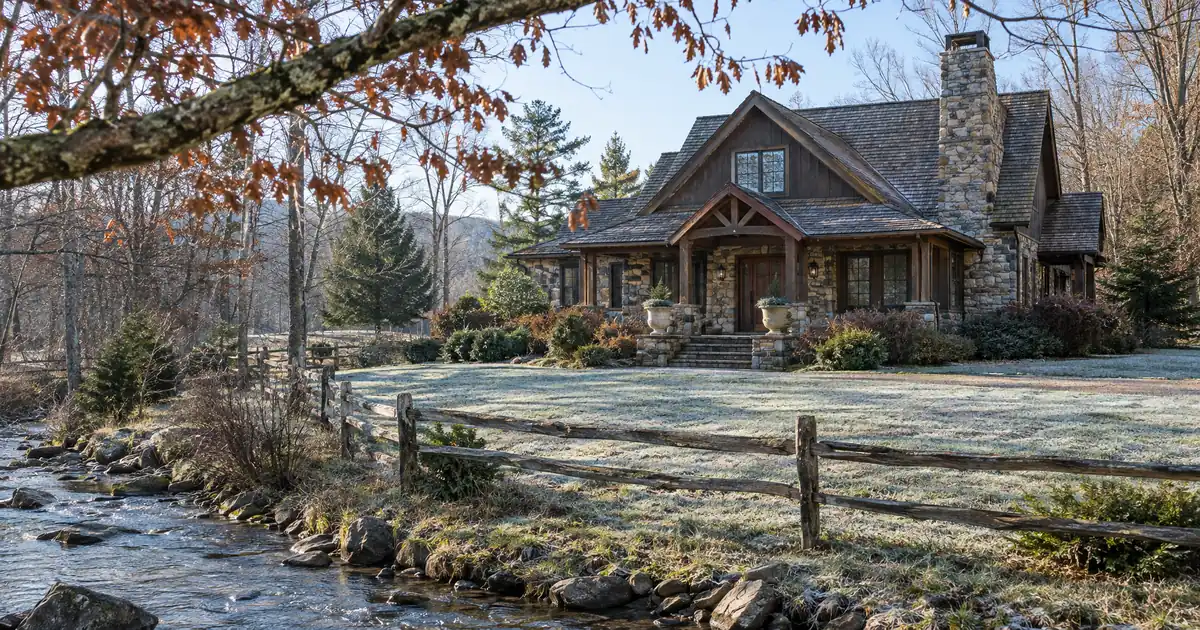
The Quick Read: It depends on whether the cabin can show rent today, because a DSCR loan fits a cabin that is rentable, an eligible property type and already documenting income that covers its payment, while a bridge loan fits a cabin that needs work, sits vacant or would fail a rent test as it stands. Many investors use both, in sequence, subject to lender guidelines.
- The deciding variable is rent evidence and condition. DSCR rewards a cabin that already earns. A bridge rewards a plan and an exit.
- Rural cabins fail on structure type, comps and income paperwork more often than on the coverage ratio itself.
- A stabilized cabin usually belongs in DSCR from day one. A bridge first means a second set of closing costs.
- The main risk is a bridge that matures before the DSCR exit is ready. Reserves decide whether you make it.
What Does Each Loan Actually Do?
A DSCR loan is long-term investor financing. It qualifies primarily on property-level rental income covering the payment, subject to lender guidelines. A bridge loan is short-term, asset-based money. It is built around the property, the plan and the exit.
What this loan actually costs to carry.
Hard money is sized against the project and priced by time. Enter the deal and see how much the program will lend, the cash required at closing, the carry while you hold it, and what is left at the exit.
Leverage tiers on the current program: 85% with fewer than 2, 90% with 2 or more, 93% with 5 or more completed projects — every tier capped at 75% of after-repair value. Loan amounts up to $5,000,000, larger by exception; terms of 6 to 18 months, interest-only, no prepayment penalty. The rehab portion funds in draws against completed work, not at closing.
Program parameters shown update from Lendmire’s centralized guideline source. Rate, points, and months are editable assumptions, not quoted terms.
Cost cap sets the loan · positive spread
Illustrative estimate only — not a quote, Loan Estimate, approval, or commitment to lend. Rate, points, and months are editable assumptions. Hard money is business-purpose financing for real estate investors, not a consumer mortgage. Leverage on the current program tops out at 93% of project cost for investors with a documented track record, capped at 75% of after-repair value, with rehab funding up to 100% of the documented budget released in draws; actual terms vary by lender, borrower experience, property, and exit. Lendmire is a mortgage broker, not a lender.
The two answer different questions. DSCR asks whether this property’s rent carries its own debt today. A bridge asks whether this plan gets the property to a finish line.
Both are business-purpose loans for non-owner-occupied investment property. They are reviewed differently from a standard owner-occupied mortgage.
Here is the program picture across our wholesale network of lenders. Figures are typical ranges. They vary by lender, property, and experience, and none is a commitment to lend.
| Factor | DSCR loan | Bridge loan |
|---|---|---|
| What is underwritten | Rent vs. full payment | Asset, plan, exit |
| Term | 30-year fixed spine; longer and interest-only via select lenders | 6-18 months, interest-only |
| Condition needed | Rent-ready | Can be vacant or need work |
| Rent evidence | Required | Not tested |
| Typical leverage | 75%-80% LTV on a purchase | Up to 80% of purchase price, no rehab |
| Credit | Most want ~660; 620 exists in parts | 620 minimum, added conditions below 660 |
| Main risk | Failing rent or comps test | Maturity before the exit |
On the DSCR side, select high-leverage programs reach 85% LTV on a purchase with roughly a 700+ score. Bridge cash-out and rate/term refinances run lower, up to 65% of value. Leverage, reserves, and pricing vary by lender and program; the final terms follow the full file review.
How Does the DSCR Test Work on a Cabin?
The coverage ratio is monthly rent divided by the full monthly obligation: principal, interest, taxes, insurance and any HOA dues. Many select programs start at 1.00. A separate select-lender path goes below 1.00, with leverage and terms adjusted. Stronger ratios open better pricing and leverage.
The appraisal does two jobs. It sets value, which drives LTV. It also supports rent, which drives coverage. That second job is where cabins get tricky.
McKissock explains that the standard rent schedule form (Form 1007) estimates monthly market rent on a one-unit property and that the lender decides how income is treated. Class Valuation goes further. It says the form cannot support a short-term rental appraisal, so nightly-rate income needs a separate analysis. Appraiser Income adds that an appraiser should not turn a nightly rate into a monthly figure by multiplying.
So a nightly rate times thirty is not market rent. That is a common misconception.
Lenders generally look at a few kinds of evidence to support rent on a short-term rental file:
- An appraiser’s short-term rental analysis.
- Trailing twelve months of platform or bank history.
- A third-party market projection, mostly on purchases with no history.
- Long-term market rent as a fallback.
On short-term rental files, expect a 640+ score and about 12 months of hosting history. Purchase leverage tops out at 75% LTV, with a 1.00 coverage floor. Refinances run around 70% LTV, also with a 1.00 floor. Cash-out on short-term rental collateral is 70%, against 75% on a standard long-term rental. Terms vary by lender guidelines, property type, leverage, credit profile, and full file review.
Which Loan Fits Which Cabin?
Match the loan to the cabin’s situation today, not to what you hope it becomes.
| Your cabin | Likely path | Why | Watch-out |
|---|---|---|---|
| Turnkey with a booking history | DSCR | Rent is documented | Slow winter months drag the trailing figure |
| Bought with no history | DSCR purchase via projection, or bridge | Depends on the lender’s evidence rules | Thin rural data weakens projections |
| Needs repairs or furnishing | Bridge, then DSCR | A DSCR appraisal fails on condition | Carry costs run while you renovate |
| Short-term note about to mature | DSCR refinance if it is rent-ready | Removes the maturity date | Value and rent must both support the exit |
The turnkey case is the easy one. Skip the bridge. You avoid a second closing, and you avoid the risk of a maturity date landing before the permanent loan is ready.
The no-history case is a judgment call. Some lenders will lean on an appraiser’s market analysis or a third-party projection. Others want trailing history before they credit short-term income. A bridge can buy time to build that record, but only if the cabin can actually be booked. A bridge does not create demand.
Why Does Rural Change the Answer?
Rural adds gates that sit in front of income. Property type comes first. In our network, DSCR is not offered on log homes, manufactured homes (single- or double-wide) or barndominiums, regardless of how much rent they earn. Frame cabins, A-frames and lake houses are reviewed individually.
Check this before you fall in love with a listing. A log cabin is a cabin by name and an ineligible property by type.
Comps come next. Rural appraisals often have few comparable sales and few nearby short-term rentals. That makes value harder to support and weakens any rent projection. Rural cutoffs also differ by lender, so a cabin one lender flags as rural may sail through at another. Ask how a rural flag changes the quoted terms.
Insurance and access matter too. A remote cabin can carry unusual coverage questions, and the premium feeds straight into the coverage ratio.
Then legality. Short-term rental rules can vary by city, county, HOA, and property type, so investors should confirm local rules before relying on projected rental income. If the cabin cannot legally host guests, no income projection survives review.
Across the lenders we place files with, the pattern is consistent. Rural cabin files rarely die on the ratio. They stall on a property type that is ineligible, an appraisal without comps, or income documentation that doesn’t match how the lender wants to count it. Sorting those three before you apply saves the most time.
What About Seasonality?
Passing the coverage test is not the same as making money. The ratio compares rent to the housing payment only. Cleaning, management, utilities, furnishing, repairs, vacancy and capital costs sit outside it. A cabin can clear 1.00 and still lose cash in a slow winter.
Seasonal cabins add a timing wrinkle. A trailing twelve-month view averages busy and slow months together, which can help or hurt depending on when you apply. A cabin with a strong summer and a dead January might look thinner than its peak suggests.
A bridge loan doesn’t test income, but it doesn’t spare you the carry either. Interest, taxes and insurance run whether or not the cabin is booked. Underwrite your own net income, not the lender’s ratio.
How Does the Bridge-Then-DSCR Path Work?
Think of it as three handoffs.
1. Acquire. A bridge funds the purchase, up to 80% of the purchase price when there is no rehab. Rehab and furnishing are funded separately and vary by lender, property, and experience.
2. Operate. You repair, furnish, list and book the cabin. This is where rent evidence gets built.
3. Refinance. A DSCR loan replaces the bridge once there is history or an appraiser analysis the permanent lender will accept.
Many investors refinance out of hard money into long-term DSCR financing once the property is stabilized, and Lendmire brokers that path.
Before you take the bridge, get the permanent lender’s requirements. They set their own rules on value, seasoning, condition, credit, reserves, vesting and rent evidence. A cash-out refinance on a standard rental tops out around 75% LTV across most of our network, with about six months of seasoning a common expectation. Short-term rental cash-out is 70%. Reserves commonly run about six months of PITIA, though they vary by lender, leverage and loan size.
Work backward from those numbers. If the exit loan can’t pay off the bridge, the plan fails on paper before it starts.
What Can Go Wrong With the Two-Step Path?
Four things, mostly.
Two sets of closing costs. The bridge and the DSCR loan each carry their own. On a cabin that could have gone straight to DSCR, that is money wasted.
The exit slips. The maturity date controls, even if the renovation runs long or bookings come in light. Bridge terms run 6 to 18 months. An extension is a risk, not a plan.
A low appraisal. If value comes in under the plan, the DSCR loan may not retire the bridge at the leverage you counted on.
Thin history. If the cabin hasn’t been hosted long enough, the permanent lender may rely on its own market analysis rather than your actual income. That analysis may be lower than you hoped.
Reserves decide whether you reach the exit. Hold enough cash to carry the property through a late finish and a soft booking season.
What If You Want to Use the Cabin Yourself?
Then DSCR may be the wrong tool. These loans are for non-owner-occupied investment property, and converting a second-home cabin means rewriting it as an investment loan with a business-purpose and non-occupancy certification. You can’t live in it.
A cabin used mainly for personal stays may be better left on its existing second-home financing. Lendmire’s piece Can You Use Bank Statements on a Rural Cabin You Rent Part-Time? covers the owner who splits time between guests and personal use.
When Does Neither Fit?
Sometimes the cabin fits neither product. It might be an ineligible structure type, or a personal-use cabin, or one with no legal rental path. In those cases a second-home loan, an alternative-documentation loan on your own income, or a local portfolio lender may be the better route. A DSCR loan is the right call when the property’s rent is the story. If your personal income is the story, a different product may serve you better.
Tax treatment varies; consult a qualified professional.
Key Terms Defined
PITIA: the full monthly housing obligation: principal, interest, taxes, insurance and any association dues.
Seasoning: how long you must have owned a property before a lender will refinance it at current value.
Exit: how a bridge loan gets repaid, usually by sale or refinance into long-term financing.
Coverage ratio: monthly rent divided by PITIA, the number a DSCR lender uses to test the property.
Quick Self-Check
Answer five questions.
1. Is the cabin an eligible type, not a log home, manufactured home or barndominium? If no, neither loan may work.
2. Is short-term rental use permitted where the cabin sits? If no, stop.
3. Is it rentable today? If yes, lean DSCR. If no, lean bridge.
4. Do you have rent evidence, or can an appraiser support it? If no, a bridge may buy time, but only if bookings are realistic.
5. Do you plan to stay there yourself? If yes, reconsider DSCR.
If the answers point to a bridge, check the exit loan’s requirements first.
Frequently Asked Questions
Can I use a bridge loan to buy a cabin with no rental history?
Yes, in many cases. Bridge loans focus on the asset, the plan and the exit rather than a rent test, with purchase leverage up to 80% of the purchase price when there is no rehab. The catch is the exit. The permanent lender will still want rent evidence, so the bridge only works if the cabin can be booked.
Can I refinance a bridge loan into DSCR?
Often, yes, once the cabin is rent-ready and the permanent lender’s tests are met. Those tests cover value, seasoning, condition, credit, reserves and rent evidence. Check them before taking the bridge, since each lender sets its own.
Does short-term rental income count toward the coverage ratio?
It can, depending on the lender and the evidence. Options include an appraiser’s analysis, trailing twelve months of platform or bank history, or a third-party projection on purchases. Long-term market rent is the usual fallback. The standard rent form does not capture nightly income.
Is a log cabin eligible?
No. In our network, DSCR is not offered on log homes, manufactured homes or barndominiums. Frame cabins, A-frames and lake houses are reviewed individually, so eligibility turns on construction type before income.
What if the rent doesn’t cover the payment?
Coverage below 1.00 is available through select lenders in the network, with leverage and terms adjusted. A bridge is another option if the cabin needs work first. Lower leverage and stronger credit usually come with a sub-1.00 file, and qualification stays subject to lender guidelines.
If you are buying, rehabbing or refinancing a cabin on a short timeline and want to see how the numbers work, Lendmire can help you compare options based on the property, the exit plan, leverage and your goals. For the full picture of how these loans work, see the complete DSCR loans guide. A cabin with a clean exit and honest coverage is a better bet than one that depends on a lucky booking season.
About Lendmire
Lendmire, NMLS# 2371349, is a non-QM mortgage broker serving real estate investors in 41 markets, including Washington, D.C., through DSCR investor loan programs. Qualification is generally reviewed around the subject property’s rental income, not the borrower’s W-2 history — a practical fit for LLC-titled portfolios and self-employed investors. All scenarios remain subject to lender review and program guidelines. Two consecutive Scotsman Guide Top Mortgage Workplace recognitions (2025, 2026).
Get Started
Ready to find the right loan for you?
In about 30 seconds you can review financing options available for your investment property. No commitment required.
Informational only. Not a Loan Estimate, approval, or commitment to lend. Program availability and eligibility are subject to lender guidelines, credit approval, property review, and underwriting.
References
1. McKissock: Form 1007 and short-term rental appraisals
2. Class Valuation: Why Form 1007 can’t be used for short-term rentals
3. Appraiser Income: Appraising short-term rentals
This article is part of Lendmire’s hard money loan program — full qualification details, guidelines, and scenarios live on the program page.
Related reading: Short-Term Rental DSCR Loan to Buy Out Siblings or a Partner · Short-Term Rental DSCR Loan Documentation for a Retiree With No W-2 · How to Insure a Lake House Short-Term Rental for a DSCR Loan
Brandon Miller
Founder & CEO, Mortgage Loan Originator, Lendmire LLC
- Mortgage Loan Originator · NMLS# 1129696 · Verify on NMLS Consumer Access
- North Carolina Real Estate Broker · License# 343312 · Verify on NCREC
- North Carolina Insurance Producer · License# 19053198 · Property, Casualty, Life, Health · Verify on NAIC SBS
- Lendmire LLC · Firm NMLS# 2371349 · Verify firm licensure
Compliance and disclosures. Lendmire (NMLS# 2371349) is a licensed mortgage broker and is not a direct lender, depository institution, financial advisor, or tax professional. Content in this article is general market analysis and educational information — not financial, legal, or tax advice for any specific situation. Lendmire does not guarantee loan approval; every transaction is subject to underwriting by the funding lender. Mortgage pricing and loan program guidelines are subject to change at any time without notice and vary by borrower characteristics, property type, and state regulations. Lendmire complies with Equal Housing Opportunity. Licensure verification: NMLS Consumer Access.