
The Quick Read: Yes, but only when three tests pass together: the refinanced rental still covers its larger payment, the net cash covers the fourplex down payment plus closing costs and reserves, and the fourplex’s own rents support its own loan. Each loan has to stand alone.
- Cash-out refinances on standard rentals generally top out around 75% LTV across the wholesale network, with about 6 months of ownership expected first.
- The fourplex purchase is a separate loan, typically 75%-80% LTV on a purchase, and its rents are tested against its own payment.
- Closing costs, payoff, and reserves come out of the cash before it reaches the down payment.
- Clearing 1.00 coverage is not the same as positive cash flow, so stress-test both properties.
- A weak first property, thin equity, or no reserves are reasons to pause.
Is This Really Two Loans, Not One?
Yes. The refinance and the purchase are separate files with separate lenders, separate appraisals, and separate tests.
DSCR Cash-Out Calculator
Run the cash-out numbers in your market
Rate source: Freddie Mac 30-yr average via FRED® — Federal Reserve Bank of St. Louis · effective Nov 5, 2026
Prefilled with starting assumptions — enter your property’s value, balance, taxes, and insurance for a more accurate picture.
Program parameters update from Lendmire’s centralized guideline source. Taxes and insurance are editable estimates.
As of Nov 5, 2026 · General Freddie Mac market benchmark, not a Lendmire loan offer. Property value, balance, taxes, and insurance are editable estimates. Maximum loan-to-value varies by lender, program, property type, and seasoning. Not a Loan Estimate, approval, or commitment to lend. Program availability and eligibility are subject to lender guidelines, credit approval, property review, and underwriting.
On the refinance, you swap an existing mortgage on rental one for a larger one and take the difference as cash. A cash-out refinance, as the CFPB describes it, lets owners tap equity. The lender looks at that property alone: its rent, its new payment, your credit, your reserves, and the loan-to-value ratio. The fourplex never enters that file.
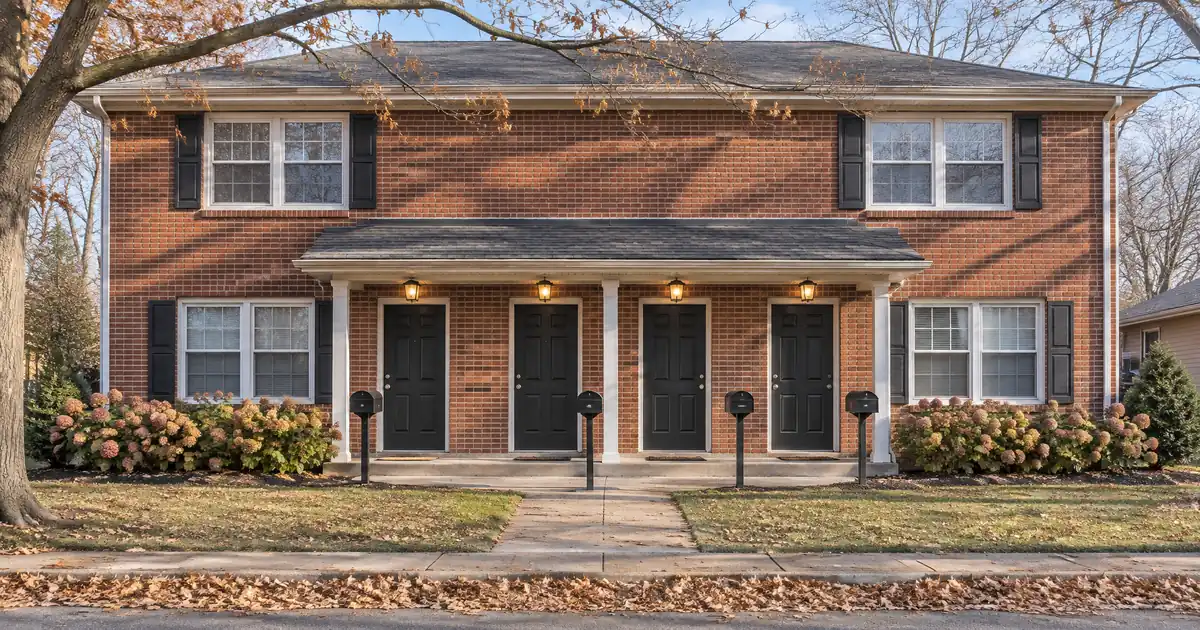
On the purchase, a different loan looks only at the fourplex. Here the lender asks whether the combined rent from four units covers the property’s full payment. The DSCR, or debt service coverage ratio, is monthly rent divided by principal, interest, taxes, insurance, and any HOA dues (together, PITIA). It compares rent to PITIA and nothing else.
That structure is why the plan can fail in two places. A strong fourplex doesn’t rescue a refinance that leaves rental one too thin, and a healthy refinance doesn’t rescue a fourplex whose rents fall short. Lendmire’s complete DSCR loans guide covers the full mechanics of both loan types.
How Much Can the First Rental Give Up?
Only as much as it can carry. A cash-out at 75% LTV or less on a standard rental raises the loan balance, which raises the payment, which lowers coverage on the property you’re borrowing against. Final terms depend on the lender’s guidelines, the property type, and the borrower’s complete credit picture.
Most programs we place files with expect about 6 months of ownership before a cash-out, measured from the date title was recorded. Credit requirements vary: a 620 floor exists in parts of the network, most programs want around 660, and 700 or better opens the strongest leverage tiers. Reserves commonly run around 6 months of PITIA, while loans above $1,500,000 typically step up to about 9 months. All of this is subject to lender guidelines and varies by borrower, property, and loan scenario.
Here is how the stress test can look. These are modeled assumptions, not market data.
| Test | Before | After cash-out | Reads as |
|---|---|---|---|
| Rental one coverage | ~1.45x | ~1.05x | Clears, with thin cushion |
| Fourplex coverage | n/a | ~1.20x | Clears on pooled rents |
| Both properties together | n/a | Each tested alone | Two files |
Rental one drops from comfortable to barely clearing. That can still be a workable file, since 1.00 is where select programs start and stronger coverage opens better pricing and leverage. But barely clearing leaves no room for a vacancy, a roof, or a rent concession. Coverage below 1.00 is available through select lenders in the network, with leverage and terms adjusted, but pulling equity from a file that starts below 1.00 is a harder case to justify.
What Does the Cash Actually Cover?
Less than the headline number suggests. The cash that reaches you is the new loan minus the old payoff, minus the refinance’s own closing costs, minus any reserves you must hold back.
Then the fourplex takes its share. Check every one of these against the net proceeds:
1. The down payment: typically 20%-25% on a purchase, or 15% on select high-leverage programs for borrowers with roughly a 700+ score. 2. Purchase closing costs. 3. Reserves required on the new loan. 4. Any repairs or turnover work on vacant or tired units. 5. A cushion that is yours, not the lender’s.
Sizing the refinance from the equity available, instead of from the purchase need, is the backwards approach, and it is how a file ends up with cash that covers the down payment but nothing else. Start with what the fourplex requires, then work backward to how much cash-out is worth taking. Equity available depends on rent used for lender review, PITIA, reserves, and the 75% cash-out LTV ceiling, so it is never a guaranteed cash figure. Leverage, reserves, and pricing vary by lender and program; the final terms follow the full file review.
A larger down payment lowers the monthly payment and can lift the DSCR, but it never erases leverage caps, credit floors, reserve rules, or property eligibility. The strongest files clear both tests: enough equity and enough rental coverage.
How Is the Fourplex Underwritten?
The fourplex is underwritten as an income property, and the rent from all four units is pooled against one payment. Most files land at 75%-80% LTV on a purchase, subject to lender guidelines.
Three details matter on a four-unit building:
- Rent schedule: The appraiser estimates market rent for every unit, and that figure usually drives coverage. A unit renting below market, or sitting vacant, can pull the number down.
- Unit mix: Four equal units are simple to underwrite. Four wildly different units invite more questions.
- Occupancy: A DSCR loan is built for non-owner-occupied properties. Deciding to live in one unit changes the loan category entirely.
That last point is the main fork. DSCR loans are designed for non-owner-occupied investment properties. Because they are business-purpose investor loans, they are reviewed differently from a standard owner-occupied mortgage. An owner who plans to live in one unit is on a different path. If you intend to rent all four units, a DSCR purchase is the cleaner fit. If you plan to live there, run both paths before choosing.
Manufactured homes (single- and double-wide), log homes, and barndominiums are not offered in the network’s DSCR programs, so confirm the building type early.
Go, Pause, or Stop?
A simple read on whether this strategy fits:
Go signals
- Rental one still clears 1.00 coverage comfortably after the larger loan.
- Net proceeds cover the down payment, closing costs, repairs, and reserves, with room left over.
- The fourplex’s pooled rent clears on its own, without help from rental one.
- Your credit score sits in the tiers the network prefers.
Pause signals
- Rental one clears coverage only barely after the cash-out.
- Seasoning on rental one is not yet met.
- The fourplex has vacant or below-market units, and your plan depends on lease-up.
- The purchase is not under contract, so the cash would sit with no firm target.
Stop signals
- Rental one drops below 1.00 after the refinance.
- The cash only works if you skip reserves.
- The fourplex only works at a higher rent than its appraisal supports.
The honest tradeoff: a refinance that thins rental one’s cushion in exchange for a bigger, higher-income asset suits an investor with stable reserves and patient capital. An investor already stretched on rental one, or relying on a hoped-for rent increase, is better off waiting.
What Are the Alternatives?
A cash-out refinance isn’t the only way to fund a fourplex down payment. Which one fits depends on the spare capital you have and how much you want to give up.
| Option | Best when | Watch out for |
|---|---|---|
| Cash-out on rental one | Equity is strong, coverage holds | Higher loan on a seasoned asset |
| Sell a weaker rental | One property drags the portfolio | Selling costs, lost income |
| Partner capital | You lack cash but have a deal | Shared ownership and control |
| Seller financing | Seller wants flexibility | Terms vary widely, negotiate hard |
| Wait and save | No deadline on the deal | The fourplex may sell first |
Nothing here is free. Each option trades money, control, or time for the down payment.
Mistakes That Sink This Plan
1. Treating the cash as free money. It is borrowed, the payment on rental one rises, and both transactions carry real costs. The CFPB’s guide to using home equity notes the payment may rise.
2. Assuming cash flow stays the same. It usually drops on the refinanced property, so check the coverage ratio before you commit.
3. Mixing up coverage and cash flow. Clearing 1.00 means rent covers PITIA. Repairs, vacancy, management, utilities, and capital expenses sit outside the calculation.
4. Spending proceeds before the purchase is secure. If the fourplex deal falls through after the refinance closes, you hold a larger loan and idle cash.
5. Repeating the move without a pause. Each cash-out raises debt on an older rental. Stacking them without rebuilding equity or reserves compounds the risk.
Tax treatment can depend on how the funds are used and how the property is held; investors should keep clear records and speak with a qualified tax professional before relying on any deduction.
Key Terms Defined
Cash-out refinance: A new, larger mortgage on a property you own, with the difference paid to you as cash at closing.
Seasoning: The ownership period a lender expects before a cash-out, about 6 months in most of the network, measured from the date title was recorded.
DSCR: Debt service coverage ratio, meaning monthly rent divided by the property’s full monthly payment.
PITIA: Principal, interest, taxes, insurance, and any association dues, the full monthly obligation used in the DSCR calculation.
Reserves: Liquid funds held after closing, commonly around 6 months of PITIA, though the requirement varies by lender, leverage, and loan size.
Frequently Asked Questions
Can I use a cash-out refinance for the down payment on a fourplex?
Yes, in many cases. The refinance is underwritten on rental one, and the purchase is underwritten on the fourplex. Each file qualifies primarily on property-level rental income covering the payment, subject to lender guidelines. The practical limit is whether both properties can carry their own debt.
How long do I have to own rental one before pulling cash out?
Most programs in the network expect about 6 months of ownership, measured from title recording. Some lenders vary, so confirm the requirement for your file before planning a purchase around the proceeds.
What if the fourplex deal falls through after the refinance?
You keep the larger loan on rental one and hold the cash. That is the main timing risk of refinancing first. Many investors line up a signed purchase contract before starting the refinance, so the cash has a defined job when it arrives.
Will the fourplex’s rent really be counted as one number?
Generally yes. Lenders look at the combined rent from all four units against the property’s single payment, and the appraiser’s rent schedule usually sets that figure. Uneven or vacant units can pull the number down, so a building with steady, near-market rents is the cleaner file.
Does a bigger down payment fix a weak coverage ratio?
It helps, because a lower loan balance lowers the payment and can raise coverage. It does not override leverage caps, credit floors, reserve rules, or property eligibility. The strongest files have both enough equity and enough rental coverage.
Next Step
If you are buying or refinancing a rental property and want to see how the numbers work, Lendmire can help you compare DSCR loan options based on the property income, credit profile, leverage, and investor goals. Lendmire is a mortgage broker arranging DSCR investor financing through select lenders across 41 markets, including Washington, D.C. Program details are subject to lender guidelines, and nothing here is a commitment to lend.
About Lendmire
Lendmire (NMLS# 2371349) is a mortgage brokerage built around DSCR investor lending, with programs available in 41 markets, including Washington, D.C. DSCR lenders commonly evaluate rental-income coverage instead of personal income paperwork, a practical fit for LLC-owned and multi-property investors. Terms vary by lender, property, leverage, and program. Scotsman Guide named Lendmire a Top Mortgage Workplace in both 2025 and 2026.
A deeper walk-through of investment-property equity extraction lives in Lendmire’s guide to cash-out refinance on an investment property.
Get Started
Ready to find the right loan for you?
See your offer in seconds. No credit pull, no obligation.
Informational only. Not a Loan Estimate, approval, or commitment to lend. Program availability and eligibility are subject to lender guidelines, credit approval, property review, and underwriting.
References
1. CFPB
2. CFPB: Using your home equity guide
This article is part of Lendmire’s investment property cash-out refinance program — full qualification details, guidelines, and scenarios live on the program page.
Related reading: How a Lender Counts Cash-Out Refinance Proceeds on a Rental Purchase · Can You Get a DSCR Cash-Out Refinance After Finishing the Rehab on a Rental? · What Is a DSCR Cash-Out Refinance on a Single Rental Property?
Brandon Miller
Founder & CEO, Mortgage Loan Originator, Lendmire LLC
- Mortgage Loan Originator · NMLS# 1129696 · Verify on NMLS Consumer Access
- North Carolina Real Estate Broker · License# 343312 · Verify on NCREC
- North Carolina Insurance Producer · License# 19053198 · Property, Casualty, Life, Health · Verify on NAIC SBS
- Lendmire LLC · Firm NMLS# 2371349 · Verify firm licensure
Disclosure information. Lendmire is a state-licensed mortgage brokerage under NMLS# 2371349. Lendmire is not a depository institution, direct lender, or financial advisor — all loans referenced are placed through wholesale lender partners and are subject to each lender's underwriting standards. This article is provided for general informational purposes and is not a commitment to lend, nor does it constitute financial, legal, or tax advice. Loan programs, terms, rates, and qualification standards change without notice and depend on borrower profile, property type, and the state in which the subject property is located. Equal Housing Opportunity provider. NMLS Consumer Access: nmlsconsumeraccess.org.