
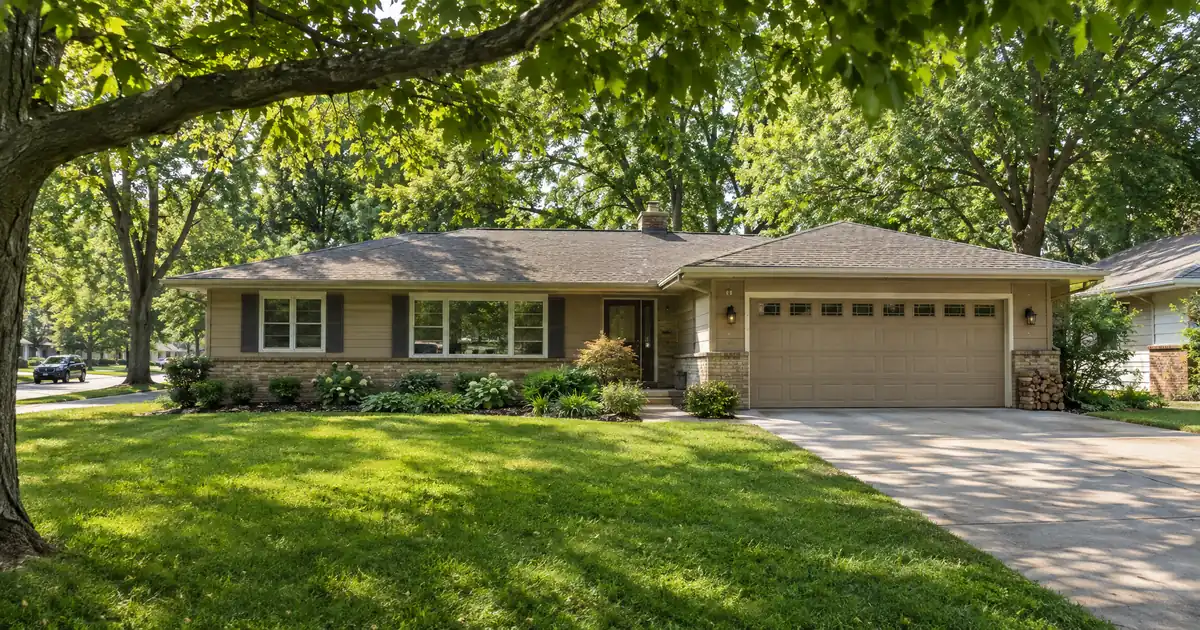
The Quick Read: A DSCR HELOC can refinance an older HELOC when that older line is secured by a one-to-four-unit rental you do not live in, because the new line pays off the old balance, closes it, and takes its lien position, and the property’s rental income covering the payment is the primary qualifier, subject to lender guidelines. Your personal income is not part of the calculation. The new line is a fresh product with its own rules, so it works as a reset, not a rescue.
- The old line must be secured by the rental. A line on your own home cannot be refinanced this way.
- Through select programs in Lendmire’s wholesale network, the rent must cover a stress payment on the whole new line at 1.10x or better, subject to underwriting.
- A second lien tops out at 70% combined loan-to-value (CLTV). A first lien on a rental with no mortgage reaches 75% loan-to-value (LTV) at the top credit tier.
- The new line restarts the clock with a fresh interest-only draw period, then repayment begins again.
- The old balance has to fit under the new ceiling. If it does not, you pay down the difference.
Key Terms Defined
DSCR (debt service coverage ratio): Monthly rent divided by the payment the lender tests. A ratio of 1.10x means the rent is 10% larger than that payment.
HELOC: A home equity line of credit. It is a revolving credit line secured by property, and you borrow against it as needed.
Draw period: The stretch when you can borrow from the line and often pay only interest.
Repayment period: The stretch after borrowing stops, when the balance is paid down on a schedule.
Lien position: Your lender’s place in line if the property is ever sold to settle debts. A first lien is paid first, and a second lien is paid after it.
CLTV (combined loan-to-value): The first mortgage balance plus the new line, divided by the property’s value.
Seasoning: The waiting period a lender wants after you buy or refinance a property before you borrow against it again.
Guarantor: A person who signs personally to back a loan, even when an LLC holds title.
Step Zero: Which Property Secures the Old Line?
Before anything else, check what the old HELOC is secured by. That one fact decides whether this strategy is open to you.
A DSCR HELOC is written only on a non-owner-occupied rental. It is never a line on your own home or a second home. If your old HELOC is secured by the house you live in, a rental’s DSCR line cannot pay it off. That debt needs a different route, such as an owner-occupied refinance.
If the old line sits on the rental, you are in the right lane. If it is secured by both a home and a rental, the picture gets mixed. The new line must be secured by the rental alone, so the home’s lien has to be dealt with separately.
Here is a quick sorting guide.
| Old HELOC is secured by | Can a DSCR HELOC refinance it? |
|---|---|
| The rental only | Yes, if the rental and file meet the program |
| Your primary home | No, wrong collateral |
| Both home and rental | Only the rental’s lien, handled separately |
DSCR loans are designed for non-owner-occupied investment properties. Because they are business-purpose investor loans, they are reviewed differently from a standard owner-occupied mortgage.
What a DSCR HELOC Actually Is
A DSCR HELOC is a revolving line of credit secured by a rental you keep. It comes in two shapes. One is a standalone second lien behind a first mortgage you keep in place. The other is a standalone first lien on a rental with no mortgage.
It is never closed together with a purchase, and it is never a third lien. That limit on lien position matters if your rental already carries a first mortgage and an old HELOC. The new line replaces the old HELOC in the second position. It cannot sit on top of both.
You can hold the rental in an LLC, subject to program eligibility. The members sign as guarantors. In other words, the LLC holds title, but the debt still follows the people behind it. The borrowers on the line also do not have to be the borrowers on the first mortgage.
The term “DSCR HELOC” is also used loosely online. Some people use it for any cash-out loan underwritten on rent. Here it means the line described here, a true open-end credit line qualified on the rental’s income. Lendmire’s complete DSCR loans guide covers the broader family of rent-qualified loans.
Why Repayment Forces the Decision
An older HELOC usually starts in a draw period, when you borrow and may pay only interest. Then borrowing stops and repayment begins. The CFPB’s HELOC explainer says the lender may set a schedule to repay the full balance. It also warns that in some cases the whole balance can come due as soon as repayment begins.
The same agency’s HELOC brochure adds that paying interest only during the draw period means no principal is paid at all. If the rate is variable, payments can also change without any new borrowing. So the payment you budgeted years ago may not resemble the one you face now.
Bank regulators have long noted that lines can convert to an amortization schedule. That guidance is for supervised banks. It does not give you a right to a refinance. Your contract sets the draw end date, the repayment terms, and whether a balloon applies. Pull it out and read it first.
That payment jump can hit rental cash flow hard. Rent that covered an interest-only payment may fall short once principal is added. A refinance resets that payment structure, which is why investors look at one before the draw ends.
How Underwriting Treats the New Line
Underwriters test the rental, not your pay stubs. There is no traditional personal-income documentation, no W-2 requirement, and no debt-to-income ratio on this program. Every parameter below is a ceiling or floor through select programs, never an offer, and all of it is subject to underwriting.
The coverage test. The minimum DSCR is 1.10x. Gross monthly rent is divided by a qualifying payment. That payment is fully amortizing and is figured on the entire credit limit at the start rate plus 2 percentage points. It is a stress test, not the payment you will actually make. The lender’s own coverage calculation governs the final result. Each figure is subject to lender guidelines and a complete review of property type, leverage, and credit.
Notice the phrase “entire credit limit.” You are tested as if you had drawn every dollar. A large line with a small balance is judged as a large line.
What counts as rent. The rent used is the lesser of the appraiser’s market rent (Form 1007) and the lease. A lease above market can count if you show three months of receipts. A lease in place is required. On a two-to-four-unit property, at most one unit may be vacant.
Credit. A second lien needs a 720 score. A first lien needs 700. Mortgage history must show no 30-day late in the last 12 months. That rule matters for an older line in repayment. If you are already behind on it, address that before you apply, because a recent late payment can end the file.
Valuation. For lines up to $400,000, the lender uses an automated valuation with a property inspection report, or a full interior appraisal. Larger lines require a full interior appraisal. Appraisal waivers are not accepted.
Seasoning. A rental bought or refinanced inside the last 6 months is not eligible (that clock runs from the last note date to the new note date), and the owner must have held title for 6 months (settlement date to note date). No reserves and no cash to close are required, though a borrower can carry at most five loans or $2,500,000 with the program.
Leverage: Will the Old Balance Fit?
Simple arithmetic can trip up a refinance. Your new line must fit under the ceiling after the first mortgage is counted.
Second lien (behind your first mortgage). CLTV runs up to 70% at a 720 score or better, on lines from $50,000 up to $500,000. Run it this way on a modeled property. Suppose the first mortgage balance is about 50% of the property’s value. The old HELOC is about 15% of value. Today’s combined position is roughly 65%.
A new line sized at 20% of value brings CLTV to 70%. That fits. The extra room could even allow a modest amount of cash beyond the payoff, though the draw rules below limit how a line is sized.
Now change one input. Say the old HELOC is 25% of value instead. The combined position is 75% before you do anything. The new line can only reach 70% CLTV, so you must pay down about 5 points of value in cash. Otherwise the numbers do not close. The old line may have been written when the property was worth less or the first mortgage was larger. The ceiling does not care.
First lien (a rental with no mortgage). If the old HELOC was the only debt, the new line is a first lien. Leverage reaches 75% LTV at a 740 score or better. It is 70% at 700 to 739. Lines above $500,000, up to $1,000,000, carry a 65% LTV ceiling at 720 or better. Leverage and terms vary by program; the final terms follow the full file review.
A declining-market flag on the property can lower any ceiling by 5 points. Condominiums are eligible property types, but the leverage tiers above govern every property type.
Step by Step: Retiring the Old Line
Here is the sequence a file usually follows.
1. Read the old contract. Note the draw end date, repayment schedule, balloon terms, any early-closure fee, and the lien position.
2. Confirm the collateral. It must be an eligible one-to-four-unit rental that you do not occupy.
3. Gather the rent evidence. You need a lease in place. The appraiser’s Form 1007 sets market rent for a single-family home, and Form 1025 covers two-to-four units.
4. Run the coverage test. Divide gross rent by the stress payment on the whole new limit. You want to clear 1.10x with a margin.
5. Check combined leverage. Add the first mortgage balance and the new limit, then divide by the valuation.
6. Order the valuation and title work. A full title policy is required on a first lien and on second liens above $400,000. Smaller second liens use an owner-and-encumbrance report.
7. Get a payoff letter from the old lender. Per-diem interest accrues daily, so the final number moves until closing.
8. Close and freeze the old line. The payoff should be paid at closing and the old line formally closed, so the new line holds its intended position.
Draw rules to plan around. At least 80% of the new line, and never less than $50,000, is drawn at closing. Later draws are at least $5,000 each. The draw period runs 5 years interest-only on the drawn balance. Then a 25-year fully amortizing repayment period follows, with a 30-year maturity. The rate is variable.
That closing draw has a side effect. If your old balance is small, the minimum closing draw may exceed it. The leftover lands in your hands as cash. Do not take a line you do not want just to refinance a small balance.
Where the General Rule Breaks
You are replacing the first mortgage too. This program is a standalone line. It does not bundle a new first mortgage with the payoff of the old line. If you want to replace both, you are in cash-out refinance territory instead. Lendmire’s piece How to Use a Rental Cash-Out Refinance to Pay Off a HELOC walks through that path.
Rent is too thin. A DSCR HELOC does not cure a coverage shortfall. It swaps one debt for another. This line’s minimum is 1.10x on the stress payment, and that is the only coverage figure that applies to it. If you come in under, a smaller limit lowers the stress payment, and a lease at market rent can lift the rent side. Other loan types, such as cash-out refinances, follow their own coverage rules, so they are a different conversation.
Strong rent, weak equity. Rent can cover the payment comfortably while the balance still exceeds the leverage ceiling. Coverage and leverage are separate tests. You must pass both.
Property type. Rural-designated property, row homes, condotels, commercial or agricultural property, and leaseholds are outside the program. So are land trusts, age-restricted communities, hobby farms, modular and log homes, land contracts, and mixed-use property. A property listed for sale in the prior two months or carrying a solar lien is also out.
Short-term rentals. Rent evidence differs for nightly stays, and treatment is program-specific.
Borrower type. The program serves US citizens, permanent residents, and non-permanent residents with a Social Security number. Foreign nationals and ITIN borrowers are not eligible.
Your Exit Options Compared
Refinancing is one answer among several. Across the wholesale network, the right call depends on equity, rent, and how long you plan to hold.
| Option | Fits if | Trade-off |
|---|---|---|
| Pay it down from cash | You have spare capital | Locks up cash |
| Ask the bank to renew | Your bank offers it | No right to a renewal |
| New DSCR HELOC | Rent clears 1.10x, equity fits | Restarts draw and repayment clock |
| Cash-out refinance | You want to replace the first too | New first mortgage terms |
| Sell the rental | Rent and equity both fall short | Gives up the asset |
A bank has no duty to extend an older line, and a new line from a different lender needs new underwriting. If your repayment period has already started, the options narrow, but they do not vanish.
The Honest Tradeoff: This Is a Reset
The new line does not remove the repayment problem. It moves it five years down the road. After the interest-only draw period, a fully amortizing repayment begins on whatever you have drawn. The variable rate also means the payment can move.
So ask what you will do at that point. Some investors use the time to raise rents, pay down principal, or sell. Others plan a later refinance. A line you draw on freely can be a flexible tool or a slow trap, depending on whether you have an exit.
Tax treatment can depend on how the funds are used and how the property is held. Borrowers should keep clear records and speak with a qualified tax professional before relying on any deduction.
Frequently Asked Questions
Can a DSCR HELOC pay off a HELOC on my own home?
No. The line is only written on a non-owner-occupied one-to-four-unit rental. It is never offered on your primary residence or a second home. A HELOC on the home you live in needs a different, owner-occupied solution.
What if I am already in the repayment period?
You can still apply, but the file gets harder. The program wants no 30-day late on mortgage history in the last 12 months. If your payment jumped and you stayed current, you may be fine. If you fell behind, address that first. Underwriting reviews each file individually.
Does the old HELOC count against my coverage ratio?
The program tests rent against a stress payment on the new line’s full limit. The old line is gone once it is paid off. For a second lien, the lender’s own coverage calculation governs how the first mortgage factors in. Your lender confirms the exact formula.
Is this available in my state?
The program is offered in 15 of Lendmire’s 16 licensed states, every licensed state except Tennessee. Those are Alabama, California, Colorado, Florida, Georgia, Indiana, Michigan, Montana, New Mexico, North Carolina, Ohio, Pennsylvania, Texas, Virginia, and Washington. Availability and terms are subject to underwriting.
Can my LLC hold title?
Yes, for investment property, subject to program eligibility. The members sign as guarantors. A title holder who is not a borrower signs a non-borrowing owner acknowledgment and the security instrument.
Next Step
If you are considering a home equity line on a rental property and want to see how the numbers work, Lendmire can help you compare DSCR HELOC options based on the property, the rent, the equity available, credit profile, combined leverage, and your goals. Reach the team at 828-256-2183 or request a quote.
About Lendmire
Lendmire (NMLS# 2371349) is a mortgage brokerage serving homeowners and real estate investors in its 16 full-service states. Home equity lines of credit are arranged through wholesale lending channels; Lendmire brokers the line and the lender underwrites each application under its occupancy-based guidelines. Scotsman Guide named Lendmire a Top Mortgage Workplace in both 2025 and 2026.
Get Started
Ready to find the right loan for you?
See your offer in seconds. No credit pull, no obligation.
Informational only. Not a Loan Estimate, approval, or commitment to lend. Program availability and eligibility are subject to lender guidelines, credit approval, property review, and underwriting.
References
This article is part of Lendmire’s DSCR HELOC program — full qualification details, guidelines, and scenarios live on the program page.
Related reading: DSCR HELOC vs DSCR Cash-Out Refinance When Your Credit Score Is Below 670 · DSCR HELOC vs DSCR Cash-Out Refinance to Purchase Investment Property · DSCR HELOC vs DSCR Cash-Out Refinance on an Investment Condo
Brandon Miller
Founder & CEO, Mortgage Loan Originator, Lendmire LLC
- Mortgage Loan Originator · NMLS# 1129696 · Verify on NMLS Consumer Access
- North Carolina Real Estate Broker · License# 343312 · Verify on NCREC
- North Carolina Insurance Producer · License# 19053198 · Property, Casualty, Life, Health · Verify on NAIC SBS
- Lendmire LLC · Firm NMLS# 2371349 · Verify firm licensure
Legal disclosures. Lendmire (NMLS# 2371349) is a state-licensed mortgage brokerage that arranges financing through wholesale lender relationships. Lendmire is not a direct lender, depository institution, or registered financial advisor. The discussion above is general informational content about real estate financing — it is not financial, legal, or tax advice, and readers should consult licensed professionals for guidance on their individual circumstances. Loan inquiries are subject to lender underwriting; this article does not represent a commitment to lend. Loan terms, rates, and qualification standards vary by borrower, property, and state, and are subject to change at any time. Equal Housing Opportunity. NMLS Consumer Access: nmlsconsumeraccess.org.