
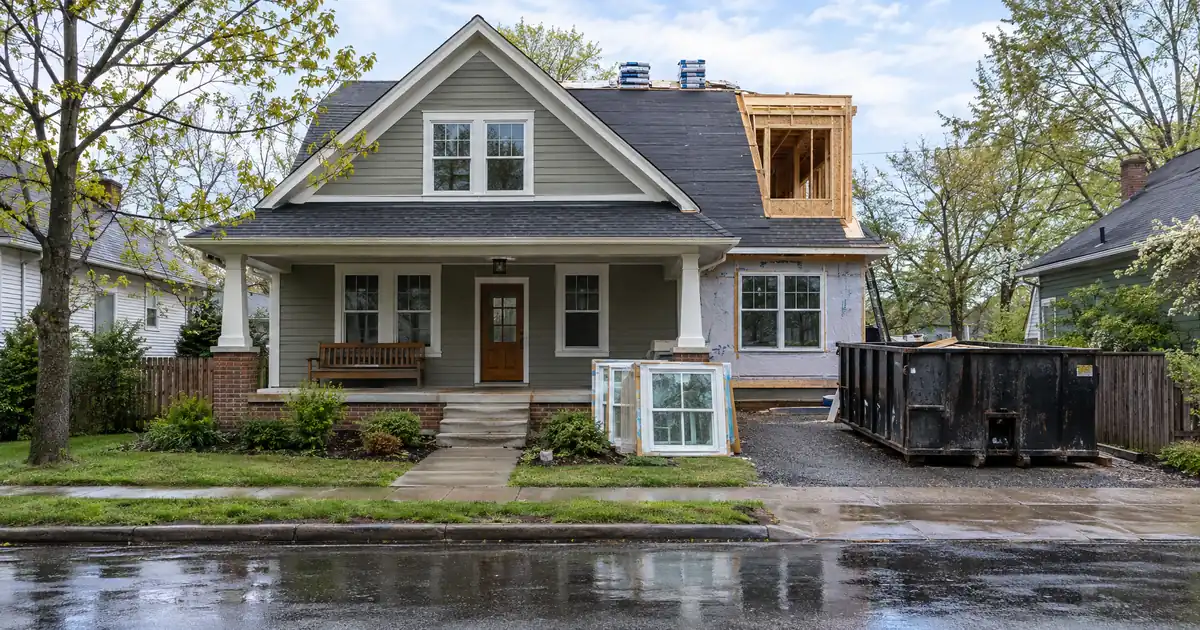
The Quick Read: Only when the property needs work or the deal has a deadline, the numbers absorb the extra cost, and a long-term loan is lined up before you close. Otherwise it is a poor default for a first rental. Hard money is a bridge, not a hold loan.
- Hard money lends against the property and your plan, not your paycheck. It still wants cash from you, a credit score, and a clear exit.
- Terms are short, typically 6-18 months, so every month of delay costs you.
- First-timers sit in the lower leverage tiers, and the top tier is reserved for experienced investors.
- If the property is already rent-ready, a DSCR purchase loan usually skips the bridge and the refinance risk.
- If the property is distressed, hard money followed by a DSCR refinance is the standard path.
Key Terms Defined
You will see these words all through the deal, so here they are once.
Hard money is a short-term loan secured by the property itself. The lender cares most about the asset and the plan.
ARV (after-repair value) is what the property should be worth once the work is done. Lenders cap the loan against it.
Loan-to-cost compares the loan to your total project cost, meaning purchase price plus rehab. Hard money leverage is often quoted this way.
Draws are payments of rehab money released in stages as work gets finished and inspected.
DSCR (debt service coverage ratio) is monthly rent divided by the monthly housing payment. That payment is PITIA: principal, interest, taxes, insurance, and any association dues.
LTV (loan-to-value) is the loan as a percentage of the property’s value.
Seasoning is the waiting period a lender wants before it will refinance a recently bought property.
Takeout loan is the long-term loan that pays off the short-term one.
What this loan actually costs to carry.
Hard money is sized against the project and priced by time. Enter the deal and see how much the program will lend, the cash required at closing, the carry while you hold it, and what is left at the exit.
Leverage tiers on the current program: 85% with fewer than 2, 90% with 2 or more, 93% with 5 or more completed projects — every tier capped at 75% of after-repair value. Loan amounts up to $5,000,000, larger by exception; terms of 6 to 18 months, interest-only, no prepayment penalty. The rehab portion funds in draws against completed work, not at closing.
Program parameters shown update from Lendmire’s centralized guideline source. Rate, points, and months are editable assumptions, not quoted terms.
Cost cap sets the loan · positive spread
Illustrative estimate only — not a quote, Loan Estimate, approval, or commitment to lend. Rate, points, and months are editable assumptions. Hard money is business-purpose financing for real estate investors, not a consumer mortgage. Leverage on the current program tops out at 93% of project cost for investors with a documented track record, capped at 75% of after-repair value, with rehab funding up to 100% of the documented budget released in draws; actual terms vary by lender, borrower experience, property, and exit. Lendmire is a mortgage broker, not a lender.
What Does Hard Money Actually Do on a First Deal?
It buys you a bridge. A hard money lender funds the purchase, and often most of the rehab, against the property. You then refinance or sell before the short term runs out.
Experian describes these loans as asset-based. The lender weighs the deal and the collateral more heavily than your credit or income. Experian also flags the same tradeoff every investor feels: the cost is high and the repayment window is short, which makes the loan risky if the plan slips.
Here is how that plays out on a file:
- What gets tested. The lender looks at the property’s value as-is and after repairs, the scope of work, your exit plan, and the cash you are putting in.
- How rehab money moves. Rehab funds are released in draws. Work gets inspected, then paid for. Your contractor may wait on you, and you may wait on the lender.
- How you pay. Payments are interest-only. Principal comes due at the end, which is the whole reason you need an exit.
- How long it lasts. Terms on the programs we see typically run 6-18 months, with no prepayment penalty. There is no multi-year option. If you need more runway, you refinance into long-term rental financing.
- Who it is for. The property must be non-owner-occupied residential, 1-4 units. Many hard money lenders also ask you to hold title in an LLC, subject to lender program eligibility.
Can a First-Timer Even Get One?
Yes, often. Experience changes your pricing and leverage more than it changes whether you are eligible. Some institutional lenders do require a track record outright, but many fund newcomers at lower leverage.
The programs Lendmire places files with tier leverage by documented completed projects. Treat these as typical ranges that vary by lender, property, and experience:
- Fix-and-flip, fewer than 2 completed projects: around 85% of project cost, always capped at 75% of ARV.
- 2 or more completed projects: around 90% of project cost, same ARV cap.
- 5 or more completed projects: up to 93% of project cost, same ARV cap.
- Bridge purchase with no rehab: up to 80% of the purchase price.
- Refinance, cash-out or rate-and-term: up to 65% of value.
- Rehab budget: up to 100% of the budget can fund in draws against completed work. That is a rehab figure, never a purchase LTV.
Read that list twice. There is no true 100% purchase program. When someone promises hard money for the full price plus repairs, they are describing a rehab-budget draw or a lender who counts the ARV generously, not free money. You still bring cash for the gap between the loan and the cost.
Credit still counts. A 620 score is the typical minimum, with added conditions below 660. Loan amounts run up to $5,000,000, larger by exception, and smaller balances vary by lender. Lenders also look at your liquidity, because they want proof you can cover overruns.
When Hard Money Makes Sense on a First Deal
It makes sense when the property cannot be financed any other way, or when the deal’s profit comfortably pays for the bridge. Three tests decide it.
1. The property needs real work. A kitchen gut, a roof, a unit that cannot get a standard appraisal today. A long-term lender will not fund a property in that condition. The bridge solves a problem you actually have.
2. The numbers absorb the cost. Interest-only carry, up-front fees, and draw delays all shrink your margin. If the deal only works when everything goes right, it does not work.
3. The exit is lined up before you close. You know which long-term lender you will approach, what that lender needs, and when the loan can be refinanced.
The two most common first-deal strategies fit this mold. A first flip uses the bridge, then sells. A first BRRRR (buy, rehab, rent, refinance, repeat) uses the bridge, stabilizes the rental, then refinances into a long-term loan.
The honest counterpoint is that experienced investors disagree here. Some say a first flip should not use hard money, because the first deal is a learning experience and the carrying cost adds pressure on top of it. Others say plenty of people do it successfully when they have done their homework and trust the numbers. Both camps are right about something. The tool works when the deal is strong. It punishes a weak deal faster than other financing does.
When Should You Skip It?
Skip it when the property is rent-ready and the bridge adds cost with no benefit. Skip it when your margin is thin or your reserves are empty. Skip it when you cannot name the takeout loan.
Run this fit test before you make an offer:
- Green light: a clear scope with a contractor bid, comps that support the ARV, cash for the down payment plus a cushion, and a takeout lender you have already spoken with.
- Red flag: a margin that disappears if the rehab runs a month long, an ARV based on one optimistic comp, no cash left after closing, or a plan that depends on a refinance you have never priced.
- Red flag: a lender who cannot explain the draw process, extension terms, and fees in plain words.
Another path worth naming: a house hack, where you live in one unit of a small multifamily on owner-occupied financing. It is a different product with a different rule set, so it deserves its own article. For a pure rental purchase, the cleaner comparison is the next section.
Hard Money or a DSCR Purchase Loan?
If the property is already stable, a DSCR purchase loan is usually the better first move. It skips the bridge, and it skips the refinance risk that sits at the end of every bridge.
| Factor | Hard money | DSCR purchase loan |
|---|---|---|
| Built for | Rehab or deadline deals | Rent-ready rentals |
| Term | 6-18 months, interest-only | 30-year fixed is the spine |
| Leverage | Cost-based tiers, ARV cap | Typically 75%-80% LTV on a purchase |
| Reviewed on | Property, plan, exit | Rent covering the payment |
| Ends with | Sale or refinance | Long-term hold |
On the DSCR side, here is what we see across the wholesale network. Most purchase files land at 75%-80% LTV, which means 20%-25% down. Select high-leverage programs reach 85% LTV on a purchase, about 15% down, usually with a score near 700 or better. A 620 floor exists in parts of the network, most programs want around 660, and 700+ opens the strongest tiers. Loan sizes run up to $3,000,000 on standard programs (smaller balances available through select lenders). Terms and reserves vary by lender, leverage, and loan size, and reserves commonly sit near 6 months of PITIA.
Coverage works like this. A 1.00 ratio is where many select programs start. A separate select-lender path takes coverage below 1.00, with leverage and terms adjusted. Stronger ratios open better pricing and leverage. The loan is reviewed primarily on property-level rental income covering the payment, subject to lender guidelines. That is useful if your personal debt-to-income picture is crowded.
One caution. Clearing 1.00 does not mean the property cash flows. DSCR compares rent to PITIA only. Repairs, vacancy, management, utilities, and capital expenses all sit outside the calculation, so budget for them separately. Our complete DSCR loans guide walks through the whole framework.
A First Deal Run Through the Numbers
Take a modeled first flip or BRRRR. The inputs below are assumptions for illustration, not market data.
Step 1: the purchase and rehab. Assume your total project cost, purchase plus rehab, comes to 80% of the ARV. A first-timer tier at 85% of project cost funds 68% of ARV. That sits under the 75% ARV cap, so the cost-based tier controls. You bring the rest in cash, plus closing costs and a cushion.
Step 2: the cap bites on a thinner deal. Now assume the project cost is 90% of ARV. Eighty-five percent of that would be 76.5% of ARV, so the 75% cap controls and your cash requirement rises. Thin deals ask for more of your money.
Step 3: the takeout. You plan to refinance into a DSCR loan. A cash-out refinance tops out around 75% LTV on standard rentals and around 70% on short-term-rental collateral. Short-term rental rules can vary by city, county, HOA, and property type, so investors should confirm local rules before relying on projected rental income. Every figure here varies by lender and program — guidelines, property type, leverage, and credit profile all apply.
Say the bridge payoff is 68% of the value you expect. If the appraisal comes in 10% lower than your ARV, that payoff becomes about 75.6% of the new value. That is already over the 75% line before exit costs. A value slip hits your cash-out faster than it hits the value, because the payoff does not fall.
The break-even appraisal is simple: payoff plus exit costs, divided by the LTV cap. Run that number before you buy, not after.
Step 4: the delay. Suppose the rehab runs a few weeks over. Interest keeps accruing, draws wait on inspections, and the rental does not start. The payoff grows every month you wait. Your margin shrinks twice: once from carry, once from lost rent.
Practitioner pattern. Across the files we place, the failures rarely come from the bridge itself. They come from a gap between the ARV the investor used and the appraisal and rent figure the takeout lender uses. The takeout lender runs its own numbers. Your ARV is a forecast, not a promise.
Where the Exit Breaks
A hard money exit usually fails in one of four places. Know them and you can plan around each.
A low appraisal. This is the big one. Hold cash reserves so you can still refinance if the value comes in under your ARV. Treat the reserve as a cost of doing the deal, not as spare money.
Seasoning. Many long-term lenders want a seasoning period before a cash-out refinance, and about 6 months from title recording is the common expectation on a DSCR cash-out. If your bridge matures near that mark, you have no room. Choose a term that clears seasoning with a buffer. A first-time investor who could not refinance as soon as expected found the delay expensive, and seasoning was the usual reason.
A weak rent number. The refinance lender sets rent from its own appraisal, not from your pro forma. Coverage that looked like 1.2x on your sheet can come back thinner. Many lenders will weigh the lease and the appraiser’s rent schedule together.
A slow sale. If your plan is a flip, the exit is a buyer. Hard money gives no grace if the listing sits. That is why a flip needs a fallback: rent the property and refinance.
The fix is the same each time. Pick your takeout lender before the bridge closes so maturity, seasoning, and leverage caps line up. Many investors who finish a bridge refinance into long-term DSCR investor loans once the property is stabilized, and Lendmire brokers that path.
Getting Ready Before You Make Offers
Build the file first. Hard money lenders ask for the same short list, and having it ready keeps your offers credible:
- Proof of funds for the down payment, plus reserves.
- A written scope, timeline, and contractor bid.
- Comps that support your ARV.
- Your entity set up, if the lender requires an LLC.
- A short bio of any experience, including renovating your own rentals.
- A named takeout lender and a rough sizing of that loan.
Why don’t hard money or DSCR lenders ask for W-2s? Both are designed for non-owner-occupied investment properties. Because they are business-purpose investor loans, they are reviewed differently from a standard owner-occupied mortgage. Federal guidance treats credit used to acquire or improve non-owner-occupied rental property as business-purpose credit, and the ability-to-repay rulemaking says those provisions do not cover business-purpose loans. That helps the investor who is out of state or carrying student-loan debt. It does not remove the credit, cash, and property tests.
Tax treatment varies; consult a qualified professional.
Misconceptions That Cost First-Timers Money
Hard money means no money down. It does not. Leverage stops short of the full cost, and you still fund the gap, the fees, and the reserves.
Credit does not matter. It matters less than the property, but lenders still review it. A 620 score is the typical floor on the programs we place, with extra conditions below 660.
You cannot get it without experience. Mostly false. Experience moves you up the leverage tiers, so a first deal also sets your record for the next one.
Hard money is a hold loan. It is built for months, not years.
Business purpose means no rules. Business-purpose loans still have lender guidelines, entity requirements, and property limits. Not every property qualifies either: the network does not offer DSCR on manufactured homes, log homes, or barndominiums.
The refinance is automatic. The new lender uses its own appraisal and rent figure, not your ARV.
Frequently Asked Questions
Can I get hard money with no experience at all?
Often yes, at the lower leverage tiers. With fewer than 2 completed projects, fix-and-flip files typically sit around 85% of project cost, capped at 75% of ARV. Terms and pricing vary by lender, property, and experience. Some institutional lenders do require a track record.
Is hard money ever a good fit for a first rental I plan to keep?
Yes, when the property needs work that blocks long-term financing and you plan to refinance. Hard money then acts as the bridge in a BRRRR. If the rental is already stable, a DSCR purchase loan avoids the bridge entirely.
How much cash do I need?
More than a conventional-style down payment on most files, because leverage is capped against cost and ARV. You also need reserves for overruns and for a low appraisal at the exit. The exact amount varies by lender, property, and experience.
What credit score do I need?
A 620 minimum is typical, with additional conditions below 660. The property, the plan, and the exit carry most of the weight, but lenders still review credit and liquidity.
Do I need an LLC?
Many lenders prefer or require one for business-purpose loans. Some investors set it up before shopping so the paperwork does not hold up the file.
Next Step
If you are buying, rehabbing or refinancing an investment property on a short timeline and want to see how the numbers work, Lendmire can help you compare hard money options based on the project, the exit plan, leverage, and your goals. As a broker, it arranges financing through select lenders in its wholesale network across 41 markets, including Washington, D.C. Nothing here is a commitment to lend, and every file is underwritten individually.
About Lendmire
A non-QM mortgage broker (NMLS# 2371349), Lendmire arranges DSCR financing for real estate investors in 41 markets — 40 states plus Washington, D.C. Because deals are underwritten primarily on property cash flow rather than personal income documentation, the structure suits self-employed buyers and entity-owned portfolios. Lendmire places loans through wholesale investor lenders; it is not a direct lender. Scotsman Guide named Lendmire a Top Mortgage Workplace in both 2025 and 2026.
Short-term financing tends to work best when the long-term plan is decided early – see refinancing out of a hard money loan with a DSCR loan.
Get Started
Ready to find the right loan for you?
In about 30 seconds you can review financing options available for your investment property. No commitment required.
Informational only. Not a Loan Estimate, approval, or commitment to lend. Program availability and eligibility are subject to lender guidelines, credit approval, property review, and underwriting.
References
1. Experian — How Do Hard Money Loans Work?
2. CFPB — Truth in Lending Act summary
3. Federal Register — Ability-to-Repay and Qualified Mortgage Standards
This article is part of Lendmire’s hard money loan program — full qualification details, guidelines, and scenarios live on the program page.
Related reading: Can You Use a Hard Money Loan to Buy Out Siblings or a Partner? · Can a DSCR Refinance Close Before Hard Money Maturity on a Long Rehab? · Hard Money Overrun Documentation for a BRRRR Rehab Into a DSCR Loan
Brandon Miller
Founder & CEO, Mortgage Loan Originator, Lendmire LLC
- Mortgage Loan Originator · NMLS# 1129696 · Verify on NMLS Consumer Access
- North Carolina Real Estate Broker · License# 343312 · Verify on NCREC
- North Carolina Insurance Producer · License# 19053198 · Property, Casualty, Life, Health · Verify on NAIC SBS
- Lendmire LLC · Firm NMLS# 2371349 · Verify firm licensure
Important disclosures. Lendmire (NMLS# 2371349) is a licensed mortgage brokerage. Lendmire is not a direct lender, depository institution, or financial advisor. All loan inquiries are subject to lender underwriting; this article does not constitute a commitment to lend. Rates, terms, and program guidelines are subject to change without notice and vary by borrower profile, property type, and state. Information in this article is general in nature and is not financial, legal, or tax advice. Equal Housing Opportunity. NMLS Consumer Access: nmlsconsumeraccess.org.