
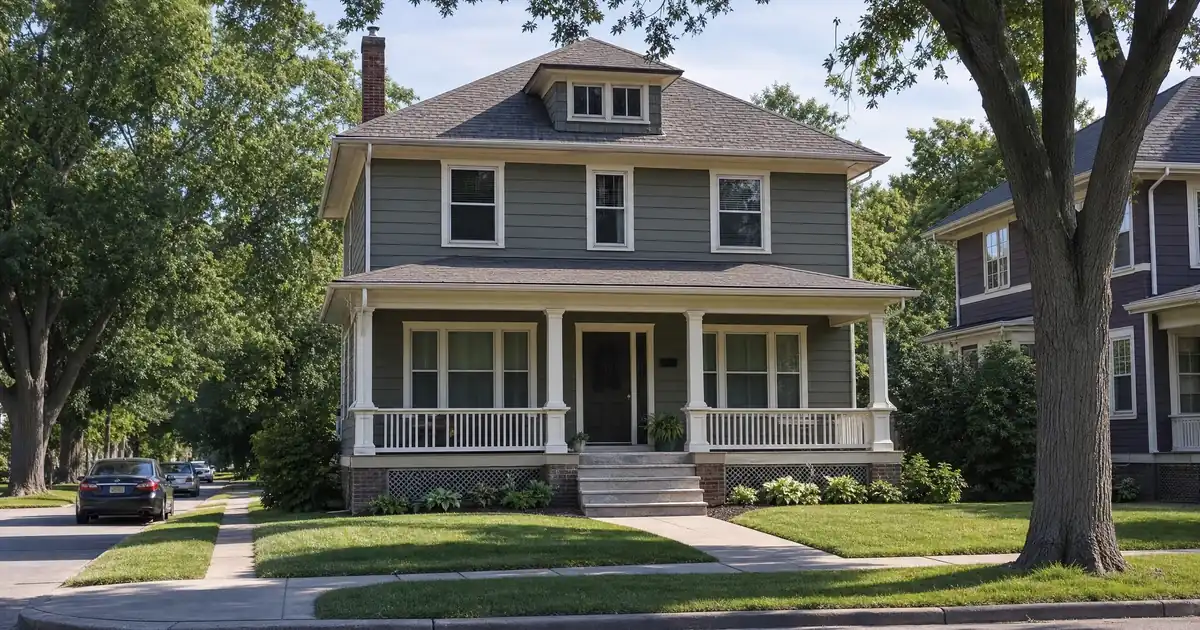
Using Equity In Your Home To Buy Investment Property — The Quick Read: Homeowners with enough built-up value can pull cash from a primary residence. They do this through a cash-out refinance, a home equity loan, or a HELOC. Then they use that cash as the down payment on a rental. The equity-extraction loan gets underwritten on the homeowner and the primary home. The rental purchase is usually financed separately. It’s often financed through a DSCR loan, which qualifies mainly on the property’s rental income rather than the buyer’s personal income. Both halves of the deal have their own rules. Mixing them up is where investors get tripped up.
Key Takeaways
- Tapping equity and buying the rental are two separate loans with two separate underwriting standards — don’t assume approval on one guarantees the other.
- Purchase leverage on the destination DSCR loan typically runs 75%-80% LTV, with select high-leverage programs reaching 85% for stronger credit files.
- Cash-out refinances on the rental side generally cap around 75% LTV, with roughly six months of seasoning expected before the new value can be used.
- DSCR loans qualify primarily on rental income covering the payment, not the borrower’s traditional personal-income documentation — subject to lender guidelines.
- Cash used as a down payment on a DSCR purchase usually needs to be documented and sourced; large recent deposits often need an explanation regardless of where they came from.
How Much Equity Is Actually Out There?
Homeowners nationally are sitting on roughly $11 trillion in tappable equity. Average equity per borrower is near $300,000. Yet only about 3% of that equity got tapped in the most recent year measured, according to Cotality. That gap between available equity and equity actually used is the whole reason this strategy is worth asking about.
DSCR Calculator
Run the numbers in your market
Rate source: Freddie Mac 30-yr average via FRED® — Federal Reserve Bank of St. Louis · effective Jul 30, 2026
Prefilled with local estimates — enter your own rent or nightly figures, taxes, insurance, and HOA for a more accurate picture.
Program parameters update from Lendmire’s centralized guideline source. Taxes and insurance are editable estimates.
As of Jul 30, 2026 · General Freddie Mac market benchmark, not a Lendmire loan offer. Rent, nightly rate, occupancy, taxes, and insurance are editable estimates. Short-term rental figures are estimates only and vary significantly by season, property type, management approach, and local short-term-rental rules — confirm local regulations before relying on them. Qualifying income for short-term rentals varies by program — some use appraisal market rent, others use documented STR history or projections — and is confirmed in underwriting. Not a Loan Estimate, approval, or commitment to lend. Program availability and eligibility are subject to lender guidelines, credit approval, property review, and underwriting.
What Home Equity Actually Means
Home equity is just the gap between what a property is worth and what’s still owed on it. Nothing more complicated than that. A home valued at $450,000 with $210,000 left on the mortgage carries $240,000 in equity. That figure is illustrative, not a market data point. It moves with two things: how much mortgage principal has been paid down, and how much the home’s value has changed since purchase. It’s a lump-sum number, not a monthly one. That’s part of why it feels abstract until it turns into an actual loan.
The Three Ways to Tap It
There are three doors into that equity, and each one behaves differently once opened. A home equity loan hands over a lump sum at closing with a fixed repayment schedule. A HELOC opens a revolving line the borrower draws against as needed. It typically starts with a draw period, then moves into a repayment period. A cash-out refinance replaces the existing mortgage entirely with a bigger one. It delivers the difference in cash. All three are secured by the primary residence. All three go through standard consumer-mortgage underwriting — credit, income, debt-to-income, appraisal — because the collateral is the home someone lives in.
| Factor | Home Equity Loan | HELOC | Cash-Out Refinance |
|---|---|---|---|
| Structure | Lump sum, fixed schedule | Revolving line, draw as needed | Replaces existing mortgage |
| Best fit | One-time known need | Ongoing or uncertain need | Consolidating into one loan |
| Existing mortgage | Stays in place (2nd lien) | Stays in place (2nd lien) | Replaced entirely |
| Underwriting basis | Homeowner + primary home | Homeowner + primary home | Homeowner + primary home |
Investors weighing using home equity to buy an investment property often default to the cash-out refinance. It’s the most familiar structure. But a HELOC can make more sense for an investor who isn’t sure yet how much cash the next deal will need.
Step by Step: How the Money Actually Moves
Here’s the path from equity to closing table, laid out in order.
Step 1 — The homeowner establishes the equity position. Current value minus current mortgage balance. Nothing exotic.
Step 2 — The homeowner picks the extraction vehicle — home equity loan, HELOC, or cash-out refi. The choice depends on how the cash will be used and how much certainty there is around timing.
Step 3 — That loan gets underwritten like any consumer mortgage. Credit, income, appraisal, debt-to-income. If the source is a primary residence, this is standard territory. But if an investor instead tries to tap equity out of an existing rental rather than a primary home, leverage caps tend to run tighter. Investment-property HELOC lines in most wholesale-network programs cap at $500,000 total. There’s no meaningful tier above that for non-owner-occupied lines.
Step 4 — Funds land in the borrower’s account and become “sourced cash.” At this point, they look no different from any other deposit — at least until the next loan file asks where they came from.
Step 5 — The rental purchase gets financed separately, most commonly with a DSCR loan. This is where the strategy actually pays off. DSCR underwriting looks at the subject property’s rent against its own payment, not the borrower’s overall debt load. So a new HELOC payment on the primary residence doesn’t automatically drag down qualification the way it might under conventional, income-based underwriting.
Step 6 — The destination lender documents and sources the down-payment funds. This is the step most investors don’t see coming. It’s covered in more detail below.
Step 7 — Closing happens on the rental, typically in an LLC or personal name. This depends on the investor’s structure and the program’s eligibility rules.
That’s the whole mechanism. Two loans, two underwriting frameworks, one investor moving cash from a house they live in to a house they don’t.
How the Destination Lender Treats That Cash
Sourcing and seasoning is the piece of this strategy that surprises people most. The HELOC or cash-out loan didn’t require it — but the destination loan usually does. Across the wholesale network Lendmire (NMLS# 2371349) works with, down-payment funds on a DSCR purchase generally need to be documented and traceable. Large or recent deposits typically need an explanation, no matter where they came from. Exactly how long funds need to sit before use varies by lender. But a couple of months of paper trail is a reasonable expectation on most files. Gift funds are uncommon on investment-property purchases in this space — DSCR down payments are typically expected to be the borrower’s own capital.
DSCR qualifies mainly on property-level rental income covering the payment, subject to lender guidelines. Most programs in the network treat 1.00 coverage as a starting floor for select programs. It’s never a universal standard. Stronger ratios open up better leverage and pricing. That 1.00 threshold is not the same thing as positive cash flow. It only measures rent against principal, interest, taxes, insurance, and any association dues. Repairs, vacancy, management fees, and capital expenditures sit entirely outside that number. A file that clears 1.20x on paper can still lose money in a bad year if those other costs aren’t budgeted separately.
Rent itself gets documented through appraiser-completed comparable-rent forms. For single-unit properties, that’s typically the Fannie Mae Single-Family Comparable Rent Schedule format (Form 1007). Two-to-four-unit properties use the small residential income property version (Form 1025). DSCR and non-QM lenders aren’t Fannie Mae products, and they set their own overlays. But that form terminology is common shorthand across the industry for how market rent gets backed up. Anyone wanting the fuller mechanics of how the ratio itself gets calculated can walk through Lendmire’s complete DSCR loans guide.
Key Terms Defined
Tappable equity — the portion of a home’s value that can realistically be pulled out through a loan while leaving a lender-required equity cushion in place.
DSCR (debt-service coverage ratio) — a ratio comparing a rental property’s monthly income to its full monthly payment obligation (principal, interest, taxes, insurance, and HOA dues where applicable). It’s used to qualify the loan instead of personal income documentation.
Seasoning — the length of time a borrower must own a property, or funds must sit in an account, before a lender will use a new value or count those funds toward a transaction.
Sourced funds — money in a bank account that a lender can trace back to a documented, legitimate origin, as opposed to an unexplained deposit.
LLC vesting — closing a property purchase in the name of a limited liability company rather than an individual. This is common on DSCR files, subject to program eligibility.
Where the General Rule Breaks: Six Edge Cases
The mechanics above describe the clean version of this strategy. Real files rarely stay that clean.
BRRRR and the two seasoning clocks. Say an investor buys a rental with equity-sourced cash, renovates it, and later wants to cash-out refinance that same rental. That investor runs into two different seasoning questions. First, how long has the borrower’s name been on title? Second, will the lender use the original purchase price or the new, higher appraised value? These don’t always line up. A roughly six-month window before the new value is usable is a reasonable planning assumption in most of the network — though it’s a typical range, not a fixed rule.
Delayed financing caps recovered equity to the purchase price. Say an investor bought a rental in cash and wants to recover capital fast through a refinance. That investor generally can’t pull out more than the original purchase price plus documented closing costs. Any appreciation or renovation value has to wait until standard seasoning is satisfied.
Moving title can reset the clock. Transferring a property from a personal name into an LLC — or the reverse — can restart seasoning requirements with some lenders in the network. This matters if an investor plans to season a property and then re-title it before refinancing.
Short-term rentals run a tighter version of everything. DSCR programs built around short-term rental income typically cap purchase leverage around 75% LTV. Refinance and cash-out cap closer to 70%. These programs generally expect a stronger credit profile (roughly 640+), a documented hosting history of around 12 months, and a 1.00 coverage floor calculated off realistic short-term income assumptions. Short-term rental rules can also vary by city, county, HOA, and property type. Investors should confirm local rules before relying on projected income at all.
A handful of states carry their own overlays. Connecticut, Florida, Illinois, and New Jersey purchases generally cap near 75% LTV in the network, regardless of credit strength. Overlay-state deals also tend to cap around $2,000,000 in loan size.
Some property types simply aren’t in the program. Manufactured homes — single- or double-wide — along with log homes and barndominiums, fall outside DSCR eligibility across the network. That’s not a matter of harder documentation or a lower ratio. They’re just not offered.
One more genuine gray area is worth flagging. Sub-1.00 coverage structures do exist through select lenders, but they come paired with reduced leverage and stronger credit requirements — never a lower bar across the board. A no-ratio option is available for DSCR below 1.00 with stronger credit or higher down payment; qualification on that path rests on credit and equity rather than a rent-coverage calculation.
What This Looks Like in Practice
Picture an investor with meaningful equity in a primary residence who wants to buy a second rental without selling anything. The equity-extraction loan gets underwritten first, on the homeowner and the primary home — credit, income, appraisal, the whole standard file. Once those funds are sitting and sourced, the rental purchase moves forward on its own track. It’s typically a DSCR file, evaluated on the subject property’s rent against its own payment. This is the practical reason DSCR products pair naturally with equity-recycling strategies. A new monthly obligation on the primary residence doesn’t get baked into the rental’s own qualification math the way it would under conventional, income-based lending.
Portfolio scale makes this more complicated. An investor pulling equity for a third or fourth rental needs to think about reserves across every financed property at once, not just the new one. Reserve requirements generally run around six months of PITIA on the destination loan, stepping up toward nine months on loans above $1,500,000. Though conservative rate-term files at modest leverage under that threshold sometimes see reserves waived entirely. Loan sizes in the network generally run up to $3,000,000 on standard programs. Anything above roughly $2,500,000 is typically structured on a 30-year fixed basis rather than an adjustable or interest-only term. That’s a planning detail that surprises investors scaling past two or three properties. The equity math on the source home is easy. The reserve math across a growing portfolio is where files actually get built or stall.
A larger down payment sourced from equity lowers the destination loan’s payment and can lift its coverage ratio. But it doesn’t erase a credit floor, a leverage cap, or a reserve requirement. The strongest files clear both tests at once: enough equity extracted to fund the down payment, and enough rental income to cover the new payment comfortably. One without the other is a half-finished plan. Exact terms depend on the lender’s guidelines, property type, leverage, and a full review of the borrower’s file.
Tax treatment can depend on how the funds are used and how the property is held. Investors should keep clear records and speak with a qualified tax professional before relying on any deduction. Interest on equity pulled from a primary residence to fund a separate property’s down payment isn’t automatically deductible the way it might be for improvements to the home itself, per IRS guidance on mortgage interest deductions.
Loan approval is never guaranteed, and nothing here is a commitment to lend. Every scenario described is general information, not financial, legal, or tax advice. Actual outcomes depend on lender approval and the specific borrower, property, and program guidelines in place at the time of application.
Common Mistakes Investors Make With This Strategy
The most frequent mistake is treating the two loans as one continuous transaction instead of two separate underwriting events. The equity-extraction loan closes on its own timeline and its own terms. The rental purchase doesn’t inherit any of that approval. A close second: assuming HELOC funds are usable the moment they hit the account, without expecting the destination lender to ask where they came from. Investors also frequently underestimate reserve requirements once they’re carrying two or three financed properties. And more than a few assume DSCR clearing 1.00 means the deal cash flows. It doesn’t, since repairs, vacancy, and management sit entirely outside that ratio. Every figure here varies by lender and program — guidelines, property type, leverage, and credit profile all apply.
Here’s something worth thinking through before committing. An investor deciding between a home equity loan and a HELOC for this exact purpose is really deciding between certainty and flexibility. A lump sum makes sense when the next rental purchase and its price are already known. A revolving line makes more sense for an investor still shopping, since unused HELOC capacity doesn’t cost anything sitting idle the way a fully drawn loan does. Reviewing using a home equity loan to buy an investment property alongside using home equity for a down payment on an investment property side by side is a reasonable way to pressure-test which structure fits before signing anything. Comparing that path against DSCR loans versus conventional financing helps clarify why the destination purchase often runs through a different underwriting lane entirely.
If the plan eventually includes pulling equity back out of the rental itself once it’s stabilized, that’s a separate conversation worth having early. Lendmire’s DSCR cash-out refinance programs generally cap around 75% LTV, with seasoning expectations of their own. Investors weighing this strategy can reach Lendmire at 828-256-2183 or request a pricing quote to see how a specific equity position and target rental pencil out under current program guidelines.
Frequently Asked Questions
Can I use equity from my primary home to buy a rental even if I’m self-employed with hard-to-document income?
Yes — and this is actually where the strategy is strongest. The equity-extraction loan on the primary residence still goes through standard income underwriting. But the destination rental purchase can often qualify through a DSCR loan based on the property’s own rental income, rather than traditional personal-income documentation. Self-employed investors frequently find this combination easier than trying to qualify for both loans on personal income alone.
Do I need to wait a certain amount of time before using HELOC cash as a down payment?
Not on the HELOC side. But the destination lender may want to see the funds sitting for a period before closing. Requirements vary by lender. Documenting where the cash came from and letting it season for at least a couple of months in the account is a reasonable expectation on most DSCR purchase files.
Can I tap equity out of an existing rental instead of my primary home?
Yes, though the terms are tighter. HELOC and equity-loan programs on non-owner-occupied properties typically carry lower leverage caps than primary-residence lines. Total investment-property HELOC exposure in most wholesale-network programs is capped at $500,000.
Does a new HELOC payment on my primary home hurt my ability to qualify for the rental loan?
Usually less than it would under conventional financing. DSCR loans qualify mainly on the rental property’s own income covering its own payment, subject to lender guidelines. So a new HELOC payment on the primary residence typically doesn’t factor directly into that property-level calculation the way it would under debt-to-income-based underwriting.
What if the rental’s rent doesn’t quite cover the full payment?
A handful of programs in the network review sub-1.00 coverage scenarios. But these come with reduced leverage and stronger credit requirements attached — never available at standard terms. If the numbers fall short, adjusting the purchase price, the down payment, or the rent assumption is usually the more productive path than searching for a workaround.
About Lendmire
Lendmire — NMLS# 2371349 — is a mortgage brokerage that specializes in DSCR investor loans. It helps arrange financing across 40 markets, including Washington, D.C., through wholesale and investor-lending channels. The model centers on property-level rental income reviewed by the lender rather than W-2 documentation, subject to lender guidelines. This suits entity-owned and multi-property investors. Lendmire holds Scotsman Guide Top Mortgage Workplace recognition for 2025 and 2026.
Lendmire’s Top Mortgage Workplace recognition is documented by Scotsman Guide 2025 Top Mortgage Workplace and Scotsman Guide 2026 Top Mortgage Workplace.
Get Started
Ready to find the right loan for you?
In about 30 seconds you can review financing options available for your home or investment property. No commitment required.
Informational only. Not a Loan Estimate, approval, or commitment to lend. Program availability and eligibility are subject to lender guidelines, credit approval, property review, and underwriting.
References
1. Cotality — The Structural Mismatch in Home Equity
2. Fannie Mae Selling Guide — Rental Income Documentation (Form 1007/1025)
3. IRS — Real Estate Taxes, Mortgage Interest, Points, and Other Property Expenses
Brandon Miller
Founder & CEO, Mortgage Loan Originator, Lendmire LLC
- Mortgage Loan Originator · NMLS# 1129696 · Verify on NMLS Consumer Access
- North Carolina Real Estate Broker · License# 343312 · Verify on NCREC
- North Carolina Insurance Producer · License# 19053198 · Property, Casualty, Life, Health · Verify on NAIC SBS
- Lendmire LLC · Firm NMLS# 2371349 · Verify firm licensure
Compliance and disclosures. Lendmire (NMLS# 2371349) is a licensed mortgage broker and is not a direct lender, depository institution, financial advisor, or tax professional. Content in this article is general market analysis and educational information — not financial, legal, or tax advice for any specific situation. Lendmire does not guarantee loan approval; every transaction is subject to underwriting by the funding lender. Mortgage pricing and loan program guidelines are subject to change at any time without notice and vary by borrower characteristics, property type, and state regulations. Lendmire complies with Equal Housing Opportunity. Licensure verification: NMLS Consumer Access.


