
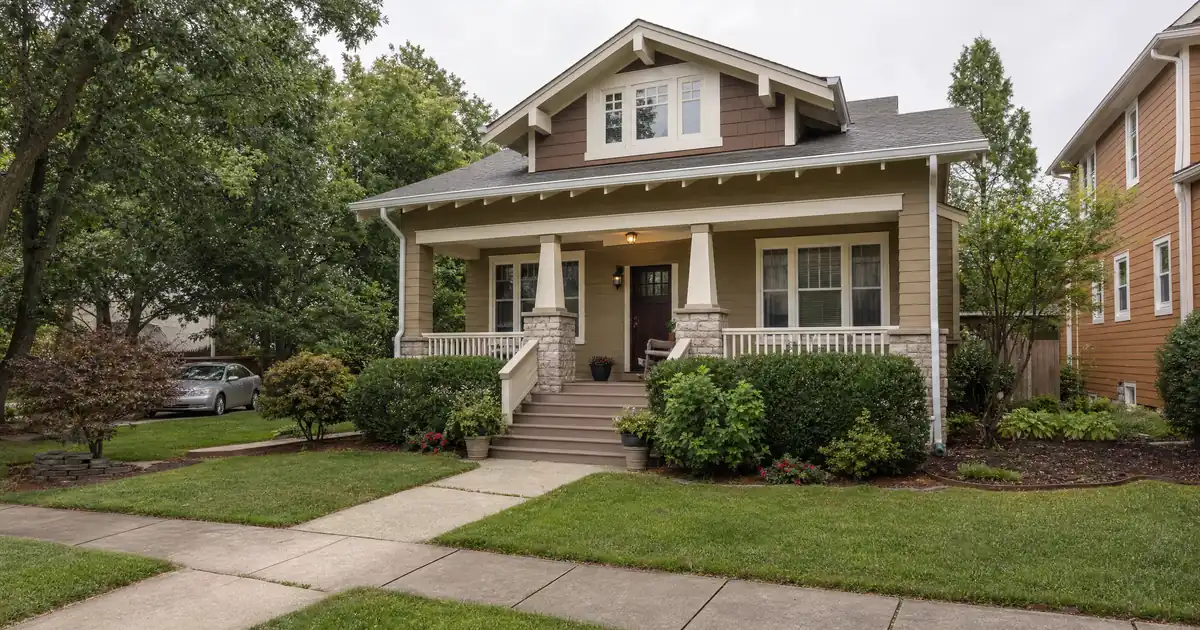
The Quick Read: Yes, investors regularly use home equity to buy a rental. They use a HELOC, a home equity loan, or a cash-out refinance on a home they already own. That equity becomes the down payment. A separate loan, usually a DSCR loan, then covers the purchase on the new property based on its own rental income. The two moves work together. One supplies cash. The other supplies leverage.
Here’s what matters most before diving into mechanics:
How large a line the equity supports in your market.
An equity line is sized by combined loan-to-value, occupancy, and credit — not by rental coverage. Switch the occupancy or the credit band and the ceiling moves with it.
Investment-property lines require a 700 minimum credit score. Second-home tiers reach 640; primary-residence tiers reach 600.
A debt-to-income ratio above 45% requires 680+ credit. Profiles under 640 are limited to single-family homes. At least 75% of the approved line is drawn at closing. Ceilings, floors, and caps update from Lendmire’s centralized guideline source.
Line estimate
Illustrative estimate only — not a quote, Loan Estimate, approval, or commitment to lend. The rate is an editable assumption; equity-line pricing is variable through both the draw and repayment periods and never converts to fixed. Occupancy and credit drive the ceiling together: investment property runs to 70% combined LTV with a 700 credit floor and a $500,000 cap; a second home runs to 70% at a 640 floor with a $500,000 cap; a primary residence reaches up to 80% at a 600 floor, and its $750,000 maximum line applies only at 75% combined LTV or below with 720+ credit and a full appraisal. Lines above $500,000 require a full appraisal. Credit, debt-to-income, property type, and full underwriting review all affect the final line.
- Equity from a primary residence and equity from an existing rental are financed through two different products, with different rules.
- Lenders scrutinize where down payment money came from — a fresh HELOC draw needs to look like clean, seasoned cash, not a live debt obligation.
- The new property’s DSCR loan is reviewed on its own projected rent, not on the investor’s personal income or the source property’s performance.
- A bigger down payment improves the ratio on the new deal, but it never overrides a leverage cap, a credit floor, or a reserve requirement.
- Coverage above 1.00 is not the same thing as positive cash flow — repairs, vacancy, and management fees live outside that number. Final terms depend on lender guidelines, property type, leverage, and the borrower’s complete credit picture.
Key Terms Defined
Home equity — the difference between what a property is worth and what’s still owed on it.
HELOC (Home Equity Line of Credit) — a revolving credit line secured by a property. The borrower draws funds as needed and typically pays interest only on the amount drawn.
Home equity loan — a lump-sum second mortgage secured by a property. It’s paid out all at once, with a fixed repayment schedule.
Cash-out refinance — a new, larger first mortgage that replaces the existing one. The difference gets paid to the borrower at closing.
DSCR (Debt Service Coverage Ratio) — a comparison of a rental property’s monthly income to its monthly housing payment. That payment includes principal, interest, taxes, insurance, and HOA dues, often called PITIA. Lenders use this ratio to qualify the loan instead of the borrower’s personal income.
Seasoning — the amount of time funds or ownership history must sit on record before a lender will count them toward a transaction.
CLTV (Combined Loan-to-Value) — the total of all liens on a property divided by its value. Lenders use it to set the maximum they’ll allow across a first mortgage and a second lien combined.
What “Using Home Equity” Actually Means Here
There’s no single loan called “buy a rental with your equity.” It’s two transactions stitched together: a withdrawal on one property, and an acquisition loan on another.
The first move pulls cash or a credit line out of a home the investor already owns. The second move — usually a DSCR loan — buys the next property. It’s underwritten entirely on that new property’s projected rent. DSCR loans sit outside Fannie Mae and Freddie Mac territory. Each lender in a non-QM network sets its own overlays on down payment sourcing, seasoning, and reserves. That’s exactly why the two transactions need separate attention.
Scale matters here. Mortgage holders nationally carried a record amount of home equity entering recent quarters. A large share is considered tappable while keeping a healthy equity cushion in place, according to industry mortgage data. Equity from a prior home is already the dominant funding source for repeat buyers. The National Association of Realtors found that 54% of repeat buyers used proceeds from a previous home sale to fund their next purchase. Investors tapping equity via a HELOC instead of a sale are drawing from the same well.
The Three Ways to Tap Equity, Compared
| Product | How Funds Arrive | Repayment | Best Fit |
|---|---|---|---|
| Home equity loan | Lump sum at closing | Fixed schedule from day one | One-time purchase, known amount needed |
| HELOC | Draw as needed, up to a limit | Interest-only during draw, then amortizing | Ongoing or uncertain capital needs |
| Cash-out refinance | Lump sum, replaces existing mortgage | Single new first-mortgage payment | Investors comfortable resetting the whole loan |
A home equity loan gives a fixed number up front. That’s useful when the purchase price and down payment are already known. A HELOC behaves more like a credit line: draw what’s needed for the down payment, leave the rest available. A cash-out refinance is the most disruptive of the three. It replaces the entire existing mortgage rather than layering a second lien on top of it. That matters most to anyone sitting on a very favorably priced first mortgage they don’t want to give up.
Tapping Equity From an Existing Rental Is a Different Product Entirely
This is the edge case almost nobody explains clearly. An investor who already owns a rental free and clear, or with substantial equity, can pull cash from that property to fund the next one. But the product looks nothing like a primary-residence HELOC.
Investment-property equity lines in Lendmire’s network typically cap around 70% combined loan-to-value. The program ceiling sits near $500,000, with a 700 minimum credit score as a hard floor — meaning a 720 score buys the same leverage a 700 score does. Credit above 700 opens eligibility on larger files, not a higher ceiling. These are typically standalone lines, not tied to refinancing the existing first mortgage. They’re structured with an interest-only draw period followed by a longer amortizing repayment period (Tennessee runs a shorter repayment window than most other states). Most of the line — commonly at least 75% — has to be drawn at closing, and pricing floats through both periods rather than converting to a fixed rate.
These lines cap at $500,000 and stay below the threshold where a full appraisal kicks in. Because of that, most close off an automated valuation model rather than a traditional appraisal — a meaningfully different process than a purchase-money mortgage. One structural detail catches investors off guard: title has to sit with an individual borrower or a revocable living trust. LLCs, corporations, and irrevocable trusts can’t hold title on this line. That’s the sharpest contrast with a DSCR loan. A property already deeded to an entity typically needs a vesting change, or the investor pivots to a DSCR cash-out refinance instead, which handles LLC-titled equity differently.
Portfolio scale has limits too. A borrower is generally capped at three of these lines totaling around $750,000, and ownership beyond roughly 15 financed properties falls outside eligibility. Investors weighing this path against a straight DSCR cash-out refinance on an existing rental are really choosing between two things: a revolving line at lower leverage, or a lump-sum refinance that typically reaches higher into the mid-70s LTV range with roughly six months of seasoning expected on most files.
How Underwriting Treats the Down Payment Once It’s in Hand
Non-QM lenders scrutinize where down payment money came from — heavily. On most DSCR purchase files, the expectation is that the funds are the borrower’s own capital, sourced and seasoned. That usually means the money has sat in an account for a stretch of time, so it’s documented and traceable rather than a fresh, unexplained deposit.
This is where a HELOC draw needs careful handling. The cash itself is fine to use — but it’s borrowed money, and underwriters flag large deposits that look like undocumented borrowing rather than seasoned equity. The practical fix: pull the draw early, let it season in the account, and keep a clean paper trail showing exactly where it came from. That trail should also show the funds aren’t tied to an obligation that could compete with the new mortgage payment. This is a conversation to have with a loan officer before assuming any specific program will treat a HELOC draw as “own funds” — treatment varies by lender.
Gift funds are a routine tool on an owner-occupied purchase, but they’re broadly restricted on investment purchases. Most DSCR programs expect the down payment to come from the borrower’s own capital rather than a gifted source. That rule trips up borrowers used to conventional owner-occupied financing.
Foreign national borrowers face an extra layer of sourcing documentation, typically several months of international bank statements plus a letter explaining fund origin. DSCR loans are designed for non-owner-occupied investment properties. Because they are business-purpose investor loans, they get reviewed differently from a standard owner-occupied mortgage.
The DSCR Math on the Property You’re Buying
The new property qualifies primarily on property-level rental income covering the payment, subject to lender guidelines. It doesn’t qualify based on the investor’s W-2s, traditional personal-income documentation, or personal debt-to-income ratio. Rent isn’t self-reported. It comes from an appraiser’s opinion.
For a single unit, that’s the Single-Family Comparable Rent Schedule, known as Form 1007. For two-to-four unit properties, it’s the Small Residential Income Property Appraisal Report, Form 1025. Both forms originated in agency lending, and the non-QM world adopted them as its standard rent-verification tool.
The number underwriting actually uses is the lower of the lease amount or the appraiser’s market rent — never the higher figure. A unit renting above the appraiser’s estimate doesn’t get full credit for that excess. The file gets underwritten at the more conservative number instead. That keeps the ratio from being inflated by a temporarily strong lease.
Coverage of 1.00 is where select programs in the network start. It’s a floor for specific programs, never a universal standard, and stronger ratios typically unlock better leverage and pricing tiers. A file with coverage below 1.00 still has a path through select programs in the network, though leverage and terms adjust to compensate for the thinner margin. Credit floors run around 620 in parts of the network, with most programs preferring something closer to 660. The strongest leverage tiers generally open up around 700 and above. Learn the full mechanics in Lendmire’s complete DSCR loans guide, and see how the math stacks up against a conventional loan in Lendmire’s DSCR vs. conventional comparison.
Where the General Rule Breaks: Edge Cases Worth Knowing
Delayed financing is the agency-world analog worth understanding, even though DSCR loans sit outside that system. Under Fannie Mae’s cash-out refinance rules, at least one borrower generally must be on title for six months before a cash-out disbursement. The exception: if the property was bought entirely in cash, a documented paper trail can waive that seasoning requirement outright rather than shortening it. This rule is often misread as “wait six months, then refinance.” It isn’t. There’s no forced waiting period once underwriting, appraisal, and title work clear.
State overlays create real variation in the equity-line product:
| Overlay | What Changes |
|---|---|
| Texas | 12-day wait, one-lien rule, 12-month seasoning bind primary homes only; investment and second homes qualify as non-homestead |
| New Mexico & Ohio | CLTV cap shifts based on the borrower’s credit profile |
| IN, NC, PA, TN, TX, WA | A property listed for sale, or listed within the past 60 days, is ineligible |
| Michigan | Minimum line size drops to $10,000, below the standard floor |
Short-term rentals get a haircut, not a bonus. Even with strong platform earnings history behind a listing, appraisers are cautioned against simply multiplying a nightly rate by 30. That approach ignores vacancy, business expenses, and personal property. So the rent figure has to be grounded in comparable monthly lease data instead. Purchase leverage on STR files typically tops out around 75% LTV. Most programs expect roughly a year of hosting history and a 640-plus credit profile, and refinance leverage runs a bit lower than that.
And here are the reliable non-starters: manufactured homes, log homes, and barndominiums fall outside DSCR programs across the network. They’re not “harder to finance” — they’re simply not offered.
Run the Numbers: A Worked Scenario
Consider an investor holding a primary residence worth enough to carry a healthy equity cushion after the existing mortgage balance. A HELOC or home equity loan draws against that cushion, and those seasoned proceeds become the down payment on a rental purchase. This is modeled here at a purchase requiring 20-25% down, in line with what most DSCR purchase files expect at standard leverage. These specifics are subject to lender guidelines and a full review of property, leverage, and credit.
On the new property, the appraiser’s market rent gets compared against the projected monthly obligation. Assume the rent lands comfortably above the payment. The file might then clear somewhere in the low-1.2x range — solid coverage that typically supports standard leverage and better pricing tiers than a file scraping close to 1.00x. Now flip it: if that same rent instead landed just under the payment, the deal would run below 1.00x on paper. Select programs in the network still review sub-1.00 files, but expect reduced leverage and stronger compensating factors like higher reserves or a bigger down payment to offset the thinner margin.
DSCR files where the down payment comes from a recent equity draw tend to show a specific pattern: strong leverage math, clean coverage on paper, but a documentation gap around the source of funds. The stronger files in that pattern get the HELOC or home equity loan proceeds parked and seasoned well before the purchase contract is signed. They have a clear paper trail showing the draw, the transfer, and the destination — rather than scrambling to explain a large deposit mid-underwriting.
Is This the Right Move? The Investor Decision
The comparison that actually matters isn’t HELOC versus home equity loan versus cash-out refinance. It’s whether tapping equity at all beats waiting, saving cash, or selling outright. Pricing and available terms vary by lender, borrower profile, property type, and full underwriting review. A cash-out refinance trades that protection for a single, simpler payment structure.
Either way, the down payment only solves half the equation. The new property still has to clear its own DSCR test on its own rent. A bigger down payment lowers the payment and can lift the ratio, but it never overrides a leverage cap, a credit floor, or a reserve requirement. The strongest files clear both tests at once: enough equity in hand, and enough rental coverage on the target property. Terms vary by lender guidelines, property type, leverage, credit profile, and full file review.
Investor purchase activity has stayed a meaningful slice of the market. The investor share of single-family purchases ran near 30% in one recent month before easing slightly as the largest institutional buyers pulled back, per SealedFolio’s investor tracking data. Equity-funded acquisitions are part of that volume, not a fringe strategy.
Investors weighing this path should also check what’s already covered elsewhere: who typically offers home equity loans on investment property, and whether pulling equity from a current rental to buy another one makes more sense than tapping a primary residence.
Common Mistakes to Avoid
Assuming an above-market lease boosts the loan amount. Underwriting uses the lower of actual or market rent — a lease priced above the appraiser’s estimate doesn’t move the number.
Treating a HELOC draw like cash on hand. It’s borrowed money. Programs that require the down payment to be “the borrower’s own funds” may not automatically treat a fresh draw the same way — confirm this before assuming it works.
Confusing an investment-property equity line with a primary-residence HELOC. The investment version runs lower leverage, tighter credit floors, and restricts title to individuals or revocable trusts. An LLC-titled rental doesn’t qualify for that specific product.
Expecting gift funds to work the same way they do on an owner-occupied loan. Most DSCR and investment-equity programs don’t accept them.
Tax treatment can depend on how the funds are used and how the property is held. Investors should keep clear records and speak with a qualified tax professional before relying on any deduction.
Lendmire (NMLS# 2371349) arranges DSCR investor loans through select lenders across 39 states plus Washington, D.C. Its investment-property equity line product runs through its residential lending operations in 16 full-service states. Every figure discussed here is a typical range from select wholesale-network guidelines, not a guarantee, and every file is subject to lender approval and full underwriting review. Investors comparing this route to a straight cash-out refinance on a rental they already own can see how that structure works in Lendmire’s cash-out refinance overview, or reach Lendmire’s team directly at 828-256-2183 to run a specific scenario.
Nothing here is a commitment to lend. Loan approval is never guaranteed, and every scenario described is subject to lender approval and to borrower, property, and program guidelines that vary by file. This content is general information only — not financial, legal, or tax advice.
Frequently Asked Questions
Can I use a HELOC as the entire down payment on a rental property?
Often, yes — but most DSCR purchase programs still expect some portion of the funds to be the borrower’s own seasoned capital rather than 100% borrowed money. The exact mix depends on the specific lender’s guidelines, so this is worth confirming before locking in a purchase contract.
Does a HELOC on my rental work the same way as one on my primary home?
No. Investment-property equity lines typically run lower leverage, a higher credit floor, and title restrictions that exclude LLCs. A primary-residence HELOC is generally the more accessible and higher-leverage option of the two.
Will the new rental’s DSCR loan look at my income from my job?
No — that’s the entire point of the structure. The DSCR loan is reviewed on the new property’s projected rental income covering its own payment, not the borrower’s personal income or debt-to-income ratio, subject to lender guidelines.
What if the property I’m buying doesn’t clear 1.00x coverage?
Select programs in the network still review sub-1.00 coverage files, though expect reduced leverage and stronger compensating factors like added reserves. This isn’t available across every program, and terms adjust meaningfully compared to a file clearing 1.00x or better.
Is interest on the equity draw tax-deductible if I use it to buy a rental?
It depends on how the funds are used and documented. This is a fact-specific question best answered by a qualified tax professional rather than general guidance.
About Lendmire
Lendmire is a non-QM mortgage brokerage (NMLS# 2371349) arranging DSCR investor loans in 40 markets, including Washington, D.C. DSCR eligibility is generally reviewed around property-level rental income rather than personal income, subject to lender and program guidelines. That makes it a fit for self-employed investors and LLC-owned portfolios. Lendmire was recognized as a Scotsman Guide Top Mortgage Workplace in 2025 and 2026.
Lendmire’s Top Mortgage Workplace recognition is documented by Scotsman Guide 2025 Top Mortgage Workplace and Scotsman Guide 2026 Top Mortgage Workplace.
Get Started
Ready to find the right loan for you?
In about 30 seconds you can review financing options available for your home or investment property. No commitment required.
Informational only. Not a Loan Estimate, approval, or commitment to lend. Program availability and eligibility are subject to lender guidelines, credit approval, property review, and underwriting.
References
1. National Association of Realtors — 2025 Profile of Home Buyers and Sellers
2. Fannie Mae Selling Guide — Rental Income (Form 1007/1025)
3. Fannie Mae Selling Guide — Cash-Out Refinance Transactions
4. SealedFolio — Real Estate Investing Statistics
Brandon Miller
Founder & CEO, Mortgage Loan Originator, Lendmire LLC
- Mortgage Loan Originator · NMLS# 1129696 · Verify on NMLS Consumer Access
- North Carolina Real Estate Broker · License# 343312 · Verify on NCREC
- North Carolina Insurance Producer · License# 19053198 · Property, Casualty, Life, Health · Verify on NAIC SBS
- Lendmire LLC · Firm NMLS# 2371349 · Verify firm licensure
Disclosure information. Lendmire is a state-licensed mortgage brokerage under NMLS# 2371349. Lendmire is not a depository institution, direct lender, or financial advisor — all loans referenced are placed through wholesale lender partners and are subject to each lender's underwriting standards. This article is provided for general informational purposes and is not a commitment to lend, nor does it constitute financial, legal, or tax advice. Loan programs, terms, rates, and qualification standards change without notice and depend on borrower profile, property type, and the state in which the subject property is located. Equal Housing Opportunity provider. NMLS Consumer Access: nmlsconsumeraccess.org.


