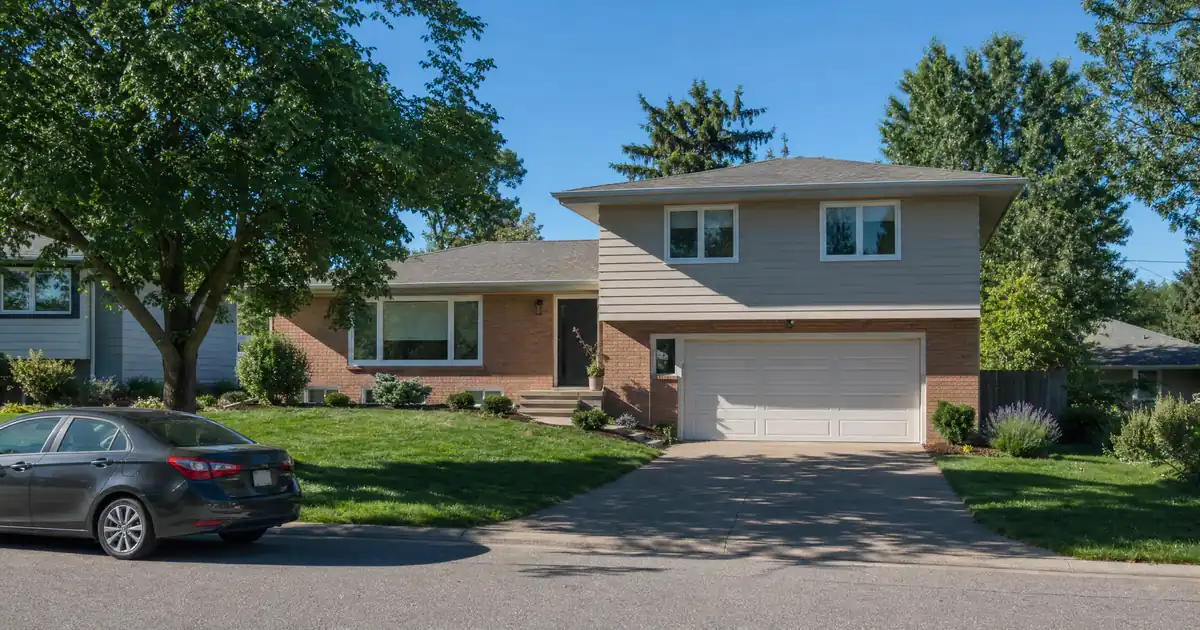
The Quick Read: Yes, tapping the equity in your current home is one of the most common ways investors fund a down payment on a second property. You can pull that equity through a HELOC, a home equity loan, or a cash-out refinance — and each moves money differently. Once the cash lands, the loan on the new property is a separate transaction with its own underwriting. If that second property is a rental, most investors end up in a DSCR loan, where the property’s own rent — not your paycheck — carries the file.
Here’s what matters most before you start calling lenders:
How large a line the equity supports in your market.
An equity line is sized by combined loan-to-value, occupancy, and credit — not by rental coverage. Switch the occupancy or the credit band and the ceiling moves with it.
Investment-property lines require a 700 minimum credit score. Second-home tiers reach 640; primary-residence tiers reach 600.
A debt-to-income ratio above 45% requires 680+ credit. Profiles under 640 are limited to single-family homes. At least 75% of the approved line is drawn at closing. Ceilings, floors, and caps update from Lendmire’s centralized guideline source.
Line estimate
Illustrative estimate only — not a quote, Loan Estimate, approval, or commitment to lend. The rate is an editable assumption; equity-line pricing is variable through both the draw and repayment periods and never converts to fixed. Occupancy and credit drive the ceiling together: investment property runs to 70% combined LTV with a 700 credit floor and a $500,000 cap; a second home runs to 70% at a 640 floor with a $500,000 cap; a primary residence reaches up to 80% at a 600 floor, and its $750,000 maximum line applies only at 75% combined LTV or below with 720+ credit and a full appraisal. Lines above $500,000 require a full appraisal. Credit, debt-to-income, property type, and full underwriting review all affect the final line.
- Pulling equity and financing the new purchase are two different loans with two different rulebooks — don’t assume one approval carries into the other.
- A home equity line used to extract cash from your current house typically has to be titled to you personally or a revocable living trust, not an LLC — a real problem if your current home is already entity-owned.
- The purchase loan on the new investment property usually runs on DSCR math: rent measured against the payment, not your income or debt-to-income ratio.
- Underwriters care a lot about sequencing and paper trail — where the down payment came from and whether it’s seasoned matters as much as the amount itself.
- A larger down payment can strengthen the coverage ratio on the new property, but it never overrides a credit floor, a reserve requirement, or a property type that’s simply off the approved list.
Key Terms Defined
Home equity is the gap between what your house is worth and what you still owe on it.
HELOC (home equity line of credit) is a revolving credit line secured by your home — you draw against it as needed, similar to a credit card, but backed by the property.
Home equity loan is a lump-sum second mortgage against your current home, funded once at closing rather than drawn over time.
Cash-out refinance replaces your existing first mortgage with a new, larger one and puts the difference in your pocket — the one option of the three that touches your original loan.
DSCR (debt-service coverage ratio) compares a rental property’s monthly rent to its monthly payment (principal, interest, taxes, insurance, and any HOA dues). A ratio at or above 1.00 means the rent covers the payment on paper — it does not mean the property is profitable once repairs, vacancy, and management are factored in.
LTV / CLTV (loan-to-value / combined loan-to-value) is the loan amount expressed as a percentage of the property’s value — CLTV adds up every lien against the home, not just the newest one.
Seasoning is the waiting period a lender wants before it will count funds, or a property’s cash-out equity, as usable and verified.
Business-purpose loan is financing extended for an investment or rental purpose rather than a consumer’s own household use — a distinction that changes which protections and disclosures apply.
Can You Actually Buy A Second Home With Equity From Your First?
Yes — this is standard practice, not a workaround. Investors do it constantly, and lenders have built products specifically for it. The mechanics are simple in concept: pull cash from Property A, use that cash as the documented down payment on Property B, then let Property B’s own loan carry its own weight from there.
The part investors underestimate is that these are two separate files. The first loan — the HELOC, home equity loan, or cash-out refinance against your current house — gets underwritten against your existing home’s value and your personal credit. The second loan, on the new property, gets underwritten against that property on its own terms. Nothing about approval on one guarantees approval on the other.
How Much Equity You Can Actually Tap
Start with a simple subtraction: your home’s current value minus what you owe equals your equity. Say, hypothetically, a home appraises at $650,000 and the mortgage balance sits at $310,000 — that’s $340,000 of equity sitting in the property, untouched.
Not all of that is borrowable. Lenders cap how much combined debt they’ll allow against a home, expressed as a CLTV percentage. On the equity-extraction side, credit tier drives the ceiling: a 700+ credit profile typically opens the door to a 70% CLTV line, while scores in the 640-680 range generally see the ceiling step down to 60-65% CLTV. Below 640, a second home doesn’t qualify for this particular line product at all — that tier is reserved for primary residences only.
Line sizes on this equity-extraction product typically run from the mid-five figures up through $750,000, though anything above $500,000 usually requires a 720+ score, a tighter 75% CLTV cap, and a full appraisal rather than an automated valuation. Below $500,000, valuation is usually handled by an automated model — no in-person appraiser required, though a borrower can request a full appraisal either way.
The Three Ways To Pull Equity Out
Each vehicle moves money on its own schedule and touches your existing mortgage differently.
| Feature | HELOC | Home Equity Loan | Cash-Out Refinance |
|---|---|---|---|
| Payout | Revolving line, draw as needed | Lump sum at closing | Lump sum at closing |
| Structure | Interest-only draw, then amortizing | Fixed schedule from day one | New fully amortizing note |
| Existing mortgage | Untouched | Untouched | Replaced entirely |
| Lien position | Usually second | Usually second | Becomes the new first |
| Best fit | Keeping a favorable existing first mortgage intact | One lump need, predictable payment | Also want to restructure the first mortgage |
Most equity-rich owners lean toward a HELOC or home equity loan over a cash-out refinance for one reason: a cash-out refi replaces the entire first mortgage, and plenty of current owners don’t want to disturb a first loan they already like the terms of. A HELOC or home equity loan leaves that first mortgage exactly where it is and stacks new debt on top instead.
What The Equity-Extraction Loan Actually Requires
Beyond the CLTV tiers above, a handful of structural rules shape this product across the network. Two draw structures exist across the wholesale network: a 3-year interest-only draw with a 17-year repayment on the higher-leverage path, and a 5-year interest-only draw with a 25-year repayment on the longer-runway path — a quoted CLTV always carries its own structure.
Debt-to-income tops out around 50%, tightening to 45% for credit profiles between 600 and 679; anyone wanting to run above 45% needs a 680 floor. Qualification is measured against the interest-only payment at the maximum draw amount, not a partial draw.
Vesting is the detail that trips up the most investors. This line product has to be titled to you personally or to an inter vivos revocable living trust — LLCs, corporations, partnerships, and irrevocable trusts cannot hold title. If your current home is already deeded to an entity, you’re looking at either a vesting change back to your own name or pulling equity through a DSCR cash-out refinance instead, which does allow entity vesting, subject to lender program eligibility. Lendmire’s piece on refinancing a second home versus an investment property walks through how that classification affects the loan you end up with.
A few states carry their own overlays worth knowing before you apply. Texas draws a hard line between primary-residence home equity rules and everything else — the state’s stricter waiting periods and one-lien-at-a-time restrictions bind primary homesteads only, while second homes and investment property qualify as ordinary non-homestead transactions instead. New Mexico and Ohio scale the CLTV cap to credit profile rather than a flat number, and a small group of states won’t approve a line against a property that’s currently listed for sale or was listed within the past couple of months.
Getting The Cash To The Closing Table On Property Two
Once the funds are drawn, the real work is proving where they came from. Lenders on the destination purchase want a clean paper trail — bank statements showing the deposit, a plausible source, and time for the money to season before it’s counted as usable down-payment funds.
Gift funds are commonly acceptable to supplement a down payment on many non-QM purchase files, but two structures reliably get flagged in underwriting review: a seller carrying a second mortgage to cover part of the down payment, and an unsecured personal loan used as the source of funds. Both show up when reviewers trace combined liens and bank statement activity, and both typically kill the file rather than just slow it down.
Timing matters as much as sourcing. Pull equity from Property A, let the funds settle and season, then move to the purchase contract on Property B — running the two transactions too close together, or in the wrong order, is the most common way investors create documentation problems for themselves. Lendmire’s guide on using a cash-out refinance to fund a second-home down payment covers this sequencing in more depth.
How The New Property’s Loan Actually Gets Underwritten
Once the down-payment cash is in place, the loan on Property B is judged almost entirely on what that property earns, not on your income. That’s the core mechanic of a DSCR loan, and it’s covered start to finish in Lendmire’s complete DSCR loans guide.
Across the wholesale network Lendmire brokers through, purchase leverage on these files typically lands at 75-80% LTV, with select high-leverage programs stretching to 85% for borrowers carrying a 700+ score. A cash-out refinance on an already-owned rental generally tops out closer to 75% LTV, with roughly six months of seasoning the common expectation before that equity counts. Coverage requirements vary by program — 1.00 is where several programs set their floor, not a universal industry standard, and stronger ratios above that typically unlock better leverage and pricing. Credit floors run as low as 620 in parts of the network, though most programs want closer to 660, and 700+ tends to open the strongest leverage tiers.
Loan sizes on these files generally run from around $100,000 up to $3 million, with anything above $2.5 million usually structured as a straight 30-year fixed rather than an adjustable or interest-only term. Reserve requirements — typically expressed in months of PITIA held in the bank — shift with leverage and loan size: conservative rate-and-term files under $1.5 million at modest leverage sometimes see reserves waived entirely, while loans above that threshold commonly step up toward nine months instead of six.
Appraisal documentation splits by property type — one of the few spots where agency-originated forms carry over into non-QM underwriting. A single-unit rental typically gets appraised with a Single-Family Comparable Rent Schedule, Form 1007, while two-to-four-unit properties use a Small Residential Income Property Appraisal Report, Form 1025 — the latter weighing both rental income and comparable market value rather than rent alone.
If Property B is intended as a short-term rental instead of a long-term lease, expect different numbers: purchase leverage closer to 75% LTV, refinance and cash-out closer to 70%, a 700+ credit expectation, roughly twelve months of hosting history, and a 1.00 coverage floor. Short-term rental rules can also vary by city, county, HOA, and property type, so confirming local rules before relying on projected rental income matters as much as the loan terms themselves. Every figure here varies by lender and program — guidelines, property type, leverage, and credit profile all apply.
A handful of states — Connecticut, Florida, Illinois, and New Jersey among them — generally cap purchase leverage closer to 75% LTV, and overlay states as a group tend to cap loan amounts near $2 million. And a short list of property types simply isn’t offered through these DSCR programs at all: manufactured homes, whether single- or double-wide, log homes, and barndominiums fall outside the network’s guidelines entirely, regardless of leverage or credit profile.
Run the numbers on a simple scenario: an investor draws equity to fund the down payment on a $420,000 fourplex, financed at 75% LTV. The property’s own rent is then measured against its new payment — a deal like this often needs coverage somewhere in the 1.05x-1.20x range to clear most program guidelines comfortably, before reserves are even factored in. A DSCR loan is reviewed primarily on property-level rental income covering the payment, subject to lender guidelines — it is not the same underwriting path as a conventional mortgage, a distinction Lendmire’s DSCR versus conventional comparison breaks down in detail.
Working DSCR files across a wide range of markets, one pattern shows up constantly: investors who plan the equity draw and the destination purchase as a single coordinated move — rather than pulling cash first and shopping for a property months later — tend to have cleaner files, because the funds are still fresh and easy to trace when the second loan goes to underwriting.
Where This Gets Complicated
A few edge cases catch investors off guard, and they’re worth knowing before you start.
There’s no true blanket loan here. Investors sometimes assume they can put both properties on one note and let equity in Property A directly secure Property B. DSCR programs generally don’t offer that structure. What actually happens is sequential: a cash-out refinance (or HELOC) on Property A generates cash, and that cash becomes the documented down payment on a separate purchase loan for Property B — two transactions producing a similar result, not one blanket mortgage. Lendmire’s piece on using DSCR loans to scale a portfolio covers how investors chain these deals together over time, and the related discussion on pulling equity from a rental property with a DSCR loan covers the extraction side specifically.
Occupancy status changes the classification. DSCR loans are designed for non-owner-occupied investment properties. Because they are business-purpose investor loans, they are reviewed differently from a standard owner-occupied mortgage. If you intend to occupy the “second home” yourself at any point, rather than treat it as a pure rental, the unit count starts to matter — a purchase loan on an owner-occupied rental typically needs more than two housing units, and a loan to improve or maintain one needs more than four, before it’s automatically treated as business-purpose. Compliance Alliance and Doss Law both note that labeling a property “investment” doesn’t settle this on its own — the facts of occupancy and unit count do.
Tax treatment can depend on how the funds are used and how the property is held; investors should keep clear records and speak with a qualified tax professional before relying on any deduction.
Does This Actually Make Sense For You?
It depends less on whether you have the equity and more on whether both loans clear their own bar independently. A big equity cushion on Property A means nothing if Property B’s rent doesn’t get anywhere close to covering its own payment, and a strong-cash-flowing Property B doesn’t help if the extraction loan on Property A can’t clear its own credit or DTI test.
The strongest files pass two separate tests: enough equity to fund the down payment cleanly, and enough rental coverage on the new property to satisfy its own underwriting. A larger down payment can lift that coverage ratio and open better leverage — but it never substitutes for a credit floor, a reserve cushion, or a property type the network simply doesn’t finance. If you’re carrying an LLC-titled current home, plan for the vesting mismatch before you apply, not after. And if the destination property is a short-term rental, build in the twelve-month hosting-history expectation before you count on that income showing up in underwriting.
Lendmire (NMLS# 2371349) arranges DSCR investor loans a multi-state wholesale network— through a wholesale network of lenders, and works these two-loan sequences regularly. Investors weighing an equity-to-purchase strategy can call 828-256-2183 or request a quote to see how a specific equity position and target property pencil out.
Nothing here is a commitment to lend, and loan approval is never guaranteed. Every scenario described here is general information, subject to the borrower’s credit profile, the property under review, and the specific lender’s program guidelines, and exact eligibility depends on full underwriting and current overlays at the time of application. This content is not financial, legal, or tax advice, and investors should confirm current program terms directly with a lender before making a decision.
Frequently Asked Questions
Does a HELOC on my current home count against me when the second lender calculates DTI on the new property?
Yes, typically. The payment on any home equity line you’re carrying gets counted as a monthly obligation in most underwriting reviews, whether it’s a HELOC on your current home or another debt. On a DSCR loan for the new property, though, the qualifying math centers on that property’s own rent-to-payment ratio rather than a full personal DTI calculation — so the HELOC’s effect is usually smaller there than it would be on a conventional mortgage application.
Can I pull equity if my current home isn’t fully paid off?
Absolutely — most equity extraction happens against homes that still carry a first mortgage. The lender simply looks at combined loan-to-value across every lien on the property, not just the new one, when setting your line size and terms.
Does it matter if the second home will be a rental instead of a vacation home?
It changes which loan you’ll likely end up with on the new property. A true vacation home you’ll occupy yourself often runs through more traditional financing, while a property purchased purely as a rental typically moves toward a DSCR loan, qualified on the property’s own income rather than yours.
What happens to my HELOC balance when I eventually sell the first home?
The outstanding balance gets paid off from sale proceeds at closing, the same way a first mortgage does. Any remaining equity after both liens are satisfied goes to you.
Can an LLC hold the equity-extraction loan if my current home is already titled to one?
Generally, no — this particular home equity line product requires vesting in an individual’s name or a revocable living trust. A home already deeded to an LLC typically needs either a vesting change or a different extraction path, such as a DSCR cash-out refinance, subject to lender program eligibility.
About Lendmire
Lendmire (NMLS# 2371349) is a mortgage brokerage built around DSCR investor lending, with programs available in 40 markets, including Washington, D.C. DSCR lenders commonly evaluate rental-income coverage instead of personal income paperwork — a practical fit for LLC-owned and multi-property investors. Terms vary by lender, property, leverage, and program.
Get Started
Ready to find the right loan for you?
In about 30 seconds you can review financing options available for your home or investment property. No commitment required.
Informational only. Not a Loan Estimate, approval, or commitment to lend. Program availability and eligibility are subject to lender guidelines, credit approval, property review, and underwriting.
Lendmire is a two-time Scotsman Guide Top Mortgage Workplace (2025, 2026). This recognition is documented by Scotsman Guide 2025 Top Mortgage Workplace and Scotsman Guide 2026 Top Mortgage Workplace.
References
1. CFPB – Ask CFPB, “What is a HELOC?”
2. Fannie Mae Selling Guide – B3-3.1-08, Rental Income
3. McKissock Learning – Form 1007 & its Impact on Short-Term Rental Appraisals
4. Compliance Alliance – Regulation Z and “Investment” Properties
5. Doss Law – Business Purpose Exemption Simplified
Brandon Miller
Founder & CEO, Mortgage Loan Originator, Lendmire LLC
- Mortgage Loan Originator · NMLS# 1129696 · Verify on NMLS Consumer Access
- North Carolina Real Estate Broker · License# 343312 · Verify on NCREC
- North Carolina Insurance Producer · License# 19053198 · Property, Casualty, Life, Health · Verify on NAIC SBS
- Lendmire LLC · Firm NMLS# 2371349 · Verify firm licensure
Legal disclosures. Lendmire (NMLS# 2371349) is a state-licensed mortgage brokerage that arranges financing through wholesale lender relationships. Lendmire is not a direct lender, depository institution, or registered financial advisor. The discussion above is general informational content about real estate financing — it is not financial, legal, or tax advice, and readers should consult licensed professionals for guidance on their individual circumstances. Loan inquiries are subject to lender underwriting; this article does not represent a commitment to lend. Loan terms, rates, and qualification standards vary by borrower, property, and state, and are subject to change at any time. Equal Housing Opportunity. NMLS Consumer Access: nmlsconsumeraccess.org.